
Understanding truck Movements in Container Terminals
First, define the role of internal truck movement. In a container terminal, a truck moves containers between quay and yard, between yard blocks, and to gates. These movements keep containers flowing. Second, internal truck travel links quay operations with yard operations and landside transport. As a result, delays inside the facility ripple outward. For example, studies record that 30–40% of turnaround time can be spent waiting or in transit. This statistic highlights the scale of the problem. Also, congestion at choke points reduces throughput and raises transportation cost.
Next, clarify common congestion points. First, gate complexes often create queues when arrivals cluster. Then, the interchange corridors between quay and yard can bottleneck, especially during peak crane cycles. Third, yard aisles and block boundaries create local congestion when container stacking and yard equipment conflict. Consequently, truck traffic slows. Meanwhile, inefficient distribution of yard cranes and poor block assignment increase unnecessary travel distances. This drives fuel use and gas emissions up across the port area.
Furthermore, container trucks suffer from unpredictable delays. For instance, a mix of scheduled and unscheduled arrivals produces variability. Then, truck waiting at gates or during internal moves becomes a major component of total time. Therefore, improving predictability matters. Also, real-time coordination and clearer sequencing between cranes and trucks will help reduce that variability. For more on yard density and how to plan stacking to lower internal moves, see research on container terminal yard density prediction using machine learning.
Finally, the human layer matters. Trucking companies coordinate with ports and terminals, but emails and phone calls still drive many ad-hoc changes. Here, AI automation can help. Thus, reducing administrative delays complements physical flow improvements and leads to measurable improvements in turnaround time, throughput, and operational efficiency.
Aligning schedule with Quay Crane and Gate Operations
First, align truck arrivals with quay crane cycles. Doing so cuts idle time at cranes and reduces unnecessary repositioning. Second, use a clear schedule to match truck slots with berth plans and yard availability. When cranes have planned container sequences, trucks can fetch the right boxes at the right time. As a result, the system avoids queues and downtime.
Next, integrate predictive ETA data into daily planning. Studies show that integrating arrival estimates smooths truck arrivals and reduces peaks. For instance, collaborative scheduling work found that optimizing these links can yield a 20–30% reduction in internal travel time through better alignment. Also, research on collaborative truck scheduling highlights gains in utilization and lower crane waiting when schedules align with truck flows [collaborative optimization study]. Therefore, ports that synchronize schedule information across stakeholders cut waiting and speed container handling.
Then, use digital tools to broadcast schedule updates in real time. For example, berth planners, terminal systems, and gate controllers can share slot changes with truck drivers and dispatchers. This reduces last-minute reroutes. In addition, a single truth for sequencing reduces manual reconciliation work and email-driven delays.
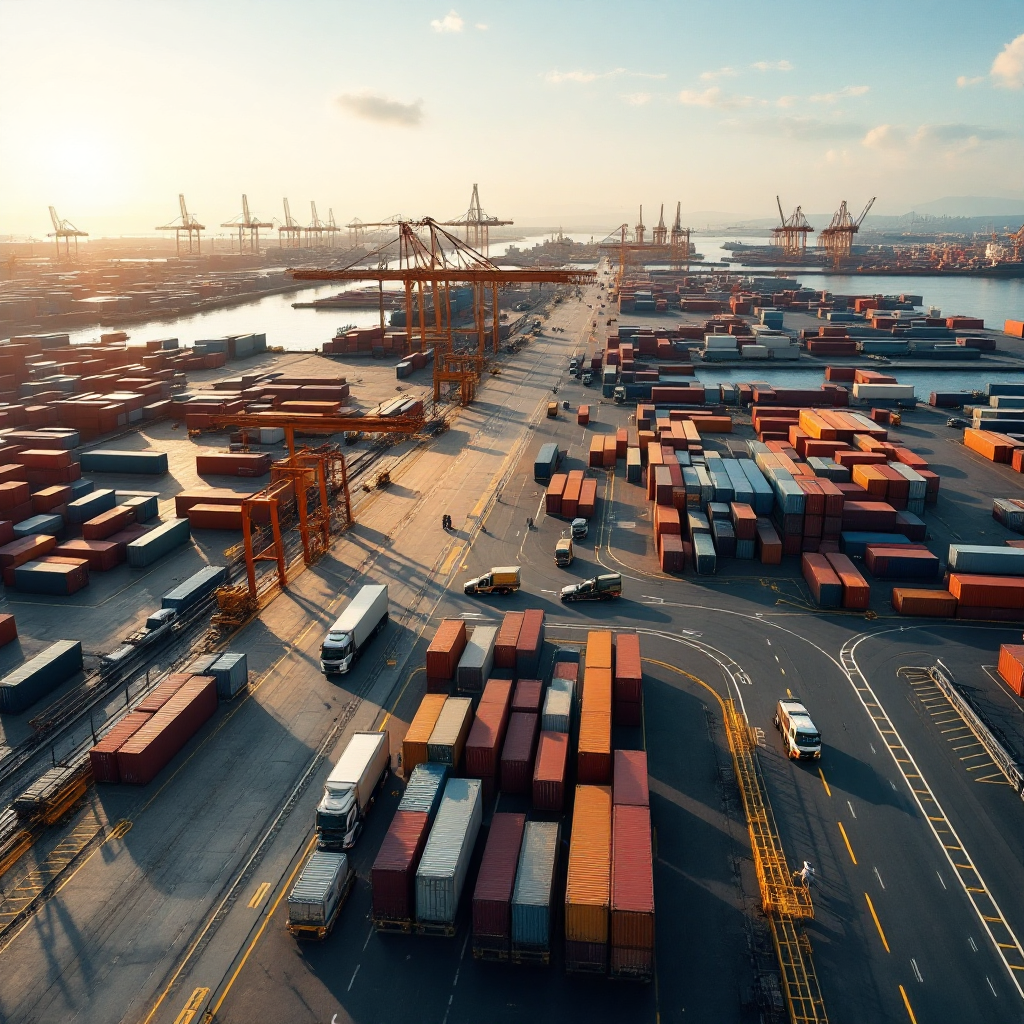
Finally, revise schedule rules to prioritize flow over localized speed. For example, staggering arrivals prevents heavy peaks at gates. Also, allow some flexibility so that cranes do not wait idle for late trucks. This flexibility, combined with reliable arrival time feeds, raises throughput. For readers who want to optimize crane sequencing in tandem with truck flows, explore strategies in optimizing quay crane operations with container sequencing software.
Drowning in a full terminal with replans, exceptions and last-minute changes?
Discover what AI-driven planning can do for your terminal
supply chain and supply chain efficiency: Aligning Container Flows for Travel Time Reduction
First, link internal truck movement to broader supply chain goals. Supply chain partners expect predictable lead times. When internal truck travel lengthens, suppliers and shippers see delays downstream. Therefore, terminal decisions must reflect landside flows. Second, align container flows so inbound and outbound waves do not collide. Doing so reduces truck turnaround times and smooths yard operations.
Next, quantify benefits of better alignment. Studies report up to a 25% cut in emissions when internal travel and routing improve [emissions reduction study]. Also, simulation work shows that optimized scheduling and routing can reduce internal travel time by 20–30%. Together, these gains lower transportation cost and improve supply chain efficiency. Consequently, carriers benefit from faster handoffs and fewer demurrage charges. Likewise, shippers face fewer unplanned delays.
Then, use collaborative approaches. For example, coordinated time slots between carriers, trucking companies, and port authorities spread arrivals and match capacity. Collaborative truck scheduling increased truck utilization by 10–15% in some trials [collaborative optimization]. As a result, trucks travel fewer empty kilometers and container handling becomes more predictable. In addition, tools that automate cross-system messages reduce the manual load on operations teams.
Finally, track metrics that matter. Measure truck turnaround times, waiting time, and total time by gate window. Also, perform sensitivity analysis on peak arrival patterns and yard capacity. These insights guide policy like time slot allocation and yard block reassignment. For more on yard operations and stacking strategies that support flow alignment, see research on optimizing container stacking for yard operations. Thus, supply chain alignment reduces internal travel while improving resilience.
optimization Techniques for Route Planning and Yard Block Assignment
First, describe dynamic yard block assignment. Rather than fixed blocks, dynamic assignment moves containers to locations that minimize future handling. This choice shortens travel paths for yard tractors and trucks. Second, deploy mixed integer programming models to balance competing objectives. For instance, researchers used a mixed integer programming model to reduce moves while considering energy use. The model reduced unnecessary travel and improved yard throughput.
Next, explain route optimization approaches. Route planners can use graph algorithms to find short, conflict-free paths through the yard. Also, time-window constraints avoid creating new congested periods. Simulation studies show that route and scheduling optimization can cut internal distances and energy consumption by around 15–25% [simulation study]. Consequently, trucks and yard tractors consume less fuel and spend less time idling.
Then, discuss trade-offs. Prioritizing shortest travel distance may increase handling if container stacking becomes suboptimal. Conversely, optimizing for minimal yard crane moves can increase truck travel. Therefore, multi-objective optimization matters. Use algorithms that explicitly consider time and emissions, such as multi quay models that balance crane productivity with environmental objectives [yard block and emissions study]. In practice, terminals test different weightings to find acceptable trade-offs.
Finally, put these techniques into operational practice. Start with pilot zones and short horizons. Monitor truck routing performance and adjust parameters. Also, combine decision models with real-time updates so the system can re-route trucks when incidents occur. For implementation guidance on yard equipment deployment and AI-based yard planning, consult resources on optimizing yard equipment deployment. By iterating, terminals gain robust, scalable solutions that lower truck travel and emissions.
Drowning in a full terminal with replans, exceptions and last-minute changes?
Discover what AI-driven planning can do for your terminal
logistics Innovations: Real-Time Technologies and Autonomous Vehicles
First, adopt GPS tracking and telematics for live traffic management. These systems show vehicle location, speed, and status. Then, operations teams can sequence trucks to avoid hotspots. Real-time feeds also enable quick reroutes when queues form. One study observed that GPS and telematics help firms “identify the most efficient routes, avoiding traffic congestion and minimizing idling time” [telematics study]. As a result, truck traffic becomes smoother and more predictable.
Next, review autonomous vehicle deployments. Autonomous container trucks reduce human-related variability. They maintain consistent speeds and follow optimal routes without discretionary stops. Research on using autonomous vehicles in port contexts found notable reductions in turn times and greater scheduling precision [autonomous vehicles study]. Therefore, ports that trial autonomous solutions can lower truck turn time at marine terminals and improve reliability.
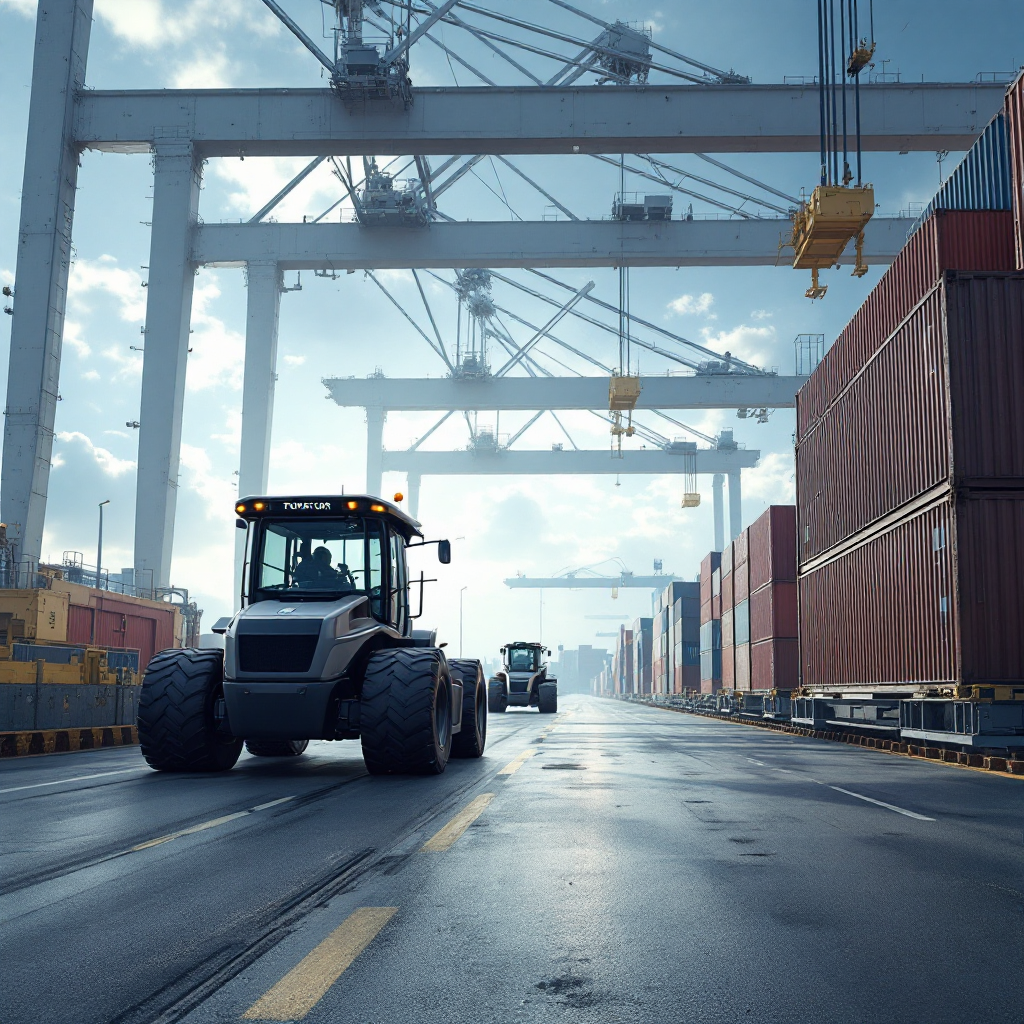
Then, link real-time tech with process automation. Systems that feed ETA and gate status into scheduling engines let planners predict truck arrival and reduce manual coordination. In addition, AI-driven email automation can resolve routine data requests and confirm pickups faster. So, the operations team spends less time on messages and more on managing flow.
Finally, consider incremental deployment. Start with telematics on a subset of container trucks, then add autonomous tractors in controlled corridors. Track KPIs: truck turnaround times, queue length, and gas emissions. Also plan for interface standards so third-party trucking companies can plug into terminal systems. For further reading about automated terminals and AGV prioritization, see AGV job prioritization in container ports. Over time, the combination of real-time data and automation yields tighter, more reliable flows within the port environment.
Reducing dwell time with appointment scheduling and loading and unloading Enhancements
First, implement a truck appointment system to spread arrivals. An appointment system moves arrivals into ordered windows and prevents bunching. Studies indicate appointment schemes can cut waiting times by up to 25% when well enforced [appointment impact study]. Therefore, fewer trucks wait in long queues and gates process more moves per hour.
Next, improve gate processes with automation. Automated check-in/out reduces paperwork and speeds entry. Also, pre-verification of booking documents and automated weight checks streamline processing. This lowers dwell time at the loading dock and reduces human error. In addition, shared digital manifests let terminal staff prepare lifts in advance. Consequently, loading and unloading become faster and more predictable.
Then, combine appointment scheduling with optimized loading sequences. When cranes know which trucks will arrive and when, they can sequence lifts to match truck slots. Also, terminals can use yard cranes to stage containers near exits just in time. This reduces truck travel inside the yard. At the same time, appointment systems must be flexible enough to accept priority or emergency moves without creating new congestion.
Finally, measure the combined effect. Track truck turnaround times and dwell time by time slot. Also monitor gas emissions and throughput to validate benefits. For terminals aiming to coordinate stacking, crane sequencing, and appointment scheduling holistically, check resources on maximizing efficiency of yard operations. In practice, pairing a robust truck appointment policy with streamlined loading and automated messaging reduces delays, lowers emissions, and improves the pace of container handling across the port.
FAQ
What is internal truck travel time and why does it matter?
Internal truck travel time is the time a truck spends moving inside a terminal or port area between service points such as quay, yard, and gate. It matters because long internal travel times reduce throughput, increase transportation cost, and raise gas emissions for the facility.
How much of truck turnaround is typically spent waiting or in transit?
Studies report that about 30–40% of truck turnaround time can be consumed by waiting or internal movement. This share varies by terminal and peak patterns, but it highlights how significant internal delays can be.
Can scheduling actually reduce internal travel time?
Yes. Aligning truck schedules with crane and gate operations can reduce internal travel time substantially. Simulation and field studies indicate improvements in the range of 20–30% when schedules and arrivals are synchronized.
What role do appointment systems play?
A truck appointment system spreads arrivals into defined windows. Well-designed appointment systems can reduce waiting time by up to 25% and smooth gate and yard flows. They also make planning more predictable for carriers and terminals.
Are autonomous trucks a realistic solution now?
Autonomous trucks and automated terminal tractors are being trialed in several ports and can reduce human-related variability in truck operations. Trials and research show measurable reductions in turn time at marine terminals, though wider deployment requires careful safety and integration planning.
How do route planning and yard block assignment work together?
Route planning finds efficient paths for vehicles inside the terminal while yard block assignment places containers to minimize future moves. Combined, they reduce unnecessary travel, lower fuel use, and improve crane productivity, though they must be balanced against each other.
What metrics should terminals monitor to track improvements?
Terminals should track truck turnaround times, waiting time, queue lengths, total time per gate window, and gas emissions. Also track utilization of cranes and yard equipment to ensure gains in one area do not cause losses in another.
How can operations teams reduce email-driven delays?
Automation tools that process and route operational emails can cut manual triage.
Is there evidence that optimization reduces emissions?
Yes. Multiple studies report that improved scheduling, routing, and reduced idle time can lower truck-related emissions by roughly 15–25%, supporting sustainability goals while improving efficiency.
Where can I read more about implementing these techniques?
For further reading, explore resources on crane sequencing, yard optimization, and automated vehicle prioritization, such as guides to optimizing quay crane operations, yard equipment deployment, and AGV prioritization in container ports.
our products
 stowAI
 stackAI
 jobAI
jobAI
Innovates vessel planning. Faster rotation time of ships, increased flexibility towards shipping lines and customers.
Build the stack in the most efficient way. Increase moves per hour by reducing shifters and increase crane efficiency.
Get the most out of your equipment. Increase moves per hour by minimising waste and delays.
stowAI
Innovates vessel planning. Faster rotation time of ships, increased flexibility towards shipping lines and customers.
stackAI
Build the stack in the most efficient way. Increase moves per hour by reducing shifters and increase crane efficiency.
jobAI
Get the most out of your equipment. Increase moves per hour by minimising waste and delays.