
automate ai for crane operation
AI-driven automation for yard crane work changes how terminals run. First, AI takes routine scheduling decisions and applies fast heuristics and algorithmic checks. Next, it assigns tasks to a yard crane with awareness of nearby quay crane activity and truck arrivals. Furthermore, AI evaluates real-time sensor streams and yard maps to avoid conflicts. Also, it learns from past cycles to improve the next planning window. In practice, this shift helps terminal operators reduce idle time and maintain consistent performance.
Traditional manual task assignment forces operator attention at every handover. However, with automated decision making, an AI agent evaluates container priority, crane reach, and the current container yard layout. Then, it sequences pick-and-place orders so cranes work continuously and safely. As one study found, “simulation-based AI scheduling can reduce crane idle times and balance workloads, leading to smoother terminal operations and increased throughput” here. Therefore, terminals can cut idle time and improve flow.
In addition, AI supports different allocation strategies to optimize stacking and retrieval. Consequently, it reduces rehandles and streamlines container loading and unloading cycles. Also, automated coordination between quay crane and yard crane reduces vessel delays and speeds vessel operations. For example, AI can sequence moves so trucks wait less and quay crane cycles stay full. Moreover, AI reduces cognitive load on staff and boosts productivity. Furthermore, this improves handoffs between the TOS and on-site crews, which in turn helps the algorithm respond faster.
Finally, using AI brings measurable benefits. For instance, terminals adopting AI-driven scheduling report reductions in crane idle time and throughput gains that align with recent research here. Therefore, automating crane operation with AI and robust algorithms is a practical path to better utilization, faster handling, and steadier operations.
container terminal and port constraints
Modern container terminal and port environments face many constraints. First, vessel schedules shift. Then, truck arrivals spike at unpredictable times. Also, yard congestion can grow fast when a wave of containers arrives. Consequently, planners must juggle quay crane work, truck dispatching, and yard allocation. At the same time, labor availability and equipment health also influence outcomes. Therefore, conventional planning often struggles under these dynamic workloads.
For example, truck patterns change by the hour. Furthermore, a delayed vessel creates a cascade of schedule changes that impact quay crane cycles and yard crane assignments. Also, terminals must manage container dwell time and container relocation problem issues while avoiding bulky reroutes that increase rehandles. In fact, automation and optimization tools help, yet they must process operational data in real time to be effective. As research shows, terminals using AI see measurable improvements in throughput and reduced idle time study. Additionally, industry reports note that AI in port systems helps cut turnaround time for vessels, which accelerates cargo handling and delivery source.
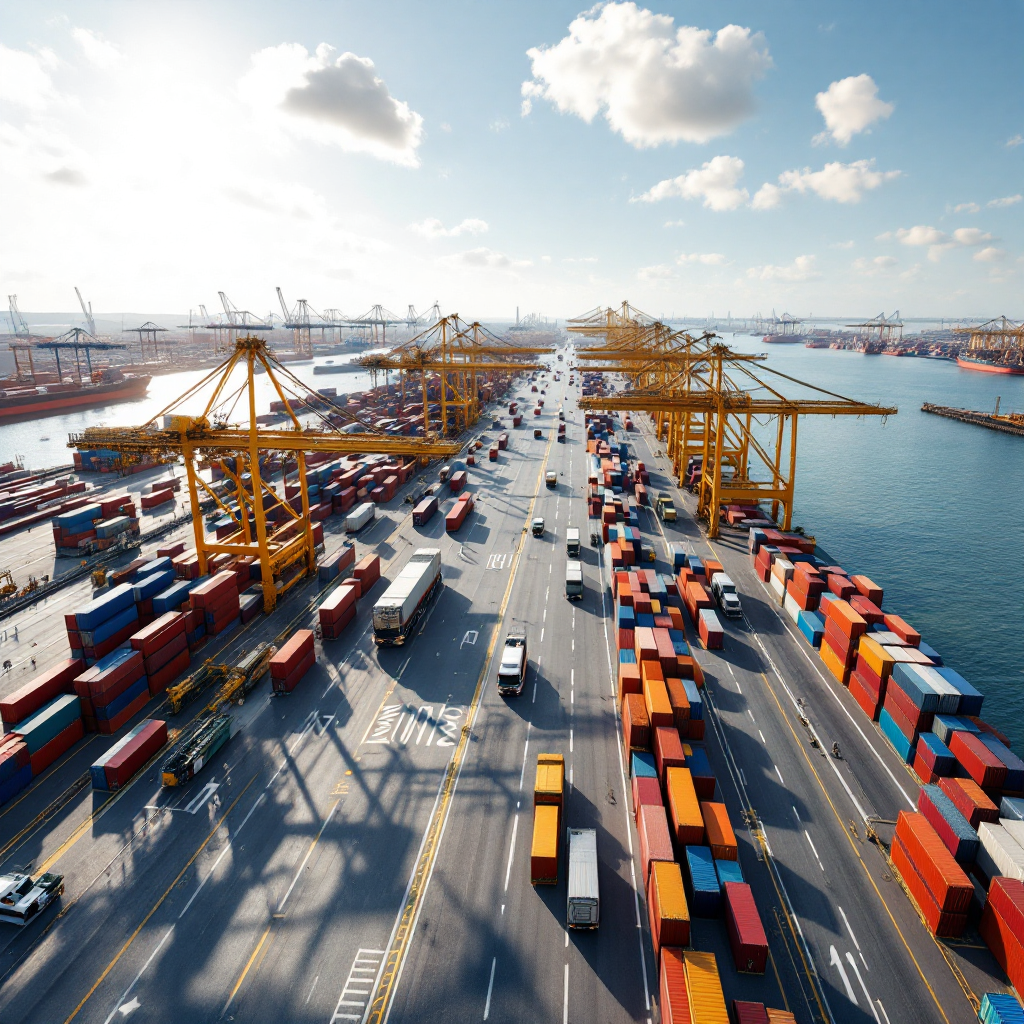
Moreover, terminals worldwide face limited yard space and must optimize container stacking to avoid bottlenecks. Also, intermodal terminals require tight coordination between rail, truck, and ship operations. Meanwhile, port operators balance safety with speed. To overcome these constraints, planners increasingly integrate AI into TOS workflows so systems can adapt continuously. For instance, predictive models forecast arrivals while allocation algorithms pre-stage containers. Finally, this combined approach reduces unnecessary moves and keeps quay crane productivity steady.
Drowning in a full terminal with replans, exceptions and last-minute changes?
Discover what AI-driven planning can do for your terminal
terminal operating system integration with yard layout
The terminal operating system connects sensors, maps, and control logic. First, it ingests position data from RTLS, optical systems, and handheld terminals. Then, the TOS feeds structured operational data to AI engines. As a result, AI gets a live representation of the yard layout and container status. Consequently, the system can propose optimal container allocation and crane sequencing. Moreover, aligning digital maps and TOS interfaces is essential for reliable execution.
To integrate well, teams follow clear steps. First, digitize the yard layout and yard block attributes in the TOS. Next, stream sensor data into the same data bus. Then, expose APIs so AI models can query the latest container locations and task lists. Also, integrate notifications so operators and trucks get timely updates. For example, automating the full email lifecycle reduces manual triage, which speeds decision loops between the TOS and human supervisors.
Furthermore, machine learning models use historical yard patterns to improve allocation. Thus, a model can predict which yard blocks will create fewer rehandles. Additionally, the TOS maintains the single source of truth for container handling, which helps AI and operator teams align. Also, this setup allows for fast testing of algorithm changes without disrupting daily moves. For further reading on container stacking and yard density prediction, see research on optimizing container stacking for yard operations and container terminal yard density prediction, which help illustrate the integration between system maps and predictive models optimizing container stacking for yard operations and container terminal yard density prediction.
Finally, the TOS and AI together support a feedback loop. The loop updates allocation based on current crane and truck status. Then, the AI refines sequences to minimize travel and energy consumption. Therefore, terminals achieve more reliable crane scheduling and smoother load and unload processes.
allocation strategies to optimize container stacking
Smart allocation improves retrieval speed and reduces rehandles. First, allocation must consider container dwell time and planned retrieval windows. Second, it must factor in container size, weight, and special handling requirements such as reefers. Also, allocation strategies must respect yard block boundaries and crane reach. Therefore, effective allocation reduces moves and improves space efficiency.
Simulation-based approaches are central to this work. For example, a terminal can run multiple allocation scenarios and measure expected rehandles, travel time, and space utilization. Then, the AI selects the scenario that balances competing KPIs. As research shows, simulation and load-balancing algorithms improve throughput significantly when integrated with scheduling logic study. Additionally, genetic algorithm variants and hybrid heuristics help solve the container relocation problem and optimize container allocation across multiple yard blocks.
Furthermore, practical metrics show clear gains. Specifically, AI-driven allocation can lower crane idle time by up to 20% and increase container throughput by 15–25% in some implementations research. Also, terminals report faster container retrieval and fewer internal truck trips, which together reduce energy consumption and operating cost. In addition, you can link allocation recommendations to real-time yard planning and automated guided vehicle routes to further minimize travel. For techniques in optimized stacking and yard equipment deployment, consult practical guides such as optimizing container stacking in terminals and optimizing yard equipment deployment in deepsea container ports optimizing container stacking in terminals and optimizing yard equipment deployment.
Finally, allocation that adapts to incoming vessel and truck data yields lower rehandles and quicker turnaround. Also, this lowers container dwell time at the yard and eases congestion. Thus, targeted allocation and simulation-based optimization directly boost terminal productivity.
Drowning in a full terminal with replans, exceptions and last-minute changes?
Discover what AI-driven planning can do for your terminal
reinforcement learning and deployment in automated terminal
Reinforcement learning offers adaptive crane scheduling that learns from interaction. First, the RL agent tests policy actions in simulation. Then, it receives reward signals based on throughput, travel time, and rehandles. Also, using deep reinforcement learning lets agents learn complex policies that traditional algorithms struggle to encode. For example, a deep reinforcement learning model can prioritize moves to balance crane workload across a terminal yard.
Pilot deployment follows a phased approach. First, train in a high-fidelity simulator that mirrors yard layout and crane physics. Next, run live testing during off-peak hours and shadow mode, where the RL policy proposes moves but does not execute them. Then, compare metrics and tune rewards until performance meets safety and productivity thresholds. Also, measure key performance indicators such as crane idle time, container retrieval time, and energy consumption. As practical evidence, terminals that apply AI note improvements in coordination and fewer delays, with industry data showing weekly operational time savings for AI adopters source.
Integration challenges matter. First, network reliability must support low-latency feedback loops. Second, real-time sensor accuracy must be high so the RL agent makes safe decisions. Also, the system must integrate with the terminal operating system to receive task confirmations. Furthermore, human-in-the-loop controls remain essential to handle exceptions and safety concerns. In addition, tools such as optical character recognition can feed metadata for container identification to speed decision-making. For researchers and practitioners, combining RL with classical algorithms and genetic algorithm enhancements helps balance exploration and safe exploitation. Moreover, “business AI ultimately gives people and organizations more time to do deeper and more meaningful work” source. Therefore, RL can free operators to focus on strategy while automated systems handle routine scheduling.
Finally, deployment needs robust governance, monitoring, and rollback plans. Also, collect operational data continuously so models remain current. Consequently, deployment leads to resilient automated terminal behavior and better overall performance.
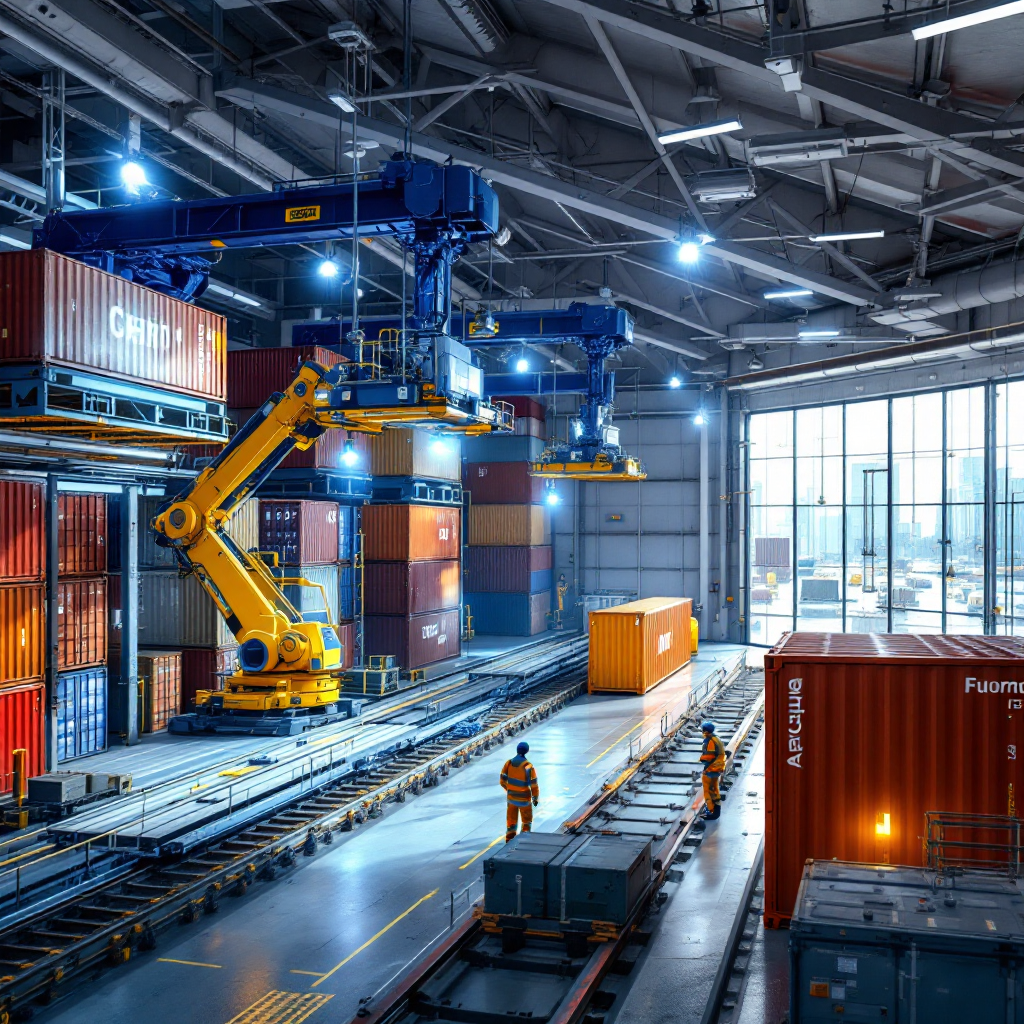
automated container terminals for an optimized yard
Next-generation automated container terminals combine hardware, software, and AI to create an optimized yard. First, automated stacking cranes and automated yard cranes operate with high precision. Also, automated guided vehicle fleets move containers between quay and stack areas. Furthermore, sensors and RTLS systems feed location and equipment health into central systems. As a result, the whole system can adjust schedules to reduce energy consumption and improve throughput.
Hardware requirements include robust connectivity, redundant sensors, and safety protocols. For example, high-bandwidth wireless and edge compute support low-latency commands. Also, vision systems and lidar help ensure safe interactions among cranes, AGVs, and personnel. In addition, integrated safety zones and fail-safe interlocks keep operations secure. For guidance on holistic automation, terminals can review studies on automated terminal architectures and AGV prioritization automated terminal architecture and AGV job prioritization.
Moreover, integrating AI with terminal control supports continuous optimization. For example, combined scheduling of quay crane, yard crane, and yard truck work reduces idle time and improves container movement. Also, integrated scheduling in automated container platforms helps sequence loading and unloading operations to keep quay crane cycles dense. As research notes, smart port designs that incorporate AI-controlled cranes increase safety, efficiency, and scalability expert view. Additionally, terminals that coordinate container allocation with real-time demand achieve faster container retrieval and lower rehandles.
Finally, the overall impact is clear. An optimized yard increases terminal productivity and reduces turnaround. Also, automated container terminals considering energy profiles can minimize energy consumption while maintaining service. Furthermore, operators gain more predictable workflows and fewer exceptions. For more in-depth strategies on maximizing yard operations and optimizing container stacking, readers can explore related resources on yard AI and maximizing efficiency in maritime yard operations yard AI and maximizing yard efficiency. Ultimately, the integrated stack of AI, algorithms, sensors, and TOS delivers a resilient and optimized yard.
FAQ
What is AI-based workload balancing for yard cranes?
AI-based workload balancing uses AI algorithms to assign and sequence tasks for yard crane fleets. It analyzes yard layout, container priorities, and equipment status to minimize idle time and rehandles.
How does a terminal operating system integrate with AI?
The terminal operating system provides structured operational data, yard layout, and task confirmations to AI engines. Then, AI queries the TOS via APIs and returns optimized task lists for execution.
Can reinforcement learning be used safely in an automated terminal?
Yes, when RL agents train in high-fidelity simulators and deploy in shadow mode first, safety risks drop. Also, human-in-the-loop controls and monitoring ensure safe live operations.
What are typical gains from AI in container terminal operations?
Research reports reductions in crane idle time by up to 20% and throughput improvements of 15–25% when AI-driven scheduling is applied study. Also, ports report faster vessel turnaround when automation and AI coordinate crane moves report.
How do allocation strategies reduce rehandles?
Allocation strategies place containers with similar retrieval windows together and stage them near gates and cranes. As a result, cranes perform fewer extra moves, which lowers rehandles and saves time.
What hardware is required for an automated container terminal?
Key hardware includes automated stacking cranes, automated guided vehicles, sensors, high-bandwidth wireless, and edge compute nodes. Also, safety systems and redundant communication links are essential for reliable operations.
How does AI affect operator roles in the yard?
AI automates routine scheduling and notification tasks, which lets operators focus on exceptions and strategy.
Are there standards for integrating sensors and the TOS?
Best practice is to digitize the yard layout and expose sensor feeds through a unified data bus and APIs. This approach ensures AI models and the TOS share a single source of truth for container locations and task status.
What challenges remain for deploying AI in ports?
Challenges include data quality, network reliability, and system integration complexity. Also, terminals must plan governance and continuous model retraining to keep AI aligned with changing operations.
Where can I read more about optimizing container stacking and yard operations?
For deeper technical guidance, see resources on optimizing container stacking for yard operations and container terminal yard density prediction using machine learning optimizing container stacking and yard density prediction. These pages outline simulation and allocation techniques that improve container retrieval and space use.
our products
 stowAI
 stackAI
 jobAI
jobAI
Innovates vessel planning. Faster rotation time of ships, increased flexibility towards shipping lines and customers.
Build the stack in the most efficient way. Increase moves per hour by reducing shifters and increase crane efficiency.
Get the most out of your equipment. Increase moves per hour by minimising waste and delays.
stowAI
Innovates vessel planning. Faster rotation time of ships, increased flexibility towards shipping lines and customers.
stackAI
Build the stack in the most efficient way. Increase moves per hour by reducing shifters and increase crane efficiency.
jobAI
Get the most out of your equipment. Increase moves per hour by minimising waste and delays.