
electric straddle carrier
The modern port moves fast. Today, the straddle carrier sits at the intersection of sustainability and productivity. It lifts, transports, and stacks containers with minimal yard footprint. As ports scale, terminal planners focus on electrification and smarter workflows. Also, electric straddle carrier adoption has accelerated. For example, the market reached roughly USD 1.27 billion in 2024. Furthermore, analysts report similar figures that support the trend USD 1.21 billion in 2024. Therefore, ports evaluate electrified fleets to meet new rules and local goals.
Regulation pushes the change. Sustainability matters to communities and terminal operators. Low emission equipment reduces exhaust and local air pollution. In addition, powered straddle carriers cut noise, which improves the working environment. The shift also lowers maintenance and extends machinery life. As a result, many operators replace diesel or diesel-hydraulic units with all-electric alternatives. The shift affects labour, layout, and workflow. However, the transition can also raise questions about charging and uptime.
To answer those questions, vendors supply technical information and specifications. They provide detailed specification sheets and guides you can download to plan investments. For terminals that want to automate, electrification pairs with automation systems and digital tools. Also, terminal teams may integrate scheduling software to automate shift charging and to optimize moves. Our company often helps teams reduce email friction during such projects by automating approvals and by surfacing the correct data from ERP and TOS systems, so planners spend less time chasing documents.
Short cycles matter. The straddle design supports multidirectional movement and precise manoeuvrability on tight yards. In practice, operators find that straddle trucks and straddle carriers handle peak volumes while keeping the footprint small. Finally, as container throughput grows, the use of hybrid and fully electric fleets looks set to expand. For further reading on yard layout and stacking, see our guide to yard stacking optimization.
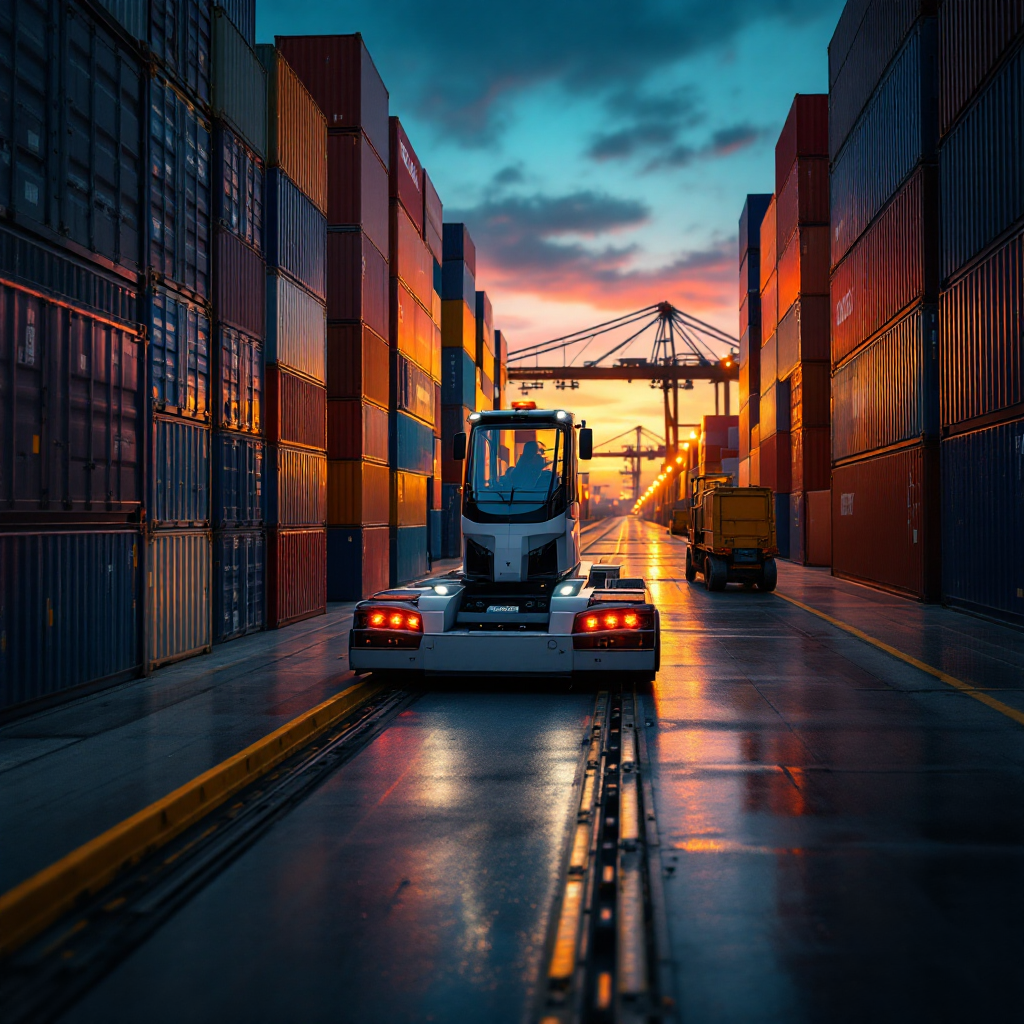
kalmar fastcharge™
kalmar fastcharge™ systems let terminals top up units in minutes. In this section, we cover pantograph charging stations and how they integrate into shift rhythms. kalmar fastcharge™ supports opportunity charging during idle periods. Thus, a battery can gain enough energy for several moves while the machine waits. In addition, these stations can connect to megawatt charging systems for continuous operations and to reduce downtime. The approach suits terminals that aim to automate and to keep high utilisation.
Kalmar provides a suite of charging solutions. For example, a pantograph lifts and connects in seconds. The design reduces operator interaction. It also reduces the need for large on-board battery packs. Therefore, fleets can benefit from lighter chassis and improved manoeuvrability. The system pairs well with all-electric fleets and with other electrification strategies. As research notes, automation and electrification are key drivers for the market that forecast growth through 2033.
Integration matters. Fast-charge units must align with grid capacity and with yard energy management. Terminal planners should model peak loads and night charging. In practice, facility teams schedule fast charge events during idle windows. Also, operators use remote monitoring to check state of charge and to plan moves. The result is better reliability and fewer interruptions. For terminals considering a larger electrification rollout, combining pantograph charge with depot charging offers flexibility.
Training helps operators and engineers adapt to new routines. For an overview of automated yard tools and how they complement charging strategies, review our piece on automated terminal solutions. In short, kalmar fastcharge™ cuts recharge time, supports high utilisation, and pairs with modern terminal software.
Optimize Beyond Your Best Day
Most AI copies the past. Loadmaster.ai uses Reinforcement Learning to simulate millions of scenarios, delivering higher crane productivity and fewer rehandles without needing historical data.
Learn how StowAI, StackAI, and JobAI superpower your terminal →
maximum power of 300 kwh
Battery design influences uptime and lift performance. Modern packs include Gen 2 lithium-ion cells. These packs deliver up to 25% higher usable capacity than earlier designs. As a result, many fleets achieve net operating time close to ten hours per shift under typical workloads. The configuration supports heavy lifting and long travel runs. Importantly, the maximum power of 300 kwh provides a clear benchmark for planners when sizing infrastructure and when forecasting energy demand.
Battery and power management affect performance. First, advanced battery management systems protect cells during fast charge cycles. Second, power allocation software prioritises hoist and traction loads. Therefore, a straddle can perform a heavy lift without draining the pack prematurely. The specification for battery size should match handling cycles. For instance, frequent short moves suit opportunity charging. Conversely, long moves require larger packs or depot charging.
Kalmar offers models labelled as full electric mobile straddle transporter and as electric mobile straddle transporter mst variants. The electric mobile straddle transporter mst integrates battery architecture with electronic steering and with durable tyres. In addition, the mobile straddle transporter mst 160 and the transporter mst 160 ton travelling configurations address high-capacity needs. These models balance load capacity and durability. They also maintain low noise and reduced exhaust compared with diesel units.
Designers compare diesel-electric, diesel-hydraulic, and fully electric options. The all-electric option removes exhaust and reduces the terminal footprint for fuel handling. It also lowers routine wear on engines and on transmission systems. Meanwhile, hybrid units offer a transitional path for terminals reluctant to remove diesel immediately. For further technical differences, consult vendor technical information and specification sheets before committing.
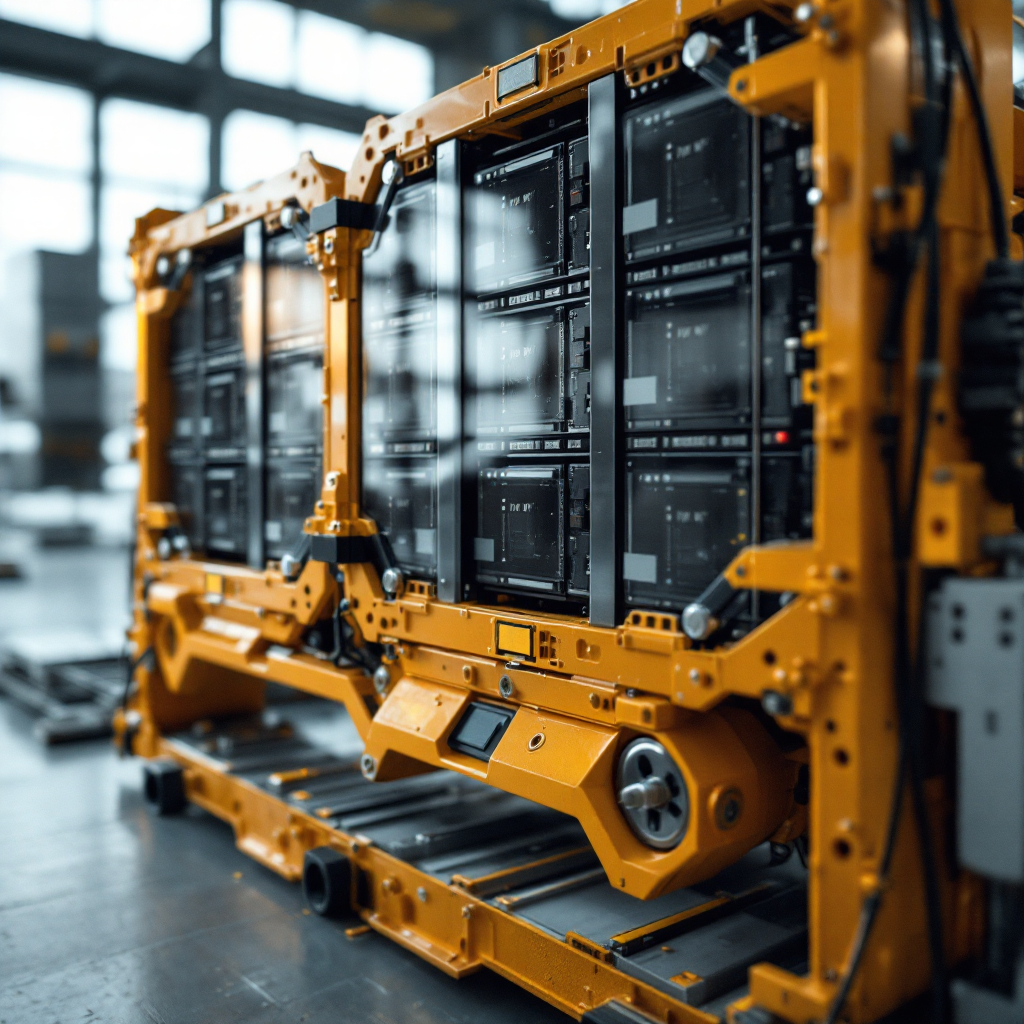
full electric mobile straddle transporter
The full electric mobile straddle transporter design focuses on stability and durability. A robust chassis supports heavy-duty lifts. The chassis integrates with multidirectional steer systems. Also, tyres and suspension tune for load distribution and for long service life. Designers specify electronic steering and brake redundancy to improve safety. The cabin offers ergonomic controls and clear sightlines for the operator. As a result, operators can maintain precision during loading and stacking.
Performance metrics include manoeuvrability, load capacity, and cycle time. The transporter delivers consistent lift for standard TEU moves. It also supports specific load patterns when yards require non-standard handling. Compared with diesel models, a full electric mobile straddle transporter cuts local emissions and lowers noise. The low noise benefit reduces community complaints and improves on-site safety. For terminals focused on efficient landside operations, this model is a compelling option.
When comparing machines, consider maintenance cycles. Electric drivetrains reduce mechanical wear and lower labor costs tied to complex engine upkeep. They also limit exhaust-related maintenance. By contrast, diesel-electric machines still require generator and emission-system care. Some operators choose hybrid fleets to balance cost and transition risk. Meanwhile, manufacturers like combilift and cimolai supply specialized handling equipment for other niche applications. These vendors complement straddle solutions when cargo types demand tailored lifting gear.
Finally, terminals should plan layout changes. A reduced footprint can free space for stack density improvements. To explore how stacking and yard layout affect throughput, see our article on container stowage and yard planning. Overall, the move to full electric transporters ties into broader sustainability and efficiency targets, while also offering clear operational advantages.
Optimize Beyond Your Best Day
Most AI copies the past. Loadmaster.ai uses Reinforcement Learning to simulate millions of scenarios, delivering higher crane productivity and fewer rehandles without needing historical data.
Learn how StowAI, StackAI, and JobAI superpower your terminal →
customer cases
Customer cases show real results. Port X reported a 15% productivity increase after switching a portion of its fleet to electric straddle carrier units. Also, noise complaints dropped by 60% near the terminal boundary. The port measured these changes after six months of live operation. They tracked moves per hour and community feedback. The data helped refine charging schedules and shift patterns. The case highlights how the right mix of vehicles and charging infrastructure improves both yard performance and public relations.
Terminal Y took a different route. They targeted zero local emissions across one berth. The terminal achieved zero local emissions and lowered operational costs by around 20%, according to internal reports. They combined fast opportunity charge stations with depot charging at night. In addition, the terminal used predictive maintenance to avoid unplanned downtime. From the rollout, stakeholders learned to tailor training, to revise service contracts, and to update safety procedures. These steps improved reliability and extended component life.
Lessons learned from these rollouts include careful energy modelling, staged fleet replacement, and staff engagement. First, energy modelling prevents unexpected grid charges. Second, staged replacement preserves capacity while providing time to train staff. Third, clear communication reduces resistance. In practice, terminals that plan for integration see smoother transitions. They also benefit from improved labour utilisation and from predictable maintenance cycles.
Case studies also point to best practices. For example, start pilots on limited blocks and measure kWh per move. Then, scale equipment and charging based on those metrics. Use digital tools to automate scheduling and to reduce email overhead during rollout. Our platform helps teams by drafting context-aware emails and by surfacing the right ERP and TOS data for vendors and for terminal operators. Such automation reduces errors and accelerates decision cycles.
efficiency
Energy efficiency defines the business case for electric fleets. Measured in kWh per move, efficient systems often reduce energy consumption by a clear margin. They also reduce CO₂ when the grid uses low-carbon sources. For companies with net-zero targets, electrification helps reach goals and supports sustainability claims. Indeed, industry forecasts expect steady growth and ongoing adoption driven by regulation and by operational gains that note regulatory pressure and technology advances.
Future trends point to continuous electric road systems and to more automation. Some researchers claim that “stop to recharge will be a thing of the past” as conductive charging and embedded systems evolve and as trials progress. At the same time, automation can route moves to match charge windows and to balance battery wear. These changes boost operational uptime and improve overall efficiency.
Operational planning also affects total cost. Optimising moves reduces empty runs and lowers kWh per move. Additionally, smart power management shifts heavy charging to off-peak hours to cut utility costs. The shift often improves reliability and reduces emissions from on-site generators. For terminals that aim to scale electrification, pairing intelligent yard control with infrastructure investment creates the best outcome.
Finally, terminals should consider fleet mix and lifecycle costs. Heavy-duty duty cycles may still need larger battery packs or complementary solutions like diesel-electric hybrids during transition periods. Yet, when the pieces come together—charging, energy management, operator training, and digital tools—ports gain a quieter, cleaner, and more reliable future. For more on terminal optimisation and AI tools for yard density and scheduling, explore our resources on yard density prediction and on yard operations optimisation.
FAQ
What is an electric straddle carrier?
An electric straddle carrier is a yard vehicle that lifts and transports containers using electric drivetrains. It replaces diesel engines with battery packs and electric motors to reduce emissions and noise.
How does kalmar fastcharge™ work?
kalmar fastcharge™ uses pantograph and depot charging stations to top up batteries during short idle periods. The system supports opportunity charging and integrates with grid and megawatt charging setups.
What does maximum power of 300 kwh mean for operations?
This figure defines a battery energy benchmark that planners use to size charge infrastructure and predict shift runtime. It helps determine whether machines need opportunity charging or larger depot packs.
Are full electric mobile straddle transporter models reliable in heavy-duty service?
Yes. Modern designs include robust chassis, electronic steering, and durable tyres to handle heavy-duty cycles. Maintenance changes focus on electric systems rather than on conventional engine upkeep.
Can electrification improve productivity?
Electrification can increase throughput by reducing refuelling time and by lowering maintenance downtime. Customer cases have shown measurable productivity gains when paired with proper charging strategy.
Do electric units reduce noise and emissions?
They do. Electric drivetrains eliminate exhaust and greatly reduce operational noise. This improves working conditions and cuts local emission levels near terminals.
What should terminals plan when switching to electric fleets?
Plan for energy modelling, charging infrastructure, staged fleet replacement, and operator training. Also, align charging schedules with yard software and with grid constraints.
Are hybrid options still relevant?
Yes. Hybrid and diesel-electric models can serve as transitional solutions for terminals that need longer range or that face grid limitations. They reduce immediate capital exposure while lowering emissions.
How do electric carriers affect labour costs?
They can lower labour costs through reduced maintenance and by enabling automated processes. However, they also require training and new skill sets for maintenance staff and operators.
Where can I find more technical information?
Vendors provide technical information and downloadable specification sheets for each model. For deeper operational advice and yard optimisation resources, check our guides on stacking, automated terminals, and yard AI.
Loadmaster.ai — Reinforcement Learning AI agents for Container Terminals. Book a demo to see our digital twin in action.