
Inefficiency in Deepsea Container Terminals and Port Operations
Equipment idle time in deepsea ports drains value, slows schedules, and increases costs. In simple terms, idle time refers to periods when a piece of equipment sits unused while work remains. For a quay crane, yard truck, or container handler that is available but not moving containers, that pause shows up as lost moves per hour. The problem scales rapidly in a busy port. Mega-ships demand coordinated resources, and poor sequencing produces long waits for berth access and lengthy ship-to-shore cycles. As a result, vessels wait and shipping schedules slip.
Data show that idle can form a large share of terminal work. For example, studies report that idle time for container handling equipment can account for up to 30–40% of total operational hours in some locations [ResearchSpace]. That statistic highlights why port authorities and terminal operators target faster resource turnover. When cranes stand idle, berth occupancy rises, and throughput suffers. As a result, turnaround time and dock completion times lengthen. Therefore, early focus on this metric produces direct gains.
Operational impacts extend beyond cranes. Yard congestion and long driving distances create bottlenecks that ripple through the system, and they force terminals into firefighting instead of planning. Poor scheduling and manual coordination increase rehandles, create extra moves per container, and worsen reduced terminal productivity across shifts. Port operators who want to improve schedule reliability must measure and attack the root causes. For instance, optimized staging of right equipment near the ship reduces waiting time for container move transfer, and better coordination between gate, quay, and yard shortens dwell time and the time a vessel uses a berth.
Some ports already show measurable benefits when they commit to change. UNCTAD notes that improvements in equipment utilization contributed to reduced ship turnaround in several ports, and some terminals cut ship time in port by up to 25% through improved practices [UNCTAD RMT2020]. Therefore, port strategy must include data-driven scheduling, better staging, and stakeholder alignment. Loadmaster.ai helps terminals move from reactive rules and historical imitation toward a policy-driven approach that dynamically balances quay productivity with yard flow, and thus reduces downtime and improves terminal performance.
Real-time Data Integration for Crane and Terminal Operations in Maritime Logistics
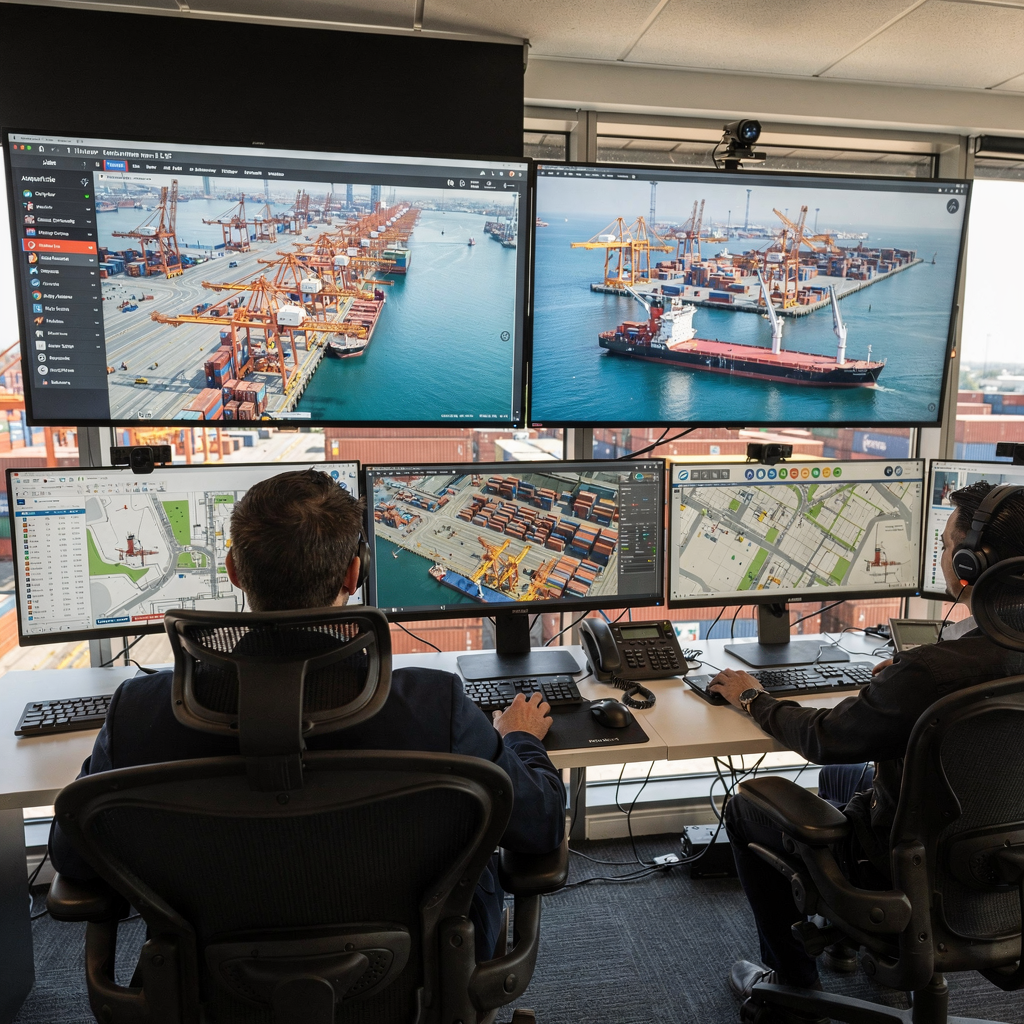
Real-time data systems change how cranes and handling equipment are used. First, sensor data and IoT telemetry provide live status for quay cranes, yard trucks, and gate lanes. Next, a unified dashboard lets planners see where delays will form so they can act earlier. Real-time data reduces guessing and speeds decision making. Consequently, scheduling and dispatch become proactive, not reactive.
Using real-time tracking, port staff can coordinate quay cranes and yard equipment to keep workflows steady. For example, a live update that a vessel’s time of arrival has shifted by an hour triggers changes to quay crane scheduling and yard slots. That adjustment prevents long idle runs and avoids extra shifter moves. As a result, the terminal gains smoother transfers and fewer conflicts between ship-to-shore tasks and yard duties.
Research and pilots back the benefits. Virtual Arrival systems and better time-of-arrival coordination have cut equipment idle time and energy waste by around 15–20% in early deployments [IMO Module 3]. In practice, combining this approach with a live operations dashboard means crane teams receive updated job lists and priority changes instantly. That reduces waiting and improves completion times for vessel work.
Real-time integration also supports a data and real-time view that aligns multiple stakeholders. Port authorities, shipping line planners, and the port community see a common picture, and they can agree on changes that reduce ship delays and berth overstays. For deeper optimization across the terminal, consider linking real-time feeds to systems that handle yard planning and truck sequencing. Loadmaster.ai’s approach, for instance, uses a digital twin to train agents on live-like scenarios, so real-time inputs help AI policies respond to changing conditions without needing vast historical records. For more on reducing truck travel and yard bottlenecks, see practical strategies to optimize yard equipment deployment in deepsea container ports here.
Drowning in a full terminal with replans, exceptions and last-minute changes?
Discover what AI-driven planning can do for your terminal
Artificial Intelligence and Automation: Optimize Crane Scheduling in Port Terminals
AI and automation deliver step-change improvements in quay crane scheduling and terminal operations. AI models that combine reinforcement learning and simulation can test millions of scenarios and propose near-optimal schedules. They work differently than supervised models because they do not simply copy past decisions. Instead, they search policy space to balance goals like maximizing crane productivity while minimizing yard congestion and driving distances.
Genetic algorithms and machine learning help, but reinforcement learning agents add a new capability. For example, Loadmaster.ai trains StowAI, StackAI, and JobAI agents inside a digital twin of a container terminal so they learn robust strategies without relying on historical data. That approach reduces the need for long data preparation and avoids repeating past inefficiencies. The result is dynamic quay crane scheduling that adapts as vessel mixes and yard states change.
Pilot projects show strong productivity gains. Some automation and AI-driven scheduling pilots report 25–50% productivity improvements in focused tasks, and integration across quay cranes and yard vehicles reduces idle and driving conflicts. When AI coordinates crane sequences and job dispatching, cranes spend more time handling containers and less time waiting. This reduces unplanned downtime and speeds ship turnaround.
Automation also connects cranes to AGVs, RTGs, and terminal tractors, so moves flow without unnecessary pauses. For terminals moving toward an automated container terminal, careful integration preserves safety and explains decisions so operators remain in control. If you need more detail on automated vehicle job prioritization and how AGVs can be scheduled to support quay crane plans, read this practical guide on AGV job prioritization for import and export flows here.
AI systems also improve resilience. They adapt to equipment failures, weather delays, and changes in shipping schedules by recalculating plans quickly. When a type of downtime appears suddenly, the system reassigns tasks and protects quay performance. Consequently, terminal performance becomes more predictable and less reliant on individual planner experience.
Smart Port Strategies: Virtual Arrival and Port Call Optimisation to Reduce Equipment Idle Time
Smart port concepts change how vessels and terminals use time and space. Virtual Arrival systems let a vessel adjust its time of arrival to fit terminal readiness. As a result, a quay crane team avoids long idle runs waiting for a late vessel, and the yard avoids unnecessary reshuffles. This coordination reduces equipment idle time and shortens overall port stay.
Implementing a port call optimisation program requires aligning many stakeholders. First, shipping line operations must share ETA updates and accept slight time shifts. Next, port terminals and port authorities must publish berth allocations and a realistic plan for quay cranes and yard resources. The payoff appears quickly: studies show reductions in ship waiting and lower energy use when arrivals are coordinated with terminal readiness [IMO Module 3].
Port call optimisation also brings environmental benefits. By cutting idle running of container handling machines and reducing unnecessary yard hashing, terminals lower fuel use and CO₂ emissions. In ports handling mega-ships, the wider quay cranes developed for higher lifts also help by accelerating individual lifts and reducing dwell. The International Transport Forum reports that larger, more capable quay cranes have raised handling rates and helped ports cope with the challenge of mega-ships [ITF].
For a smart port, data integration matters. A single dashboard that links vessel arrival estimates, crane availability, and yard capacity helps to sequence moves so that cranes see continuous work. That reduces waiting time and increases throughput. Moreover, virtual arrival combined with AI-driven scheduling yields a composite benefit: fewer rehandles, lower energy use, and improved berth utilization. If you want to explore berth and crane planning best practices, including how to match quay crane scheduling with berth allocation, see this resource on berth and crane planning here.
Drowning in a full terminal with replans, exceptions and last-minute changes?
Discover what AI-driven planning can do for your terminal
Predictive Maintenance and Container Handling Automation to Minimise Downtime
Predictive maintenance transforms crane upkeep from calendar-based service to condition-based action. By analyzing sensor data, terminals detect wear patterns and forecast maintenance needs before failures occur. This technique prevents unplanned downtime and keeps quay cranes and handling equipment available for scheduled shifts. In practice, predictive maintenance reduces crane downtime by an estimated 15–20% in cases where it is deployed with accurate telemetry [ResearchSpace].
Automation of container handling also contributes. When automated processes manage repetitive tasks such as stacking moves or gate checks, manual interventions fall. That reduces delays that would otherwise cascade into longer completion times and congestion. Automated container terminal technologies, like coordinated RTGs and automated straddle carriers, cut human error and improve consistency across shifts. Moreover, automated sequencing of ship-to-shore jobs reduces juggling and keeps the right equipment in the right place at the right time.
Predictive analytics requires a combination of good instrumentation and smart analytics. AI-driven models can flag anomalous vibration patterns or unusual hydraulic behaviour, and then trigger a maintenance action that prevents a breakdown. That approach reduces both type of downtime and the need for emergency repairs. As a result, terminals obtain higher equipment availability and steadier throughput.
For operators, the benefits extend to planning. With fewer unexpected crane failures, planners can produce more reliable schedules and improve ship turnaround. Predictive maintenance also reduces spare parts inventory pressure and maintenance crew overtime. If you want a deeper dive into how predictive maintenance can cut deepsea container port crane downtime, Loadmaster.ai’s analysis and practical steps are a useful starting point read more.
Optimization of Equipment Staging and Terminal Operations to Enhance Port Efficiency
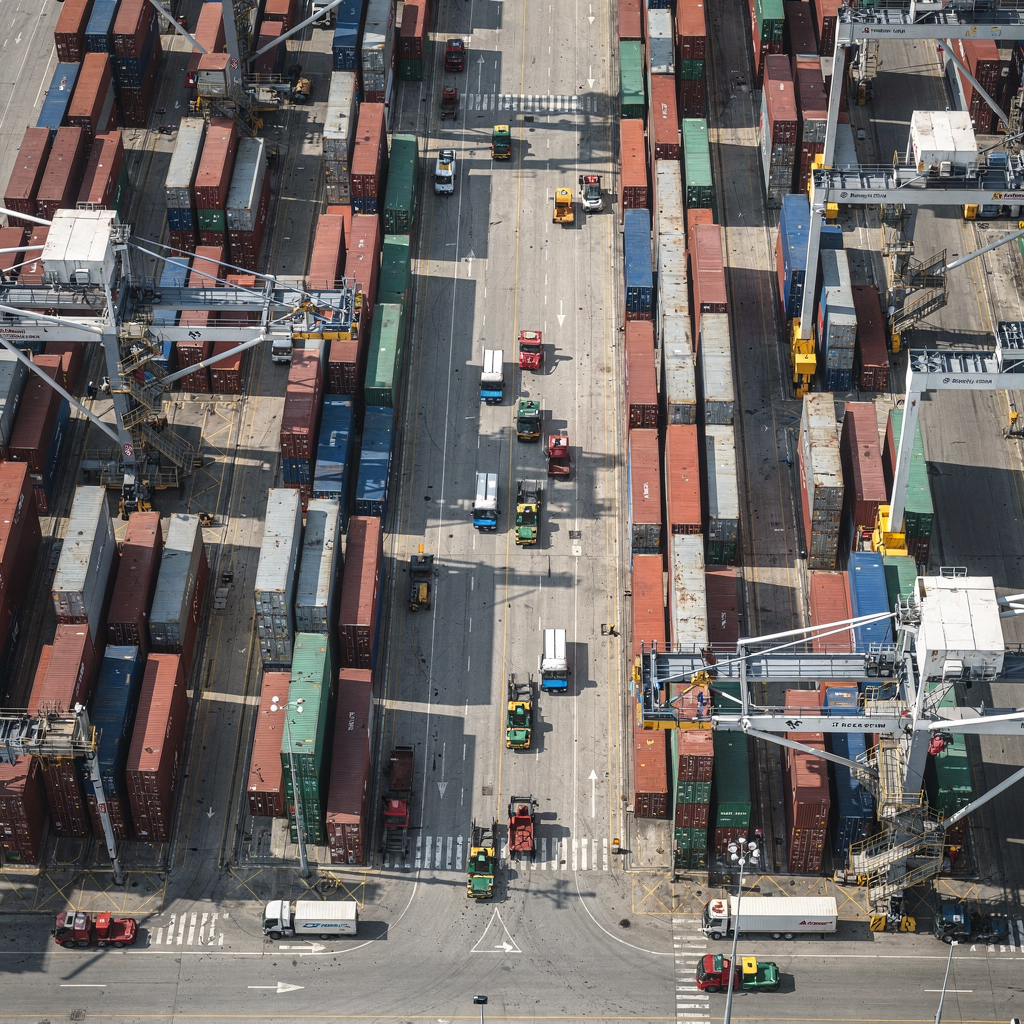
Staging equipment correctly is one of the most practical ways to reduce delays at the quay and in the yard. A staging strategy places the right equipment near the ship when the next job starts. By doing so, terminals reduce driving time, lower energy use, and avoid unnecessary rehandles. Planning staging for peak windows improves completion times and helps maximize crane time on the ship.
Optimization models help set where and when to position handling equipment. These models consider constraints such as yard density, lane access, and the sequence of container moves. They also examine trade-offs, including quay productivity versus yard congestion and the cost of repositioning equipment. A well-tuned model reduces idle at the ship and reduces reduced terminal productivity in the yard. The optimization step often shows rapid gains: consolidated case studies find up to 25% reduction in overall idle time when staging and scheduling are jointly optimized [ResearchSpace].
Practically, terminals use mixed approaches. Short-term rules manage immediate work, and optimization engines run continuously to propose near-optimal plans for the next hours. These plans are then refined with real-time updates. The combination of analytics, a shared dashboard, and automated job dispatch reduces conflicts between quay cranes and yard trucks. When an AGV or terminal tractor is only a short drive away, the next container move executes quickly and the crane does not sit idle.
Loadmaster.ai’s reinforcement learning approach demonstrates another path. By training agents on a digital twin, terminals find staging and dispatch policies that generalize across vessel mixes and disruptions. The agents learn to place the right equipment in key locations and to dynamically reweight objectives to protect quay throughput during peaks. As a result, terminals see more consistent performance and fewer surprises during busy windows. For further reading on reducing truck travel and improving stacking strategies that support equipment staging, review practical guides to minimizing internal truck travel time and optimizing container stacking here and here.
FAQ
What is equipment idle time and why does it matter?
Equipment idle time means when cranes, trucks, or handlers are available but not working on moves. It matters because idle reduces throughput, raises costs, and lengthens ship turnaround and berth occupancy.
How much idle time do terminals typically experience?
Studies show idle time can account for 30–40% of operational hours in some terminals, which is a major inefficiency [ResearchSpace]. Reducing that share increases moves per hour and lowers costs.
Can real-time data really help reduce crane waiting and idle?
Yes. Real-time updates on vessel ETAs and equipment status let planners re-sequence jobs and place the right equipment where it is needed. Virtual Arrival programs and real-time dashboards have reduced equipment idle time and energy use in pilots [IMO].
What role does AI play in quay crane scheduling?
AI, especially reinforcement learning, generates adaptive policies that balance crane productivity with yard congestion and drive times. These ai-driven approaches can produce near-optimal plans without needing large historical datasets.
How does predictive maintenance reduce downtime?
Predictive maintenance uses sensor data to forecast equipment failures and prompt timely service. By addressing maintenance needs before breakdowns occur, terminals cut unplanned downtime and improve availability for scheduled shifts.
Are virtual arrival systems hard to implement?
They require coordination between shipping lines, port authorities, and terminal planners, and they need reliable ETA sharing. However, the technical side is straightforward and the benefits include lower congestion and reduced idle running.
What quick wins can terminal operators pursue to reduce idle?
Start with better staging near the quay, a simple real-time dashboard, and agreement on shared ETAs with shipping lines. Those steps reduce waiting time and improve crane utilization almost immediately.
How do automated systems interact with human teams?
Automation and AI should augment human decision-making, not replace it. Systems can provide prioritized task lists and explain decisions so operators retain control and can intervene when needed.
Can smaller terminals also benefit from these strategies?
Yes. Even modest terminals see gains from better staging, basic predictive maintenance, and improved communication of vessel arrival times. The same principles scale down effectively.
Where can I learn more about improving terminal performance?
Explore resources on berth and crane planning, predictive maintenance, and yard optimization for practical guidance. For example, see Loadmaster.ai’s guidance on berth and crane planning and predictive maintenance for deepsea container ports here and here.
our products
 stowAI
 stackAI
 jobAI
jobAI
Innovates vessel planning. Faster rotation time of ships, increased flexibility towards shipping lines and customers.
Build the stack in the most efficient way. Increase moves per hour by reducing shifters and increase crane efficiency.
Get the most out of your equipment. Increase moves per hour by minimising waste and delays.
stowAI
Innovates vessel planning. Faster rotation time of ships, increased flexibility towards shipping lines and customers.
stackAI
Build the stack in the most efficient way. Increase moves per hour by reducing shifters and increase crane efficiency.
jobAI
Get the most out of your equipment. Increase moves per hour by minimising waste and delays.