
Port inefficiency: Identifying Idle Time Sources
Idle time in container ports appears when resources sit unused while work waits to start. It hurts vessel turnaround, it raises costs, and it increases demurrage and unnecessary waiting for shippers. For example, studies show that congested terminals can lose roughly 20–30% of total vessel time to idle periods, which lengthens turnaround time and lowers throughput (20–30% vessel time lost). First, define the term clearly. Idle time means hours when cranes, trucks, or berths stand idle while cargo waits elsewhere. Next, consider the direct impacts. Ships face higher berth costs, liners face schedule slips, and truck drivers queue longer at gates. This increases the time at the port and raises freight rates for customers.
Root causes often overlap. Berth waiting arises when multiple vessels arrive without synchronized berthing slots. Crane unavailability follows from breakdowns, poor assignments, or mismatch between crane reach and stowage plans. Yard congestion and suboptimal yard layout lead to long moves and extra reshuffles. Hinterland disruptions trigger truck arrivals at uneven peaks and gate queuing that blocks yard flow. In Jakarta’s Tanjung Priok case study, loading and unloading operations showed idle pockets driven by mismatched quay and yard sequences (Tanjung Priok analysis). Therefore, planners must watch both quay and yard to spot inefficiency.
To avoid bottleneck cycles, teams must connect berth planning with yard management and gate scheduling. For example, a delayed customs clearance or late truck and equipment arrivals will cascade into longer vessel waits and higher demurrage. Consequently, port call reliability drops, and shipping lines report lower predictability. For those who want deeper planning methods, see container terminal berth and crane planning best practices for practical steps and templates container terminal berth and crane planning best practices. Finally, improving the efficiency of container handling reduces unnecessary handling, saves fuel, and helps meet sustainability goals.
Terminal operating automation: Reducing Equipment Downtime and Scheduling Conflicts
Automation can streamline crane assignments and reduce idle in busy yards. When systems automate routine sequencing, they free planners to handle exceptions. Automated scheduling cuts handoffs and speeds response. For instance, automated yard vehicles can lower idle slots by notable margins in pilot trials, and they keep cranes busy during peaks. Also, automation enables tighter links between quay planning and yard management so that tasks follow a consistent logic.
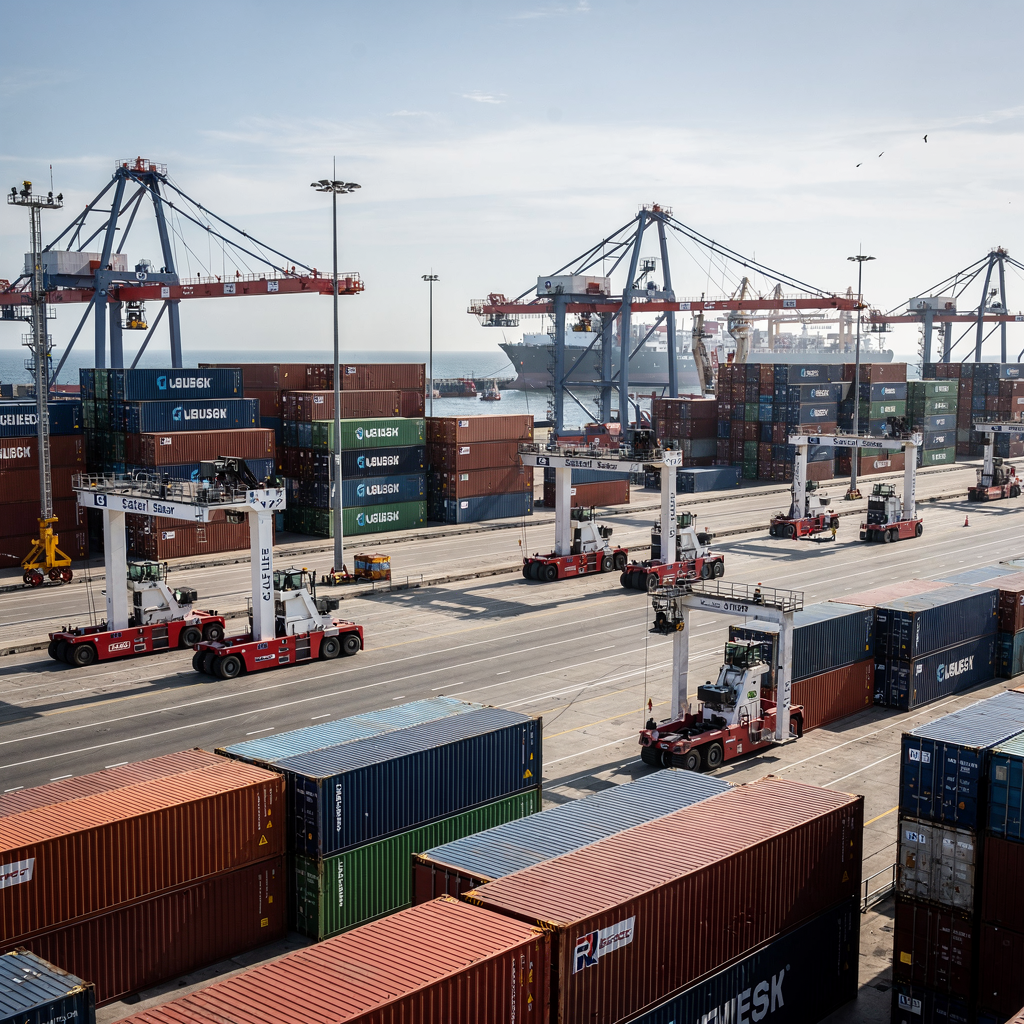
Terminal operating platforms that integrate with Terminal Operating Systems give real-time updates and reduce conflicts. They update task lists, reorder moves, and coordinate truck and quay assignments. This reduces rehandles and lowers fuel consumption, and it improves terminal efficiency. For terminals facing shifting vessel mixes, a closed-loop approach that tests policies against a digital twin gives robust, tested strategies that protect KPIs. Loadmaster.ai uses reinforcement learning to train agents in a sandbox digital twin so that operations do not rely solely on historical data or a single planner’s experience. That means fewer rehandles, more consistent performance, and better handling of sudden breakdowns.
Beyond equipment, a TOS-agnostic connection helps. It lets automated decision agents read equipment telemetry and job queues. As a result, dispatchers get clearer priorities. For readers interested in gear-level improvements, check predictive maintenance to reduce deepsea container port crane downtime for how to keep cranes available and reliable predictive maintenance to reduce deepsea container port crane downtime. Finally, automated yard vehicle pilots often show tangible gains in crane productivity and lower truck idle, which improves the operational efficiency of the whole container terminal.
Drowning in a full terminal with replans, exceptions and last-minute changes?
Discover what AI-driven planning can do for your terminal
Real-time data integration for real-time visibility
Real-time data from AIS, RFID, and IoT sensors creates a clearer picture of assets and cargo. For example, AIS gives vessel positions and estimated arrival updates. RFID tags show when a container moves through a gate or reaches a stack. IoT sensors report crane status, and they flag faults before they cause long downtime. Using this mix, teams can track containers, trucks, and equipment with precise timestamps and reduce unnecessary waiting. The project on predicting port congestion with machine learning highlights how trajectory prediction from AIS can anticipate berth demand and ease port congestion (AIS trajectory prediction).
Dashboards present that data as live maps and KPIs. They show which berth will clear first, which stacks are full, and which gates face heavy queues. With clear visuals, supervisors can reassign cranes, adjust gate windows, and sequence truck arrivals to avoid peaks. Real-time visibility helps teams react quickly to breakdowns or late arrivals, and it supports dynamic berth planning. Also, real-time tracking of containers and equipment shortens the feedback loop between quay and yard, and it helps to minimize idle across workflows.
Moreover, combining sensor streams with analytics reduces long dwell at the yard. When a truck shows up early, the system can hold a slot for it. When a vessel reports delayed arrival time, the yard can reshuffle moves to protect quay productivity. For practical toolkits, explore TOS-agnostic software plugins that connect telemetry and TOS for smoother end-to-end flows TOS-agnostic software plugins. In short, integrating real-time data brings transparency, reduces bottleneck risk, and helps teams avoid idle time while they coordinate across gate, quay, and yard operations.
Data-driven insights: AI predictions to reduce dwell time
Data-driven models now forecast vessel arrival and yard occupancy to plan ahead. Predictive analytics use historical patterns and live feeds to estimate stack usage and peak demand. For example, machine learning models can predict near-term berth demand and suggest crane sequences that match the forecasted load. In trials, predictive tools have cut average dwell times by around 25% through timely alerts and adjusted assignments, helping terminals reduce long dwell and improve throughput.
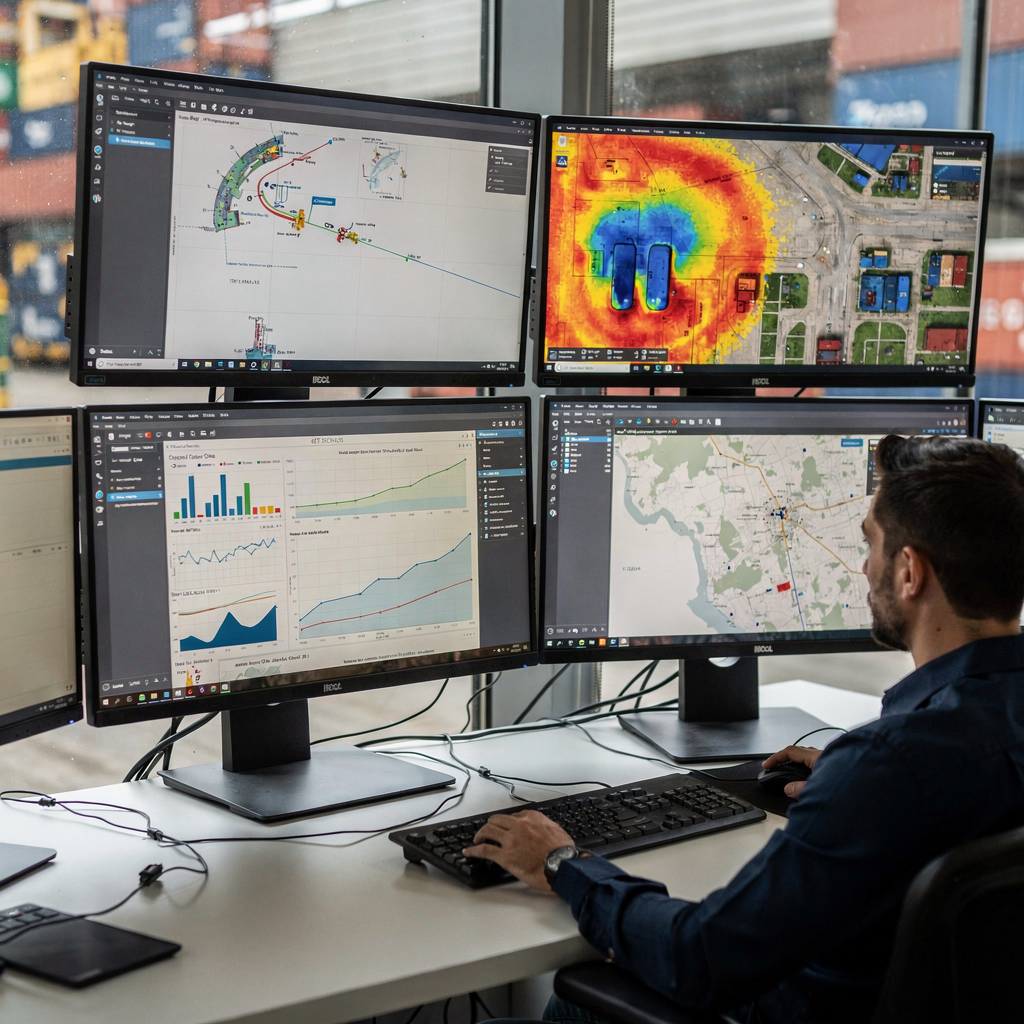
Artificial intelligence and ai-driven policies help with complex trade-offs. They weigh quay productivity against yard congestion and driving distance. When planners face conflicting goals, AI can produce balanced sequences that protect future plans while keeping cranes productive. Integration of artificial intelligence into planning workflows enables agents to learn policies that generalize across conditions instead of copying past choices. For example, when a vessel shifts its ETA, an AI-driven agent can reassign cranes and gates to avoid idle and to minimize delays at both quay and yard.
To avoid idle peaks, teams should combine predictive alerts with dynamic tasking. That means the system not only forecasts problems but also suggests executable moves. Using predictive analytics alongside live telemetry reduces guesswork. It also helps logistics managers make informed decisions that cut demurrage, save fuel, and improve schedule adherence. When terminals adopt this data-driven approach, they reduce costs and increase the reliability that shipping lines need to manage global supply chains.
Drowning in a full terminal with replans, exceptions and last-minute changes?
Discover what AI-driven planning can do for your terminal
Optimisation with AI: Optimize Yard Workflows to Cut Dwell Times
Optimisation algorithms improve stack planning and appointment systems to reduce reshuffles. Simple heuristics assign stacks by nearest-first or by vessel, but they often cause extra moves when conditions change. By contrast, AI-based optimisation, including genetic algorithm experiments, can search policy space to find plans that reduce moves per container. Tests show 10–20% fewer moves per container when optimised plans guide yard placements and reshuffles. That translates directly into lower fuel consumption and fewer hours of truck and equipment idling.
Stack planning that accounts for driving distance, RTG balance, and future demand protects against unnecessary reshuffles. When the system optimizes yard workflows, it reduces long dwell in busy blocks and lowers the number of shifters needed for a vessel. This approach improves productivity and helps meet sustainability goals by cutting emissions from unnecessary traveling. Also, predict truck patterns and align appointment windows so that truck arrivals spread evenly across shifts.
Compare heuristic vs AI-based approaches. Heuristics run fast and are easy to explain, but they only reflect past rules. AI, especially reinforcement learning agents, can propose novel sequencing that protects future operations while maximizing efficiency. For readers who want hands-on examples, see optimizing container stacking for yard operations at container terminals and discover how AI-based stacking reduces rehandles optimizing container stacking for yard operations. Finally, this optimisation work helps terminals minimize idle, improve productivity, and save fuel over the long run.
Supply chain coordination: Using terminal resources to streamline port operations
Supply chain coordination between ports, shipping lines, and inland carriers smooths flows and trims waiting at gates. Shared platforms that expose slot availability and vessel plans let carriers book gates and align truck arrivals with quay capacity. This reduces gate queuing and lowers the risk of yard congestion. When ports publish real-time slot information, truckers can avoid peak windows and adjust routes to match capacity. That makes gate operations more predictable for everyone.
Collaborative planning also shortens time at the port for cargo. For instance, dockside teams that share manifest updates and customs clearance status with truckers cut idle at the gate and speed unload. Integrated platforms reduce unnecessary waiting and demurrage while they improve logistics efficiency across stakeholders. Industry case studies and industry reports from the COVID-19 period show how integrated planning helps to recover from port congestion and supply chain shocks (COVID-19 port congestion report).
Practically, terminal teams should align quay plans with inland carriers. That means matching terminal tractors, appointment windows, and yard slots to vessel schedules. Examples from major operators such as Maersk and APMT illustrate how coordinated slot booking and shared visibility improve schedule reliability (CMC Container Study). For more on synchronising equipment travel and job scheduling, see synchronizing ASC gantry travel with job scheduling in container ports for technical guidance synchronizing ASC gantry travel with job scheduling. Ultimately, better coordination reduces bottleneck points, maximizes throughput, and supports terminals in meeting commercial and sustainability targets.
FAQ
What is idle time and why does it matter?
Idle time refers to periods when vessels, cranes, trucks, or workers are not actively handling cargo. It matters because idle increases turnaround time, raises costs, and can cause demurrage and unnecessary waiting for shippers.
How much of vessel operations can be lost to idle periods?
Research indicates that congested terminals can lose around 20–30% of vessel time to idle periods, which significantly affects turnaround time and throughput (study). This figure highlights why ports invest in visibility and predictive tools.
Can automation really cut equipment downtime?
Yes. Automation reduces manual handoffs and speeds task reassignment, which lowers crane and vehicle idle. For terminals interested in integration and predictive tools, predictive maintenance and TOS plugins can keep cranes available and responsive predictive maintenance.
What role does real-time data play in reducing delays?
Real-time data from AIS, RFID, and IoT sensors gives operators live insight into vessel positions, container locations, and equipment health. That visibility helps dispatchers react fast and avoid gate queuing and other bottlenecks.
How does AI reduce dwell times at the yard?
AI models forecast yard occupancy and suggest sequenced moves that minimize reshuffles. Predictive analytics send alerts and reschedule cranes so the terminal can reduce long dwell and improve throughput.
Are heuristic methods still useful for yard planning?
Yes. Heuristics are fast and simple, and they still play a role in real-time decisions. However, AI-based optimisation can find multi-objective solutions that reduce moves per container and lower fuel consumption over time.
How do ports coordinate with shipping lines and truckers?
Ports share berth and slot data via shared platforms so shipping lines and truckers can align arrivals. This coordination reduces truck and gate waits and helps avoid peak congestion at the terminal.
What immediate steps can logistics managers take to avoid idle time?
Start by improving visibility and scheduling. Use real-time tracking and align gate appointments with berth plans. Also, run scenario tests in a digital twin before changing operating rules.
Does optimizing yard layout matter for reducing idle?
Yes. A smarter yard layout and clearer stack rules reduce driving distances and reshuffles. That lowers fuel consumption and helps improve productivity during busy port calls.
Can small terminals adopt these technologies affordably?
Many tools scale down to smaller operations and integrate with existing TOS. Solutions such as simulation-driven AI agents can be trialed in a sandbox so terminals see benefits before full deployment, which helps minimize risk and cost.
our products
 stowAI
 stackAI
 jobAI
jobAI
Innovates vessel planning. Faster rotation time of ships, increased flexibility towards shipping lines and customers.
Build the stack in the most efficient way. Increase moves per hour by reducing shifters and increase crane efficiency.
Get the most out of your equipment. Increase moves per hour by minimising waste and delays.
stowAI
Innovates vessel planning. Faster rotation time of ships, increased flexibility towards shipping lines and customers.
stackAI
Build the stack in the most efficient way. Increase moves per hour by reducing shifters and increase crane efficiency.
jobAI
Get the most out of your equipment. Increase moves per hour by minimising waste and delays.