
simulation modeling for container terminal operations
Simulation modeling gives terminal planners a way to TEST decisions before they hit the quay. It combines data, rules, and randomness to represent real processes. In a container terminal context, a model reproduces crane cycles, truck queues, yard moves, and gate checks. Planners can therefore quantify effects of changes without disrupting live operations. For example, teams can compare an alternative yard layout or a new shift pattern and then measure impact on container throughput and berth productivity.
Discrete event methods work well here because container handling happens as a sequence of events: a vessel arrives, cranes work, trucks queue, a stacker repositions a box. That sequence makes discrete event an efficient choice for SMOOTHLY representing container flows and equipment interactions. A discrete event approach captures quay crane cycles, yard stacking, and gate activity as individual events which change system state. This allows detailed KPIs to be logged, including moves per hour, average wait time, and equipment utilization.
Terminal teams often use simulation as a testbed for container yard planning and help predict congestion and rehandles. They set up a simulation model developed from terminal maps, equipment specs, and vessel schedules. Then they run what-if scenarios to evaluate scheduling rules and resource allocation. This process keeps planners from reacting only to daily firefighting. Instead, planners gain a repeatable process to optimize resource allocation and to minimize rehandles. Loadmaster.ai uses similar principles when we spin up a digital twin of your yard to train RL agents in a risk-free environment and to produce policies that generalize to real-world shifts.
If you want a practical how-to, read a guide on how to simulate container terminal operations that shows steps from data collection to validation and scenario testing (how to simulate container terminal operations). The guide explains data needs, simulation assumptions, and verification checks. Finally, simulation modeling supports stakeholder buy-in because it produces visuals, metrics, and clear comparisons that decision makers can review and sign off on.
port simulation software: AnyLogic and FlexSim
Port simulation tools give terminals a controlled environment for planning. They reduce risk and speed up decision cycles. AnyLogic and FlexSim are two well-known offerings that many teams choose for different reasons. AnyLogic provides multi-method modeling with discrete event, agent-based modeling, and system dynamics in one package. Teams often chose anylogic for projects that need hybrid techniques and for its strong customization options. AnyLogic also supports risk-free scenario testing across vessel mixes and yard rules, and it powers port and terminal simulation software projects that quantify improvements like cost reduction and throughput gains (Port and Terminal Simulation Software – AnyLogic).
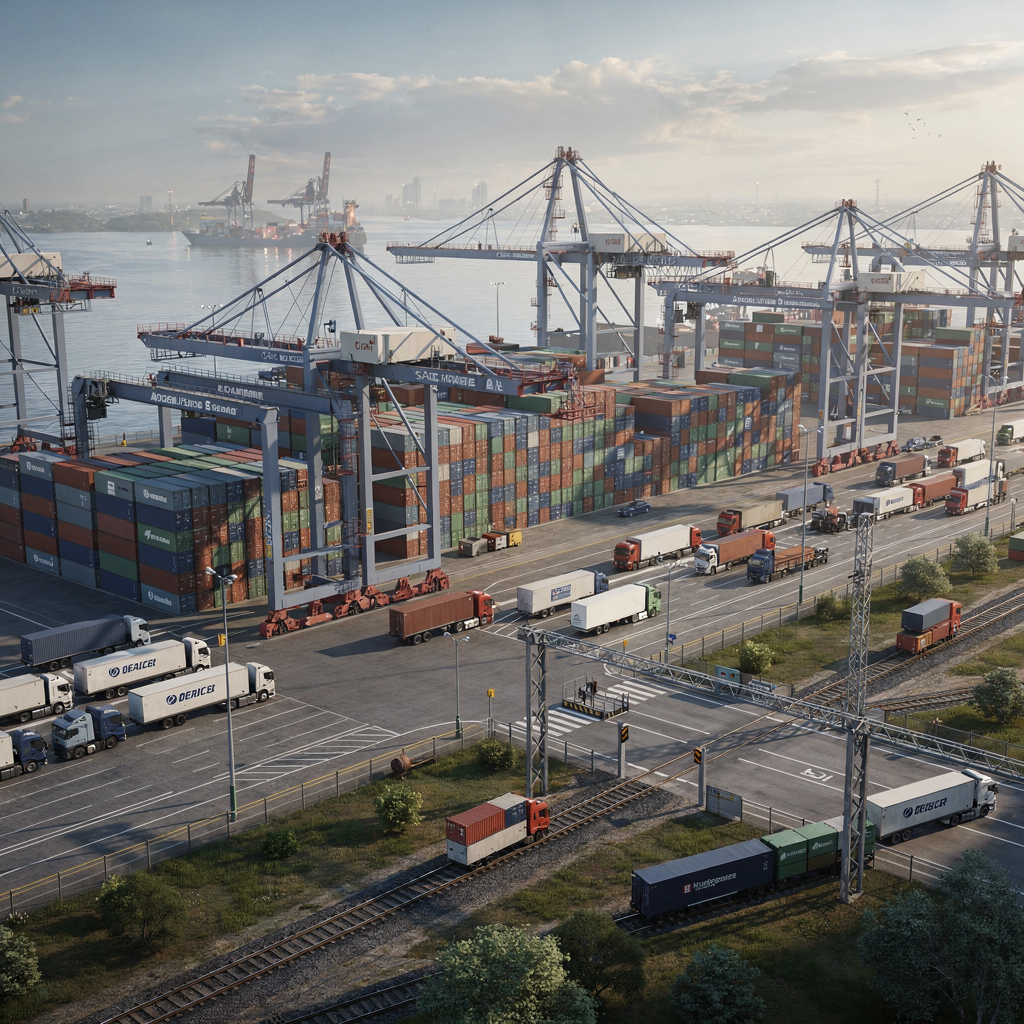
FlexSim focuses on 3D visualization and scenario-driven decision support. It helps terminal operators analyze automation options and resource allocation. Users can build realistic layouts, animate equipment, and test alternative allocation policies to reduce bottleneck risk. Research describes FlexSim as a strong tool for container operations management and for evaluating automation trade-offs (A simulation tool for container operations management at seaport terminals). In practice, FlexSim’s visualization clarifies complex workflows for operations teams and stakeholders.
Both AnyLogic and FlexSim integrate with planning tools and data feeds. They output KPIs and dashboards that support port management and help quantify benefits. For terminals that need TOS testing and emulation, toolchains often include a virtual terminal or a link to a Terminal Operating System for end-to-end validation. You can learn more about simulation and optimisation tools that align with TOS deployments in this overview on simulation and optimisation tools for TOS (simulation and optimisation tools for TOS). Overall, port simulation software reduces guesswork, improves resource allocation, and helps teams plan quickly and efficiently for different vessel arrival patterns and gate surges.
Drowning in a full terminal with replans, exceptions and last-minute changes?
Discover what AI-driven planning can do for your terminal
terminal simulation software and digital twin
Terminal simulation software spans research libraries, commercial packages, and full virtual terminals. CHESSCON provides a virtual terminal system with 3D emulation. TerminalSim supplies a C++ library for bespoke models and academic studies. Talumis GEMINI focuses on digital twin use-cases, where simulation becomes an always-on representation that supports planning, scheduling, and emulation. The market includes many options, so selection depends on scale, integration needs, and the goal to create a digital twin for continuous decision support (Virtual Terminal for 3D Simulation and TOS Optimization | CHESSCON).
A digital twin links simulation models to live telemetry. A terminal digital twin can replay past operations, forecast congestion, and feed automated policies. Teams use a digital twin of the terminal to train ML models or to validate new dispatch rules. Talumis GEMINI markets digital twin capabilities for ports, and research highlights the value of a twin for prediction and planning (Ports Simulation – Talumis).
Integration with a Terminal Operating System is essential when simulation must interact with live data. Terminal simulation software should accept vessel schedules, equipment telemetry, and TOS assignments via APIs. In practice, vendors provide connectors or the terminal builds a middleware layer that syncs the twin with live feeds. That setup enables simulation-based planning and real-time decision support. For teams choosing technology, consider system requirements, data latency, and the capacity to test operational changes without risking service levels.
If you plan a full rollout, check enterprise-grade reviews and comparisons of port and terminal solutions. A useful resource on terminal optimisation and digital twin approaches explains how to set up a twin, what KPIs to track, and how to gain stakeholder consensus (terminal optimisation digital twin). Finally, a virtual terminal also works as a training environment. Case evidence shows that virtual terminals cut staff training time and improve safety, while they help terminal operators trial automation strategies in a risk-free space (Terminal Planning & Optimization | CHESSCON).
discrete event simulation in container port
Discrete event simulation fits container port problems because it models the arrival and servicing of discrete entities: vessels, containers, trucks. In a discrete event model, state changes occur at event times. That makes it efficient to track queues, crane cycles, and yard moves. When planners run scenarios, they can measure berth productivity, container throughput, and turnaround times. These outputs inform tactical decisions about staffing, equipment shifts, and crane sequences.
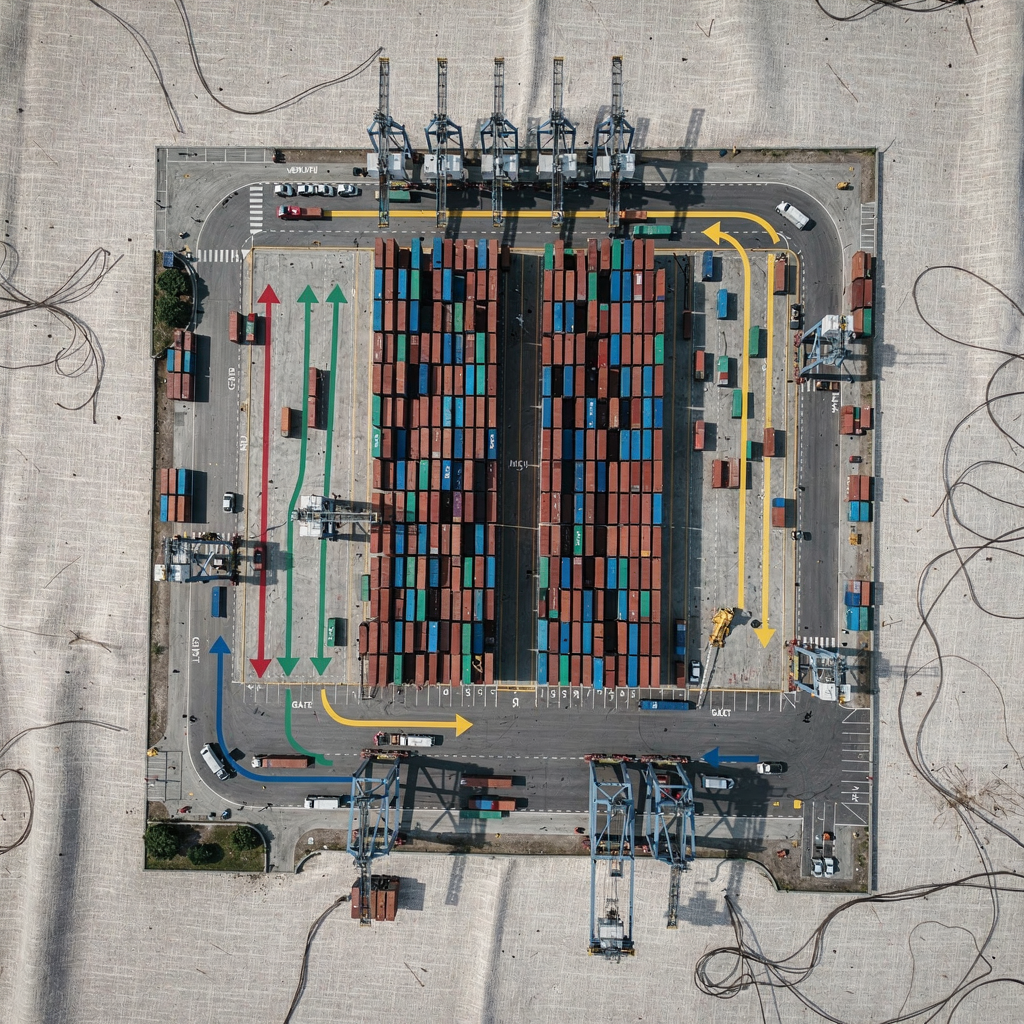
Key metrics include throughput, turnaround time, and berth productivity. Simulation lets teams quantify these KPIs under different vessel mixes and peak seals. Reports indicate that simulation-driven planning can increase throughput by 10–25% depending on complexity (Port and Terminal Simulation Software – AnyLogic). Also, cost reductions of roughly 15–20% are linked to optimized resource allocation and fewer rehandles (Port and Terminal Simulation Software – AnyLogic).
Simulation also helps minimize operational risk. For example, terminals can test new dispatch rules or a change in gate operating hours before rolling them into live operations. This practice reduces service disruption and protects vessel schedules. A robust simulation model developed to reflect equipment specs, container stacking rules, and human workflows becomes a decision support tool for daily planning. It supports allocation decisions and improves equipment utilization.
Teams that use simulation-based planning gain confidence. They can predict the effects of intermodal changes such as rail and road schedule shifts. Simulation also supports multimodal planning and helps optimize vessel capacity utilization, dispatch sequencing, and yard reshuffles. When paired with agent-based techniques for complex human behavior, simulation tools handle complex systems and provide both high-level forecasts and granular execution guidance. Overall, discrete event helps ports move from guesswork to measurable improvement in port operations.
Drowning in a full terminal with replans, exceptions and last-minute changes?
Discover what AI-driven planning can do for your terminal
case studies in port efficiency and throughput
Real projects show what simulation can deliver. For instance, an AnyLogic deployment helped a terminal model a wide set of vessel mixes and yard policies. The project reported throughput improvements up to 25% depending on terminal scale and process changes (Port and Terminal Simulation Software – AnyLogic). That kind of gain often combines schedule smoothing, better allocation of quay cranes, and reduced rehandles. In many cases, the results came from using simulation software to test sequences that would have been risky to try in live service.
FlexSim offers clear 3D visuals that operations teams use to spot bottleneck areas. A FlexSim case focused on yard assignment and automation showed reduced yard congestion and shorter truck turnaround times after planners implemented recommended changes (A simulation tool for container operations management at seaport terminals). These studies report that visualization speeds stakeholder consensus because non-technical managers can see the impact of change. A case study shows how simulation convinces stakeholders to adopt automation and to retune allocation rules.
Virtual terminals also speed training. For example, 3D simulation and emulation platforms cut training time by roughly 30% while improving safety and readiness for automated workflows (Virtual Terminal for 3D Simulation and TOS Optimization | CHESSCON). Meanwhile, terminals that combine simulation with optimization report operational cost cuts in the range of 15–20% through better equipment utilization and fewer unnecessary moves (Port and Terminal Simulation Software – AnyLogic).
At Loadmaster.ai we take these outcomes further by training RL agents inside a container terminal simulation model. Our agents learn policies in a risk-free twin and then transfer those policies into live operations with guardrails. This workflow preserves service while delivering consistent gains in utilization and reduced driving distances. If you want deeper examples, our review of enterprise simulation tools outlines which platforms work best for integration and production rollouts (enterprise simulation tools for port logistics).
supply chain optimization with container terminal simulation model
Container terminal simulation ties directly into the wider supply chain. A terminal that optimizes yard flows improves hinterland connections and vessel schedules. Simulation lets planners test scenarios affecting rail and road links, truck appointment systems, and feeder rotations. That integration supports single-source decisions for the whole corridor, not just the dock.
Scenario testing can simulate gate surges, delayed feeder calls, or sudden labor shortages. Planners then quantify effects on container throughput, vessel capacity utilization, and intermodal handoffs. A well-calibrated container terminal simulation model becomes a decision support asset for logistics managers who must coordinate across the network. Simulation tools so often provide dashboards and KPIs that link terminal performance to supply chain outcomes.
When evaluating software, pick options that match your scale, integration needs, and support expectations. Important criteria include the ability to connect to live TOS feeds, to handle complex stacking rules for container stacking, and to produce clear dashboards for stakeholders. You should also consider how the tool supports testbeds for container yard planning, whether it allows agent-based modeling for human decisions, and whether the vendor supports create a digital twin workflows. For guidance on system requirements and software choices, see our page on terminal capacity planning software and simulation selections (terminal capacity planning software).
Finally, pick a partner who can deliver a risk-free rollout. The best projects combine simulation-based planning with operational pilots, clear KPIs, and tight TOS integration. That ensures the model supports operational changes, reduces bottleneck risk, and helps teams quickly and efficiently move from analysis to sustained performance improvements.
FAQ
What is the difference between simulation and a digital twin?
Simulation is a technique that imitates processes to test scenarios. A digital twin is a live, continuously updated simulation that links to telemetry and TOS feeds to mirror real-world status.
Which simulation software do container terminals use most often?
Terminals commonly use packages like AnyLogic, FlexSim, CHESSCON, and specialized libraries such as TerminalSim. Choice depends on scale, visualization needs, and integration with a Terminal Operating System.
Can simulation reduce terminal costs?
Yes. Studies report operational cost savings around 15–20% when terminals optimize allocation and reduce rehandles (AnyLogic ports study). Savings depend on current inefficiencies and the scope of changes.
How does discrete event simulation help with quay crane scheduling?
Discrete event simulation models crane cycles as events and tracks queues. That lets planners test sequences to improve vessel capacity utilization and to minimize idle crane time.
Do virtual terminals improve training speed?
Yes. 3D virtual terminals can shorten training time by up to 30% while improving safety and readiness for automated systems (CHESSCON virtual terminal). They let staff practice without disrupting operations.
What role does simulation play in supply chain planning?
Simulation links terminal performance to hinterland flows and vessel schedules. It allows planners to test appointment systems, rail and road timing, and multimodal handoffs to optimize the entire corridor.
How do I choose terminal simulation software?
Evaluate scale, TOS connectivity, visualization, and vendor support. Also consider whether the software supports create a digital twin and whether it fits your system requirements and planned operational changes.
Can simulation tools integrate with existing TOS?
Yes. Many tools connect to TOS via APIs or middleware. Integration enables live-data validation, simulation-based planning, and decision support that aligns with operational workflows.
What is agent-based modeling and when is it useful?
Agent-based modeling represents individual decision makers or pieces of equipment as agents with rules. It is useful when human behavior or decentralized decision making significantly affects outcomes.
Are there free or open-source options for terminal simulation?
There are research libraries and open-source projects like TerminalSim that can be adapted for proof-of-concept work. For enterprise deployments, commercial platforms usually offer more integration and support.
our products
 stowAI
 stackAI
 jobAI
jobAI
Innovates vessel planning. Faster rotation time of ships, increased flexibility towards shipping lines and customers.
Build the stack in the most efficient way. Increase moves per hour by reducing shifters and increase crane efficiency.
Get the most out of your equipment. Increase moves per hour by minimising waste and delays.
stowAI
Innovates vessel planning. Faster rotation time of ships, increased flexibility towards shipping lines and customers.
stackAI
Build the stack in the most efficient way. Increase moves per hour by reducing shifters and increase crane efficiency.
jobAI
Get the most out of your equipment. Increase moves per hour by minimising waste and delays.