
literature review
First, this literature review summarises core studies on vessel planning in deepsea container ports and related terminal planning. Also, it highlights quantitative findings that show clear gains when ports tune hoist and trolley parameters. In addition, researchers report that increasing hoist count per gantry reduced handling time by up to 20% in empirical studies and terminal case work (Efficiency and productivity in container terminal operation). Next, ports such as Antwerp documented crane productivity improvements near 15% after optimizing hoist allocation and sequencing (Port of Antwerp case study). Then, the ITF work on mega-ships explained how scale forces terminals to reconfigure gantry deployment to preserve berth productivity (The Impact of Mega-Ships). Therefore, the OECD report makes the point that larger vessels yield carrier savings but raise terminal CAPEX and complexity (The Impact of Mega-Ships | OECD). Also, automation studies show robotized layouts can lift handling efficiency by roughly 25% under certain designs (robotized terminal study). Next, digital readiness analyses indicate that terminals with programmable gantries and integrated TOS adapt parameters in real time more reliably (Digital readiness of container terminals). In addition, experts stress adaptable hoist and trolley controls as key to reduce vessel rotation time of ships and to improve the predictability of berth windows. Finally, this review notes that mixed integer and heuristic models dominate the academic literature for crane and berth allocation, while newer reinforcement learning approaches aim to validate policy performance in a simulated terminal context. Thus, the literature points to measurable gains from parameter tuning, supported by simulation, case evidence, and expert insight. For further reading on stowage and AI integration, see our piece on AI in port stowage planning AI in port stowage planning.
container port
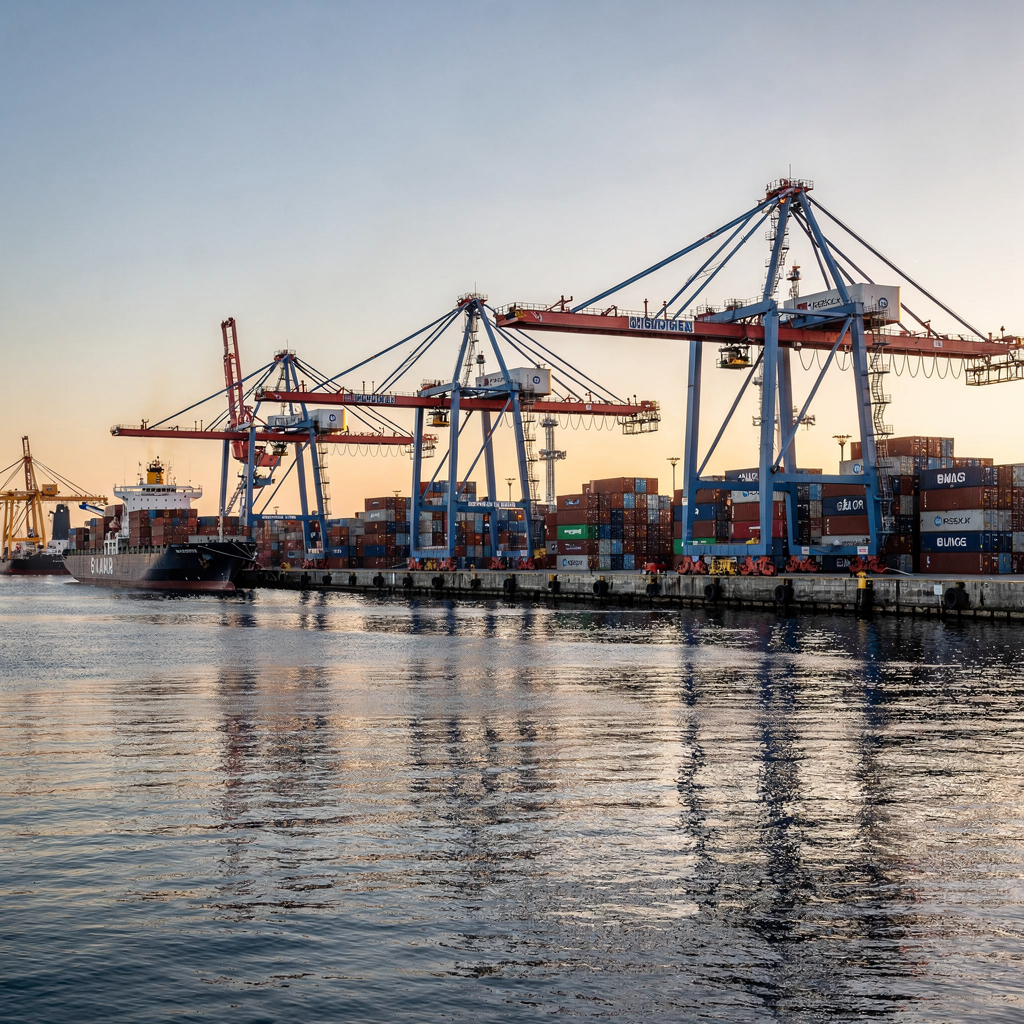
First, a deepsea container port serves as a hub for global container trade and handles ultra-large container ships. Also, the deepsea container port links ocean carriers, hinterland connectors, and warehousing. In addition, the role spans transhipment, import container processing, export container staging, and customs flow. Next, mega-ships exceeding 20,000 TEU concentrate container volume into fewer calls and create operational pressure on quay capacity and yard layout. Then, that pressure forces terminals to rethink crane positions, hoist counts, and trolley speeds to protect berth productivity. Therefore, quay crane spacing and the number of gantries available shape how many containers move per hour. Also, ports must plan resource allocation and scheduling with care to avoid excessive congestion in the storage yard or the container yard. In addition, strategic allocation of handling resources reduces unnecessary moves and lowers energy consumption. Next, this need for planning shows in both operational models and real terminals, including experience at the Port of Rotterdam which adapted to larger ships through infrastructure and equipment upgrades. Then, terminals face a scheduling problem that blends quay planning with yard management and gate flows. Therefore, ports must balance quay productivity against yard congestion and truck turnaround times. Also, automated guided vehicle trials and fully automated container terminal pilots illustrate alternative ways to re-balance labor and capital. In addition, terminals must manage empty container repositioning, container dwell time, and the flow of import container deliveries. Finally, port development strategies should include investment in quay cranes, yard cranes, and digital systems to maintain throughput and to reduce emission and energy consumption. For a practical reference on digital twin integration, read our guide on integrating digital twins with TOS digital twin integration with TOS.
Drowning in a full terminal with replans, exceptions and last-minute changes?
Discover what AI-driven planning can do for your terminal
container terminal operations
First, container terminal operations revolve around three main equipment types: hoists, trolleys, and gantry cranes. Also, hoists lift containers vertically, trolleys move them horizontally, and gantry cranes coordinate both across a wide ship bay. In addition, yard cranes and automated guided vehicle systems link quay moves to the container yard and storage yard. Next, adjusting hoist count per gantry can allow parallel lifts and reduce per-container handling time. Then, studies show that adding hoists or reallocating them per shift produced productivity gains in the 15–20% range in some terminals (Port case study). Therefore, terminal operators model trolley speed carefully, because faster trolley travel reduces transfer time but may raise wear and safety risk. Also, gantry spacing across the berth affects coverage and the risk of crane interference; tight spacing increases flexibility but complicates simultaneous operations. In addition, simulation-based approaches help optimize equipment layout and operational rules. Next, discrete-event simulation, mixed integer programming, and heuristic search have long informed gantry and yard layouts. Then, modern approaches layer reinforcement learning agents into the simulator to explore new strategies without risking live service. Also, resource allocation and scheduling require the terminal to allocate quay cranes to bays and to sequence container lifts by weight, size, and destination. In addition, the terminal handling of large container batches benefits from optimized crane cycles and balanced yard stacking. Next, container terminal operators often benchmark quay crane productivity against throughput targets and yard storage constraints. Therefore, they tune hoist and trolley parameters to improve the efficiency of moves per hour and to minimize rehandles. Finally, to read more on equipment planning and job allocation, consult our work on container terminal equipment planning container terminal equipment job allocation optimization.
crane scheduling
First, crane scheduling assigns cranes to vessel bays and sequences the order of lifts, which directly shapes vessel rotation time and berth occupancy. Also, planners use integer and mixed integer formulations to model multi-crane assignments under precedence, safety, and travel-time constraints. In addition, the crane scheduling problem appears in many forms, such as quay crane scheduling and yard crane scheduling problems that interact through container flows. Next, variable parameters like hoist count and trolley speed feed into multi-crane scheduling algorithms as adjustable inputs. Then, when planners allow different hoist settings per crane, the algorithm can schedule parallel lifts across adjacent bays and reduce idle crane time. Therefore, algorithms that combine mixed integer programming with heuristics deliver near-optimal schedules quickly for large container ships. Also, reinforcement learning and other AI algorithms can learn policies that handle uncertainty and real-time disruptions. In addition, crane scheduling affects berth productivity and container dwell time by changing how fast a vessel clears the quay. Next, simulation shows that improved crane sequencing can reduce turnaround by significant fractions, especially when paired with better yard planning to avoid bottlenecks. Then, planners also care about energy consumption and emission, since crane cycles and trolley acceleration influence electrical load. Therefore, scheduling can aim to minimize peak energy consumption while preserving throughput. Also, load balancing across quay cranes reduces crane wear and spreads the operator workload. In addition, the scheduling of container moves must consider the container yard and the availability of yard cranes and automated guided vehicles. Next, to see methods that reduce restows, consult our AI-based restow minimization research AI-based restow minimization. Finally, the combination of advanced algorithms and robust execution reduces rehandles and helps terminals validate new schedules before live deployment.
Drowning in a full terminal with replans, exceptions and last-minute changes?
Discover what AI-driven planning can do for your terminal
terminal automation
First, terminal automation includes automated gantry cranes with programmable hoist and trolley controls and integrated telemetry. Also, automated container terminal projects have demonstrated higher moves per hour and more predictable throughput in controlled settings. In addition, digital readiness matters: terminals that integrate real-time data from cranes, yard cranes, and TOS can adjust parameters dynamically and sustain stable performance (Digital readiness of container terminals). Next, automated gantries can run customized hoist cycles and trolley profiles to optimize for specific container mixes. Then, that flexibility reduces unnecessary travel and helps minimize rehandles in the stack and the storage yard. Therefore, terminal automation supports goals like lower energy consumption and improved energy efficiency when paired with smart energy management and operations planning. Also, automated guided vehicles and automated guided systems can free yard crane resources and shorten container truck wait times. In addition, operators must weigh capital costs against labor savings and against the potential to improve the efficiency of quay and yard flows. Next, our RL-based approach frames terminal automation as closed-loop optimization between quay sequencing and yard placement. Then, Loadmaster.ai trains StowAI, StackAI, and JobAI in a sandbox digital twin, which enables cold-start readiness without historical bias from poor data. Also, TOS integration matters: the terminal needs a responsive container terminal operating system to accept real-time plan updates. In addition, operational efficiency improves when terminal operators deploy multi-agent control that balances quay productivity with yard congestion. Next, the deployment trade-offs include CAPEX, training, and the risk of losing tribal knowledge if systems outrun staff skills. Therefore, terminals should phase automation and validate outcomes in simulation. For more on configuring TOS for performance, read our guide on optimizing TOS configuration optimizing container terminal TOS configuration.
application of ai in container
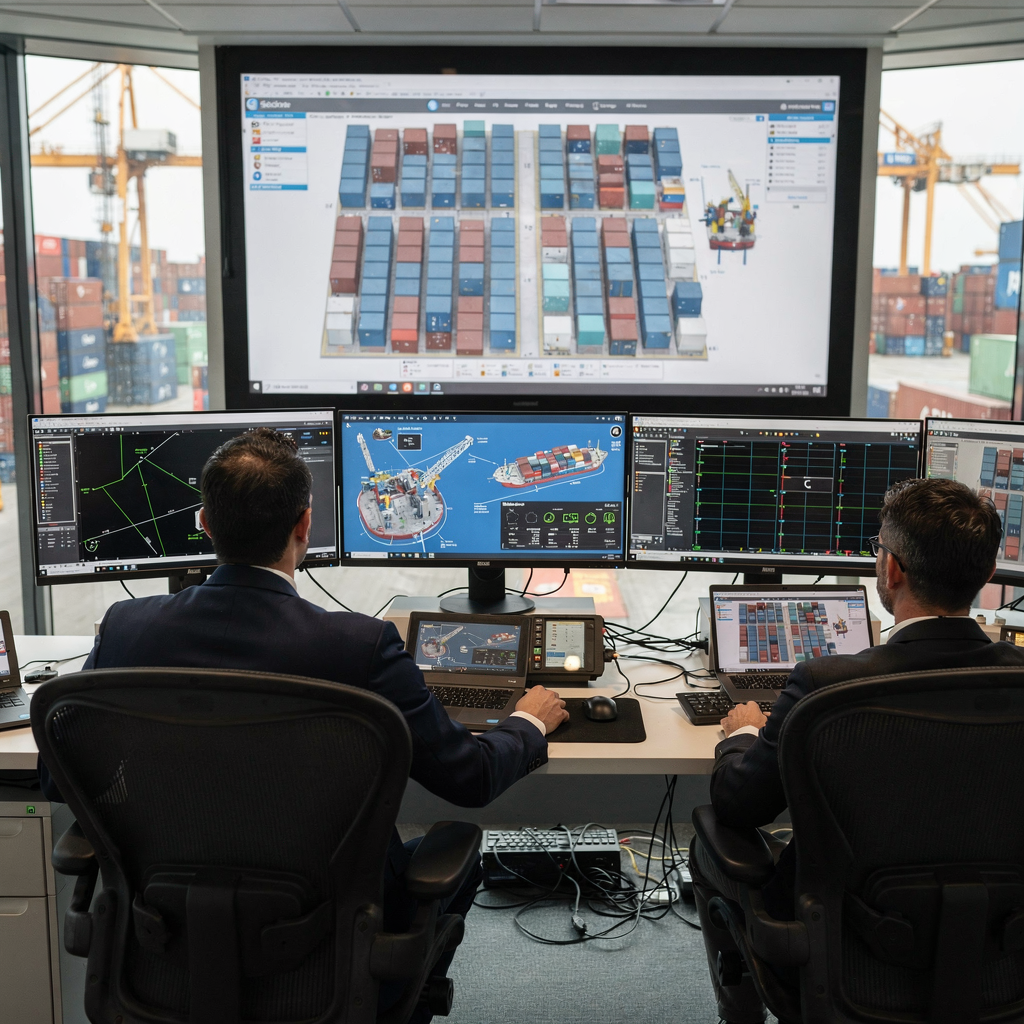
First, the role of AI in container terminals expands from prediction to decision-making. Also, AI-driven algorithms enable dynamic parameter tuning for hoists, trolleys, and gantries based on real-time conditions. In addition, machine-learning models such as supervised predictors can forecast container volume and gate peaks. Next, reinforcement learning agents can learn policies that directly control crane scheduling, stacking, and job allocation. Then, Loadmaster.ai’s agents—StowAI, StackAI, and JobAI—train in a digital twin to optimize multiple KPIs without relying on historical labels. Therefore, AI can reduce rehandles, balance yard storage, and shorten driving distances for yard cranes and straddles. Also, examples of ML and RL in the field show improvements in quay productivity and lower container dwell time when agents coordinate quay and yard. In addition, AI helps minimize energy consumption by smoothing crane acceleration profiles and by timing moves to spread electrical load. Next, models that combine optimization, simulation, and learning address the scheduling problem under uncertainty and help validate new strategies before live deployment. Then, hybrid algorithms that mix integer programming with learned heuristics speed up scheduling of container ship bays. Therefore, the future sees an increasing shift to smart container port designs, where AI optimizes across quay and yard, and where resource allocation and scheduling respond to real-time disruption. Also, for hands-on methods and system integration, see our article on next-generation planning architectures next-generation planning architecture. In addition, future research directions include tighter energy management, better empty container repositioning policies, and improved forecasting container demand. Finally, AI must validate decisions through sandbox testing and through explainable KPIs so terminal operators can trust automated choices.
FAQ
What is vessel planning and why does it matter?
Vessel planning assigns cranes, sequences lifts, and organises container flow to and from a vessel. It matters because effective planning reduces berth time, lowers costs, and increases throughput.
How much can hoist and trolley tuning improve productivity?
Studies report productivity gains in the 15–20% range when terminals optimise hoist allocations and trolley parameters (case study). Results vary by terminal layout, vessel size, and operational discipline.
What role do gantry cranes play in handling ultra-large container ships?
Gantry cranes span a vessel’s width and coordinate multiple hoists and trolleys, enabling parallel operations. They determine how many concurrent lifts can happen at a berth and thus directly affect throughput.
Can automation reduce container dwell time?
Yes. Automated systems with programmable hoist and trolley controls reduce variability and speed up moves, which helps lower container dwell time in the yard and at the quay.
How does AI improve crane scheduling?
AI can learn policies that adapt to real-time disruptions and that balance multi-objective KPIs. Reinforcement learning agents can propose schedules that reduce rehandles and improve quay crane utilization.
What are the main trade-offs when automating a terminal?
Terminals trade capital expenses for lower labor costs and more consistent performance. They also must manage integration, staff training, and the risk of overdependence on any single technology.
How do ports manage energy consumption from crane operations?
Ports manage energy by smoothing acceleration profiles, timing heavy lifts, and integrating energy management and operations planning. Smart scheduling can lower peak load and reduce emission.
What simulation tools help optimise crane placement and spacing?
Practitioners use discrete-event simulation, mixed integer solvers, heuristics, and digital twins to test gantry spacing and crane counts. Simulators let terminals validate strategies before live deployment.
How can terminals reduce rehandles and yard congestion?
Terminals combine smarter stowage planning, coordinated quay and yard scheduling, and AI-driven placement to reduce rehandles. For more, see our article on AI-based restow minimization AI-based restow minimization.
Where can I read about integrating digital twins with TOS?
We discuss digital twin integration and practical steps to link simulation with live operations in our guide on digital twin integration with terminal operating systems digital twin integration with TOS.
our products
 stowAI
 stackAI
 jobAI
jobAI
Innovates vessel planning. Faster rotation time of ships, increased flexibility towards shipping lines and customers.
Build the stack in the most efficient way. Increase moves per hour by reducing shifters and increase crane efficiency.
Get the most out of your equipment. Increase moves per hour by minimising waste and delays.
stowAI
Innovates vessel planning. Faster rotation time of ships, increased flexibility towards shipping lines and customers.
stackAI
Build the stack in the most efficient way. Increase moves per hour by reducing shifters and increase crane efficiency.
jobAI
Get the most out of your equipment. Increase moves per hour by minimising waste and delays.