
Terminal operating systems and analytics: automating anomaly detection
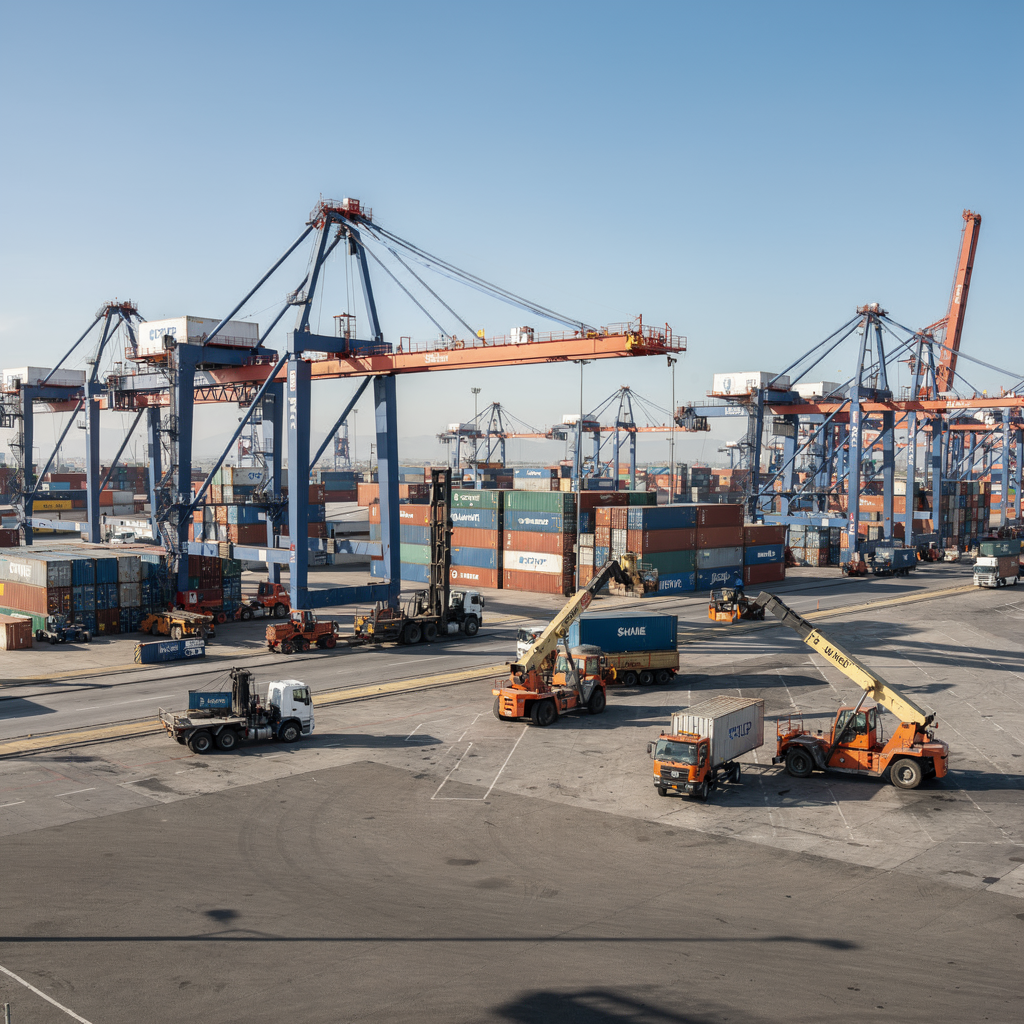
Terminal operating systems pull together telemetry from cranes, trucks, reach stackers and yard equipment. They collect sensor streams, transform them, and feed dashboards for terminal operators. For effective predictive maintenance using this telemetry, the terminal operating systems must ingest high-frequency data and present clean, actionable signals. For example, a Temperature rise paired with a vibration spike often signals bearing wear. Therefore, real-time analytics pipelines that filter noise and flag anomaly windows are essential.
Sensors report vibration, hydraulic pressure, and temperature. The continuous data collection supports early detection and timely maintenance. Many terminals face issues with data collected that is noisy or inconsistent. To address that, teams apply standardized preprocessing, then apply machine learning algorithms to extract features. The goal is to detect trends before equipment failures become visible. A study notes: “Manufacturers predict machine failures via sensor data analysis, enabling timely maintenance actions that prevent costly breakdowns” (UNIS).
Terminal operators who integrate sensor feeds into their TOS reduce firefighting and improve planning. Our approach at Loadmaster.ai complements TOS by simulating terminal states and training agents that respect equipment constraints while balancing operational KPIs. We connect via APIs so that a TOS continues as the single source of truth. For further reading on TOS integration patterns see our guide on TOS-agnostic software plugins for terminal operations.
Analytics automate anomaly detection for vibration, temperature and pressure. Analytical models raise early alerts that let maintenance teams act on time. Precision work reduces unplanned maintenance events by up to 50% and boosts uptime by 20–30% in logistics operations (PrecisionInc). That statistic shows how real-time alerting and clear workflows translate into measurable gains.
To scale, terminals must standardize data collection and metadata. They must enforce timestamp alignment, unit consistency, and device health signals. This makes it easier to build predictive maintenance models and to feed results back into the computerized maintenance management system. Also, it enables optimal maintenance planning and scheduled maintenance to occur at windows that do not hurt quay productivity. The result is fewer disruptions, higher crane utilization, and longer asset life.
Container terminal predictive analytics: AI-driven predictive maintenance
Combining historical and real-time data lets AI-driven predictive maintenance forecast failures with much greater accuracy than fixed schedules. A container terminal benefits when analytics blend historical performance metrics, maintenance logs, and live sensor feeds. Predictive analytics models can forecast component wear, hydraulic leaks, and motor overheating. These forecasts permit timely maintenance and move operations from reactive maintenance to proactive maintenance.
Predictive maintenance models use supervised learning and domain features such as cycles per hour and load profile. They learn from historical data and generate risk scores per asset. The learning models then suggest maintenance schedules and maintenance tasks. This approach forms a maintenance model that balances safety and cost. Industry studies show 30–50% less downtime and 10–40% lower maintenance costs when predictive maintenance is adopted in logistics and shipping (MDPI).
AI in predictive maintenance often uses neural networks and tree-based algorithms. Neural networks capture subtle non-linear degradation patterns. Meanwhile, tree-based algorithm models remain interpretable for technicians. These predictive models feed into a predictive maintenance system that raises work orders when risk crosses a threshold. The system can optimize maintenance schedules to preserve throughput and to reduce maintenance costs. The terminal operator sees fewer emergency repairs and better planned, scheduled maintenance.
At Loadmaster.ai we train RL-based agents in a digital twin to explore policies that maintain operational KPIs. That method avoids over-reliance on limited historical data. It is useful for terminals with little high-quality historical data. Our sandbox approach helps bridge the gap between simulations and on-site deployments. For a deeper dive into predictive maintenance to reduce crane downtime see our related post on predictive maintenance to reduce deepsea container port crane downtime.
Overall, AI-driven predictive maintenance moves teams from scheduled maintenance to optimal maintenance windows. It helps extend equipment life and to predict future events that threaten continuity. With clearer forecasts, maintenance planning can prioritize parts, order spares ahead, and schedule technicians when they add the most value.
Drowning in a full terminal with replans, exceptions and last-minute changes?
Discover what AI-driven planning can do for your terminal
Machine learning to detect disruptions in the supply chain
Machine learning helps spot patterns that precede wider disruption. Supervised methods flag known failure signatures. Unsupervised methods find new anomaly clusters that humans might miss. Both play a role. For example, clustering time-series of vibration reveals groups of assets showing similar early wear. So teams can act on groups instead of on single machines. That reduces repair costs and the risk of cascading failures.
Detecting issues early prevents a single crane outage from creating a terminal bottleneck. A failure at the quay can delay vessel operations and ripple through the supply chain. Predictive analytics identify those risk points weeks before they become acute. Thus, terminal planners gain time to reassign tasks, to re-sequence loads, or to deploy spare equipment.
Machine learning algorithms support what-if analyses inside a digital twin. Simulation lets planners stress-test strategies and to see how an outage affects throughput. It also helps in maintenance planning by estimating the impact of a planned shutdown on quay productivity. In practice, timely alerts from learning models improve throughput and reduce gate lead times. A digital twin linked to live feeds amplifies the value of predictions and helps teams decide on optimal interventions.
When models warn of asset degradation, maintenance teams can collect targeted data and verify alerts during scheduled checks. That workflow reduces unnecessary inspections. It also improves technician efficiency and shortens repair times. For terminals that want to tackle empty driving and idle times, our work on equipment dispatching to reduce empty driving offers complementary strategies.
Finally, the combination of data analytics and simulation increases resilience. Integrating machine learning into operational playbooks helps terminals prioritize moves that keep vessels on schedule. The end result is fewer surprises, smoother cargo flow, and better alignment between maintenance activities and service levels.
AI tools to optimise maintenance teams
AI tools can schedule work orders based on predicted risk and technician availability. They balance workload and spare-parts stocks. The scheduling of maintenance becomes a constrained optimization task. AI considers spare parts lead times, technician skill sets, and vessel windows. It produces schedules that reduce rehandles, and that keep the quay running during peak hours.
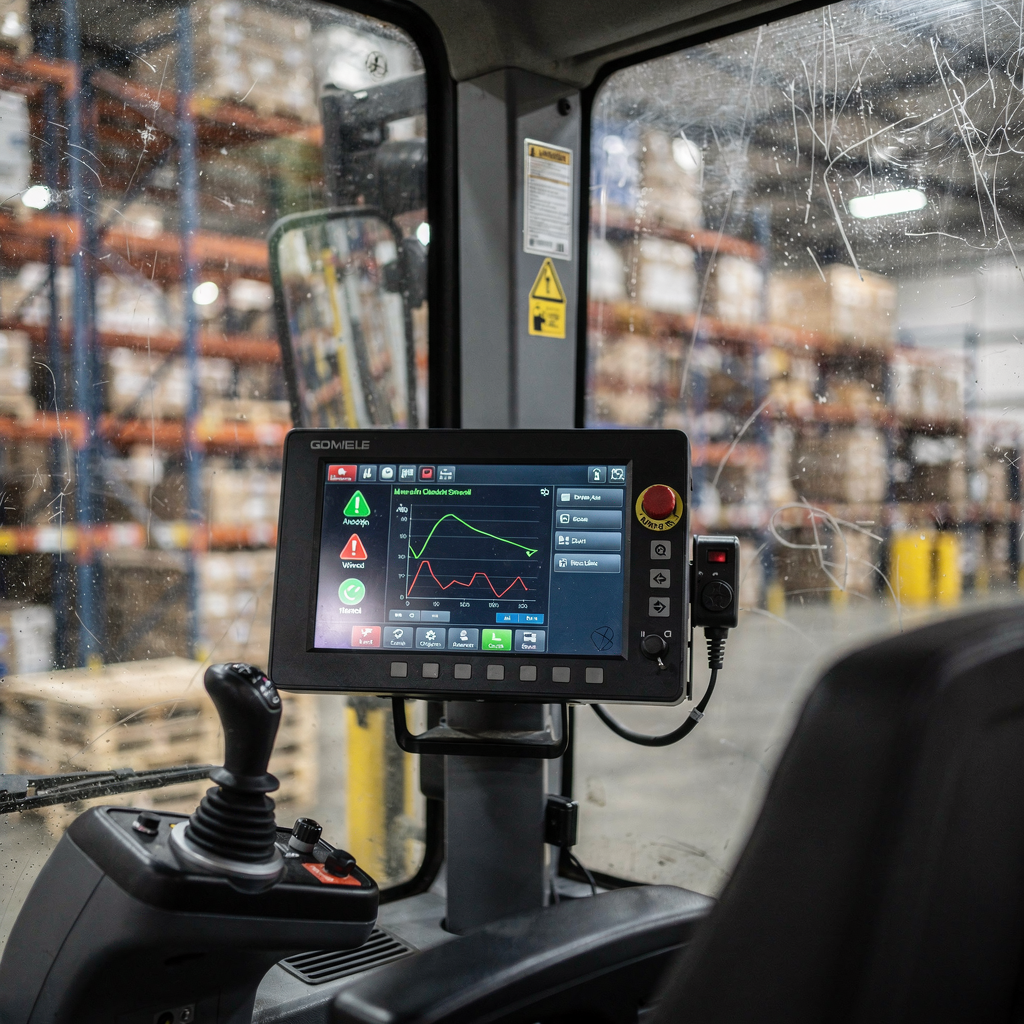
Dashboards present prioritized alerts and recommended maintenance tasks. Maintenance teams see risk-ranked assets and the predicted time to failure. That clarity helps teams focus on high-risk assets first. It also helps maintenance teams to minimize overtime and to plan training when particular faults recur. The result is more consistent performance and a happier staff.
AI-driven workflows can automate routine maintenance tasks while keeping human oversight for complex repairs. Computerized maintenance management systems integrate AI outputs with logging and compliance records. This reduces administrative delay and improves visibility for terminal management. For terminals that require coordinated planning across berth and crane, our guide on berth and crane planning best practices covers strategies to protect quay productivity during maintenance.
Case evidence shows that combining AI forecasts with disciplined maintenance planning can reduce maintenance costs by up to 40% compared to fixed schedules. It can also extend equipment life and to reduce fuel consumption through fewer inefficient moves. AI in predictive maintenance reduces reactive maintenance and helps teams perform performing maintenance at the right time. This leads to improved safety and better resource allocation.
In practice, terminals must address potential issues such as cross-vendor telemetry, spare parts management, and change management. Training and clear SLAs ensure that algorithm recommendations turn into effective maintenance tasks. When implemented correctly, AI tools convert large amounts of data into practical action, lower maintenance costs, and higher operational reliability.
Drowning in a full terminal with replans, exceptions and last-minute changes?
Discover what AI-driven planning can do for your terminal
Case studies of predictive maintenance in inland container terminals
Several inland hubs in Europe and Asia have tested predictive maintenance and reported strong returns. In one case, a major hub cut unplanned stoppages by close to a third after adding vibration and temperature monitors to quay cranes. Another operator reported reduced scheduled downtime by deploying predictive maintenance models to prioritize bearing inspections and to order parts early. Those results match broader industry findings that predictive practices improve fleet uptime by 20–30% (PrecisionInc).
Case studies also highlight the importance of data quality. Terminals that standardize data collection, timestamping, and metadata find model training faster and more reliable. A literature review explains that downtime in handling equipment can ripple through logistics networks, emphasizing the need for integrated analytics across modes (ResearchGate).
Key metrics used in case studies include downtime reduction, maintenance costs, and return on investment. Organizations calculate ROI by comparing cost savings from fewer emergency repairs against the investment in sensors and software. Many projects recover costs in under two years. That makes the business case compelling for operators planning long asset lifecycles.
Lessons learned center on integration and stakeholder engagement. Projects succeed when IT, maintenance, and operations align on goals. Cross-vendor integration remains a common hurdle. To overcome it, successful terminals build service layers that normalize telemetry and translate results into maintenance logs. They also create governance that ensures data is trusted and available for training predictive maintenance models. The BCG analysis of digital transformation in container shipping outlines how digital tools support broader modernization (BCG).
These case studies reinforce that a practical path combines sensors, analytics, and operational change. Deploying a digital twin and simulation can accelerate benefits by validating predictive models before live rollout. For a primer on inland terminal simulation tools see our overview on inland container terminal simulation software.
Future outlook: AI-driven automation in terminal operations
Emerging trends include smarter sensors, ubiquitous internet of things deployments, and edge computing. Sensors become cheaper and more capable. Edge devices perform initial filtering and anomaly scoring so that central systems receive higher-quality events. This reduces latency and makes early detection more reliable.
Digital twin adoption will grow. Digital twin models let teams test predictive maintenance strategies without risking real assets. Decision support systems that connect predictive maintenance using live inputs to scheduling and dispatch will become standard. These systems help terminals anticipate equipment failures and to allocate resources proactively. A recent study on port resilience argues for DSS that include predictive maintenance as a core input (ScienceDirect).
Automation will also shift the balance between preventive maintenance and targeted, data-driven work. Where once terminals relied on scheduled maintenance windows, they will increasingly perform timely maintenance only when models indicate need. AI-driven predictive operations will help optimize vessel stowage and maneuvering while protecting equipment health. For terminals planning multi-objective optimization across quay and yard, our future work on the future of autonomous container terminals explains integration strategies.
Finally, governance and explainability will remain priorities. Terminals need transparent algorithms and audit trails to meet regulatory expectations and operator trust. Reinforcement learning and neural networks must be combined with rules and operational guardrails so that AI recommendations are safe and actionable. The vision is clear: predictive maintenance becomes embedded into terminal systems, supporting resilient port operations, reduced maintenance costs, and higher throughput.
FAQ
What is predictive maintenance and how does it work at a container terminal?
Predictive maintenance uses sensors and analytics to forecast future problems before they occur. It combines historical and real-time data with models to schedule timely maintenance and to avoid unexpected failures.
Which assets benefit most from predictive maintenance?
Cranes, reach stackers, RTGs, and yard tractors benefit the most because they operate under heavy cyclic loads. These assets produce rich sensor data that learning models can use to predict degradation.
How much downtime reduction can terminals expect?
Reports suggest 20–30% improvements in equipment uptime and up to 30–50% reductions in downtime in some operations (PrecisionInc). Results vary with data quality and deployment scope.
What data do I need to start?
Start with vibration, temperature, hydraulic pressure, and cycle counts. Also maintain maintenance logs and parts history. This mix supports both supervised models and anomaly detection.
Can small inland terminals adopt these systems?
Yes. Solutions that use digital twins and simulation can train policies without needing long historical data sets. That enables a cold-start deployment and incremental rollout.
How does AI help maintenance teams prioritize work?
AI ranks assets by risk and predicts time-to-failure, which guides scheduling of maintenance tasks. It also helps manage spare parts and technician allocation to reduce delays.
Are there integration challenges with existing TOS?
Yes. Integrating heterogeneous telemetry and normalizing data streams is a common hurdle. TOS-agnostic layers and APIs ease integration; see our guide on TOS plugins for more details (TOS-agnostic software plugins for terminal operations).
What role does a digital twin play?
A digital twin simulates terminal operations and predicts the impact of maintenance interventions. It lets teams validate predictive maintenance strategies before applying them live.
How does predictive maintenance affect safety?
Timely maintenance and early detection improve safety by preventing catastrophic failures. Better planning also reduces rushed repairs that can cause accidents.
How do I measure ROI for predictive maintenance?
Measure reductions in unplanned downtime, maintenance costs, and improvements in throughput. Compare those savings to the cost of sensors, software, and change management to find payback periods.
our products
 stowAI
 stackAI
 jobAI
jobAI
Innovates vessel planning. Faster rotation time of ships, increased flexibility towards shipping lines and customers.
Build the stack in the most efficient way. Increase moves per hour by reducing shifters and increase crane efficiency.
Get the most out of your equipment. Increase moves per hour by minimising waste and delays.
stowAI
Innovates vessel planning. Faster rotation time of ships, increased flexibility towards shipping lines and customers.
stackAI
Build the stack in the most efficient way. Increase moves per hour by reducing shifters and increase crane efficiency.
jobAI
Get the most out of your equipment. Increase moves per hour by minimising waste and delays.