
2026 forecast and market size for container terminal automation
The 2026 forecast for container terminal automation shows steady growth driven by rising trade volume and targeted automation investment. The global port infrastructure market is projected at US$222.1 billion in 2026, rising to US$316.5 billion by 2034 (CAGR 4.53%) — a figure that helps explain why many authorities increase their automation programmes market is projected. Demand stems from higher container volume, digitalization of terminal processes, and the need for better port efficiency. As trade rebounds after 2023 and into 2024, terminal operators are planning for larger annual container throughput and more resilient operations.
Drivers include rising global trade, digitalization spending, and capacity expansion at major hubs. Asia-Pacific remains the leading region for smart port development and automation projects, with ports such as Singapore and Shanghai setting benchmarks for advanced automation smart port development. Europe and North America follow, often targeting retrofit and brownfield projects to reach a higher automation level while controlling cost and disruption. The shift toward fully automated and semi-automated terminals is a phased journey. For brownfield terminals we recommend staged deployments that protect throughput while introducing gate automation and automated equipment incrementally — a strategy covered in our brownfield guidance brownfield versus greenfield container port automation.
From a market-size perspective, stakeholders must watch CAPEX cycles and public funding for port infrastructure. Port authorities seek to improve port competitiveness and reduce transport costs. In practical terms, automation investment can improve port performance across key metrics such as berth occupancy rate and crane moves per hour. The global container terminal ecosystem now balances investments in automated guided vehicles and crane automation with investments in AI and operating systems to manage complexity. For terminals looking to measure ROI, see our guide on measuring AI benefits in terminals measuring ROI of AI.
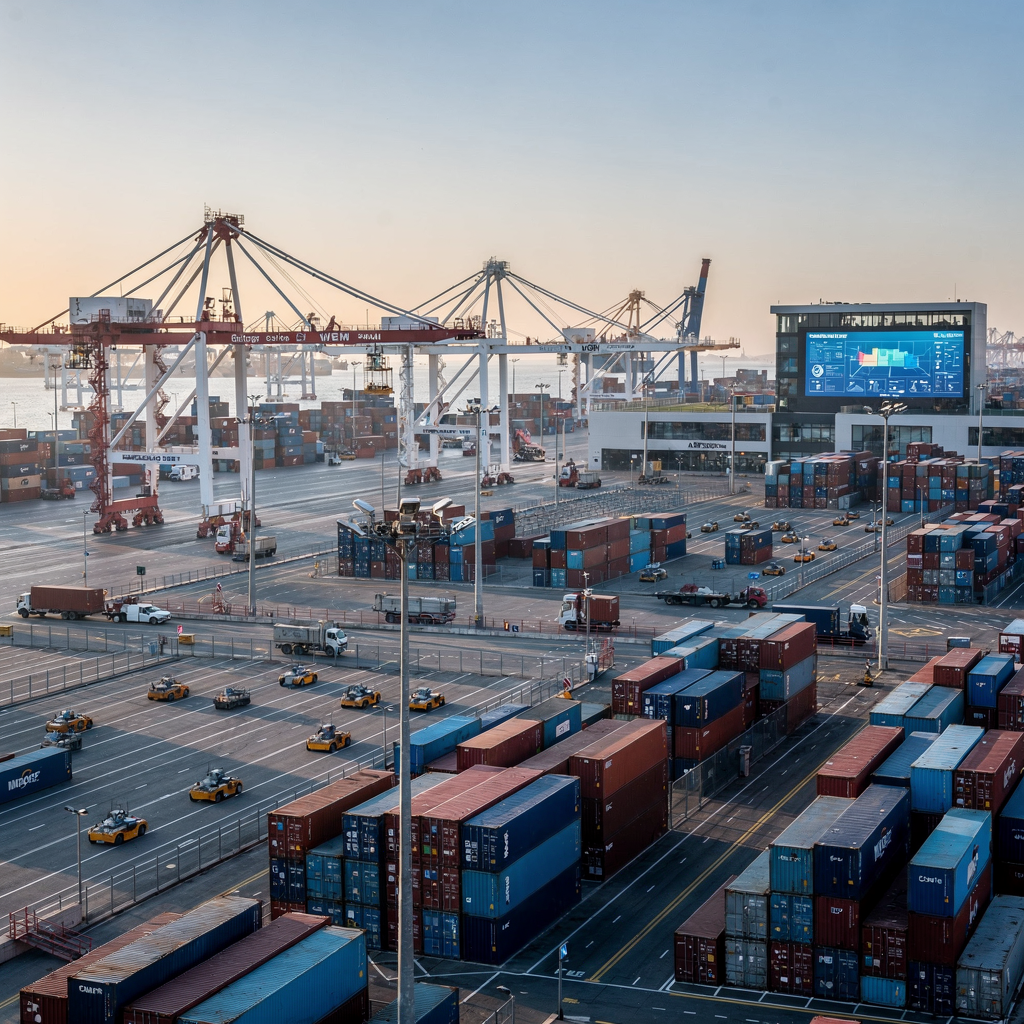
automation in container terminal operations: key technologies and ai integration
Automation in terminal operations now blends hardware and software to improve container handling and port efficiency. Automated guided vehicles and automated stacking cranes appear in more terminals, and the combination of these automated guided vehicles with AI brings predictable gains in container throughput. Ports deploy IoT sensors to collect real-time telemetry from quay cranes, AGVs, and gate lanes. This data feeds terminal operating systems and emerging automation systems that schedule moves, reduce idle time, and optimize energy use.
AI and artificial intelligence play central roles. AI-powered terminal operating systems use predictive models for maintenance and resource scheduling. These systems can predict equipment faults before they happen, so planners can avoid downtime. At the same time, reinforcement learning approaches are proving useful where historical data is limited. Our company, Loadmaster.ai, trains agents in a digital twin so a terminal gets optimized plans without depending on imperfect past records. That approach addresses the user pain of firefighting and inconsistent performance by enabling closed-loop control with StowAI, StackAI, and JobAI to optimize quay productivity, yard balance, and dispatching simultaneously.
Operators also integrate real-time data streams to improve operational decisions. Gate automation reduces truck dwell time and improves yard flow. Dynamic vessel arrival prediction connects with berth planning and helps terminals adjust to late or early arrivals. For terminals assessing how AI can change equipment pooling and response, our work on equipment-pool optimization illustrates how mixed manual and automated fleets gain responsiveness AI-based equipment pool optimization. Finally, terminal operating software must be open and integrate with existing TOS and APIs to avoid vendor lock-in; for more on interfaces see our guide on data exchange interfaces for data exchange with existing port operations TOS.
Drowning in a full terminal with replans, exceptions and last-minute changes?
Discover what AI-driven planning can do for your terminal
Terminal automation and automated container terminal benchmarks for port performance
Terminal benchmarks now guide investment choices and measure the impact of automation. PSA Singapore’s Tuas Mega Port is a high-profile example. Tuas plans 65 million TEU capacity by 2040 and expects significant productivity gains from advanced automation and electrification, a projection that has set expectations for emerging terminals globally. Rotterdam’s Maasvlakte II and Hamburg’s HHLA terminals have reported measurable reductions in vessel turnaround time — often in the range of 20–25% — after installing automated systems and improving yard layouts. These case studies form a benchmark for automated terminals seeking to improve port performance and port throughput.
Key performance indicators include crane moves per hour, berth occupancy rate, yard utilisation, and truck turn time. For an automated container terminal, crane automation and optimized yard allocation directly increase container throughput per shift. Terminals that aim to be fully automated terminals must balance full automation ambitions with safe integration and careful KPI targets. Our research shows that increases in throughput often accompany reduced driving distances and fewer rehandles, which together improve operational efficiency and lower energy use. For terminals tracking dwell and berth availability, see our detailed predictive berth availability modelling resource predictive berth availability modeling.
Benchmarks also inform workforce planning. As automation level rises, productivity gains must be sustained across shifts and through peaks. Terminals that adopt automation technologies should set targets for port equipment uptime and a clear benchmark for gate automation performance. A practical benchmark suggests that automation projects targeting a 15–30% efficiency improvement should also set milestones for rehandle reduction and yard density control. For insights on how yard density relates to gross crane rate, review our modelling guide relationship between yard density and gross crane rate.
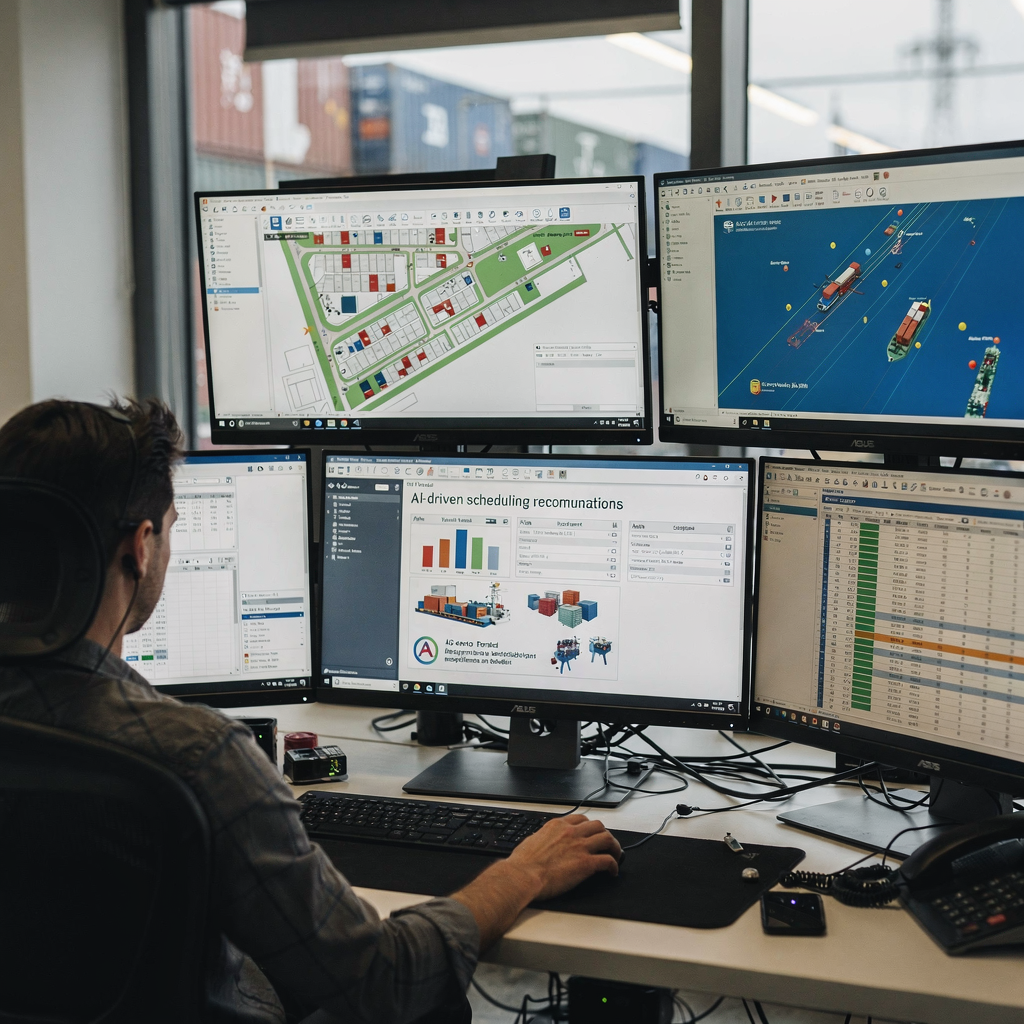
Logistics rethink: how automate solutions tackle port congestion and yield gains
Automation solutions are reshaping how logistics hubs manage congestion and cargo flow. Port congestion reduces cargo throughput and raises transport costs. Automated workflows, gate automation, and digital freight platforms cut truck waiting times and smooth yard operations. For many terminals, integrating rail and road hinterland connections via digital platforms reduces tailbacks and avoids costly idle time. Dynamic berth scheduling and vessel arrival prediction are crucial to smoothing cargo flows and cutting berth waiting.
Digitalization helps terminals prioritize moves when resources are constrained. For example, automated gate systems can cut truck waiting times by up to 40% when combined with better appointment systems and automated equipment dispatch. These improvements feed through to the global supply chain and shipping industry by making schedules more reliable and freight capacity easier to plan. In a market with overcapacity pressures in 2026, improved scheduling helps carriers maintain service quality and reduces costly blank sailings. The link between better port operations and freight reliability has been noted in recent market outlooks 2026 Supply Chain Outlook.
Loadmaster.ai contributes to this rethink by automating job scheduling and improving equipment responsiveness. Our JobAI coordinates moves across quay, yard, and gate to reduce waits and boost crane utilization. For terminals exploring gate and job scheduling gains, see our work on internal terminal transport scheduling and gate-related optimizations internal terminal transport job scheduling for container terminals. Altogether, automation solutions connect terminal operating decisions to rail and road schedules, enabling a more responsive logistics landscape and helping trade partners plan capacity across the global logistics network.
Drowning in a full terminal with replans, exceptions and last-minute changes?
Discover what AI-driven planning can do for your terminal
Sustainability in container terminal automation: green port initiatives for 2026
Sustainability is a top driver of automation choices in 2026. Electrification of quay cranes and AGVs reduces emissions and supports port climate goals. Studies show electrified equipment can cut CO₂ per move by a meaningful percentage when paired with renewable power. Many ports now install shore-power connections for berthed vessels and use on-site renewables to lower grid impact. These measures support broader maritime decarbonization and meet stricter environmental regulations.
Automation and IoT make green operations easier to manage. Real-time energy monitoring lets terminals optimize charging schedules for automated guided vehicles and automated equipment to favor times of low carbon intensity. Water- and waste-management automation also reduces environmental footprint while improving regulatory compliance. For terminals seeking an AI-assisted sustainability roadmap, our guide on sustainable operations explains how policy-driven control and simulation reduce energy and fuel use sustainable port operations with AI.
Avoiding high container dwell times also reduces emissions from idling trucks. Gate automation and predictive scheduling help cut those waits and lower local air pollution. Electrified yards further reduce onsite emission exposure. In sum, investing in automation technologies is increasingly framed as an investment in climate resilience and port competitiveness. The sustainability gains include lower fuel consumption, reduced operating expenses, and better community outcomes near major maritime hubs. Ports must therefore weigh automation projects not only for throughput and cost but also for long-term emission reductions and compliance with evolving standards in 2026 and beyond.
Port labor transformation: workforce roles amidst automation and future forecasts
Automation changes work at the terminal. Manual loading roles decline while system supervision, remote crane operation, and data analysis grow. The workforce shifts into roles that require digital skills, AI literacy, and robotics maintenance. Upskilling programmes become a core part of automation projects. Operators invest in training so staff can manage terminal operating software and oversee automation system behaviour safely.
These shifts also affect labour-costs and operational planning. Automation can lower operating expenses by 10–20% while requiring retraining investments. Terminals often adopt a mixed model with semi-automated terminals operating beside fully automated terminals during transition periods. Change management is key. Clear governance, safety protocols, and explainable AI controls help unions and staff accept new workflows. Our RL-based approach eases adoption because the AI trains in a sandbox and deploys with guardrails. This reduces risk and helps preserve tribal knowledge by encoding rules and performance objectives into repeatable policies.
For longer-term forecasts, expect continued collaboration between port authorities, training institutions, and vendors. Roles such as remote crane operator, scheduler, and AI systems auditor will become common. Automation also creates new jobs in analytics and cybersecurity. Terminals that invest in human-centred automation will both improve port competitiveness and maintain social licence to operate. For planners interested in improving equipment moves and saving fuel, see our related optimization work optimizing equipment moves to save fuel.
FAQ
What is the market size for automation in container terminals in 2026?
The global port infrastructure market is projected at US$222.1 billion in 2026, according to market estimates market is projected. That figure reflects a mix of equipment, software, and infrastructure investments tied to automation projects and port expansion.
How does AI improve terminal operations?
AI enables predictive maintenance, better scheduling, and dynamic resource allocation. For terminals without large historical data sets, reinforcement learning can train agents in a digital twin to optimize multiple KPIs simultaneously.
Will automation reduce port congestion?
Yes. Gate automation, dynamic berth scheduling, and real-time dispatch systems reduce truck waiting and smooth berth usage. These changes translate to lower dwell times and improved cargo throughput.
Are sustainability gains real with automation?
They are. Electrified quay cranes and AGVs lower emissions per move, while real-time energy management ties equipment charging to cleaner grid periods. Renewable installations and shore power further reduce vessel-related emissions.
What happens to jobs at automated terminals?
Jobs shift rather than vanish. Manual roles decline while new roles in supervision, data analysis, and remote operation increase. Upskilling programmes are essential to manage this transition.
How do terminals measure ROI on automation?
Terminals track KPIs such as crane moves per hour, berth occupancy, yard utilisation, and reduced rehandles. For a structured approach, see guidance on measuring AI ROI in terminals measuring ROI of AI.
Can older terminals adopt automation without major disruption?
Yes. Brownfield strategies allow phased rollouts of gate automation and selective crane automation to protect throughput during upgrades. Our brownfield versus greenfield resource explains common approaches brownfield versus greenfield container port automation.
How do automated guided vehicles fit with existing fleets?
AGVs often function alongside manual trucks in mixed fleets. AI-based equipment pooling helps assign moves across automated guided vehicles and manual equipment to optimize response and fuel use AI-based equipment pool optimization.
What role does digitalization play in 2026 trends to watch in 2026?
Digitalization ties together IoT, AI, and terminal operating systems so terminals can operate with better visibility and control. It is the backbone for dynamic scheduling and real-time decision-making across the supply chain.
How do small and mid-size terminals approach automation projects?
They prioritize high-impact areas such as gate automation, crane automation, and yard optimisation. Pilot projects with measurable objectives help demonstrate benefits before scaling to full automation or full automation targets.
our products
 stowAI
 stackAI
 jobAI
jobAI
Innovates vessel planning. Faster rotation time of ships, increased flexibility towards shipping lines and customers.
Build the stack in the most efficient way. Increase moves per hour by reducing shifters and increase crane efficiency.
Get the most out of your equipment. Increase moves per hour by minimising waste and delays.
stowAI
Innovates vessel planning. Faster rotation time of ships, increased flexibility towards shipping lines and customers.
stackAI
Build the stack in the most efficient way. Increase moves per hour by reducing shifters and increase crane efficiency.
jobAI
Get the most out of your equipment. Increase moves per hour by minimising waste and delays.