
Container Terminal, Inland and Port Operations
However, therefore, thus, then, next, also, consequently, meanwhile, likewise, similarly, hence, subsequently, alternatively, finally. These transition words help the reader move through complex ideas. They also set pace and clarity.
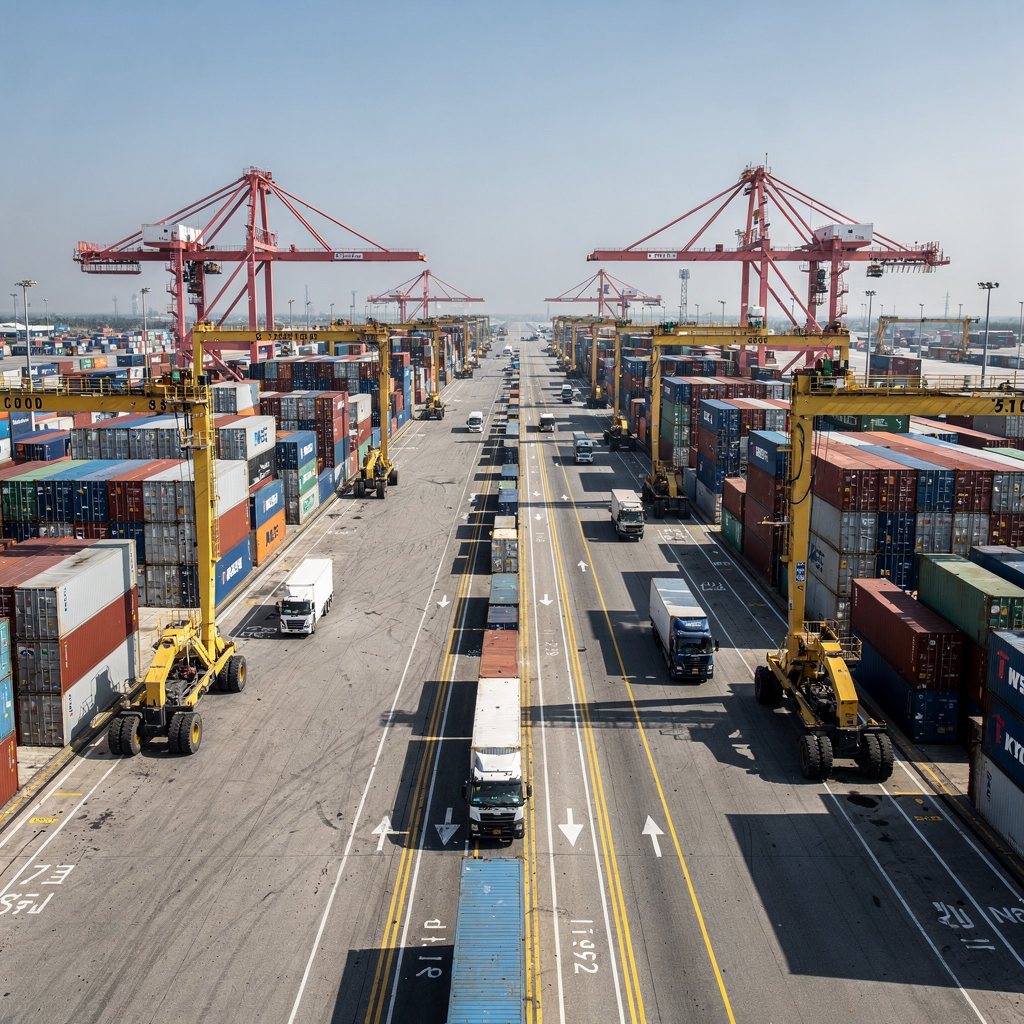
A container terminal serves as the node between vessels, hinterland modes, and local distribution. It receives import containers and dispatches export containers. It handles transshipment and local delivery. Terminal operations require careful coordination of quay activity, yard handling, and gate throughput. The yard layout typically divides blocks into stacks, lanes, and dedicated storage space for special equipment or cargo. Stacking rules define how many tiers a stack can hold and where empty and full boxes sit. The layout also determines access lanes for handling equipment and yard crane movement.
Throughput measures matter. Moves per hour (MPH) quantify crane productivity at the QUAY and the yard. Dwell time captures how long a container stays in the terminal before onward transport. Re-handling rates measure how often a container is moved more than once during its stay. A high MPH at the quay can reduce vessel or train turnaround time and lower turnaround time for BERTH allocation. However, a pure focus on MPH may increase re-handles and raise overall delay.
The trade-off between crane speed and yard organisation sits at the heart of many scheduling problems. If cranes load and unload faster, the yard can become congested. If the yard optimises stacking and reduces re-handles, the cranes can idle waiting for space or for integrated internal truck services. A balanced approach improves throughput while protecting storage space and operational efficiency. Academic studies report crane productivity ranges and yard impacts. For example, benchmark work shows terminals that balance yard strategy and crane pace hit about 30 MPH while keeping re-handle rates low (Key Findings On Terminal Productivity Performance Across Ports). Dr Maria Lopez warns that pushing crane speed too far creates downstream bottlenecks (Efficiency and Productivity in Container Terminal Operation). Equally, careful stacking can cut dwell time by around 10% but often reduces crane speed by several moves per hour (Impact of Port Efficiency and Productivity on the Economy).
Loadmaster.ai builds digital twins that show these trade-offs in realistic conditions. Our simulation-first approach helps planners test rules without risking live operations. For further detail on vessel side planning integrated with yard strategy, see our guide to container terminal vessel planning container terminal vessel planning explained.
Literature Review of Crane Systems
However, therefore, thus, then, next, also, consequently, meanwhile, likewise, similarly, hence, subsequently, alternatively. Transition words keep structure clear. They assist comparisons and summarised findings.
This literature review surveys research on crane systems and yard quality trade-offs. The literature overview includes classic authors such as Steenken and Stahlbock and recent empirical benchmarking. Steenken and Stahlbock appear in many comparative analyses of gantry and rubber-tyred setups. Shi and others offer models that include quay crane assignment and yard interactions. Studies typically contrast gantry, rubber-tyred, and automated crane systems. Gantry designs deliver proven handling efficiency with humans. Rubber-tyred cranes provide flexibility and lower capital cost for some yard layouts. Automated systems can reduce human variability and improve consistency, and an automated container terminal shows distinct benefits in sustained throughput.
Key metrics include crane availability, MPH, safety incidents, and re-handle frequency. For example, research reports typical crane productivity of 20 to 40 MPH across terminals, and it notes that pushing beyond 35 MPH often raises re-handling by 20–30% (Key Findings On Terminal Productivity Performance Across Ports). Other work finds improving container accessibility by 15% in the yard can cut overall dwell time by up to 10% while reducing crane speed by roughly 5 MPH (Impact of Port Efficiency and Productivity on the Economy). Dr Maria Lopez summarises the operational risk: “The key challenge in inland terminal management is to find the sweet spot where crane productivity and yard quality complement rather than compete” (Lopez quote).
The review compares performance across crane systems. It notes gantry cranes tend to excel at high MPH on fixed QUAY operations. Rubber-tyred options score for flexibility in yard operations. Automated solutions reduce human-caused variance and can improve operational efficiency and energy efficiency but require investment and integration. The literature identifies research gaps. Few studies model quay crane scheduling problem together with space allocation, YCS decisions, and integrated internal truck flows simultaneously. Many analyses treat quay and yard modules separately instead of considered simultaneously. This gap motivates integrated simulation models and simulation optimization work. For practical insights on shifting from rule-based planning to AI-driven control, see our article on transitioning from rule-based planning to AI optimization in port operations from rule-based planning to AI optimization.
Drowning in a full terminal with replans, exceptions and last-minute changes?
Discover what AI-driven planning can do for your terminal
Framework of Simulation-Based Optimization Method
However, therefore, thus, then, next, also, consequently, meanwhile, likewise, similarly, hence, subsequently, alternatively. These terms guide readers through method steps. They mark input, model, and output stages.
We present a modular framework of simulation-based optimization for supporting terminal decisions. The framework of simulation-based optimization starts with a digital twin and a set of data inputs. Inputs include vessel and train schedules, number of containers by type of container, equipment fleets, berth assignments, gate arrivals, and yard layout. The modelling core uses discrete-event techniques and agent-based components. Simulation models represent crane systems, yard crane movement, truck routing, AGV flows, and resource contention. The simulation-based optimization method integrates search with evaluation. It tests candidate policies in a simulated environment to score policy quality against KPIs such as throughput, yard congestion index, and cost.
Objectives include maximising MPH, minimising re-handles, and protecting storage space while reducing energy consumption. Constraints cover safety, equipment availability, and regulatory limits. Performance measures track throughput and the yard congestion index, plus container dwell time and the number of containers in each block. The framework supports a multi-objective evaluation so planners can see the trade-off between efficiency and energy. The objective function can explicitly include a penalty for re-handling and a term for efficiency and energy consumption.
Practically, the framework requires software platforms that can execute large-scale discrete-event runs and keep state for learning agents. Industry tools vary. Academic and commercial simulation models often use customised engines. Loadmaster.ai uses a simulation-first AI approach to spin up a digital twin that trains RL agents iteratively. This approach avoids heavy reliance on historical traces and improves cold-start readiness. For technical notes on simulation-first training and integration with TOS, see our whitepaper on simulation-first AI for inland container terminal optimization simulation-first AI for inland container terminal optimization.
Data requirements include telemetry from handling equipment, gate logs, and historical disruption patterns. With that data, the simulation-based optimization method can evaluate policies and search the solution space using meta-heuristic or exact methods as needed. A MIP model can support small instances, while heuristic methods handle NP-HARD problems at scale. The framework can also incorporate energy-saving objectives to support sustainability and energy efficiency targets.
Crane Scheduling and Yard Crane Scheduling Algorithm
However, therefore, thus, then, next, also, consequently, meanwhile, likewise, similarly, hence, subsequently, alternatively. These signals help readers follow scheduling logic and algorithm descriptions.
Crane scheduling defines rules for assigning tasks to cranes. These rules can be static or dynamic. Priority dispatch assigns the next container to the crane with the highest rank or shortest expected idle time. Dynamic allocation reacts to real-time yard states and can swap tasks to reduce travel and waiting. Crane scheduling in a container often needs to consider quay crane assignment, berth congestion, and interference among adjacent cranes. The quay crane scheduling problem remains NP-HARD in general, and exact methods only solve small instances optimally.
Yard crane scheduling involves stacking sequence decisions and retrieval planning. Yard crane decisions drive the number of reshuffles. Good yard crane scheduling reduces re-handles and shortens retrieval paths. In practice, yard operations are coordinated with quay tasks and gate flows. The integrated internal truck flow must be considered. Many terminals use YCS (yard control systems) to dispatch yard crane and truck tasks. The yc scheduling and yard crane scheduling problems combine allocation of tasks and the sequence of moves to maintain accessibility and minimise driving distance.
Exact methods such as MIP model formulations can find optimality for reduced-size problems. However, at operational scale, a terminal must use meta-heuristics and hybrid algorithms. Algorithms combine local search, priority-based rules, and lookahead simulation. For example, a terminal may use an exact method as a benchmark and then deploy a heuristic algorithm in production. Modern approaches use reinforcement learning for online scheduling and closed-loop control. Loadmaster.ai trains StowAI, StackAI, and JobAI to coordinate quay, yard, and gate tasks. This architecture reduces rehandles, balances workloads, and improves operational efficiency. For details on integrating job execution with PLC telemetry, read about improving equipment responsiveness through PLC-integrated AI systems improving equipment responsiveness.
Drowning in a full terminal with replans, exceptions and last-minute changes?
Discover what AI-driven planning can do for your terminal
Heuristic Algorithm for Multi-Objective Optimization
However, therefore, thus, then, next, also, consequently, meanwhile, likewise, similarly, hence, subsequently, alternatively. These connects prepare the reader for algorithmic design and evaluation.
This section introduces a heuristic algorithm designed for multi-objective trade-offs. We consider genetic, tabu search, and simulated annealing techniques. Each heuristic has strengths. Genetic approaches explore diverse policies by recombining good solutions. Tabu search focuses search around promising regions while avoiding cycles. Simulated annealing allows uphill moves to escape local minima. We also mention PSO as a complementary search primitive for continuous tuning. A tabu search algorithm sometimes pairs well with local repair heuristics for stack reshuffles.
We formalise the multi-objective problem to maximise MPH, minimise re-handles, and balance yard quality. The solution encoding includes assignment vectors for quay crane tasks and stack location choices for import and export containers. Constraint handling integrates stacking limits, berth windows, and handling equipment capacities. The heuristic algorithm evaluates each candidate using a fitness score derived from a weighted objective function. The objective function includes penalties for energy use, delays, and reshuffles. It supports preference changes so a terminal can prioritise throughput during peaks or yard balance during gate surges. Convergence criteria rely on fitness stability and computational budgets. The algorithm iteratively improves the candidate pool until fixes meet a convergence threshold or time budget expires.
We note that scheduling in a container terminal is similar to a flow shop scheduling problem with blocking constraints and sequence-dependent setup times. The search must explore a large solution space and manage NP-HARD complexity. To improve practicality, heuristics incorporate domain knowledge, such as prioritising export containers by vessel deadlines and reserving lanes for inward high-priority cargo. Hybrid designs combine exact methods as local optimisers and heuristic meta-search for global exploration. For a practical case study on crane split planning and sequence control at the quay and yard, see our automated container terminal crane split planning software overview automated container terminal crane split planning software. This article details how learning agents can produce time-saving strategies with consistent performance across shifts.
Numerical Experiments with Simulation and Yard Crane
However, therefore, thus, then, next, also, consequently, meanwhile, likewise, similarly, hence, subsequently, alternatively. These connectors prepare the reader for scenario design and KPI analysis.
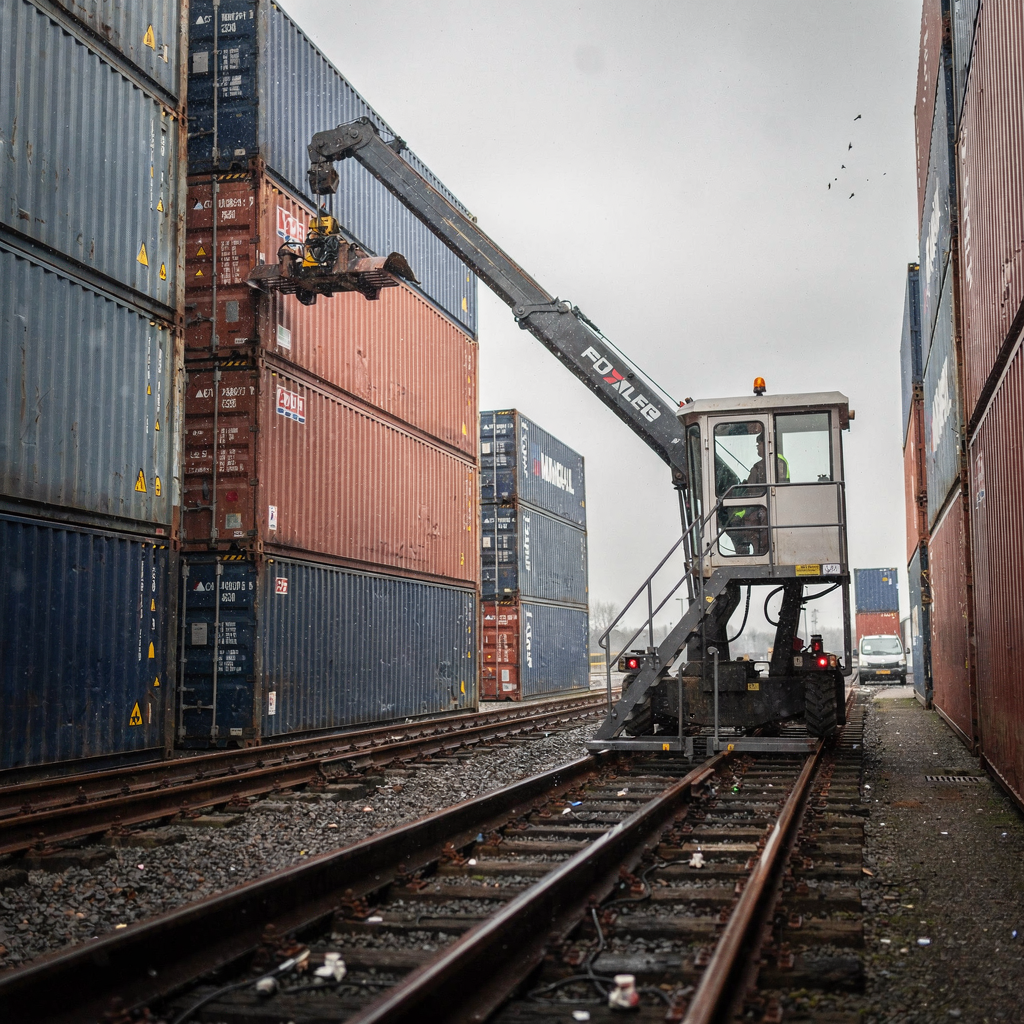
This section sets up numerical experiments using a production-grade simulator to evaluate policies. Scenarios vary demand patterns, yard layouts, and crane fleets. We vary the number of containers, the mix of import containers and export containers, and the sequence of berth arrivals. Baseline schedules reflect human planners and standard YCS rules. Optimised schedules arise from our heuristic algorithm and from RL-trained agents. Each scenario tracks throughput, yard utilisation, and container dwell time.
Experiment design includes sensitivity analysis to test robustness. We stress test cases with sudden gate surges and berth delays. In some runs we introduce equipment failures to measure resilience and to evaluate reducing truck emissions through routing changes. Key performance indicators include moves per hour at the QUAY, average dwell time, re-handle frequency, and yard congestion index. Numerical experiments confirm published ranges for crane productivity and rehandles. For instance, pushing crane productivity above 35 MPH correlates with a 20–30% increase in re-handling in the yard (Efficiency and Productivity in Container Terminal Operation). Other experiments reproduce results that improving yard accessibility by 15% can reduce dwell by 10% at the cost of about 5 MPH in crane speed (Impact of Port Efficiency and Productivity on the Economy).
Sensitivity analysis shows that small changes in allocation policies and YC scheduling thresholds can shift outcomes substantially. For example, reserving a lane for high-priority export containers cuts departure delays, helping minimise the total departure delay metric. Another finding is that hybrid control that reweights objectives during peaks achieves better operational efficiency than static weightings. Experiments also compare exact methods like MIP model runs on small instances against heuristic algorithm outcomes on full-scale layouts. The heuristics reach high-quality solutions far faster. Additional scenarios replicate multi-berth interactions and quay cranes interference. To see how simulation ties to implementation, our article on interfaces for data exchange with existing port operations TOS explains integration steps interfaces for data exchange with existing port operations TOS. Overall, numerical experiments validate that a balanced approach to crane and yard control supports throughput while protecting storage space and sustainability goals.
FAQ
What is the main trade-off between crane speed and yard quality?
The main trade-off is between immediate throughput at the quay and long-term accessibility in the yard. High crane speed can increase re-handling and longer dwell time, while careful stacking improves access but may slow down cranes.
How does simulation help with terminal decisions?
Simulation creates a repeatable environment to test scheduling and allocation rules without disrupting live operations. It lets planners run numerical experiments and evaluate KPIs under varied demand, equipment mix, and disruptions.
What types of crane systems are compared in the literature?
Researchers compare gantry, rubber-tyred, and automated crane systems. Each system has trade-offs in flexibility, capital cost, and handling efficiency. Automated systems tend to reduce variability and improve consistency.
Can an algorithm balance multiple objectives in a terminal?
Yes. Multi-objective algorithms combine targets like maximising MPH and minimising re-handles. Heuristic algorithm designs, genetic methods, and tabu search algorithm techniques can explore trade-offs and generate practical schedules.
What is a framework of simulation-based optimization?
It is a structured process that integrates discrete-event simulation with search methods to evaluate and find good policies. The framework of simulation-based optimization scores candidate rules against throughput, cost, and yard congestion index.
Are exact methods useful for scheduling?
Exact methods like a MIP model can prove optimality for small instances or benchmark problems. However, most real-world scheduling problems are NP-HARD and require heuristics or hybrid approaches for scalability.
How do yard crane scheduling and crane scheduling differ?
Crane scheduling often refers to quay and primary lift assignments at the berth. Yard crane scheduling focuses on stacking sequence and retrieval planning within yard blocks. Both must be coordinated for best results.
What role do AGVs and agvs play in the yard?
AGVs and agv systems automate container transport between quay and yard. They can reduce driving distances and help achieve energy-saving objectives, but they require careful routing problems solutions and integration.
How does Loadmaster.ai approach optimisation?
Loadmaster.ai trains RL agents in a digital twin to produce policies that balance quay productivity, yard congestion, and driving distance. The system is cold-start ready and does not rely solely on historical data.
What metrics should terminals use to evaluate schedules?
Terminals should track throughput, turnaround time, moves per hour, re-handle frequency, container dwell time, and energy efficiency. These KPIs reveal trade-offs and support decisions that improve operational efficiency.
our products
 stowAI
 stackAI
 jobAI
jobAI
Innovates vessel planning. Faster rotation time of ships, increased flexibility towards shipping lines and customers.
Build the stack in the most efficient way. Increase moves per hour by reducing shifters and increase crane efficiency.
Get the most out of your equipment. Increase moves per hour by minimising waste and delays.
stowAI
Innovates vessel planning. Faster rotation time of ships, increased flexibility towards shipping lines and customers.
stackAI
Build the stack in the most efficient way. Increase moves per hour by reducing shifters and increase crane efficiency.
jobAI
Get the most out of your equipment. Increase moves per hour by minimising waste and delays.