
Trade Options with thinkorswim®: A Platform Introduction
Option trading lets you buy or sell the right to transact a stock at a set price before an expiration date. First, understand that options can hedge portfolios and enable leveraged exposure. Next, simulate ideas before you risk capital. The thinkorswim® interface pairs real market data with advanced charting, so a user can model trades and review outcomes. For traders who want robust testing, thinkorswim (plain name) supports paper strategies and complex multi-leg orders. In one clear summary, emulation tools used in other industries highlight how testing before deployment improves operational outcomes; for terminals, emulation like CONTROLS improves throughput by up to 15-20% according to TBA Group. Similarly, a digital twin approach used in container terminals can mirror your trading practice: it creates a safe environment to learn and to refine tactics GEMINI Digital Twin. That comparison matters because thinkorswim blends realistic market feeds with an accessible sandbox. The YouTube tutorial that accompanies this post outlines the interface, order entry, and the analyze tab for probability-based planning. It guides a new trader through menu layout, option chains, and the paperMoney simulator so you can test without exposure. The tutorial describes risk metrics, delta, and how theoretical prices are derived from volatility inputs. For those who want to go deeper, industry research shows simulation helps forecast system behavior and supports strategic investment choices as illustrated in academic forecasting studies. Finally, thinkorswim offers a flexible environment to learn and to perform; it is both a learning space and a professional tool. Transitioning from practice to live trading requires discipline and a plan. If you want to explore terminal-like simulation concepts used outside finance, see our container-terminal simulation software page for parallels in testing and tuning operational rules.
schwab and charles schwab Account Setup for Options Trading
To start options trading you first need an account with Schwab. Open an account online with Charles Schwab. The process asks for ID, investment goals, and experience. Then you request options permissions. Click through margins and permissions during your account setup. After approvals, you can access the thinkorswim® platform. To access the thinkorswim® platform, download the desktop client and sign in with your Schwab credentials. The platform setup asks whether you want live or paper mode. Many users enable papermoney to practice before they risk cash. You should also read the options disclosure document once, then confirm you understand assignment risk and margin obligations. After that, enable margin if you plan to trade spreads or more advanced positions. Schwab provides educational resources and a demo mode that functions like a trading simulator found in academic labs. One simple step in the tutorial shows how to change account type to allow multi-leg orders. If your account is approved for options, you will see options chains and permission to place simulated options orders in the papermoney® to practice environment. Remember to add two-factor authentication and set up funding rules for live access. For practical guidance on terminal-like testing and integration, our article on terminal-operating-system-simulation-integration explains how sandboxed testing supports safe deployment in operations, and it offers a useful analogy for traders who want to stage changes carefully. Finally, Schwab support can help with questions about security and about margin. Keep files of confirmations and regulatory disclosures. This careful setup reduces compliance issues and prepares you to trade responsibly.

Drowning in a full terminal with replans, exceptions and last-minute changes?
Discover what AI-driven planning can do for your terminal
Simulate Option Strategies with the thinkorswim® tool
Open the paperMoney mode to run a simulated trade without capital at stake. The paperMoney simulation lets you pick an options chain and create multi-leg orders. To practice a bull call spread, select a lower-strike call to buy and a higher-strike call to sell. Then choose sizes and place the simulated trade. For a neutral approach, enter an iron condor by selling an out-of-the-money put and call while buying protection further out. The tool shows estimated margin, premium, and theoretical profit and loss. You can also use the trading simulator mode to test order execution differences across strategies. Use the analyze tab to review a position’s risk/reward across expiration dates and implied volatility shifts. The model displays a risk profile that highlights max loss, max gain, and break-even points. When you change quantities, the platform updates the simulated trade’s P/L instantly. If volatility spikes, you can rerun scenarios using historical data and see how the theoretical price moves. Thinkorswim (plain) also allows backtesting on short windows and inspecting historical data to underlie scenario assumptions. For traders who prefer structured learning, the tutorial walks through order types, order routing, and how market data feeds affect fills. As you practice, track each position by date and by underlying stock price. Our team at Loadmaster.ai often emphasizes simulation for terminals because testing policies in a sandbox yields robust policies before live systems apply them; similarly, trading in paperMoney keeps learning safe and measurable. When ready, move from paper to a small live allocation and apply the same risk rules you tested during simulation.
Assessing Risk Profile and Probability Analysis in a Simulated Trade
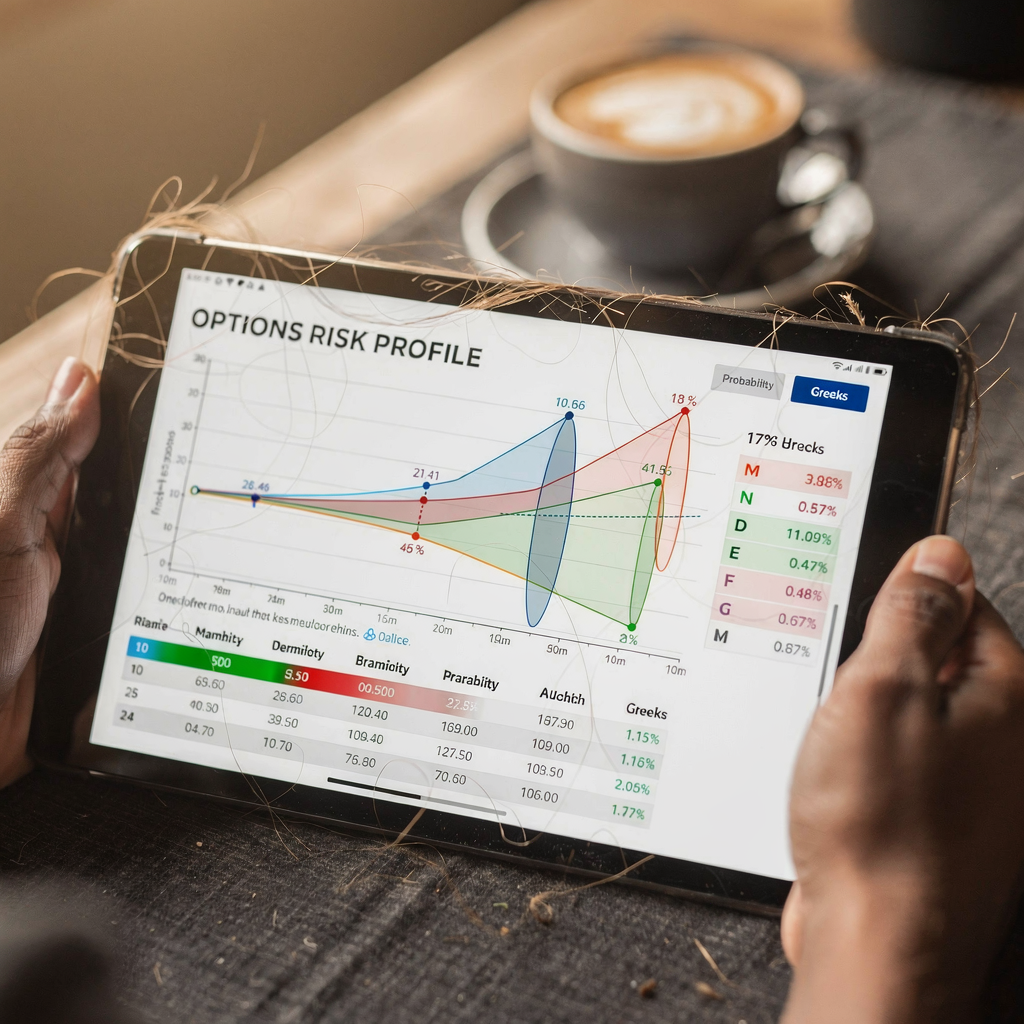
Assess risk with clear visuals. The risk profile chart shows profit and loss at expiration across a range of stock prices. It marks maximum loss and maximum gain. Read the horizontal axis to see where break-even points lie. The analyze tab offers probability metrics and a probability analysis view that helps estimate the chance a trade will finish in the money. Use the probability cone to visualize expected stock price dispersion and the probability ITM overlays to refine strike selection. The platform uses delta as a proxy for movement sensitivity and for short-term probability. While probability helps, remember implied volatility drives option premiums; higher volatility inflates premium and shifts theoretical fair value. You can stress test positions by editing implied volatility inputs and by applying historical data to see how past events affected option premiums. The thinkorswim (plain) tools also calculate theoretical Greeks and provide a live theoretical price for orders. Always consider worst-case scenarios and set stop rules for acceptable loss. Traders should combine probability outputs with position sizing to manage exposure. Our container-terminal work shows that balanced KPIs and simulated stress tests create resilient operational policies; in trading, similar simulated stress tests build durable strategies. Finally, create a checklist to read the options disclosure document before opening live positions. That step ensures you understand assignment, margin calls, and liquidity issues. Regular review of simulated performance reduces surprises when you invest real capital.
Drowning in a full terminal with replans, exceptions and last-minute changes?
Discover what AI-driven planning can do for your terminal
Optimising Your trading platform: Better Trading Platform Insights
Comparing platforms helps you choose the best fit. Thinkorswim stands out for customization, advanced charting, and deep option analytics. It lets users create custom layouts, watchlists, and alerts. Those features matter when speed and clarity underlie decision-making. If you want a better trading platform, prioritize fast order entry and clear risk visuals. thinkorswim (plain) supports scriptable studies and flexible workspace presets. It also gives access to market data and to volatility surfaces so you can review skews and smiles. For many, the ability to add gadgets and custom tools increases productivity. The platform’s premium features include alert chaining and multi-leg ticket templates. If you trade multiple securities, a good platform will show correlation studies and let you group positions by sector. For options-focused traders, integrated probability tools and theoretical pricing are essential. You can attach news feeds and educational overlays to streamline learning. If you want to study parallels, our article on terminal-digital-twin-software explains how modular testing and scalable interfaces reduce deployment risk in complex systems; traders gain by applying the same modular approach to tool selection. Finally, when you evaluate platforms, check execution quality, latency, and whether the provider offers a trading simulator for safe rehearsals. These checks protect capital and improve the learning curve for new and experienced traders alike.
Building Your Trader Portfolio: Analysis and Growth Strategies
Combine simulated results with live positions to build a resilient portfolio. Start by listing all open positions and simulated trade outcomes. Then compute aggregate exposure by underlying and by sector. Use risk/reward ratios and volatility-adjusted position sizing to balance the book. Tools on thinkorswim (plain) let you review portfolio Greeks across expirations so you can see net delta, gamma, and vega. That analysis helps when market volatility shifts and when you need to hedge. Backtesting small strategies with historical data provides context for expected returns and for drawdown scenarios. When you plan growth, set clear objectives and a timeline for the next steps. For example, move from paperMoney to live allocation only after consistent simulated outcomes and after you validate the setup for execution and order routing. Monitor position-level P/L and set stop levels for defined loss tolerances. If you want to diversify, consider income strategies like credit spreads or protective plays using long puts. Remember that every options move involves premium exchange and time decay, so monitor theta decay as it underlie returns. Loadmaster.ai’s experience with reinforcement learning agents shows that iterative simulation and policy refinement lead to stable outcomes in complex systems; traders benefit from similar cycles of test, refine, and deploy. Finally, maintain an educational routine and keep a trading journal. That habit helps you track what worked, what didn’t, and how to adjust for changing market conditions in the future.
FAQ
What is the best way to start using thinkorswim for options testing?
Begin in paper mode to avoid risking capital. Use the paperMoney simulator, follow a tutorial, and practice simple spreads before attempting complex multi-leg positions.
How do I enable options permissions on a Schwab account?
Apply for options trading during account setup or in account settings. Schwab will review your experience, financial information, and investment objectives before granting permission.
Can I simulate an iron condor on thinkorswim?
Yes. Use the options chain to select strikes, create the multi-leg order, and place it in paperMoney. Then monitor the simulated trade and adjust as needed.
What is a risk profile chart and why does it matter?
A risk profile chart shows profit and loss across stock prices and expirations. It helps you see maximum loss, maximum gain, and break-even points before you place a real trade.
Where can I find probability tools in thinkorswim?
Open the analyze tab to access probability views and cones. Those tools calculate probability ITM and provide theoretical pricing based on implied volatility.
Is thinkorswim suitable for new traders?
Yes, it is suitable for all investors because it offers both educational materials and advanced features for experienced traders. Begin with paperMoney® to practice in a safe environment.
How should I manage loss when transitioning from paper to live trading?
Use conservative position sizing and set stop levels based on simulated loss scenarios. Start with a small live allocation and scale up as you demonstrate consistent results.
Do I need to read the options disclosure document before trading?
Yes. Read the options disclosure document to understand assignment, margin, and strategy-specific risks. That step is required and protects both you and your broker.
Can historical data be used for backtesting options strategies?
Historical data supports limited backtesting, but be mindful that implied volatility and execution conditions change. Use backtesting as one input among others when you plan trades.
What resources help me improve trade selection and portfolio growth?
Combine platform tools, educational tutorials, and consistent simulation results. Also track performance in a trading journal and review both simulated and live positions to refine strategy over time.
our products
 stowAI
 stackAI
 jobAI
jobAI
Innovates vessel planning. Faster rotation time of ships, increased flexibility towards shipping lines and customers.
Build the stack in the most efficient way. Increase moves per hour by reducing shifters and increase crane efficiency.
Get the most out of your equipment. Increase moves per hour by minimising waste and delays.
stowAI
Innovates vessel planning. Faster rotation time of ships, increased flexibility towards shipping lines and customers.
stackAI
Build the stack in the most efficient way. Increase moves per hour by reducing shifters and increase crane efficiency.
jobAI
Get the most out of your equipment. Increase moves per hour by minimising waste and delays.