
Introducing tos-Agnostic Plugins for terminal Operations
TOS-agnostic software plugins change how a terminal runs daily. First, they act as neutral extensions that connect to many TOS platforms. They enable operators to integrate AI and other advanced tools without vendor lock-in. In addition, terminals gain vendor independence and seamless integration. For example, a system that converts vendor-specific messages into a common format lets software modules work across the terminal. A patent describes “processing data in a TOS format associated with a TOS type, converting the data into a TOS agnostic format, and performing processing” which explains the technical basis for this approach (US9495657B1).
Terminal teams gain measurable outcomes. For instance, a Fraunhofer CML study found terminals became “more productive, lean and independent,” and reported efficiency gains up to 20% when adopting modern TOS layers (Fraunhofer CML). Also, terminals that add TOS-agnostic API layers report faster decision-making and fewer manual steps. A recent industry review shows a roughly 30% reduction in manual email triage and a 15–25% rise in throughput when AI uses agnostic data plumbing (Loadmaster.ai).
Operators now face a strategic choice. They can keep a single integrated TOS, or they can deploy agnostic plugins to scale functionality. Loadmaster.ai builds reinforcement learning agents that sit on top of neutral data layers to automate vessel stow, yard placement, and execution. These agents enable terminal operators to improve productivity while keeping their TOS choices open. As a result, terminals reduce firefighting, minimize rehandles, and streamline container movements. Thus, TOS-agnostic plugins serve both tactical fixes and strategic modernization for terminals.
Enhancing a terminal operating system with cloud-based terminal operating system Extensions
Cloud-based terminal operating system modules bridge old and new systems. Middleware and APIs translate formats so legacy TOS platforms can benefit from new services. For example, a cloud-based terminal operating system module can expose real-time telemetry and scheduling endpoints. Consequently, terminals can run optimization services in the cloud while their base TOS remains on-prem. This reduces upfront cost and speeds deployment.
Middleware does the heavy lifting. It standardises messages, manages security, and enables scalable processing across multiple terminals. In addition, a cloud approach supports a pay-as-you-go automation as a service model. Terminals gain scalability, lower capital risk, and faster feature rollout. Cloud modules give a user-friendly interface for yard management and berth planning, and they provide terminal data streams for AI. For further reading on yard deployment and workload balancing, see our article on AI-based workload balancing for wide-span yard cranes.
Many terminals prefer incremental upgrades. They add a cloud module for gate operations first, and then extend to yard management. This phased deployment reduces downtime and lets staff adapt. A quick case study shows rapid deployment with minimal downtime. A mid-size container terminal spun up a cloud-based module and integrated it with its installed TOS in under six weeks. The result: faster gate turnaround and smoother equipment control. In short, cloud-based modules let a terminal optimise terminal processes and support new tooling without wholesale replacement.
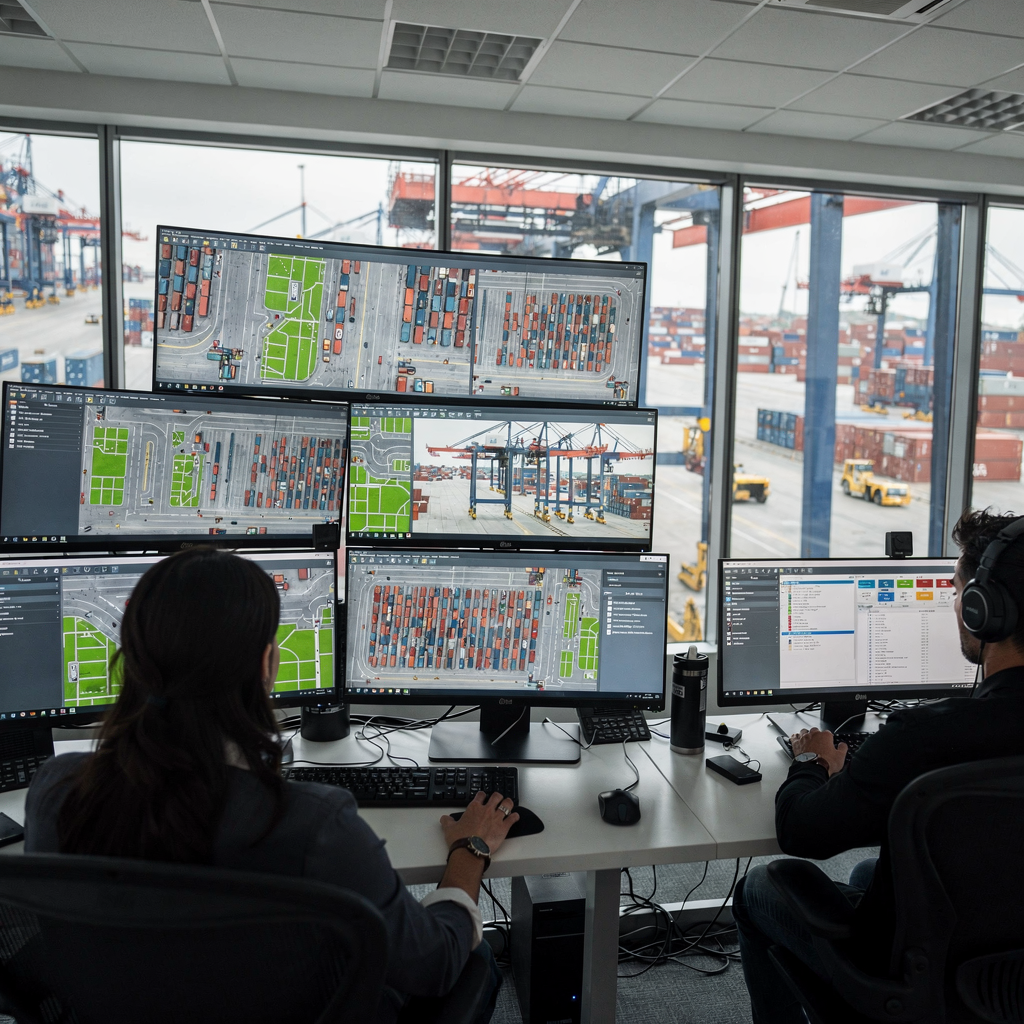
Drowning in a full terminal with replans, exceptions and last-minute changes?
Discover what AI-driven planning can do for your terminal
Optimise container terminal workflow with Kalmar One Plugins
Kalmar One offers a framework to plug in automation and analytics. Kalmar One integrates with a container terminal operating system to provide equipment control and movement and storage functions. For terminals adopting Kalmar One, AI-driven scheduling and resource allocation become practical. For example, Kalmar One can coordinate RTGs, straddle carriers, and cranes to reduce idle time. Additionally, a Kalmar One deployment can link to third-party AI modules to optimise container flow.
AI models feed on terminal data. When combined with Kalmar One, models can provide real-time yard planning and berth allocation recommendations. These models improve productivity and reduce bottlenecks. Loadmaster.ai’s RL agents can sit alongside Kalmar One to close the loop between planning and execution. They train in a digital twin and then guide the live system to automate moves and balance load. As a result, terminals reduce manual triage by about 30% while increasing crane utilization and lowering driving distances (Loadmaster.ai).
Kalmar One also supports a modular automation system that enables terminal operators to add functionality as needed. The system supports a user-friendly user interface and offers hooks for equipment telematics, which makes it simpler to integrate new software solutions. In practice, a container terminal that pairs Kalmar One with agnostic AI tools can reduce rehandles and smooth workflows. That combination helps optimise yard workflows, optimise terminal throughput, and provide terminal operators with predictable performance across shifts. For details on optimizing yard equipment deployment, see our guide on optimizing yard equipment deployment in deepsea container ports.
Automate port and intermodal Processes for Smarter Logistics
Automation across the port and intermodal chain improves handoffs. End-to-end container flow automation links vessel planning, yard operations, and gate handling. In practice, terminals integrate ERP, accounting, and customs systems so paperwork no longer blocks movement. This reduces wait time and cut manual processing. For example, linking customs clearance to gate release can speed gate operations and avoid congestion. Therefore, terminals cut turnaround time and increase throughput.
Integrating systems requires careful design and security. Terminals must standardise APIs and data formats, otherwise integration projects stall. To standardise, stakeholders often adopt a neutral data model and apply secure APIs. Secure gateways encrypt data in transit and enforce access control. Additionally, terminals should run penetration tests and audit trails to meet compliance. For real-world best practices about berth and crane planning, review our article on container terminal berth and crane planning.
Intermodal connectors let terminals pass container movements to rail and truck partners seamlessly. They also enable automated container handling with fewer manual touches. Still, challenges persist. Standardisation across ports and terminals must mature, and legacy system interfaces need updates. However, when integration succeeds, terminals see better predictability, lower costs, and stronger operational efficiencies. In short, automating intermodal flows lets terminals streamline operations and provide terminal operators with better situational awareness.
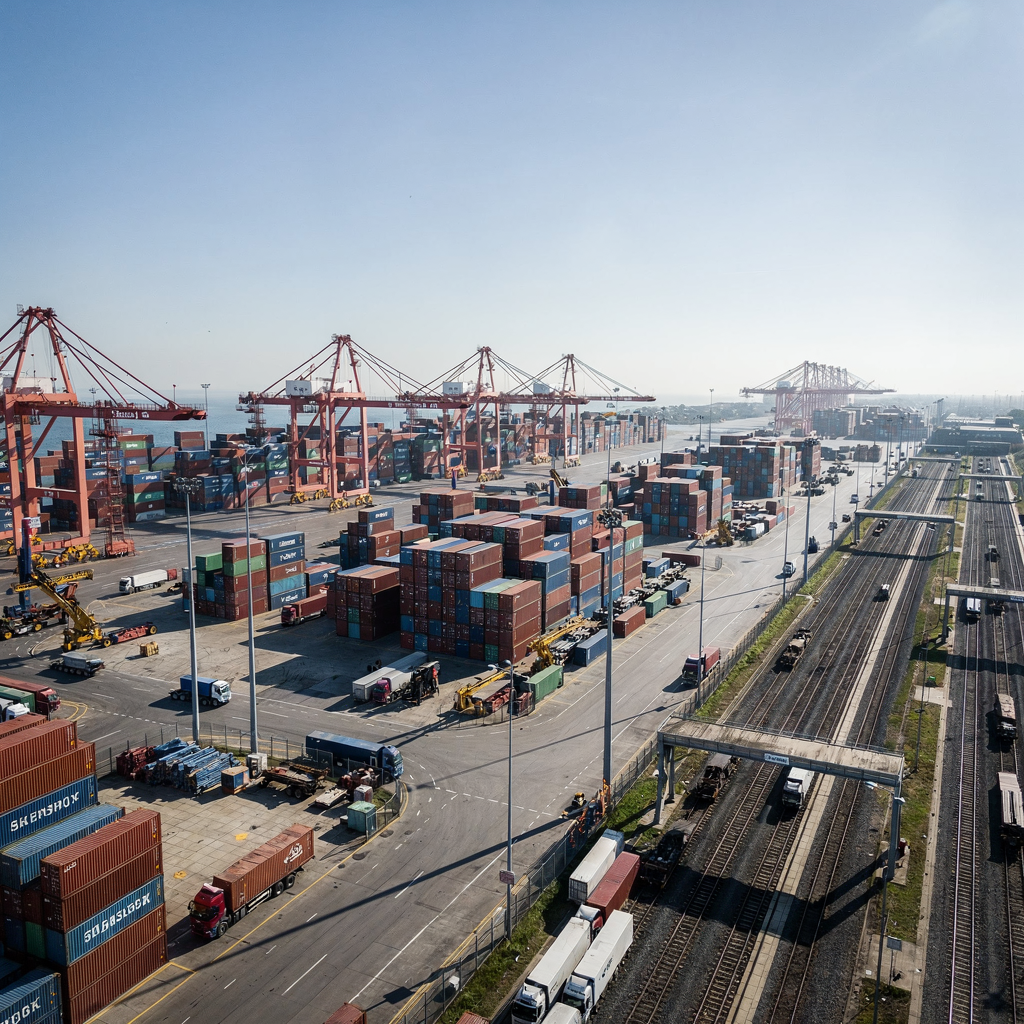
Drowning in a full terminal with replans, exceptions and last-minute changes?
Discover what AI-driven planning can do for your terminal
AI-Driven optimization and system development Strategies for Advanced Operations
Developers now build custom algorithms on agnostic data layers. These algorithms run machine learning algorithms or reinforcement learning to solve complex trade-offs. For example, Loadmaster.ai trains RL agents in a digital twin so they learn policies without relying on historical data. This approach reduces the need for extensive historical records and avoids copying past mistakes. As a result, the AI can search policy space for better plans and adapt to new conditions.
Continuous improvement matters. Teams must instrument the system to feed back live KPIs. Then, the models can optimise using those signals. Align system development with operational KPIs so the model targets quay productivity, yard balance, or drive time. This method ensures the software development cycle delivers measurable gains. Additionally, robust A/B testing in a sandbox helps validate algorithms before they run in production. For a guide on terminal KPIs and optimization approaches, consult our resource on container terminal KPIs optimization approach with AI.
Security and auditability guide development. Systems should log decisions and expose explainable metrics. This supports governance and readiness for regulations like the EU AI Act. Also, developers must make the user interface clear so planners trust automated recommendations. In practice, a terminal that combines agnostic feeds, explainable AI, and iterative releases will improve efficiency and productivity steadily. Finally, the system offers a path from pilot to full adoption while protecting operational continuity.
Strategies to optimize Efficiency and Future-Proof Your Infrastructure
Scale with phased and modular deployment. Start with a pilot block and then expand to the entire terminal. This minimizes risk and lets staff build confidence. Choose a scalable and flexible architecture that supports across multiple terminals and modules. For example, an automation as a service model enables terminals to test features before full deployment. Also, plan for hardware interfaces for cranes, straddle carriers, and terminal tractors so you can upgrade equipment control without replacing the TOS.
Adopt open standards where possible. Work to standardise message formats and API semantics across partners. Doing so simplifies integration with customs, ERP, and intermodal carriers. In addition, build a roadmap that aligns pilots to business KPIs. Start by optimising gate operations, then add yard management, and finally expand to berth and crane scheduling. This phased approach helps you minimize disruption and maximise returns.
Finally, future-proofing requires people, process, and technology. Train staff, establish governance, and document interfaces. Use digital twins to validate system changes and to test new automation strategies. Terminals that embrace agnostic plugins, invest in AI, and maintain openness will lead in efficiency and productivity. For tactics on reducing internal travel time, see our article on minimizing internal truck travel time in port operations. By following these steps, you can scale from a pilot to full-scale adoption while protecting daily operations.
FAQ
What is a TOS-agnostic plugin and how does it differ from integrated TOS modules?
A TOS-agnostic plugin connects to multiple TOS platforms through standardized APIs or middleware. It is not tied to one vendor. In contrast, integrated TOS modules live inside a specific terminal operating system and depend on that vendor’s interfaces.
Can an existing terminal automate without replacing its TOS?
Yes. Middleware and cloud-based modules let terminals automate without full TOS replacement. This approach reduces downtime and supports phased deployment so teams adapt gradually.
How do AI agents improve container terminal operations?
AI agents, particularly reinforcement learning, optimise decisions by simulating millions of scenarios. They reduce rehandles, balance yard loads, and improve crane productivity while adapting to real-time disruptions.
What security measures are needed for cross-system integration?
Implement secure gateways, encryption, access controls, and audit logs. Also, run penetration testing and maintain strict API authentication to protect terminal data and workflows.
Are there measurable efficiency gains from using agnostic plugins?
Yes. Studies and industry reports cite up to 20% productivity gains in some adopters and up to 30% reduction in manual triage for certain workflows (Fraunhofer CML, Loadmaster.ai). Results vary by terminal and scope.
How do you ensure interoperability across ports and terminals?
Standardise data formats and APIs, and adopt neutral data models. Collaborate with partners and equipment vendors to standardise interfaces and testing procedures for consistent integration.
What is the role of cloud-based terminal operating system modules?
Cloud modules provide scalable compute, real-time data streams, and pay-as-you-go deployment. They enable terminals to run modern services without replacing legacy TOS installations.
Can agnostic systems help with intermodal logistics?
Yes. They automate handoffs between truck, rail, and vessel flows and connect ERP, customs, and port systems to streamline the full container journey.
How do you measure success when deploying these plugins?
Track KPIs such as throughput, crane utilization, gate turnaround, and rehandles. Use digital twins to validate changes and monitor live metrics for continuous improvement.
How does Loadmaster.ai integrate with existing terminal systems?
Loadmaster.ai integrates via APIs and middleware and is TOS-agnostic by design. It deploys RL agents trained in a digital twin, then works with your TOS and equipment telemetry to deliver measurable gains without extensive historical data dependence.
our products
 stowAI
 stackAI
 jobAI
jobAI
Innovates vessel planning. Faster rotation time of ships, increased flexibility towards shipping lines and customers.
Build the stack in the most efficient way. Increase moves per hour by reducing shifters and increase crane efficiency.
Get the most out of your equipment. Increase moves per hour by minimising waste and delays.
stowAI
Innovates vessel planning. Faster rotation time of ships, increased flexibility towards shipping lines and customers.
stackAI
Build the stack in the most efficient way. Increase moves per hour by reducing shifters and increase crane efficiency.
jobAI
Get the most out of your equipment. Increase moves per hour by minimising waste and delays.