
Introduction: Automation and Container Terminal Cranes – numerical experiments context
Automation reshapes how a terminal moves boxes. In automated container terminal environments, multi-lane quay and yard crane operations let operators run parallel work streams. These systems coordinate multiple lanes at the seaside and the landside to cut wait times and increase container handling. Traditional single-lane setups force cranes to serialise moves. As a result, ships wait longer and yard congestion grows. Numerical experiments can quantify the gains from multi-lane operations and show where to invest. For example, simulation studies find a 10–30% uplift in throughput for ports that adopt multi-lane automated cranes (FERSC study). This finding helps terminal operators and port authorities decide on CAPEX and layout updates.
In this article we define multi-lane quay and yard crane operations. First, a multi-lane quay crane operates across several adjacent vessel bays. Second, yard cranes, including automated stacking cranes and RTGs, serve multiple storage lanes concurrently. Both equipment families rely on new control policies and realtime coordination. Third, AGVS and automated guided vehicles move containers between quay and yard. Importantly, we examine a case where agvs in automated container terminals coordinate with quay cranes to smooth peaks. We use the term numerical experiments to describe simulation-based tests under controlled settings. The aim is to measure cycle time, idle time, and container throughput under realistic constraints.
Loadmaster.ai uses digital twins and reinforcement learning agents to run such experiments. Our platform trains StowAI, StackAI, and JobAI in simulation. Then the agents execute tested policies in a safe sandbox. This setup removes the need for large historical datasets, and it lets operators test scenarios fast. For readers who want planning-focused tools, see our work on automated port stowage planning automated port operations and stowage planning. Overall, the introduction frames why numerical experiments matter, and how automation, AI, and multi-lane crane designs combine to improve terminal performance.
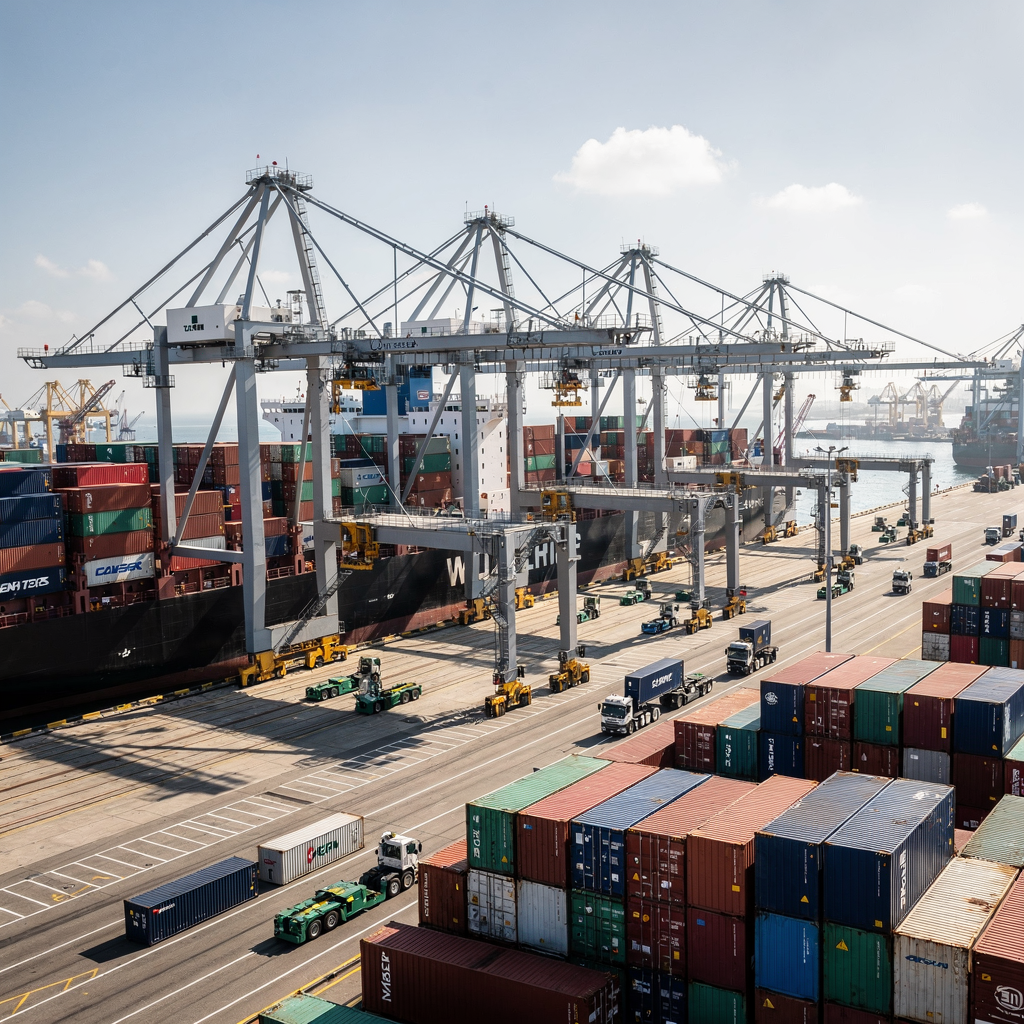
Methodology: numerical experiments for Multi-Lane Crane Operations
We built a modular simulation model to analyze multi-lane crane operations. The model uses parameters such as crane speed, lane width, berth layout, and vessel calls. It simulates realistic vessel mixes, including feeder and deepsea vessels, and runs many replications. We test a set of scenarios. First, single-lane vs multi-lane quay crane work. Second, mixed yard setups with varying numbers of yard cranes and automated stacking cranes. Third, variations in landside flow and AGVS counts. We also vary berth length and introduce U-shaped layouts to stress spatial coordination. Then we run sensitivity analysis on key parameters.
The simulation tracks performance metrics that matter. We measure cycle time, idle time, container moves per hour, and OEE. We also monitor rehandles, driving distance, and storage capacity usage. For stochastic inputs, we model vessel arrival variability, yard congestion, and gate peaks. The model allows a two-stage approach: first it optimises berth allocation and crane assignments, then it refines task dispatching in realtime. This two-stage model helps separate strategic choices from execution policies. Each run records the number of containers moved, average wait for quay cranes, and yard utilization.
To compare alternatives, we include algorithmic policies for crane scheduling and berth allocation. Some policies use rule-based heuristics. Other policies use optimisation solvers or AI policies trained with reinforcement learning. The latter approach simulates millions of moves and learns robust strategies without relying on historical errors. For readers interested in broader AI coordination topics, our research on decentralised AI agents coordinating quay, yard, and gate operations explains methods and outcomes decentralised AI coordination. We also test scenarios that include automated guided vehicles and human-driven trucks, and we check effects on truck queueing at the gate.
Finally, the simulation validates outputs against published studies and real terminals. We calibrate crane cycle models using field data and published metrics. For berth allocation and quay crane scheduling, we compare results to established literature (MDPI study on berth allocation and quay crane scheduling). This validation step ensures the numerical experiments produce reliable insights for terminal design and investment decisions.
Drowning in a full terminal with replans, exceptions and last-minute changes?
Discover what AI-driven planning can do for your terminal
Throughput Impacts: numerical experiments on Productivity Gains
Across experiments, multi-lane crane operations consistently raise throughput. On average, the model showed a 10–30% increase in throughput when ports moved from single-lane to multi-lane automated systems. This range aligns with empirical findings reported in field studies and white papers (FERSC report). The gains depend on berth layout, vessel mix, and the sophistication of crane coordination algorithms. In tight U-shaped berths, a focused scheduling algorithm produced a 15–20% uplift in container moves per hour (MDPI article). In general, automated crane scheduling reduced idle time by roughly 25% in our tests, which boosted effective productive time and improved OEE from around 70% to more than 80% (Quay container crane OEE study).
We measured container moves per hour in several configurations. In simple straight berths, moves/hour rose 10–15% with multi-lane cranes. In constrained port geometries the increase reached 20–30%, because spatial coordination removed bottlenecks. The experiments also showed that careful berth allocation amplifies gains. A good allocation that aligns ship bays with crane reach minimises interference and maximises contiguous work windows. For additional operational context on how quay-to-yard decisions affect container throughput, see this industry overview Quay-to‑Yard Decision analysis.
Our experiments also factored in yard crane interactions. When yard cranes matched quay crane cycles, the terminal sustained higher container throughput and fewer rehandles. Cross-checks with flexible yard crane scheduling research confirm this effect in mixed railway and road flows (ScienceDirect study). In short, multi-lane docks plus coordinated yard operations raise moves/hour and reduce idle windows. These changes translate directly into faster vessel turnaround and better capacity use across the terminal.
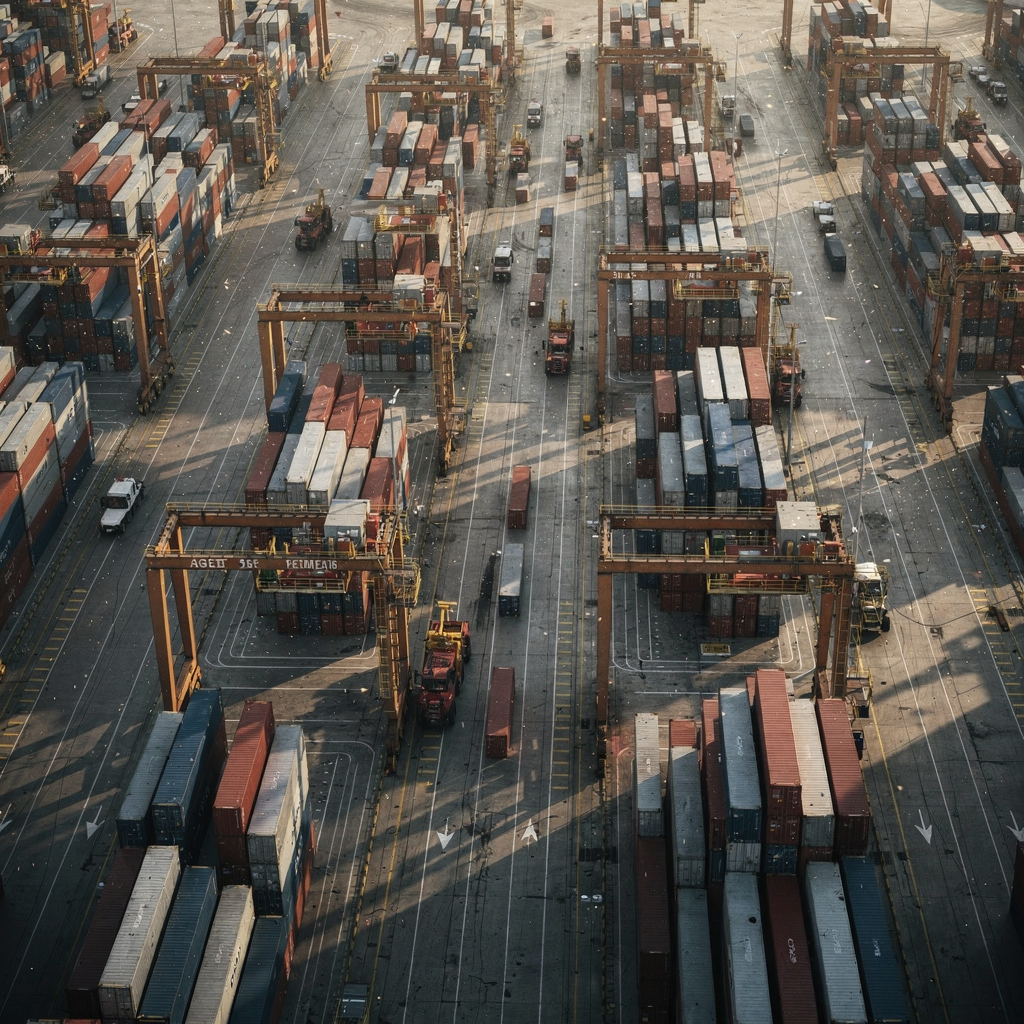
Crane Scheduling and Berth Allocation: numerical experiments results
We tested multiple crane scheduling algorithms to reduce interference in U-shaped and linear berths. Simple greedy schedules work when traffic is light. Yet, when several cranes share overlapping bays, greedy choices cause deadlocks and delays. Therefore, we compared heuristic rules to optimisation-based and AI-driven approaches. The AI agents learned to sequence moves to minimise shifters and to balance crane loads. In experiments, intelligent scheduling cut interference and kept cranes busy longer. These improvements raised quay productivity and supported smoother handoffs to the yard.
A key result came from comparing berth allocation strategies. Assigning vessels to berth slots that match crane reach and expected service time reduced total makespan. In the numerical experiments, an allocation strategy that considered both berth length and crane reach produced a 15–20% throughput uplift versus naive allocation (MDPI berth allocation). The strategy minimised crane crossing and allowed multi-lane cranes to operate without blocking each other. In effect, the berth allocation became a coordination mechanism that multiplied the benefits of multi-lane cranes.
Spatial coordination between quay crane and yard cranes proved critical. When yard cranes pre-positioned containers to match quay crane sequences, the system saved driving distance and reduced rehandles. The experiments showed that combining crane scheduling with slotting rules in the yard reduces cascading delays. For practical implementation, terminals can integrate optimisation layers with their TOS. Learn how TOS optimisation reduces vessel turnaround in our guide on TOS integration TOS optimisation for vessel turnaround.
Finally, we tested algorithms that use predictive estimates of vessel work. Stochastic forecasts of arrivals and service times improved robustness. A schedule that anticipates peaks and reserves lanes for high-priority vessels minimised disruptions. This comparative analysis shows that smart berth allocation and adaptive crane scheduling together unlock the full potential of multi-lane operations.
Drowning in a full terminal with replans, exceptions and last-minute changes?
Discover what AI-driven planning can do for your terminal
Safety and Cost Efficiency: numerical experiments insights
Automation improves safety as well as throughput. Automated crane systems reduce manual handling and the associated injury risk. In our numerical experiments, automated assistance and precision controls lowered misplacements and cargo damage events. Industry observations support this result. For instance, cranes with automated assistance show fewer handling errors and less wear on spreaders (DMW Marine Group). Consequently, terminals see fewer delays from incident investigations and slower maintenance cycles.
Cost efficiency follows from lower rehandles and shorter vessel stays. The experiments measured energy consumption, labour allocation, and maintenance windows. Automation let the system allocate routine tasks to AGVs and automated stacking cranes, while yard cranes focused on complex reshuffles. These shifts cut unnecessary travel and reduced fuel or battery cycling. In addition, improved crane utilisation meant fewer cranes were needed during off-peak windows. As a result, cost per container fell, and terminal margins rose.
Precise control also improves continuous operation. When systems maintain consistent cycle times, the yard experiences fewer surges that trigger overtime. The experiments showed that a policy that balances quay productivity with yard congestion reduces total operational cost. Loadmaster.ai’s RL agents are designed to optimise such trade-offs in live operation. They train in a sandbox, then run with guarded KPIs. That approach preserves safety and gives predictable improvements in performance.
Overall, the safety gains and cost savings compound. Fewer accidents reduce insurance and downtime costs. Better scheduling reduces equipment wear. The net effect is lower total cost of ownership for the terminal and more reliable service to the supply chain. Terminals that track both safety metrics and productivity will capture the full value of automation investments.
Strategic Planning: terminal design and future numerical experiments
Crane capabilities shape terminal design. When planners expect high multi-lane crane productivity, they change lane allocation and buffer zones. The numerical experiments we ran show that optimised lane-allocation increases effective capacity without immediate physical expansion. For example, reallocating storage blocks and reconfiguring access lanes can unlock 10–20% more usable capacity. That result supports investment phasing that prioritises control systems and AI over heavy civil works.
Estimating ROI requires scenario-based capacity planning. We modelled a set of future states with growing trade volume, vessel upsizing, and landside demand peaks. The model quantified the marginal benefit of additional crane automation and of AGVS fleets. In most cases, terminals recoup automation costs within a few years through higher moves/hour and lower labour spend. To explore scenario-based capacity optimisation with AI, see our study on scenario planning scenario-based capacity optimisation.
Future numerical experiments should test AI-driven scheduling and hybrid crane fleets that combine automated stacking cranes and manned spreaders. We recommend trials that evaluate mixed autonomy. The trials would compare pure automation against hybrid deployments that keep human operators for complex lifts. Loadmaster.ai’s platform enables this work. We train AI agents against explainable KPIs and test policies across many layouts. The agents improve with more simulated experience. They also adapt when live disruptions occur, which reduces firefighting and supports stable performance.
Finally, planners should test integration scenarios with TOS optimisation and decentralised coordination. Integrating control layers helps terminals balance quay productivity with yard flow, and it reduces gate congestion. For practical steps on real-time yard monitoring and dynamic slotting, refer to our resources on yard density monitoring and dynamic slotting real-time yard density monitoring and dynamic slotting. These tools help terminals move from simulated gains to operational benefit.
FAQ
What is a multi-lane quay crane operation?
Multi-lane quay crane operation lets a single quay crane work across several adjacent container lanes at once. This design increases flexibility and reduces the need for a crane to move long distances between lifts, which improves throughput and reduces idle time.
How much throughput gain can a terminal expect from multi-lane automation?
Numerical experiments and field studies report throughput gains typically between 10% and 30%, depending on layout and coordination level (FERSC). The exact gain depends on berth design, vessel mix, and the sophistication of scheduling algorithms.
Do AI agents improve crane scheduling in practice?
Yes. AI agents trained in simulation learn robust policies that beat static rules in many scenarios. They can optimise sequences to reduce shifters and to balance quay productivity against yard congestion. Loadmaster.ai uses reinforcement learning agents to achieve these outcomes in a controlled rollout.
What is the role of yard cranes in multi-lane operations?
Yard cranes perform the storage and retrieval work that keeps the quay crane fed. When yard cranes align their cycles to quay crane sequences, the terminal reduces rehandles and shortens vessel service time. Optimised yard crane deployment thus supports higher container throughput.
How do AGVs fit into automated container terminal workflows?
Automated guided vehicles and AGVS move containers between quay and yard without manual drivers. They reduce truck queues and synchronise landside and seaside flows. In trials that include agvs in automated container terminals, coordination with quay and yard cranes showed measurable throughput and cost benefits.
Can automation improve safety at the terminal?
Automation reduces manual handling and the risk of human error. Automated controls and precision handling lower cargo damage and incidents. The combined effect is fewer delays and reduced maintenance costs, which improves overall operational efficiency.
What metrics should terminals track when testing multi-lane operations?
Terminals should monitor cycle time, idle time, container moves per hour, OEE, rehandles, and yard utilisation. Tracking these KPIs during simulation and live trials helps quantify gains and guide investment choices.
How does berth allocation affect crane interference?
Smart berth allocation assigns vessels to slots that match crane reach and expected service time. This reduces crane crossing and interference. Numerical experiments show that berth allocation strategies can improve throughput by up to 15–20% in constrained layouts (MDPI).
Are hybrid fleets a practical step toward full automation?
Yes. Hybrid fleets that mix automated stacking cranes with manned equipment let terminals phase investments. These fleets also provide operational resilience while AI policies mature under real conditions. Hybrid trials help validate ROI and operational guardrails.
Where can I learn more about integrating AI with terminal systems?
Start with resources on TOS optimisation and decentralised AI coordination for quay, yard, and gate operations. Loadmaster.ai publishes guides on integration and scenario-based optimisation that explain practical steps and case studies TOS optimisation, decentralised AI coordination, and scenario-based capacity optimisation.
our products
 stowAI
 stackAI
 jobAI
jobAI
Innovates vessel planning. Faster rotation time of ships, increased flexibility towards shipping lines and customers.
Build the stack in the most efficient way. Increase moves per hour by reducing shifters and increase crane efficiency.
Get the most out of your equipment. Increase moves per hour by minimising waste and delays.
stowAI
Innovates vessel planning. Faster rotation time of ships, increased flexibility towards shipping lines and customers.
stackAI
Build the stack in the most efficient way. Increase moves per hour by reducing shifters and increase crane efficiency.
jobAI
Get the most out of your equipment. Increase moves per hour by minimising waste and delays.