
Terminal Operations in Terminals and Ports: Challenges and Goals
Modern terminal environments face constant pressure. Port lands are limited, and equipment often becomes a bottleneck. Demand can swing day to day, and this variability strains labor, machines, and processes. Terminal operations must handle peak surges while keeping berth productivity high. For example, berth productivity directly affects vessel turnaround times and overall throughput. Therefore operators track berth, yard dwell time, and crane utilization as core metrics. These metrics show where systems fail and where process optimization will pay off.
Central to this effort is a Terminal Operating System. A good terminal operating system centralises data, enforces rules, and gives operational teams consistent guidance. The TOS connects gate systems, vessel planning, and yard modules to provide end-to-end visibility. In practice, this reduces errors and improves coordination. For more on how stowage affects crane work and berth split, see this analysis of stowage planning and crane split strategies here. Also, the modern terminal needs to integrate TOS with sensors and ERP to optimize scheduling and resource allocation.
Ports and terminals now pursue terminal optimization to cut dwell time and reduce congestion. At the same time, terminal operators must balance throughput goals with safety and maintenance. The logistics industry demands measurable operational efficiencies, and terminal managers respond with data and technology. Still, legacy systems can slow adoption of new modules and procedures. Therefore phased rollouts are common, and training is essential. Ultimately, the goal is to optimize container flows, reduce costs, and raise productivity for cargo owners, shippers, and logistics providers.
Yard Management and Container Yard Utilization: Reducing Dwell Times
Yard management defines how the container yard is organised, scheduled, and used. Effective yard management increases container yard utilization and lowers dwell times. Studies show yard optimization efforts can boost yard utilization by 20–30% and cut congestion, which helps throughput and reduces handling costs here. In addition, combining density forecasting with other data sources improves forecast accuracy by roughly 15% source. These gains help terminals plan moves and allocate cranes and trucks more effectively.
Slot allocation and density forecasting work together to reduce rehandles and delays. For example, dynamic re-stacking uses algorithms to reposition containers proactively. This reduces the need for costly extra moves and improves gate turnaround. Similarly, advanced optimization modules predict peaks and free up space in time. As a result, yards can maintain efficient use of aisles and stacks while avoiding bottleneck areas. Furthermore, a cloud-based yard planning tool can share real-time data with trucking partners to streamline gate flow.
Real-time location data and visibility change how teams manage cargo. Sensors and IoT provide updates on container storage and exact locations within the yard. This real-time information supports optimized allocation of handling equipment and labor. Container yard managers can then reduce dwell and improve container moves per hour. Additionally, process optimization and yard operations improvements lower overall operational costs for terminals and for the wider supply chain. For related best practices around density forecasting, read more about advanced yard density forecasting here.

Drowning in a full terminal with replans, exceptions and last-minute changes?
Discover what AI-driven planning can do for your terminal
Crane Automation and Container Stacking for Improved Productivity
Automation and smarter stacking make a measurable difference. Automated cranes, guided by AI and rules-based logic, reduce cycle times and raise throughput. For instance, AI-driven stacking algorithms can suggest optimal placement to minimize future rehandles. Reports indicate such interventions often yield up to 15% gains in yard throughput and can reduce energy use by around 10% when cranes follow optimized paths source. These savings improve terminal performance and lower operating expenses.
Container stacking decisions rely on predicted container flows and planned vessel schedules. When a terminal can predict incoming maritime container volumes, it can pre-position equipment and staff. This reduces congestion and shortens turnaround. Also, the right stacking policy preserves access to high-priority cargo and improves service for shippers. To explore algorithms for container location assignment, see this work on smart assignment strategies smart algorithms. That research explains how AI modules decide where each box should go.
Safety and maintenance are core benefits of automation too. Automated cranes follow predictable patterns, which reduces risk and extends component life through smoother operations. Predictive maintenance can schedule downtime before failures, thereby avoiding longer outages and preserving throughput. Integration matters here. When crane control links to yard optimization modules, the entire system adapts in minutes rather than hours. For terminals adopting automation, change management and transparent performance goals help build trust with the crew. This approach helps terminal operators maintain reliable terminal service while they modernize handling operations and adopt container stacking policies that reduce inefficiency.
Terminal Operating System (TOS) and Seamless Integration of New Software
The architecture of a modern terminal operating system matters. A TOS should present a single source of truth and interface with IoT sensors, ERP, and equipment control layers. This saves time and avoids duplicated effort. A well-architected TOS also supports optimization modules for yard planning, gate planning, and vessel planning. When these modules communicate, they deliver real-time visibility across processes. This improves resource allocation and shortens turnaround times.
Seamless integration of new software is a common challenge. Existing terminal operating stacks often include legacy components. Integrators need to map data, translate messages, and test end-to-end flows. Best practice calls for phased deployment, API-first design, and middleware to handle translation. Also, cloud-based enhancements can provide scalability and faster feature updates. For example, AI modules for real-time equipment task allocation can plug into a TOS to balance jobs across vehicles and cranes AI task allocation. These modules give operators control while offering advanced optimization under varied conditions.
Operational visibility matters for terminals and ports. Real-time dashboards show utilization, crane status, and queue lengths. They help managers act before small issues become systemic bottlenecks. Still, the human element is important. Training, clear escalation rules, and collaboration between IT and operations reduce resistance. Companies that handle emails, exceptions, and operational queries well gain faster benefits.
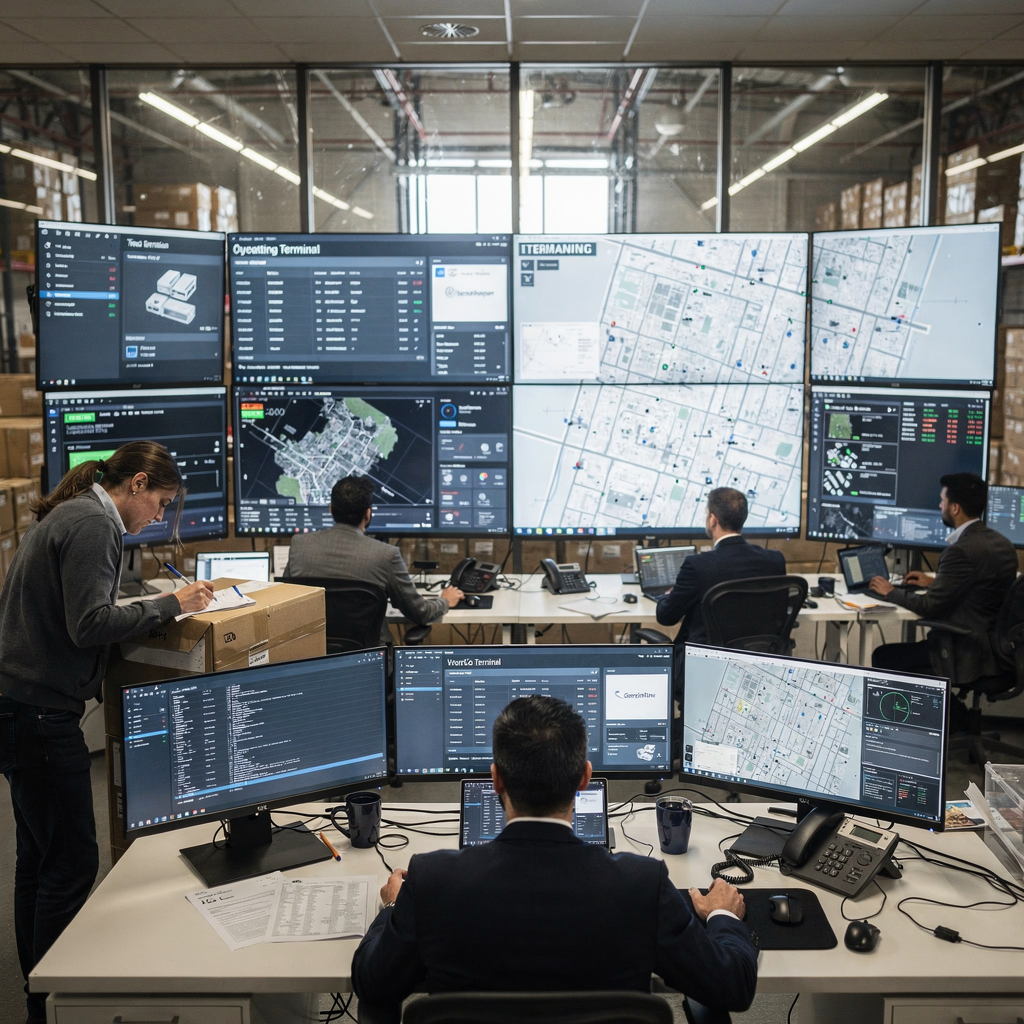
Drowning in a full terminal with replans, exceptions and last-minute changes?
Discover what AI-driven planning can do for your terminal
Maritime Container Flows and Optimization in the Supply Chain
Understanding maritime container flow is essential to optimize the movement of goods. Containers move from vessel discharge to yard stacking and then to hinterland transfer. Each handoff creates potential delay. Predictive Analytics and optimization engines forecast peak periods and align the equipment mix to demand. This ensures the right number of cranes, trucks, and yard handlers are available at the right time. As a result, terminals improve throughput and reduce turnaround for vessels and trucks.
Linking yard decisions to broader supply chain goals matters. When terminals share real-time visibility with ports, carriers, and inland carriers, scheduling improves. This reduces idle truck time and improves rail utilization. For deeper thinking on inland terminal throughput improvements without expansion, see this analysis on improving inland container terminal throughput inland throughput. Predictive models also help align crane schedules and gate shifts. Consequently, the whole chain moves more smoothly and costs less.
Advanced optimization techniques combine forecasts for vessel arrivals with yard space availability. These techniques help optimize container routing and determine when to shift boxes between stacks. They also reduce dwell at the gate by enabling just-in-time truck arrivals. For terminals aiming to support global trade and to be a smart port, investments in analytics and in process optimization pay off. Terminal performance improves, cargo owners see fewer delays, and the wider global supply chain benefits from more predictable vessels, trucks, and rail windows.
Streamline Container Operations with Predictive Analytics and Operational Insights
Predictive analytics brings clarity to chaotic yards. Machine learning models forecast yard density and resource needs, which helps to optimize container moves and storage. By anticipating peaks, terminals can assign extra cranes or trucks ahead of time. This reduces rehandles and improves throughput. In fact, research shows combining density forecasting with other signals improves forecasts by about 15% source. These incremental gains already translate into lower labour costs and better crane moves per hour.
Operational dashboards turn predictions into action. Dashboards display throughput, utilization, and dwell time in real time. They also show alerts when stacks reach risky density levels. With that information, teams can shift tasks, change allocation, and redeploy staff. Furthermore, process optimization that uses both historical and live data helps terminals sustain performance improvements over months. For more about conflict resolution across equipment pools, review this approach to real-time conflict resolution in port operations equipment conflict resolution.
ROI from yard optimisation software is tangible. Operators report lower labour costs, higher crane moves per hour, and sustained productivity gains after deployment. In addition, smarter scheduling reduces downtime and helps extend equipment life. New software that integrates with a TOS, and that provides strong operational performance reporting, pays for itself through reduced inefficiency and improved container handling. For terminals and ports focused on long-term gains, adopting sophisticated solutions and embracing cloud-based modules delivers measurable improvements throughout the terminal and within the yard.
FAQ
What is yard optimization software and how does it help terminals?
Yard optimization software is a software solution that plans and coordinates container storage, movement and equipment tasks within a yard. It helps terminals increase yard utilization, reduce dwell time, and improve container moves per hour by providing real-time visibility and predictive recommendations.
How much can yard optimization improve utilization?
Implementations often report yard utilization improvements in the range of 20–30%, depending on baseline conditions and data quality. Research on yard density forecasting supports these gains and shows that combining datasets can improve operational forecasts by roughly 15% source.
Can a TOS integrate with automation and AI tools?
Yes. A modern terminal operating system supports APIs and middleware to connect IoT sensors, crane control and optimization modules. When integration is well planned, the TOS enables seamless integration of new software and real-time visibility across systems.
Do automated cranes really improve productivity?
Automated cranes guided by AI-driven stacking algorithms speed cycles and reduce rehandles. Case studies report up to 15% throughput gains and energy savings in the range of 10% when movements are optimized source.
What are common challenges when deploying new software in a terminal?
Challenges include integrating legacy systems, aligning data models, and managing change among staff. Phased deployment, API-first strategies, and clear governance help overcome these barriers.
How do predictive models affect supply chain operations?
Predictive models forecast peaks and help align equipment mix, which reduces vessel and truck dwell. This supports improved rail and inland transfers and helps smooth movements across the global supply chain.
Is cloud-based yard planning secure and reliable?
Cloud-based platforms offer scalability and frequent updates, and when configured correctly they meet enterprise security standards. They often provide better uptime and faster deployment of optimization modules than on-premise alternatives.
How do terminals measure ROI for optimization projects?
Terminals track key metrics such as throughput, crane moves per hour, utilization and dwell time. Improvements in these metrics, combined with reduced labour and energy costs, quantify the ROI and support further investment in advanced optimization techniques.
What role does real-time visibility play in container operations?
Real-time visibility allows teams to act quickly on congestion signals and equipment issues. It enables better allocation of resources, reduces inefficiency, and supports smoother turnaround for vessels and trucks.
How can email automation support terminal operations?
Email automation reduces time spent on triage, routing, and drafting replies for operational queries, which improves response time and consistency. By automating operational email workflows, teams can focus on higher-value tasks and resolve exceptions faster, improving operational performance overall.
our products
 stowAI
 stackAI
 jobAI
jobAI
Innovates vessel planning. Faster rotation time of ships, increased flexibility towards shipping lines and customers.
Build the stack in the most efficient way. Increase moves per hour by reducing shifters and increase crane efficiency.
Get the most out of your equipment. Increase moves per hour by minimising waste and delays.
stowAI
Innovates vessel planning. Faster rotation time of ships, increased flexibility towards shipping lines and customers.
stackAI
Build the stack in the most efficient way. Increase moves per hour by reducing shifters and increase crane efficiency.
jobAI
Get the most out of your equipment. Increase moves per hour by minimising waste and delays.