
Understanding supply chains and disruption
Terminals act as critical nodes in modern supply chains. They move cargo, consolidate freight, and connect trade lanes. Consequently, a single terminal interruption can ripple through entire supply chains and affect customer satisfaction. For clarity, I will call the handling, storage, and transfer activities at docks and yards a terminal or port operation. Also, I will use the word disruption to mean any unexpected event that breaks planned flows. For example, extreme weather events can flood quays and stop cranes. Also, labor unrest can cause a port strike that halts berthing and lifts. Additionally, cyberattacks can lock operational systems. Furthermore, a pandemic such as the covid-19 pandemic exposed staffing and health vulnerabilities that reduced throughput.
Data shows how steep the stakes have become. For instance, supply chain disruptions cost companies growth opportunities on a grand scale. A recent estimate places missed revenue growth at about $1.6 trillion globally as businesses faced interruptions and delays. Also, during the covid-19 pandemic container delays rose by up to 30–40% in peak periods, which increased costs and reduced service reliability. Next, extreme weather hit ports repeatedly: over 60% of major global ports reported weather-related interruptions in the past five years, according to reporting from UNCTAD (UNCTAD). Thus, supply chains face more frequent shocks. Also, many terminals rely on a small set of suppliers and routes, which heightens vulnerability.
Therefore, stakeholders must treat terminals as strategic assets. They must invest to safeguard throughput and maintain continuity. Also, they must adopt high-performing practices to preserve pace and reduce port congestion. Finally, port authorities, shipping lines, and logistics providers can work together to detect and respond faster. In short, building supply chain resilience starts with understanding how terminals interconnect with the broader global supply chain. As a result, operators who act now can keep goods moving when future disruptions arrive.
Risk management: achieving real-time visibility
Risk management must move from annual plans to continuous action. Also, terminals need tools that provide real-time visibility across yards, vessels, and hinterland links. Real-time feeds reduce guesswork. For example, IoT sensors on cranes and chassis deliver location and status. Also, AI dashboards can consume those feeds and surface anomalies. Therefore, operators can identify potential delays before they escalate. Additionally, predictive analytics help planners reroute assets and avoid port congestion when a berth becomes unavailable.
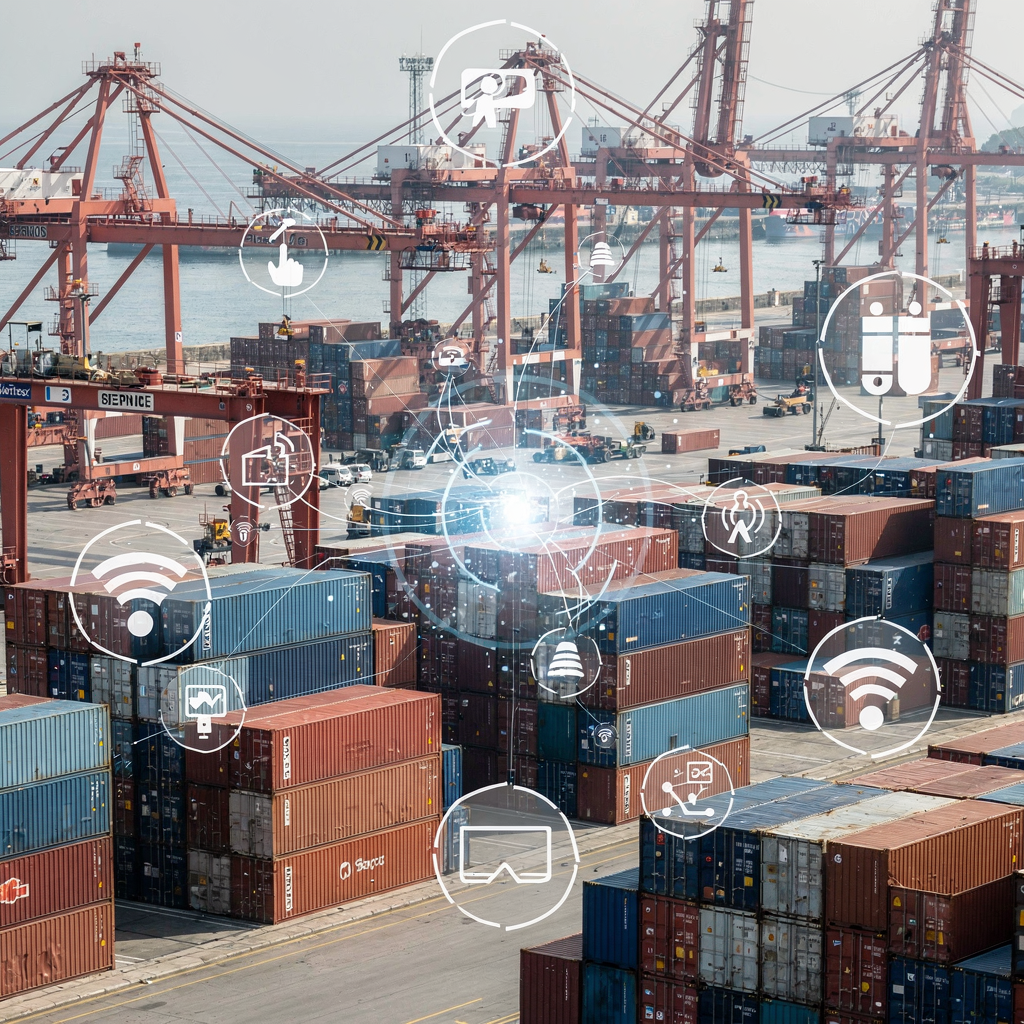
Also, modern dashboards fuse weather, berth schedules, and truck ETAs. They enable informed decisions and faster decision-making. For instance, a port operator that integrated live tracking and predictive berth allocation cut average vessel wait time substantially. Specifically, operators referencing predictive berth tools saw measurable drops in idle time; readers can explore berth allocation methods in detail with a study on berth allocation problem in terminal operations. Furthermore, integrating real-time equipment dispatch systems increases yard throughput and reduces driving distances; see research on real-time equipment dispatch optimization.
Also, the human side matters. Teams must trust data and use it during crises. Consequently, operations staff spend less time hunting for information and more time acting. In addition, automating routine messaging preserves attention for exceptions. Next, risk management requires rules that trigger responses automatically. Thus, when sensors show a crane outage, systems can alert engineering, update berth plans, and notify shipping lines. Also, this reduces manual error and speeds the response.
Finally, real-time visibility supports a collaborative approach. Port authorities, terminal operators, shippers, and logistics providers can share status, align priorities, and reroute when needed. For example, combining asset-tracking with predictive yard models provides a coherent view that helps teams mitigate cascading effects from a single disruption. Also, stakeholders gain the confidence to act fast and maintain service levels, which supports broader global trade.
Drowning in a full terminal with replans, exceptions and last-minute changes?
Discover what AI-driven planning can do for your terminal
Diversify supplier networks to remove bottleneck
Over-reliance on a single supplier or route creates a pressing bottleneck. Also, data suggests that more than 70% of terminal operations depend heavily on one supplier, route, or port, which magnifies supply chain vulnerabilities (TCB Group). Therefore, leaders must diversify liner services, stevedoring partners, and hinterland connections. First, they can sign flexible contracts with multiple shipping lines. Next, they can qualify alternate stevedoring partners. Then, they can expand rail and road links to several inland hubs to reduce dependence on a single corridor.
Also, diversification improves flexibility during a port strike or sudden closure. For example, when one trade lane becomes blocked by geopolitical tensions, operators can shift volume to a nearby terminal and maintain throughput. Furthermore, building relationships across suppliers and carriers lets terminals reassign slots and resources quickly. Specifically, terminal managers should map critical suppliers and tag single points of failure. In addition, they should run scenario exercises to identify how a supplier outage would affect yard capacity and shipment schedules. Also, digital tools make that mapping quicker and more accurate.
Moreover, partnership contracts can include surge clauses and shared contingency plans. Also, collaborative forecasting with shipping lines and suppliers reduces forecast error and smooths demand spikes. For practical guidance, teams can consult predictive modeling for yard capacity to see how different supplier failures affect storage and throughput (predictive modeling for port operations yard capacity). Additionally, optimizing yard storage logic and chassis pools reduces internal bottlenecks when external supply changes; learn more about yard storage optimization (yard storage optimization).
Finally, diversification becomes a competitive advantage. It reduces vulnerability and supports customer satisfaction by maintaining service levels during shocks. Also, it helps shippers and logistics providers plan with confidence. Therefore, terminals that diversify strategically can safeguard volumes, preserve trade lanes, and keep goods flowing through an unpredictable world.
Inventory management: balancing inventory levels with contingency planning at hubs
Terminals must balance lean operations with buffer capacity. Also, inventory management at hubs determines how well supply chains absorb shocks. First, operators should set dynamic safety stock rules tied to lead-time volatility and shipment frequency. Next, they should use predictive analytics that incorporate weather events and seasonal demand. Also, this supports more accurate forecasts and avoids costly overstocks or stockouts. Furthermore, modular storage solutions let terminals scale capacity quickly during spikes. Specifically, temporary racks and flexible yard allocations let teams redeploy space in hours rather than days.
Also, contingency planning at hubs must include reroute options and alternative labor pools. For instance, terminals can partner with nearby depots and inland hubs to reroute cargo when berths close. Also, cross-training staff and engaging temporary labor agreements reduce the risk of severe productivity loss during a strike. For reference on operational tactics, terminals can study dynamic internal transport replanning that helps vessels and trucks adapt when patterns change (dynamic internal transport replanning).
Additionally, digital inventory systems that tie directly into TMS and WMS provide visibility to shippers and buyers. Consequently, logistics providers and shippers get timely, accurate status without manual messages. Moreover, contingency drills should simulate scenarios such as a sudden port closure or extended weather-related shutdown. These exercises help teams identify bottleneck points and predefine who reroutes shipments and who handles customer communications.
Finally, terminals should view inventory as a tactical lever. Also, they should use contingency planning to align storage and labor to demand surges. Therefore, hubs that balance inventory levels with flexible infrastructure and clear escalation paths maintain continuity and protect the broader global supply chain.
Drowning in a full terminal with replans, exceptions and last-minute changes?
Discover what AI-driven planning can do for your terminal
Operational agility to navigate global disruptions
Operational agility defines how fast a terminal responds to disturbance. Also, agility determines whether the terminal will recover quickly or suffer prolonged interruptions. First, terminals should implement modular yard layouts that allow rapid reconfiguration. Next, they should adopt flexible shift models and cross-train staff to cover critical tasks. Also, these practices reduce downtime caused by absences or sudden surges. In addition, modular equipment pools and rapid spare parts delivery help maintain crane uptime and vessel turn times.
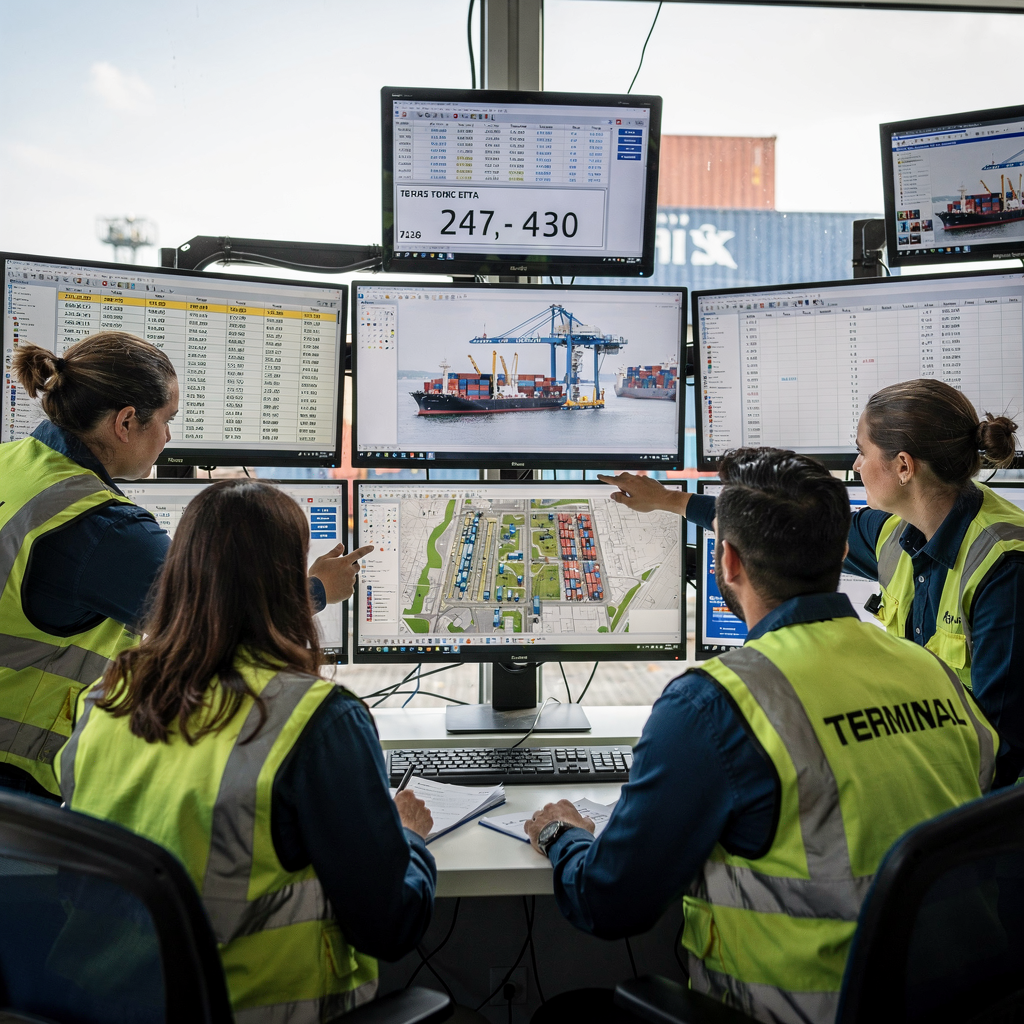
Also, collaboration platforms enable a coordinated response among port authorities, shipping lines, and terminal operators. For example, shared dashboards allow stakeholders to see the same data and make aligned choices. Furthermore, tools that automate routine communication reduce delays in decision-making. Consequently, teams can focus on actions rather than message triage.
Also, technology supports predictive analytics that flag future disruptions before they occur. For instance, weather modeling combined with berth allocation logic highlights risks to vessel schedules. Also, terminal operators can use AI-driven yard management to optimize slot assignments and reduce truck turn times; see research on AI-driven yard management systems for implementation ideas (AI-driven container port yard management systems). Additionally, flexible contracts with shipping lines and carriers help reroute volume quickly and maintain service levels during geopolitical tensions or port congestion.
Finally, agility relies on clear governance. Also, leaders must define who decides and how decisions flow during a crisis. For example, a single incident commander or a small rapid-response team can cut red tape. Also, decision-making protocols and real-time data align resources and actions, which helps terminals sustain operational efficiency in an unpredictable world.
How to prioritize and build supply chain resilience
Leaders must prioritize investments where they deliver the most value. Also, start by mapping critical factors in operations, including single points of failure and high-impact suppliers. Next, score initiatives by impact and feasibility. Also, prioritize projects that improve visibility and reduce dependency. For example, investing in real-time visibility systems often yields fast returns. Also, stress-testing and iterative learning help teams refine plans. Specifically, run table-top exercises and live drills that simulate port closure, cyberattack, or weather events.
Also, measure progress with clear KPIs. For instance, track vessel turnaround time, berth occupancy, and average truck turn time. Also, add metrics for communication: time to notify shippers and time to reroute a shipment. Furthermore, use after-action reviews to capture lessons and translate them into policy changes. For practical methods, teams can consult simulation software to test yard capacity and berth plans under stress (container terminal simulation software overview).
Also, build supply chain resilience by combining people, process, and tech. First, train teams and define roles. Next, automate repetitive tasks to free people for exception handling. Therefore, automating routine workflows becomes a resilience enabler. Additionally, invest in infrastructure that withstands extreme weather events and in cybersecurity measures that protect control systems. Also, form partnerships with alternate suppliers and inland hubs to reroute cargo when needed.
Finally, remember that resilience has become a strategic necessity. Also, supply chain resilience has become a key metric for investors and customers. Therefore, organizations that build supply chain resilience amid future disruptions will protect revenue and secure competitive advantage. Also, prioritize actions that safeguard critical trade lanes and maintain continuity of global trade. Ultimately, resilience strategies that emphasize agility, collaboration, and predictive analytics will help terminals and their partners sustain operations in a world of rising uncertainty.
FAQ
What is terminal operations resilience?
Terminal operations resilience refers to the ability of a terminal to anticipate, absorb, recover from, and adapt to disruption.
How do weather events affect port performance?
Extreme weather events can close berths, damage cranes, and interrupt yard access, which increases vessel wait times and causes port congestion. For context, more than 60% of major ports reported weather interruptions over a recent five-year period (UNCTAD).
Why is real-time visibility important?
Real-time visibility lets teams make informed decisions quickly, avoid cascading delays, and reroute shipments when needed. Also, it improves coordination among port authorities, terminal operators, and logistics providers.
How can terminals reduce the risk of a bottleneck?
Diversify supplier networks, expand hinterland links, and qualify alternate stevedoring partners to remove bottleneck risk. Also, use predictive analytics to identify potential constraints before they escalate.
What role does inventory management play at hubs?
Inventory management balances operational efficiency and buffer capacity, allowing terminals to absorb delays without excessive cost. Also, flexible storage and contingency plans enable rapid redeployment when demand spikes.
How does operational agility help during global disruptions?
Operational agility enables fast reconfiguration of yard layouts, flexible shifts, and rapid decision-making. Also, it reduces downtime and preserves operational efficiency when disruptions occur.
Can automation technologies help resilience?
Yes. Automation reduces manual errors and speeds communication. For example, AI agents that manage email workflows cut handling time and surface the right data, which accelerates response during incidents.
What should terminals prioritize when building resilience?
Also, run stress-tests to validate plans and use KPIs to track improvement over time.
How do geopolitical tensions impact terminals?
Geopolitical tensions can close trade lanes, disrupt shipping schedules, and force rerouting of cargo. Also, they increase the need for diversified routes and resilient operational plans.
Where can I find resources to improve berth and yard planning?
You can consult simulation and optimization studies that focus on berth allocation and yard capacity to test resilience measures. For instance, explore resources on berth allocation and predictive modeling for yard capacity to guide investments (berth allocation problem in terminal operations, predictive modeling for port operations yard capacity).
our products
 stowAI
 stackAI
 jobAI
jobAI
Innovates vessel planning. Faster rotation time of ships, increased flexibility towards shipping lines and customers.
Build the stack in the most efficient way. Increase moves per hour by reducing shifters and increase crane efficiency.
Get the most out of your equipment. Increase moves per hour by minimising waste and delays.
stowAI
Innovates vessel planning. Faster rotation time of ships, increased flexibility towards shipping lines and customers.
stackAI
Build the stack in the most efficient way. Increase moves per hour by reducing shifters and increase crane efficiency.
jobAI
Get the most out of your equipment. Increase moves per hour by minimising waste and delays.