
Chapter 1: simulation offers in airport terminal
However. Therefore. Furthermore. Also. Meanwhile. Additionally. Consequently. Thus. Hence. Next. First. Second. Finally.
Terminal layout matters more than many teams expect. Simulation offers a safe way to test designs before any concrete work begins. Planners can replicate passenger movements and resource constraints, and then compare alternatives without disrupting current operations. Discrete Event Simulation (DES) remains the leading approach to model sequences of events, and it helps capture stochastic delays and service time variance. DES models break complex processes into discrete events such as check-in completion, security screening start, and boarding call. With that granularity, airport teams can see how small scheduling changes ripple through operations. For example, research shows arrival optimisation can increase throughput by up to 15% in high-frequency maritime settings, a finding that airport teams can translate to peak handling strategies here. In passenger contexts, CAST Terminal models report congestion reductions of about 20% during peaks when layouts and staffing are adjusted in advance source. These numbers prove that a careful approach to design and testing yields measurable gains.
Simulation reduces risk, cost, and time to decision. It lowers the chance of expensive rework by validating new terminal layouts in a virtual setting. It also helps identify potential bottlenecks early, so teams can reassign staff or change queue geometry before construction starts. For airport operators, the method supports capacity analysis and optimization while keeping day-to-day flows running. Simulation offers a controlled environment to analyze and experiment with terminal facilities and staffing under different demand mixes. Airlines and ground handling companies gain clearer estimates of waiting time exposure and queue lengths. The approach supports performance indicators such as utilization and service rates, and it provides decision support to balance competing objectives like passenger comfort and operational throughput. For an applied example that links digital twins and capacity planning, see a detailed resource on capacity planning using digital twins in terminal operations capacity planning with digital twins.
Chapter 2: simulation model for terminal simulation
However. Therefore. Also. Meanwhile. Next. In addition. Thus. Hence. Consequently. Finally. First. Second. Third.
A robust simulation model replicates check-in, security, passport control, retail flows, and boarding in discrete yet connected units. The simulation model maps each service node and the routes passengers take between them. It models staff allocation, equipment availability, and processing times. The model also includes stochastic inputs such as variable arrival rates, flight delays, and differing passenger behavior. Practitioners often choose DES for its event-driven clarity, but they sometimes combine it with agent-based approaches to capture individual decision-making. Agent-based methods offer fine-grained insight into how passengers choose queues or react to signage. Meanwhile, continuous approaches help where flows behave like fluids, for instance in long corridors or baggage carousels. Comparing these approaches lets teams pick an approach that fits their objectives and data availability.
Stochastic events matter. The simulation includes random delays, late arriving buses, and cascading flight disruptions. By running many replications, planners produce distributions for waiting time, queue lengths, and resource utilization rather than single-point estimates. They then use those distributions to validate new terminal layouts and test staff rosters. A validated simulation model can simulate peak surges and irregular flight schedules to reveal where bottleneck formation is likely. It helps quantify time and cost implications of layout changes. For airports that want to simulate integrated terminal and airside effects, a simulation is a powerful tool that can be used to analyze the impact of gate reassignments and transfer times. For readers who need software-focused examples for container and port contexts, review options at Loadmaster’s container terminal simulation software page container terminal simulation tools.
Drowning in a full terminal with replans, exceptions and last-minute changes?
Discover what AI-driven planning can do for your terminal
Chapter 3: simulation software for passenger flow
Therefore. Also. Furthermore. Meanwhile. Additionally. Next. First. Second. Finally. Consequently. Thus.
There are established tools for passenger flow and process simulation. CAST Terminal provides scalable, realistic models of airport terminals that model check-in, security, and boarding behavior; CAST Terminal is used by planners to assess capacity and layout changes CAST Terminal details. Simio brings digital twin capabilities for real-time what-if analysis and resource allocation, and its products show measurable efficiency gains in live settings Simio digital twin. Bentley OpenPaths adds machine learning to speed calibration and incorporate new mobility data sources for richer forecasts Bentley OpenPaths. Each software tool captures queuing and waiting dynamics, models staff scheduling, and reports key performance indicators. These metrics include queue lengths, service times, and allocation effectiveness. In practice, simulation software can reduce congestion by about 20% and speed processing by roughly 10% when teams apply the recommended capacity adjustments and layout tweaks, as demonstrated in vendor case material and applied studies CAST Terminal.
Software selection depends on scope. Small regional airports may prefer user-friendly tools with modest software license costs, while large hubs need scalable platforms that integrate with live systems. Tools vary in their ability to produce simulation results quickly and to integrate data feeds. For example, CAST Terminal provides realistic models of airport terminals and other passenger handling facilities; cast terminal provides scalable scenario analysis and capacity planning modules. Larger hubs often combine DES and digital twin frameworks to maintain operational continuity while testing new terminal design proposals. Airport operators benefit when models link to operational data and when the software supports scenario-based stress tests. For terminals looking for container-focused simulation and what-if capabilities, Loadmaster also documents port and yard simulation options at their port terminal simulation tools page port terminal simulation tools.
Chapter 4: digital twin for terminal performance
However. Therefore. Additionally. Also. Next. Meanwhile. Consequently. Thus. Hence. For example. Finally. First.
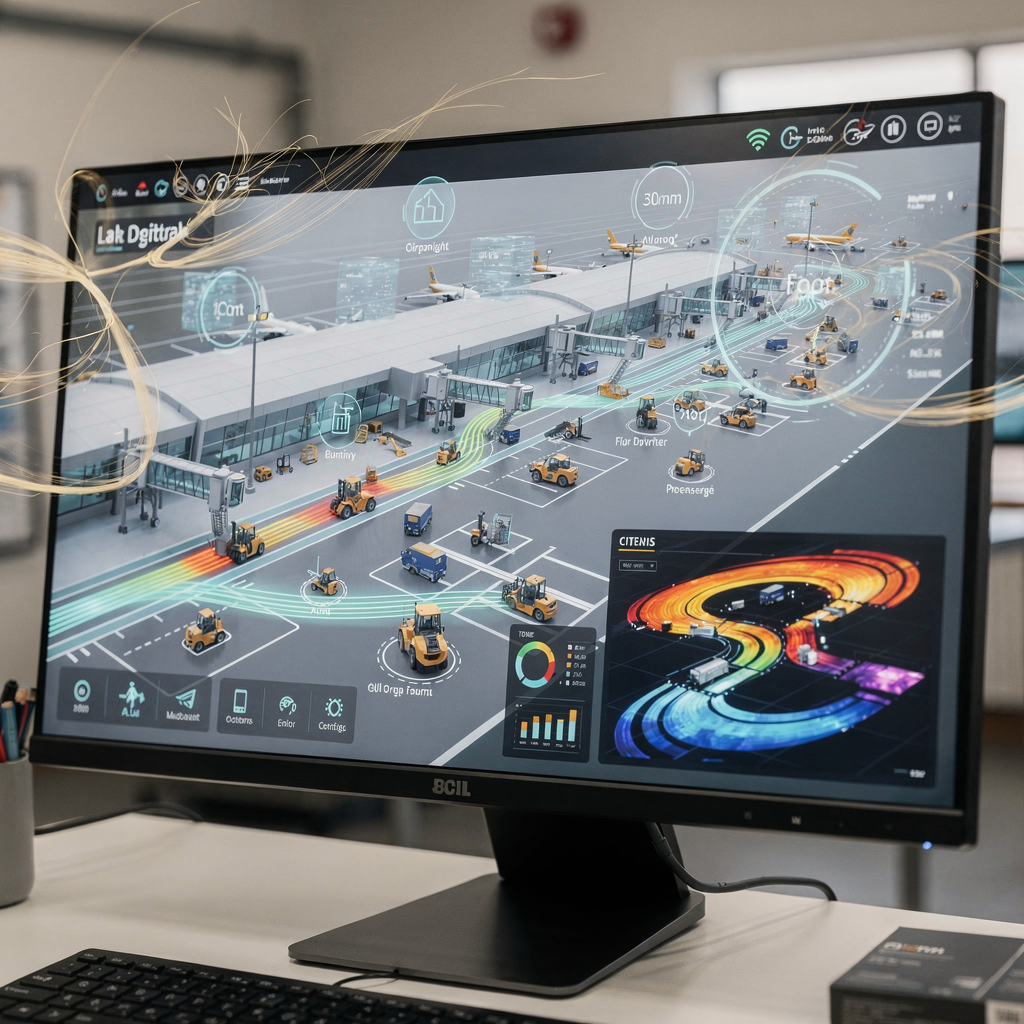
A digital twin differs from a traditional simulation in that it connects to live data feeds and runs continuously. Digital twin platforms synchronize model state with sensor streams, gate logs, and flight information to predict the future state of operations. As a result, teams can make adjustments in near real-time. Studies and vendor claims indicate digital twin deployment can yield 12–18% better allocation of staff and equipment by matching resources to demand patterns dynamically Simio digital twin. That improvement reduces the chance of bottleneck formation during unexpected surges. For resilience testing, a digital twin can replay severe weather events or security scenarios and reveal terminal performance impacts without risking operations. This provides a way to validate new terminal layouts and processes while keeping passengers safe.
The twin also supports continuous improvement. It produces live performance indicators and compares them to target KPIs. The system highlights where utilization falls below expectations and suggests how to rebalance allocation across check-in counters or security lanes. For container-focused readers, the same twin concept applies to container terminal yards; Loadmaster uses digital twin sandboxes to train RL agents that optimize quay and yard decisions, generating policies in a closed-loop setting before production deployment RL agent training with digital twins. Across airports, a well-implemented digital twin links to TOS, flight feeds, and equipment telemetry and can predict how layout and operations interact. That linkage helps airport operators and ground handling companies manage passenger volumes and maintain stable performance under varying demand.
Drowning in a full terminal with replans, exceptions and last-minute changes?
Discover what AI-driven planning can do for your terminal
Chapter 5: passenger flow and process simulation with flow and process simulation software
Therefore. Also. Meanwhile. Additionally. Next. Finally. First. Second. Third. Consequently. Thus. Hence.
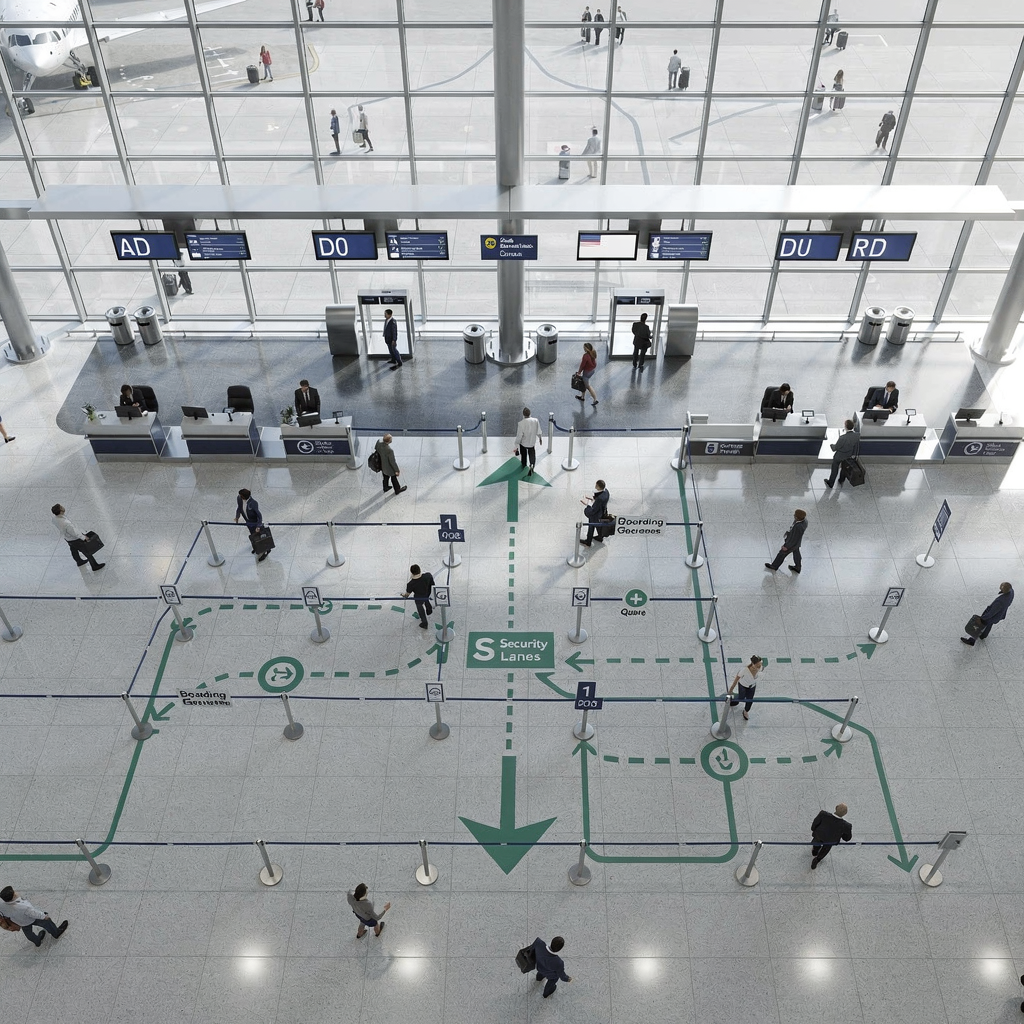
Flow and process simulation software maps end-to-end journeys and quantifies where delays build. It links check-in desks, security lanes, passport control, retail touchpoints, and gate waiting areas into a single representation. This integrated modeling helps teams analyze the impact of changes on passenger flow and process times. Machine learning can refine model calibration by learning from sensor logs, mobile-device data, and boarding system timestamps. When models learn typical arrival patterns and dwell times, they produce better forecasts for peak periods and unusual days. Operators then test staffing rules and signage changes in a virtual setting to predict the effects on queuing and waiting and to reduce waiting times at choke points. The platform supports scenario testing for peak, off-peak, and irregular flight schedules so planners can compare outcomes across different scenarios.
Calibration matters. Flow and process simulation that uses mobile-device density and IoT sensor streams reduces model bias and helps validate throughput estimates. In some cases, the software can detect when a particular passport control lane creates a recurring bottleneck and recommend layout changes or staff reallocation. The models help identify potential bottlenecks in retail areas and at security lanes. They also support capacity analysis and optimization for new terminal design or reconfiguration. For teams working on container terminals, simulation can also map yard flows and stacking strategies to reveal how a container yard layout impacts port throughput and crane productivity. This cross-domain experience helps supply chain planners align terminal infrastructure and operational rules with throughput goals.
Chapter 6: optimization of airport terminal using terminal simulation
Therefore. Also. Additionally. Next. Meanwhile. Consequently. Thus. Hence. Finally. First. Second.
Optimization of terminal infrastructure starts with data collection. Teams gather timestamped flows, staffing rosters, equipment cycles, and demand forecasts. They then build a calibrated model and set target performance indicators. Common steps include defining facility requirements, encoding business rules, selecting a software tool, and verifying simulation results across multiple scenarios. Analysis and optimization of terminal options follows, where planners run scenario variants to compare trade-offs in time and cost. For example, applied studies show that arrival optimisation can improve throughput by up to 15% and reduce average turnaround times by 10% in high-frequency settings performance analysis. Similarly, airport-focused simulations suggest congestion reductions near 20% with targeted layout tweaks and staffing changes CAST Terminal case.
Best practices include stakeholder workshops, continuous validation, and phased rollouts. Engage airlines early, and include ground handling companies and airport operators in scenario reviews. Use short simulation runs to screen ideas and longer replications to measure variability. Keep a repository of simulation results and use them as a baseline for continuous improvement. Future developments will push AI-driven layouts and automated decision support further into operations. For example, Loadmaster’s approach trains RL agents in digital twins to propose allocation policies that reduce rehandles and balance workloads before any live change, a method that improves robustness when historical data is scarce RL-driven optimization. To explore practical simulation and what-if use for container contexts, see their terminal digital twin software overview terminal digital twin software.
Finally, apply iterative cycles: test, implement, measure, and refine. That loop turns modeled improvements into sustained operational gains. Validate new terminal layouts in a sandbox first to avoid costly missteps, and then roll out changes with clear metrics for tracking success. This structured approach lets teams optimize terminal design while protecting current operations and passengers.
FAQ
What is terminal layout optimisation simulation?
Terminal layout optimisation simulation uses virtual models to assess and improve how a terminal arranges facilities, staff, and equipment. It lets planners test new terminal layouts and processes without disrupting real-world operations.
Which simulation approaches work best for airport terminals?
Discrete Event Simulation works well for process-driven areas like check-in and security, while agent-based methods capture individual passenger behavior. Many projects combine methods to gain both macro and micro perspectives.
How do digital twins differ from traditional models?
Digital twin solutions integrate live data streams with a model to provide near real-time feedback and predictive analytics. They support ongoing adjustments and resilience testing that traditional static models cannot offer.
Can simulation reduce waiting time at security and check-in?
Yes. By testing changes to queue geometry and staff rosters in advance, simulation can reduce waiting time and improve service flow. Many implementations report double-digit reductions in congestion when changes are applied.
What data do I need to build a reliable model?
Collect timestamps for key touchpoints, staff schedules, equipment availability, and historical passenger volumes. Supplement that with sensor or mobile-device data to calibrate walking speeds and dwell times.
How long does it take to see benefits from simulation projects?
Quick wins may appear after a few iterative tests, but robust benefits often require repeated runs and operational changes. A phased approach helps teams measure improvements and refine strategies over weeks to months.
Are there specific tools for small airports?
Yes. Several simulation software packages scale from regional airports to major hubs and offer user-friendly interfaces. Choose a tool that matches your budget and required integration capabilities.
How does simulation help during disruptions like weather or strikes?
Simulation and digital twin testing can replay disruption scenarios to measure impacts on terminals and identify contingency plans. That helps operators reallocate resources and maintain service levels during stress events.
Can machine learning improve model calibration?
Yes. Machine learning can speed up calibration by fitting model parameters to observed data and by detecting patterns in passenger volumes and pathway choices. That results in more accurate forecasts for different scenarios.
Where can I learn more about applying these methods to container or port terminals?
There are specific resources and tools for maritime and container contexts that describe yard and quay modeling techniques. Loadmaster publishes guides and case studies on container-terminal simulation and digital twin applications that demonstrate analogous methods and outcomes.
our products
 stowAI
 stackAI
 jobAI
jobAI
Innovates vessel planning. Faster rotation time of ships, increased flexibility towards shipping lines and customers.
Build the stack in the most efficient way. Increase moves per hour by reducing shifters and increase crane efficiency.
Get the most out of your equipment. Increase moves per hour by minimising waste and delays.
stowAI
Innovates vessel planning. Faster rotation time of ships, increased flexibility towards shipping lines and customers.
stackAI
Build the stack in the most efficient way. Increase moves per hour by reducing shifters and increase crane efficiency.
jobAI
Get the most out of your equipment. Increase moves per hour by minimising waste and delays.