
Port congestion crisis: Root causes of port congestion
Port congestion has moved from a seasonal headache to a full congestion crisis, and stakeholders feel the strain across global trade lanes. Global port congestion rose sharply, with a reported surge of roughly 300% by 2025 (source). This spike created severe congestion at many major hubs, and it forced carriers to rebook sailings and adjust schedules. The root cause of the uptick traces to a mix of capacity constraints and process failures. In particular, limited berthing slots, ageing cranes, and tight yard space amplify bottleneck effects. Ships queue longer, and berth allocation becomes a scarce resource. That scarcity then increases wait times for vessels and raises demurrage and detention risks for shippers.
To understand what to fix, we must list the causes of port congestion. First, port gates and berth shortages restrict how fast a vessel can be worked. Second, inefficient port dwell processes slow handover between vessel and truck or rail. Third, paperwork and customs clearance delays extend quay time. These root causes of port congestion compound, and they create a ripple effect that spreads delays through inland networks and trucking schedules. Today, the largest container gateways report spikes in port activity, and the situation produces significant delays for downstream logistics partners.
Ports face a mix of operational and structural problems. On the operational side, manual booking, siloed IT, and poor visibility cause appointment no-shows and clashing slots. On the structural side, land limits and local planning rules block rapid expansion of berth and yard capacity. The combination of both kinds of limits increases the chance of a congested port during peaks. To reduce port congestion, stakeholders must address both process and physical constraints. Policy makers and port authorities must coordinate with carriers and terminal operators, and they must adopt new digital tools to manage flows in real-time.
Container dwell time and delay at inland container terminals
Extended container dwell times at inland sites add to port stress and push costs higher. In 2024, acceptable dwell thresholds for many terminals ranged between 3 and 7 days for imports, and gates trending above that range triggered operational alarms. When container dwell crosses those thresholds, carriers and shippers record demurrage charges and face longer delays in cargo delivery. Extended container dwell times are visible in yard occupancy metrics, and that makes it harder to keep a steady throughput.
Causes of delay at inland container terminals include paperwork bottlenecks, limited yard space, and rail scheduling conflicts. Paperwork and customs clearance bottlenecks slow truck turnaround and extend dwell. Likewise, when rail arrives late or out of sequence, the inland terminal must reshuffle stacks, and that creates extra moves and wasted time. These issues also create delays in cargo handling that cascade back to the seaport. When a terminal cannot clear imports promptly, a downstream carrier cannot pick up or drop off containers on schedule, and that increases wait times for a connected vessel or barge.
To measure progress, terminals track container dwell and port dwell metrics alongside gate throughput. Improving container tracking and sharing timely status reduces uncertainty, and that shortens handover windows. For congestion insights, terminals can use predictive analytics to flag shipments at risk of late pickup. A mix of staff training, simple digital paperwork, and better stacking rules lowers average dwell. For example, pilot programs that improve appointment adherence have reduced port delays and shortened the average port dwell per box by visible margins. Finally, better coordination between port terminals and inland hubs ensures that container traffic flows more smoothly and that the ripple effect of a single disruption is limited.
Drowning in a full terminal with replans, exceptions and last-minute changes?
Discover what AI-driven planning can do for your terminal
Dock scheduling software for better visibility and reduced dwell
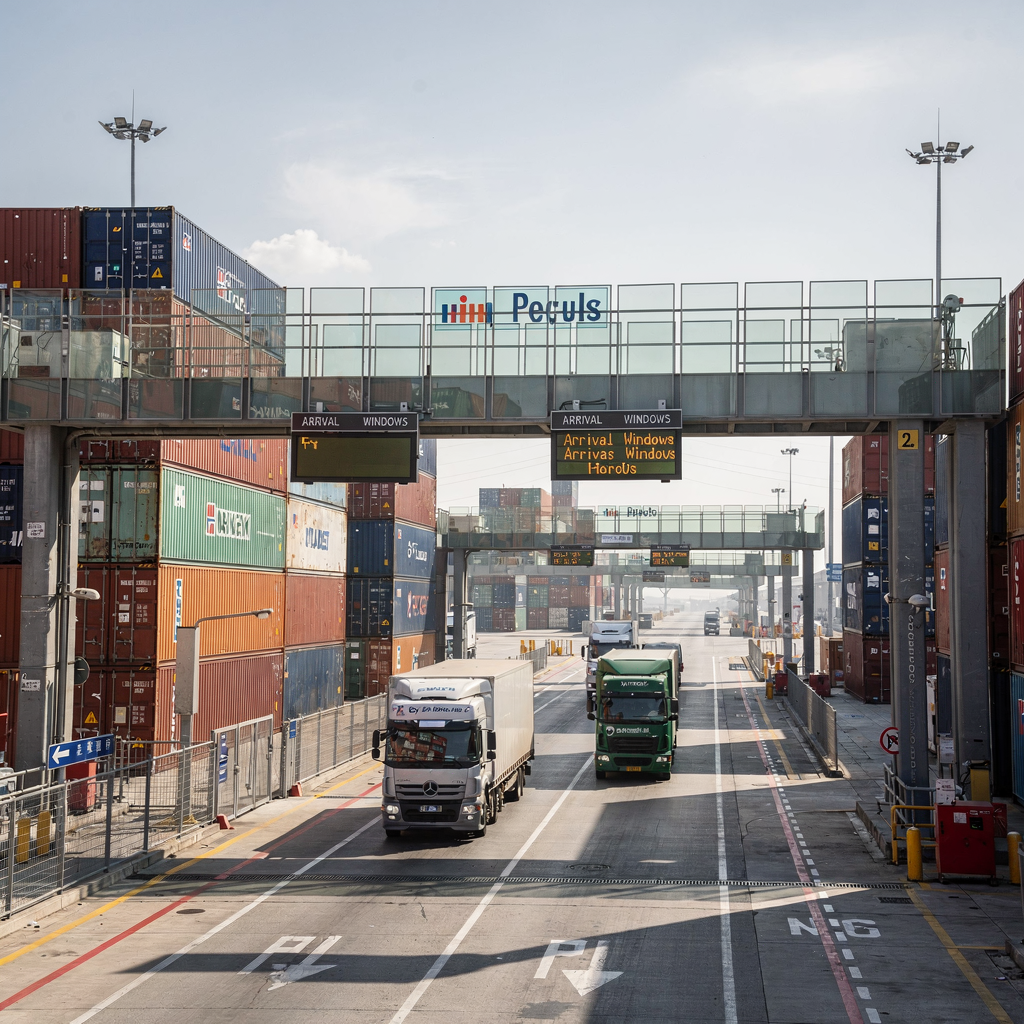
Dock scheduling software brings order to a chaotic appointment system, and it gives operators real-time tools to manage truck arrival patterns and quay loading. Modern platforms tie truck appointments to berth windows and gate capacity, and they reduce appointment clashes. When terminals adopt dock scheduling software, they gain better visibility into truck queues and can enforce time slots that smooth demand. This approach helps in reducing congestion and in lowering no-show rates, and it can cut average wait times for drivers.
One clear benefit is lower container dwell; automated schedules reduce idle time at the quay and speed handover to inland transport. Predictive ETAs that use port community systems enable carriers, terminal operators, and truckers to sync arrival times. Sharing ETAs also improves planning for quay cranes and yard crews. The 2025 playbook on port congestion management highlights how port community systems and predictive ETAs reduce inefficiencies in port operations (source). That same playbook shows how real-time data and appointment enforcement lower the chance of bottleneck formations at gates.
Dock scheduling software also links to container tracking and congestion data, and it sends alerts when a shipment risks missing its pick-up window. By combining dock schedules with truck-tracking systems, terminals can reduce appointment no-shows and improve slot utilization. These tools reduce port delays and help terminal operators plan for peaks. Practical pilots report up to a 15% cut in terminal dwell when scheduling is coupled with accurate ETA feeds. To learn more about scheduling, see solutions for inter-terminal truck tracking that connect truckers to appointment windows and gate rules (internal link).
Logistics and terminal automation for efficient container handling
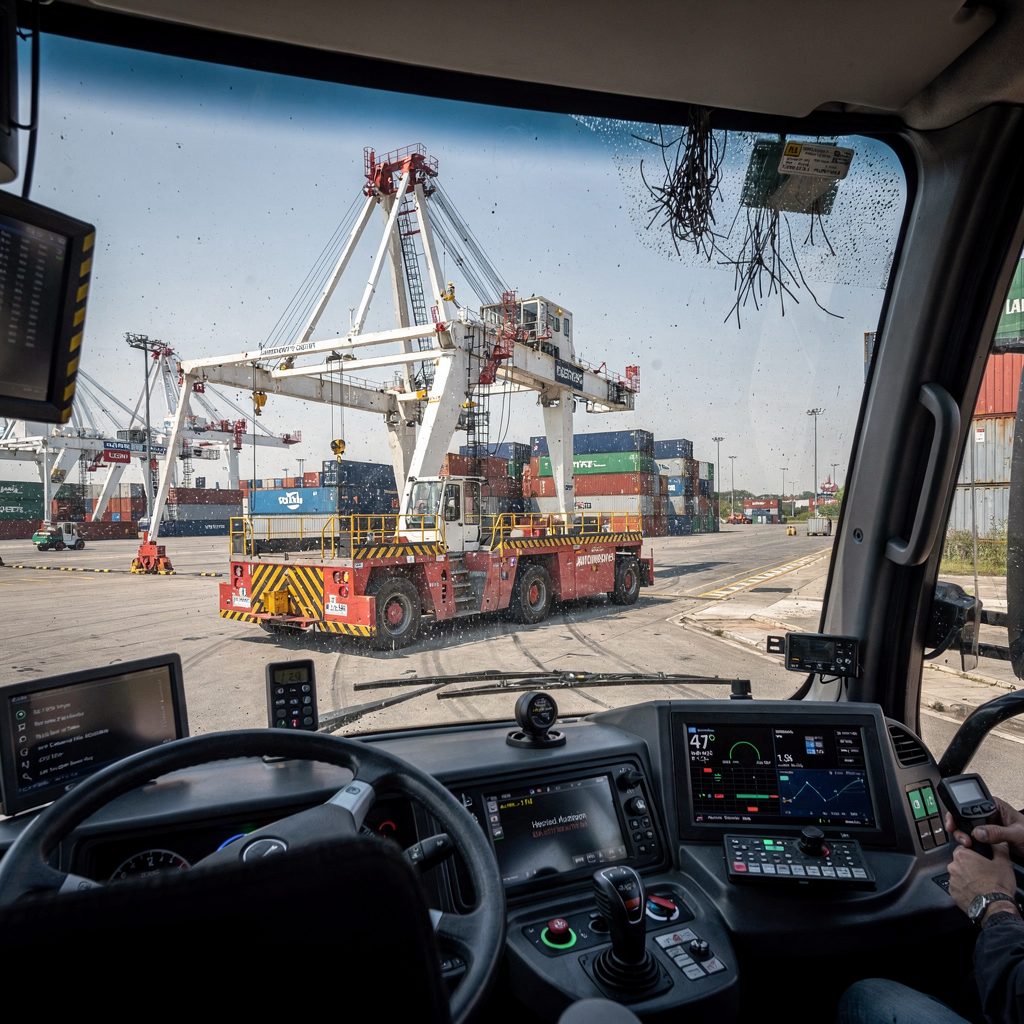
Automation drives faster container handling and higher throughput, and AI systems now coordinate quay cranes with yard moves. AI-driven yard management optimizes stacking and reshuffling, and it minimizes unnecessary rehandles. Port TOS integration with autonomous job scheduling reduces idle time for equipment and therefore increases crane productivity. Automation also reduces human error, and that brings steadier port performance across shifts. Importantly, AI lets terminals tune trade-offs between quay speed and yard congestion.
Loadmaster.ai uses reinforcement learning agents to improve vessel planning, yard strategy, and execution. StowAI, StackAI, and JobAI create closed-loop control that trains policies in a digital twin, and then deploys them with operational guardrails. Those agents simulate millions of choices so a real terminal can improve without relying on historical data. The approach reduces rehandles and lowers driving distance, and it delivers more predictable terminal operations (internal link). Real deployments show meaningful gains: some terminals achieve a 10% throughput boost without physical expansion and while lowering energy use.
Automation also supports better port efficiency by smoothing handovers and by improving visibility across the gate, quay, and yard. Terminal operators can monitor crane cycles and balance loads to prevent spikes in wait times. This automation reduces delays and congestion at critical points, and it cuts delays in cargo handling that used to clog the system. For more on how simulation supports capacity planning and safe rollout, review simulation models and digital twin testing for terminal rollout (internal link). As automation scales, terminal operators must also update processes and training so staff and machines work together effectively.
Drowning in a full terminal with replans, exceptions and last-minute changes?
Discover what AI-driven planning can do for your terminal
Inland hubs to tackle bottleneck in global port network
Inland logistics hubs act as satellite nodes that relieve pressure on coastal terminals and reduce turnaround time for container traffic. These inland hubs take boxes off the quay, park them in well-run yards, and feed rail or barge services back to the seaport. By decentralising container handling, inland hubs help to shorten port queues and to provide predictable windows for carriers and trucks. The role of inland ports in tackling supply chain congestion has grown, and several cases in the US show clear benefits (source).
Building inland hubs changes the balance of container traffic, and it lets ports focus on vessel moves while inland terminals handle longer-term storage and redistributions. A typical success story shows US inland hubs cutting port dwell by 10–15% by redirecting flows via rail and barge links. That shift also reduces truck miles in urban areas and lowers emissions. Inland hubs also help carriers to plan rotation and to reduce the chance that a delayed container blocks a berth slot for a vessel.
To make inland hubs work, operators need reliable inland transportation and predictable rail windows. Rail links must align with port schedules so containers move on time. When inland hubs tie into a network of container vessels, barges, and rail carriers, the pressure on seaport terminals eases and the system becomes more resilient to local disruption. For terminals exploring this strategy, studies on container terminal capacity planning and digital twins explain how to model and scale inland hubs without breaking port operations (internal link). Inland hubs can also host value-added services, such as container inspection and cargo consolidation, which further smooth cargo flow and reduce port work overload.
Port and terminal infrastructure upgrades by 2025
Targeted upgrades to port infrastructure remain essential even as operations improve. Adding extra berths, upgrading cranes, and building stronger rail connections all raise port capacity and reduce the chance of long vessel queues. Yet expansions take time and cost money, so ports must prioritize projects with the strongest ROI. Forecasts for 2025 suggest container volumes will continue to climb, and ports must model capacity needs against peak daily arrivals. That modeling helps decision-makers decide when to invest in more berth and yard capacity and when to focus on operational optimisation.
Cost-benefit analysis typically compares the ROI of physical expansion to the gains from automation and process change. In many cases, modest equipment upgrades combined with better port management and scheduling software deliver faster, cheaper benefits than full terminal expansion. For example, investments in additional rail spurs and in more efficient gate layouts can reduce truck wait times and cut port delays without adding new berths. Ports that combine these upgrades with better port community systems and shared ETA feeds limit the chance that a single disruption will ripple across the network.
Infrastructure projects must also plan for policy and environmental rules. Port authorities should coordinate with city planners to secure land for future yard and berth needs. Meanwhile, terminals should consider automation strategies that reduce operating cost and energy use; those strategies often pay back faster than civil works. To assess project value, read analyses on the ROI of port operations automation projects and on capacity planning using simulation (internal link). Taken together, these investments and upgrades will raise port performance and reduce long-term disruption to global supply chain routes. If the goal is to reduce costs and maintain service during growth, then a balanced mix of infrastructure and smart operations is the right path.
FAQ
What causes the recent congestion crisis at ports?
The congestion crisis stems from limited berth availability, inefficient handover processes, and mismatched arrival windows. Those issues combine with higher container volumes and staffing shortages to create severe congestion that affects vessel schedules.
How does container dwell time affect overall supply chains?
Longer container dwell time ties up inventory and increases demurrage and detention fees for shippers. It also creates secondary delays in trucking and rail, and it can force carriers to skip calls or change rotations.
Can dock scheduling software reduce port delays?
Yes. Dock scheduling software coordinates truck appointments and quay workflows, and it improves the predictability of arrivals and handovers. When paired with port community systems and real-time data, the software reduces no-shows and cuts average wait times.
What role does AI play in yard and terminal operations?
AI optimises stacking, sequencing, and equipment dispatch so terminals can handle more boxes without expanding yards. Reinforcement learning agents, for example, can train policies in a digital twin and then deploy better strategies in production.
How do inland hubs relieve pressure on seaports?
Inland hubs take containers off port yards and provide storage, consolidation, and onward transport by rail or barge. This decentralised handling reduces port dwell, frees berth space, and smooths container traffic between sea and land.
Are infrastructure upgrades necessary if software improves operations?
Both are needed. Software and process changes often deliver faster wins, but targeted infrastructure upgrades like new berths and rail links are necessary to meet long-term demand. A blended strategy usually offers the best ROI.
What is the impact of better port visibility on operations?
Improved visibility reduces uncertainty and enables proactive resource allocation. With real-time tracking and shared ETAs, terminals can lower appointment conflicts and reduce delays in cargo handling.
How do ports measure success after implementing these solutions?
Ports measure improvements via throughput, reduced wait times for trucks and vessels, lower rehandle rates, and shorter average port dwell. They also track reductions in demurrage and detention costs for customers.
Can smaller container ports adopt these technologies affordably?
Yes. Many automation and scheduling tools scale to smaller operations, and simulation helps tailor deployments before large investments. Costs can be phased to match terminal priorities and expected demand growth.
How quickly can terminals see benefits from automation and better scheduling?
Operational changes and scheduling often yield measurable improvements within months, while infrastructure upgrades take longer. Combining both approaches gives the fastest route to sustained port performance gains.
our products
 stowAI
 stackAI
 jobAI
jobAI
Innovates vessel planning. Faster rotation time of ships, increased flexibility towards shipping lines and customers.
Build the stack in the most efficient way. Increase moves per hour by reducing shifters and increase crane efficiency.
Get the most out of your equipment. Increase moves per hour by minimising waste and delays.
stowAI
Innovates vessel planning. Faster rotation time of ships, increased flexibility towards shipping lines and customers.
stackAI
Build the stack in the most efficient way. Increase moves per hour by reducing shifters and increase crane efficiency.
jobAI
Get the most out of your equipment. Increase moves per hour by minimising waste and delays.