
Maritime Operations, Port Congestion and Delay: the need for Turnaround Time improvements
Vessel turnaround time measures the total time a vessel spends in a port from arrival to departure. First, this metric drives schedule reliability for shipping companies and affects the broader supply chain. Next, high turnaround time creates port congestion and causes longer waiting times for container vessels. For context, average turnaround times in major hubs range from two to five days, which extends voyage legs and raises port costs for shipping lines and cargo owners. The International Transport Forum highlights low schedule reliability linked to port waiting times, and the report shows how waiting adds days to schedules Performance of Maritime Logistics – International Transport Forum (ITF). Also, research into port congestion shows that delays caused by stacking and berth shortages drive much of that waste Port Congestion Problem, Causes and Solutions.
Consequently, reducing delay directly improves port efficiency and cut fuel consumption. For shipping companies, faster port calls lower port costs per TEU and shorten the time at the port for vessels. In turn, faster vessel turnaround time reduces the risk of cascading missed connections and helps reduce the recovery costs from schedule slips. For the supply chain, improved vessel schedules decrease inventory holding and reduce dwell times at the quay. Also, ports around the world that focus on schedule reliability improve global trade performance and the resilience of maritime operations.
Therefore, ports must act. Stakeholder coordination across port authorities, terminal operators and shipping lines matters. For example, ports that implement dynamic berth booking and collaborative time windows can reduce congestion and waiting. Furthermore, early booking and better arrival management give operators a clear view of the day. Finally, this chapter sets the stage for specific measures. The following sections explain terminal operating systems, smart port technologies and port call optimization that together can reduce delay and improve container handling, offering a way to improve port performance overall.
Terminal Operating System and Real-Time data to Optimize Port and Improve Productivity
Terminal operating systems drive how a terminal assigns work and schedules moves. First, a modern terminal operating system connects berth planning, yard planning and equipment dispatch. Also, the TOS integrates with port community systems, linking shipping companies, port authorities and truck operators. This integration uses real-time feeds so that berth slots and quay cranes align with the vessel’s arrival. For readers who want deeper technical context, a review of berth allocation problems shows common methods and solutions berth allocation problem in terminal operations. Next, ports that deploy cloud-based TOS architectures benefit from faster updates and easier scale when container volumes spike cloud-based versus on-premise TOS.
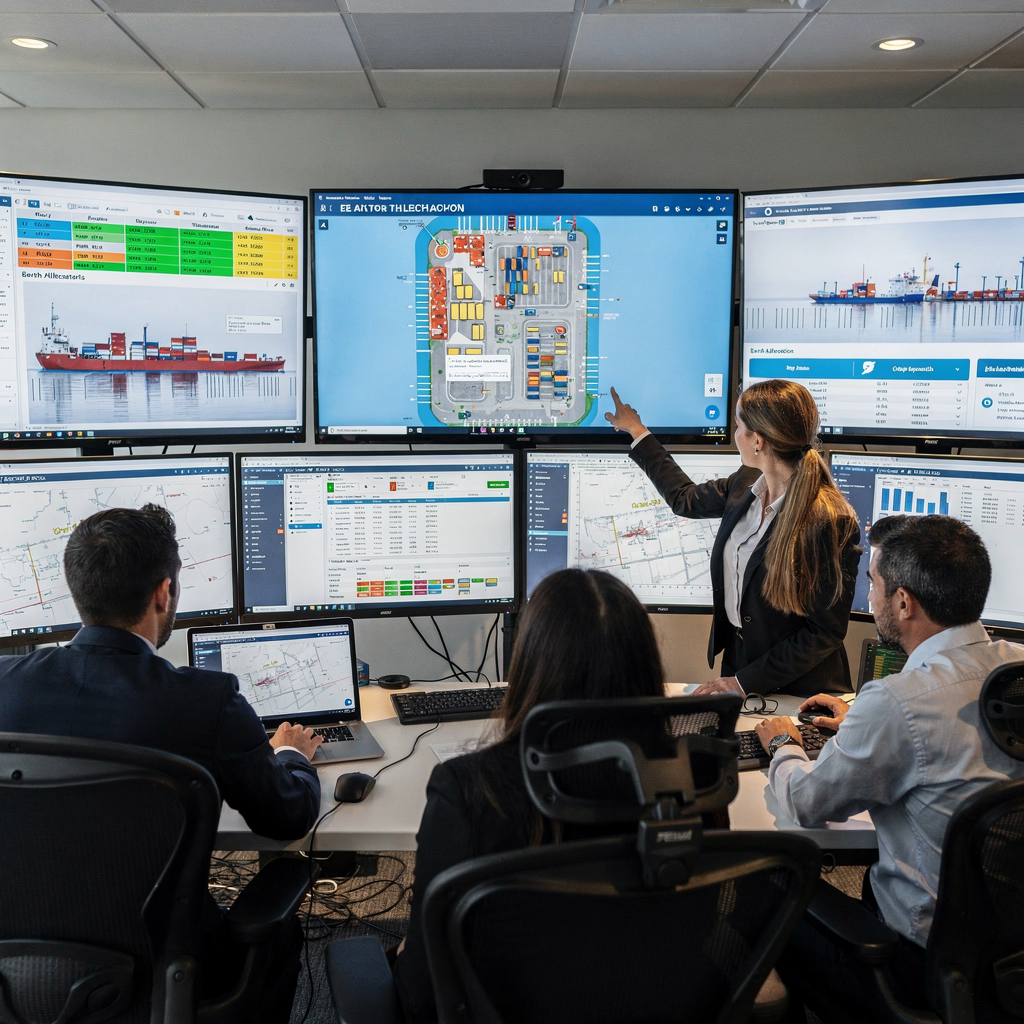
Real-time data improves productivity and reduces inefficiency. For instance, linking Automatic Identification System feeds with TOS analytics reduces idle time and helps optimize crane sequences. Also, TOS-driven yard planning shortens truck loops and reduces container dwell. A port using integrated TOS and analytics reported up to 20% reductions in vessel waiting times after rollout Top 18 Maritime Shipping Challenges – Ship Universe. Furthermore, operators can apply predictive analytics to forecast yard capacity and truck arrivals, which smooths resource allocation predictive modeling for port operations and yard capacity. The TOS should therefore tie into predictive models for arrival windows and equipment demand. Doing so allows the port to optimize crane assignments, minimize dwell times, and reduce the time spent on routine rework. As a result, staff spend less time triaging messages and more time improving operational efficiency. Finally, when terminals connect systems across stakeholders, the overall effect is better berth utilization and improved productivity during busy periods.
Drowning in a full terminal with replans, exceptions and last-minute changes?
Discover what AI-driven planning can do for your terminal
Port Operations Optimization: smart port solutions to tackle inefficiency and bottleneck
Port operations suffer from multiple inefficiency drivers. First, crane idle time and poorly sequenced moves reduce the crane’s productive hours. Next, yard congestion and equipment imbalance create delays that ripple into berth occupancy. Also, mismatches in container flows lead to longer truck queues and higher container dwell. To remove these bottlenecks, ports adopt smart port technologies such as IoT sensors, AI scheduling and automated guided vehicles. These tools give port operators a live view of equipment status, yard density and gate throughput. For practical approaches, ports can use real-time equipment dispatch solutions to cut unproductive travel and reposition gear real-time equipment dispatch optimization in container terminals.
Moreover, AI-driven scheduling can prioritize the highest-impact moves. For example, smart algorithms reduce crane idle time by assigning contiguous moves to a single crane and balancing workload across cranes. A study of high-frequency service ports found that strict scheduling and AI-like allocation reduce berth occupation and improve the efficiency of container handling Performance analysis for a maritime port with high-frequency services. Also, by sampling early adopters, ports can report productivity gains of 15–25% in berth occupation reduction and faster cargo turnaround. Furthermore, IoT and analytics let operators detect a developing bottleneck before it stalls the quay. For instance, sensors on trucks and lift equipment can flag yard density issues. Then, port operators sequence moves to avoid stacking delays and reduce the need for repositioning.
In addition, ports should integrate weather conditions into planning. Strong winds or heavy rain affect crane productivity and safety. Therefore, operational plans that incorporate weather windows help avoid sudden pauses and reduce recovery costs. Finally, a continuous improvement culture helps. Port authorities, terminal operators and the port community must measure KPIs, iterate on processes and align incentives so the smart port investment pays off. This combined approach helps optimize port operations and improve the efficiency of container flows.
Container Terminal and Container Handling: logistic strategies for time savings in container shipping
Container terminal performance depends on logistics beyond the quay. First, early booking and strategic warehousing near the quay shorten time to shore and reduce port costs. For example, freight carriers that book slots early and stage cargo close to the berth cut delays caused by missing equipment and reduce the risk of vessel idle time. A practical tactic is partnering with warehouses and cross-dock providers to move cargo faster to the truck gate. Also, integrating hinterland rail links speeds container handover from the terminal and reduces dwell times. Ports with efficient rail shuttles can clear stacks faster and free yard capacity.
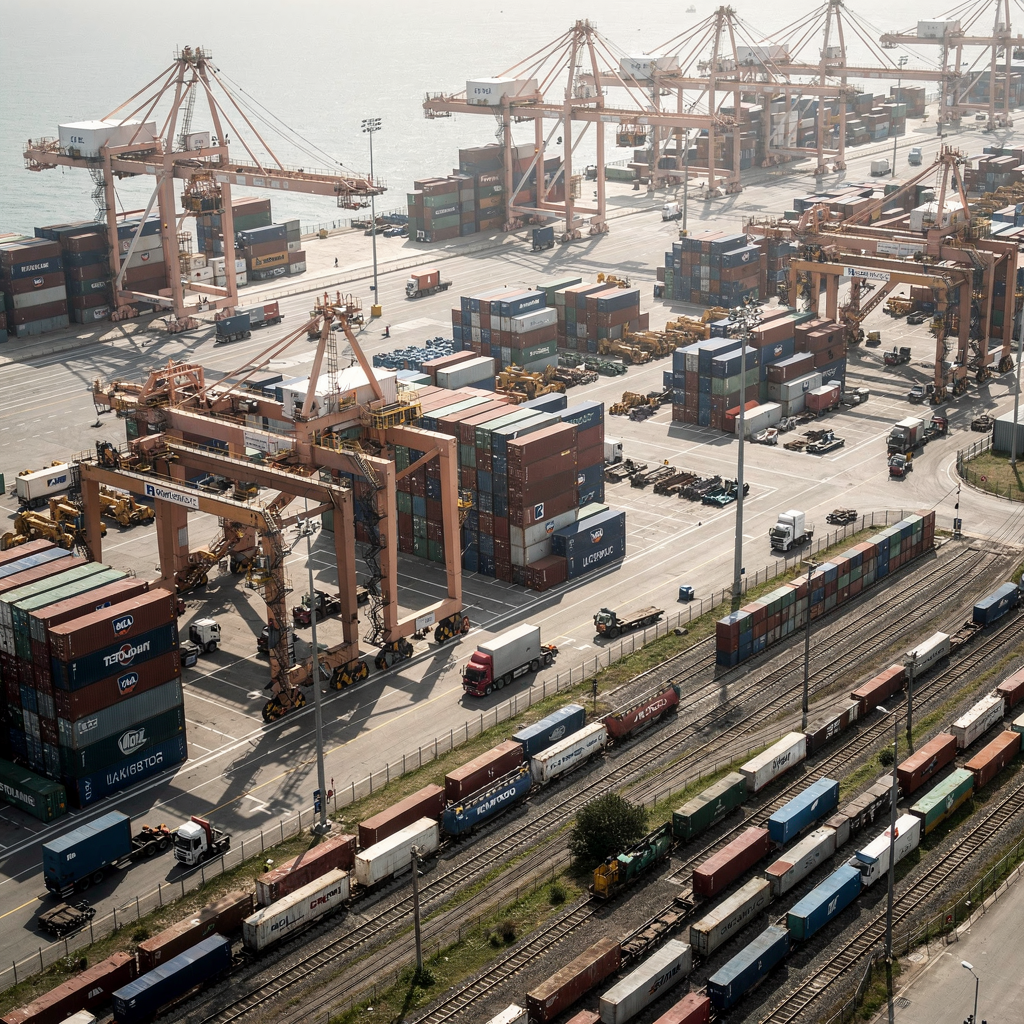
Also, cross-docking at the terminal consolidates cargo flows. For container shipping lines, this reduces loading and unloading complexity and shortens the vessel’s time at the port. In peak periods, early booking and warehousing can reduce turnaround by up to 30% according to industry guidance 8 Ways International Freight Carriers Reduce Delays – BAFCOintl.com. Next, terminals should optimize gate hours and time windows to balance truck visits. Doing so limits queuing and improves throughput for the operator. Additionally, digital appointment systems connected to the TOS let stakeholders see arrival slots and reduce last-minute rushes.
Terminal operators can also leverage chassis pool optimization and asset-tracking systems to reduce delays in container handover chassis pool optimization through AI in container terminals. Furthermore, improved container handling includes standardized twistlock procedures and better lashing coordination. These reduce time spent on routine tasks and improve crane productivity. Also, collaborative partnerships across shipping lines, truckers and port authorities reduce the chance of misrouted cargo. Finally, an integrated logistics approach — combining warehousing, rail, truck and digital booking — brings measurable time savings and helps in reducing vessel turnaround time for container vessels.
Drowning in a full terminal with replans, exceptions and last-minute changes?
Discover what AI-driven planning can do for your terminal
Port Call Optimization and Scheduling: reducing delay and unplanned congestion
Port call optimization improves how a vessel moves through a port’s sequence of services. First, port call optimization aligns arrival, berth assignment and cargo handling. Next, efficient sequencing reduces waiting time and prevents unnecessary congestion. Real-time data and predictive analytics create accurate arrival windows and help avoid queuing at the berth. The UN Trade and Development review notes route and schedule work that can improve terminal throughput Review of Maritime Transport 2024. Also, dynamic departure policies driven by live data smooth vessel flow and limit the stacking of multiple ships waiting for a single berth Port Congestion Problem, Causes and Solutions.
Port call optimization offers distinct benefits. For example, better berth sequencing minimizes the time a vessel’s crew waits for service and reduces the vessel’s fuel consumption while idling. Also, coordinated time windows allow truckers and rail operators to plan arrival and departure moves. Shipping companies that adopt strict schedules often accept staged loading, which speeds turnarounds and improves vessel schedules. Evidence shows route optimization and better scheduling can cut turnaround by 10–18% in many ports Enhancing Efficiency at Ports and Terminals for Ocean Freight. Furthermore, port authorities can apply predictive arrival models to estimate service times and allocate quay cranes more effectively.
To get started, ports should set clear KPIs and feedback loops. Also, they should test dynamic departure policies during low-traffic periods. This approach helps port operators validate rules and reduces the chance of unintended disruption. In addition, harmonizing VHF procedures and electronic notices to mariners reduces radio chatter and human error during the approach. Finally, integrating port call information with the TOS and the port community gives stakeholders one source of truth. That alignment helps avoid delays caused by mismatched expectations and leads to an improved port call for all parties.
Effective Port and Terminal strategies to Reduce Port turnaround time and Optimize resources
Reducing the time a vessel spends in port requires several strategies. First, combine a terminal operating system with smart port technology and strong stakeholder coordination. Also, add port call optimization and route planning to improve arrival predictability. For a practical blueprint, ports should run pilot projects that focus on berth allocation, yard planning and crane scheduling. For example, load balancing across cranes and berth re-sequencing reduces berth occupation and improves the efficiency of container moves ai approaches to quay crane scheduling. Next, connect email and operational workflows. Using AI agents to automate email lets teams handle exceptions faster and reduces the time spent on routine email triage.
Also, use a performance dashboard to track KPIs. Relevant KPIs include berth utilisation, crane moves per hour, gate turn time and container dwell. Furthermore, a checklist for continuous improvement should include capacity modeling, predictive maintenance, and interchange agreements with hinterland partners. Ports can also optimize fuel consumption by reducing idle time and smoothing berth arrivals. Importantly, port authorities and port operators must align incentives so that improved throughput benefits all stakeholders. For deeper technical explorations, terminals can study equipment dispatch and yard storage optimization resources real-time equipment dispatch optimization and ai-driven container port yard management systems.
Finally, the broader impact matters. Reduced turnaround time lowers port costs, improves schedule reliability for shipping lines, and strengthens resilience in maritime logistics. Also, improved port efficiency supports global trade and helps reduce recovery costs after disruptions. By combining technology, policies and operational change, ports can identify areas for improvement and continuously raise performance. This multi-pronged approach represents a practical way to improve port throughput and to optimize port resources while keeping vessels moving on time.
FAQ
What exactly is vessel turnaround time?
Vessel turnaround time is the total duration a vessel spends in a port from arrival to departure. It includes berth service, loading and unloading, and any waiting time before departure.
How does a terminal operating system help reduce delay?
A terminal operating system connects berth planning, yard control and equipment schedules to a single view. It enables real-time decisions that reduce idle time and improve productivity.
Can smart port technologies really cut berth occupation?
Yes. Adopting IoT sensors and AI scheduling has reduced berth occupation and improved container handling in pilot ports. Early adopters report measurable productivity gains that shorten vessel stays.
What role do shipping companies play in improving port efficiency?
Shipping companies set vessel schedules and provide booking information that ports use for planning. When they book early and share accurate arrival data, ports can better allocate berths and cranes.
How important is early booking and strategic warehousing?
Early booking secures time windows and equipment, which reduces the risk of avoidable delays. Strategic warehousing near the quay can speed cargo handling and provide time savings during peaks.
What is port call optimization and why use it?
Port call optimization sequences arrival, berth allocation and services to minimize waiting and delays. It improves berth sequencing and helps ports avoid unplanned congestion during busy periods.
How do ports measure progress after optimization?
Ports monitor KPIs like berth utilisation, crane moves per hour and container dwell. Regular reviews and continuous improvement cycles help identify areas for improvement and sustain gains.
Are predictive models useful for yard planning?
Yes. Predictive analytics forecast arrival patterns and yard density, which helps terminals allocate equipment and reduce congestion. This reduces recovery costs after disruptions.
What immediate changes can reduce port turnaround time?
Immediate steps include improving data sharing, enforcing time windows, and automating routine communications. Also, optimizing crane scheduling and gate appointments brings quick wins.
How do weather conditions affect turnaround and what can ports do?
Weather conditions can slow crane productivity and create safety pauses. Ports should incorporate weather windows into planning and have contingency procedures to limit schedule slips.
our products
 stowAI
 stackAI
 jobAI
jobAI
Innovates vessel planning. Faster rotation time of ships, increased flexibility towards shipping lines and customers.
Build the stack in the most efficient way. Increase moves per hour by reducing shifters and increase crane efficiency.
Get the most out of your equipment. Increase moves per hour by minimising waste and delays.
stowAI
Innovates vessel planning. Faster rotation time of ships, increased flexibility towards shipping lines and customers.
stackAI
Build the stack in the most efficient way. Increase moves per hour by reducing shifters and increase crane efficiency.
jobAI
Get the most out of your equipment. Increase moves per hour by minimising waste and delays.