
port: Overview of Container Rehandle Issues at Terminals
Container rehandles cost time and money at every busy port. Rehandles occur when a container must be moved more than once during a single call. The primary causes are poor stacking order and unexpected retrievals caused by errant schedules, last-minute changes, or mislabelled cargo. The result appears as extra crane moves, extra truck wait time, and extra fuel use. Terminal operators often track the number of unproductive moves to quantify this waste. Rehandling moves add labour and equipment wear, and they slow overall throughput. For example, rising port calls in 2023 increased pressure on terminals and made rehandling more visible (UNCTAD 2024). These pressures affect the entire supply chain and they affect port competitiveness.
At a practical level, rehandles increase labour costs, shorten the life of yard cranes, and extend time required for a vessel call. Each extra move can add minutes to the turnaround. Terminal operators often find that reducing the number of reshuffles by 20–30% yields measurable gains in productivity and efficiency. In the import and export flows, a single misstacked import container can force a series of shifts that cascade across the storage area. When import containers and export containers mix without clear sequencing, the container retrieval process becomes unpredictable and the expected number of moves rises. Landside constraints and landside peaks further aggravate the problem because trucks arrive in bursts and then create local bottleneck conditions. As a result, terminal throughput falls and delays can lead to missed berth windows and higher costs for carriers.
Port managers must evaluate the allocation of space and plan stacking strategies to reduce reshuffle risk. They must also monitor dwell times and arrival time patterns to predetermine likely peaks. Data analytics and real-time data can help, and they can reveal hidden patterns in which containers arrive and which containers leave. Operators that use these signals also often reduce the number of unproductive moves. Finally, terminal operators should consider targeted investments in both equipment and software. Simple changes to stacking order and a clear stowage plan can significantly reduce disruptions and improve the efficiency of operations.
literature review: Summarising Research on Rehandle Reduction
This literature review summarises key academic and industry findings on reducing reshuffle and rehandling. Researchers have focused on several streams. First, advanced information systems that combine truck-arrival notices and dwell times data show strong benefits. Studies using dwell times distributions and truck notifications demonstrate how predictive scheduling will reduce unnecessary relocation and waiting time (utilizing information sources). Second, optimisation methods such as quay crane dual-cycling paired with yard minimisation produce big gains. Recent work on a Quay Crane Dual Cycle – Dockyard Rehandle Genetic Algorithm (QCDC-DR-GA) reports up to a 30% drop in dockyard rehandles in simulation trials (QCDC-DR-GA). Third, block relocation-minimisation and schedule-aware stacking papers address the container relocation problem directly and they produce useful heuristics and exact-method comparisons (block relocation study).
Researchers also compared exact methods, dynamic programming model approaches, and heuristic or tree search solutions. Dekker et al appears in the literature on allocation and storage decisions, and many studies report computational results that favour hybrid heuristics over pure exact methods for large instances. Where the expected number of reshuffles is central, experiments with randomly generated yard scenarios show that a carefully tuned heuristic called a block relocation heuristic will significantly reduce reshuffles. The literature review also notes the role of automated container detection and smart port sensing in reducing human error and unpredictability (smart port tech). Those solutions cut down on misidentification and thus they cut the number of rehandles.
Authors such as Chen and Liu contribute important models for sequencing and allocation under constraint, and several papers model how disruption scenarios and empty containers change the optimum stacking and stowage plan. The consensus in this literature is clear: combining real-time data feeds, mathematical model support, and pragmatic heuristics yields the best balance between computational tractability and yard performance. For practitioners seeking further reading on operations and KPIs, see our piece on container terminal KPIs and optimisation with AI where practical implementations are discussed (container terminal KPIs).
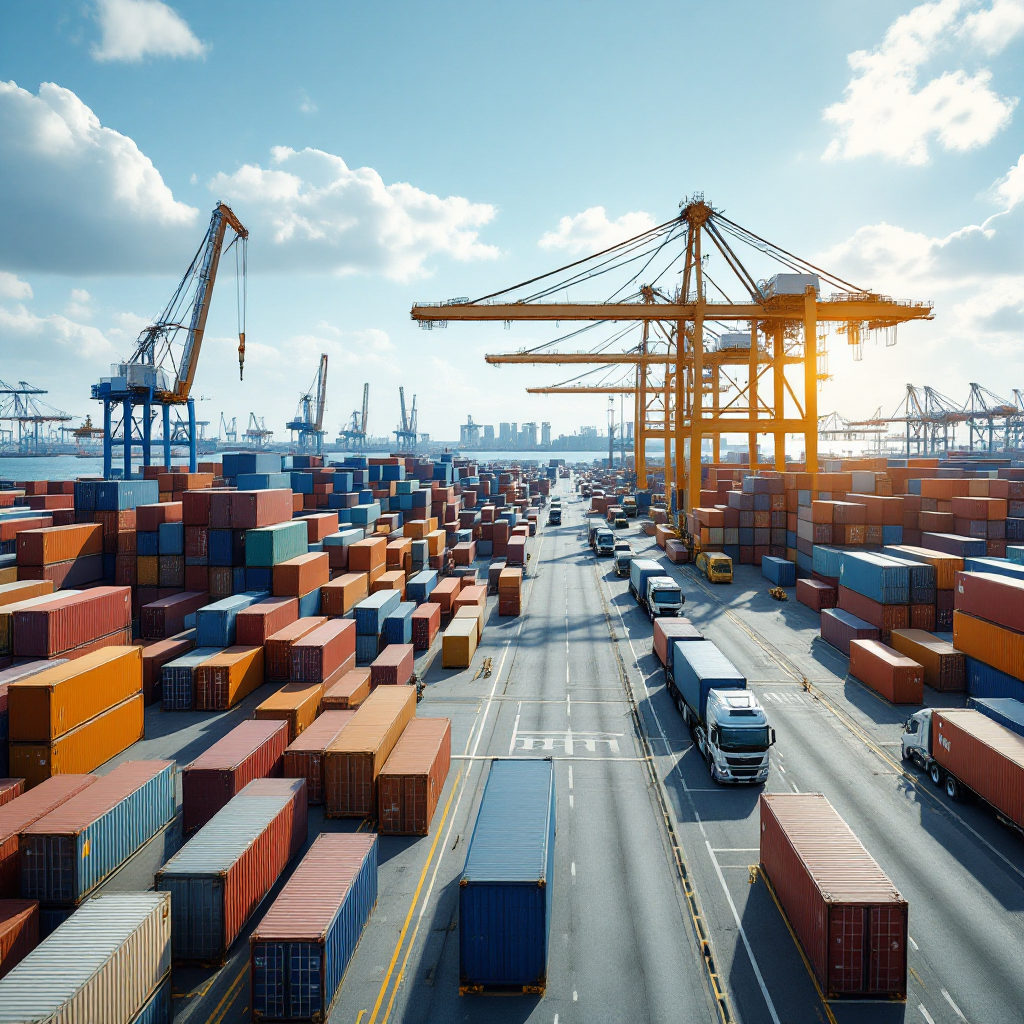
Drowning in a full terminal with replans, exceptions and last-minute changes?
Discover what AI-driven planning can do for your terminal
port container: Optimising Port Container Handling Practices
Effective port container handling combines technology, clear stacking policies, and integration between quay and yard systems. Smart port technologies support automated container identification, they speed retrieval, and they reduce errors. Industry reports suggest that smart solutions improve container handling efficiency by 15–25% largely by cutting rehandles (smart port efficiency). Automated container sensors and vision systems let operators track which containers are where, and they help to predetermine which ones will be needed next. Real-time data supports dynamic decisions, and real-time container terminal replanning strategies can reassign moves to avoid future reshuffles (replanning strategies).
Stacking strategies must reflect planned retrieval order, and operators often apply yard segmentation to separate export containers and import container flows. Doing so reduces conflicts and it lowers the chance that a stored container will block another. A clear container stacking policy can prevent excessive reshuffle. The storage yard layout matters as well. If the storage area places high-turn containers near gates and low-turn near the inner rows, the yard can accommodate peaks more smoothly. Terminal operators should also integrate scheduling systems so the quay and yard teams share a single source of truth. This integration reduces conflicts between crane allocation and yard moves and it lowers inefficiency.
Data integration works best when planners combine arrival time predictions, stowage plans, and truck booking status. For example, using booking data to tag high-priority boxes before they reach the yard lets automated systems allocate optimal slots. Virtualhandhelds and automated yard cranes benefit from this foresight. That kind of integration reduces manual triage and it reduces delays that often cause reshuffle. For further operational examples on yard equipment deployment consider our study on optimising yard equipment deployment which outlines practical rules for assigning yard cranes and vehicles (yard equipment deployment).
port congestion: Evaluating Congestion Effects on Reshuffle
Port congestion creates a chain reaction that increases reshuffle and raises the number of rehandles. When vessels queue for a berth, the quay work rate fluctuates and the storage area fills faster. Berth delays change the planned departure time for a vessel and they create peaks in container movement. Those peaks raise the number of reshuffles because staff stack quickly to free the quay and then later must retrieve the containers in a different order. Metrics such as berth utilisation, truck waiting time, and yard occupancy become critical to observe. Efficient berth planning reduces berth-related pressure on the yard and it lowers reshuffle risk (berth-call optimisation).
Port congestion also increases dwell times of import boxes. Longer dwell makes the storage yard more crowded and it forces terminal operators to move boxes more often. The landside flow matters because trucks and rail services move containers out. If landside is slow, stored containers pile up and operators start to reallocate slots, which increases rehandling. Container transshipment flows add complexity too. A hub that combines feeder calls with deepsea calls may see variable demand for the same slots. If the allocation problem is not addressed, the yard becomes a bottleneck and it requires additional rehandling to retrieve the containers in time for the next sail.
To evaluate congestion impacts, terminals should track the number of containers waiting per gate and the number of unproductive moves per shift. They should also simulate scenarios with discrete-event models to find where constraints cause the most delays. Simulation studies and discrete-event experiments help to predict where storage area limits will force extra moves. Terminal planners can then test strategies that include slot reservation, staging areas for high-turn units, and temporary buffer rows for new containers. These practices help to reduce the number of reshuffles and to protect turnaround time for vessels.
Drowning in a full terminal with replans, exceptions and last-minute changes?
Discover what AI-driven planning can do for your terminal
heuristic: Applying Heuristic and AI Models for Minimising Reshuffles
Heuristic and AI-based approaches target the core computational challenges in port yards. A well-chosen heuristic reduces search time and gives near-optimal allocation under tight constraints. For instance, a heuristic for block relocation minimisation will assign an early retrieval container to an accessible slot to prevent later reshuffles. Researchers have also used a tree search and dynamic programming model to compare methods for small instances and then scaled with heuristics for larger ones. The literature shows that exact methods work for small problems, but heuristics provide timely solutions for real yards where time needed is short and decision windows are tight.
Genetic-algorithm approaches, such as QCDC-DR-GA, combine yard minimisation with crane dual-cycling. These methods explicitly try to maximise quay cycles while minimising rehandling moves, and they often outperform simple greedy allocation. The heuristic called a hybrid genetic search can accommodate multiple objectives such as minimising the expected number of reshuffles and matching the stowage plan to departure time windows (QCDC-DR-GA). AI-driven predictive analytics add value by forecasting arrival time and dwell times, and by predicting which containers will be needed next. When planners use data analytics to predict truck bookings and vessel ETAs they can predetermine optimal slots and thereby reduce the expected number of rehandles.
AI models also help to evaluate trade-offs quickly. They can simulate how a change in stacking strategies affects the number of containers that must be moved for a given vessel. Tools that integrate machine learning and optimisation allow terminal operators to evaluate scenarios and choose an allocation that balances crane productivity and storage constraints. For practical AI use cases in terminals, our team has compiled examples on machine learning use cases in port operations that show how predictive models can inform yard moves (machine learning use cases).
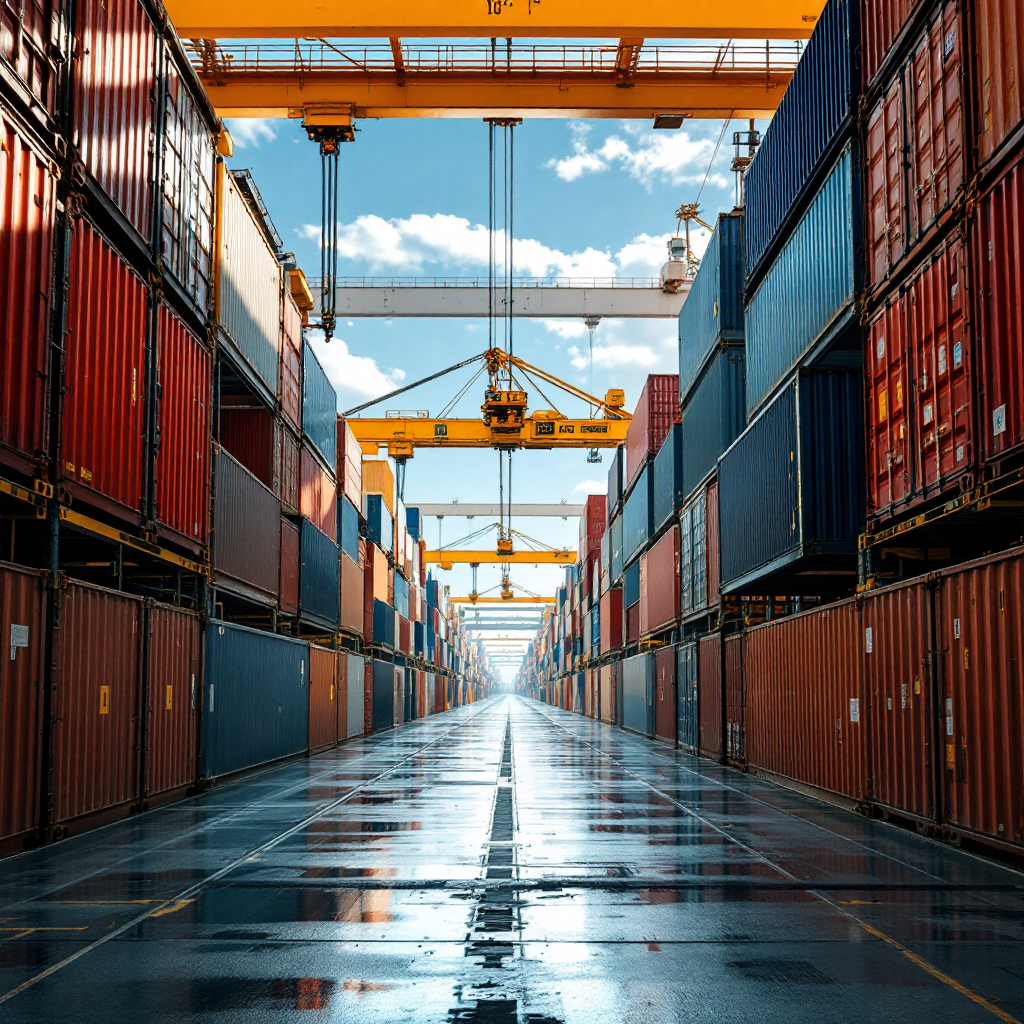
turn times: Reducing Vessel Turn Times through Efficient Yard Operations
Reducing reshuffles directly reduces vessel turn times. When the storage yard runs smoothly, quay cranes unload and load without waiting for container relocation. That reduced delay shortens turnaround time and it lowers berth occupation costs. Studies of integrated models report a 25–30% reduction in rehandling that translates to measurable gains in turn times and quay productivity (QCDC-DR-GA results). When terminals compare computational results from hybrid approaches to conventional sequencing methods, they often find clear improvements compared to conventional planning.
Best practices include synchronising the stowage plan with the yard layout so that containers destined for early discharge sit in accessible rows. Terminal planners must also handle export containers and import container flows separately when possible. This separation reduces conflicts and it lets cranes operate optimally. Some terminals create temporary holding rows that accommodate new containers until staff can position them for minimal reshuffle later. These operational rules reduce the number of reshuffles and they improve overall productivity and efficiency.
Case studies show that when a terminal implements real-time data feeds, berth-call optimisation, and schedule-aware stacking, it will significantly reduce time required for a call. In short, coordination between berth scheduling, quay operations, and yard planning yields the optimum balance between crane utilisation and yard stability. Planners who adopt these coordinated measures will see fewer delays, fewer rehandling moves, and faster turn times.
FAQ
What is a rehandle and why does it matter?
A rehandle is an extra movement of a container within the terminal beyond the initial unload or move. It matters because each rehandle increases labour, fuel use, and equipment wear and it lengthens vessel turn times.
How do dwell times affect reshuffle risk?
Dwell times influence how long containers occupy yard slots and they affect yard occupancy. Longer dwell times increase the chance that other boxes will block access, which raises reshuffle risk.
Can smart port technologies reduce the number of reshuffles?
Yes. Automated container identification and real-time data reduce manual errors and let planners place containers to avoid future reshuffles. Studies show efficiency gains of 15–25% with such technologies (smart port efficiency).
What is QCDC-DR-GA and what does it achieve?
QCDC-DR-GA is a hybrid genetic algorithm that maximises quay crane dual-cycling while minimising dockyard rehandles. Simulation studies show reductions in rehandling by up to 30% (QCDC-DR-GA).
How do berth delays cause more reshuffles?
Berth delays shift planned loading and unload sequences and they force faster stacking to clear the quay. That fast stacking often creates later conflicts that require reshuffle when retrieve the containers.
What role do heuristic methods play in yard planning?
Heuristic methods provide fast, near-optimal solutions to the container relocation problem when exact methods are too slow. They help terminals reduce the number of reshuffles under tight time constraints.
How can terminals use emails and bookings data better?
By automating the extraction of booking and truck notices, terminals can convert unstructured messages into structured signals for planners.
Are there KPIs to track reshuffle performance?
Yes. Track number of unproductive moves, number of reshuffles per vessel, truck waiting time, yard occupancy, and turnaround time to measure performance and spot trends.
What immediate steps reduce rehandling in a busy yard?
Implement schedule-aware stacking, segment export and import flows, create buffer rows for new containers, and use real-time data to guide placement. These steps reduce the need to retrieve the containers later.
Where can I find applied examples and tools for implementation?
Look at practical resources on berth-call optimisation and yard equipment deployment to see applied rules and tools. For example, see our coverage on berth-call optimisation strategies (berth-call optimisation) and yard equipment deployment (yard equipment deployment).
our products
 stowAI
 stackAI
 jobAI
jobAI
Innovates vessel planning. Faster rotation time of ships, increased flexibility towards shipping lines and customers.
Build the stack in the most efficient way. Increase moves per hour by reducing shifters and increase crane efficiency.
Get the most out of your equipment. Increase moves per hour by minimising waste and delays.
stowAI
Innovates vessel planning. Faster rotation time of ships, increased flexibility towards shipping lines and customers.
stackAI
Build the stack in the most efficient way. Increase moves per hour by reducing shifters and increase crane efficiency.
jobAI
Get the most out of your equipment. Increase moves per hour by minimising waste and delays.