
Terminal and Supply Chain Visibility: Introduction
Ports and marine terminals face intense pressure today, and visibility sits at the heart of the response. Also, congestion and unexpected vessel delays increase costs and complicate planning. Therefore, terminals need real-time information, clear dashboards, and predictable flows to operate efficiently. The need grows as global trade expands and supply chain stakes rise. In this context a terminal operating system brings order. It gives planners tools to monitor berth plans, yard status, and gate flows. Also, it supports resource allocation and stakeholder communication so teams act with confidence.
Visibility matters because small delays amplify across the supply chain. For example, advanced systems can reduce vessel turnaround times by roughly 15% when combined with process changes (SourceForge). Also, terminals that adopt modern TOS report measurable productivity gains. In some cases operators see a 20–30% rise in productivity after integrating advanced modules (SourceForge). These numbers show why adopting a robust platform matters.
Loadmaster.ai works alongside existing systems to add policy-driven intelligence that fills gaps. For example, our reinforcement learning agents simulate millions of decisions so planners no longer juggle constraints manually. Also, this approach reduces reliance on historical models and on tribal knowledge. It helps terminals manage peaks and disruptions. In addition, combining simulation with a terminal operating system gives operations a tested playbook. The result is smoother execution, and clearer communication between quay, yard, and gate staff.
Finally, improved visibility directly affects commercial outcomes. It shortens dwell time, it reduces idle equipment, and it improves invoice accuracy. Also, better visibility helps terminal operators demonstrate measurable service levels to shipping lines and truckers. Therefore, investing in visibility tools delivers both operational and commercial returns for a port, and for the larger supply chain.
steizar terminal operating system: Core Modules and Functions
The steizar terminal operating system focuses on integrated modules that manage core terminal workflows. First, vessel planning and berth allocation give port managers a coherent plan for quay execution. Also, automated crane scheduling links to vessel stow plans so moves align with resources. Second, yard management tracks containers in real-time and optimizes placements to reduce rehandles and driving distances. This module reduces congestion and improves terminal productivity.
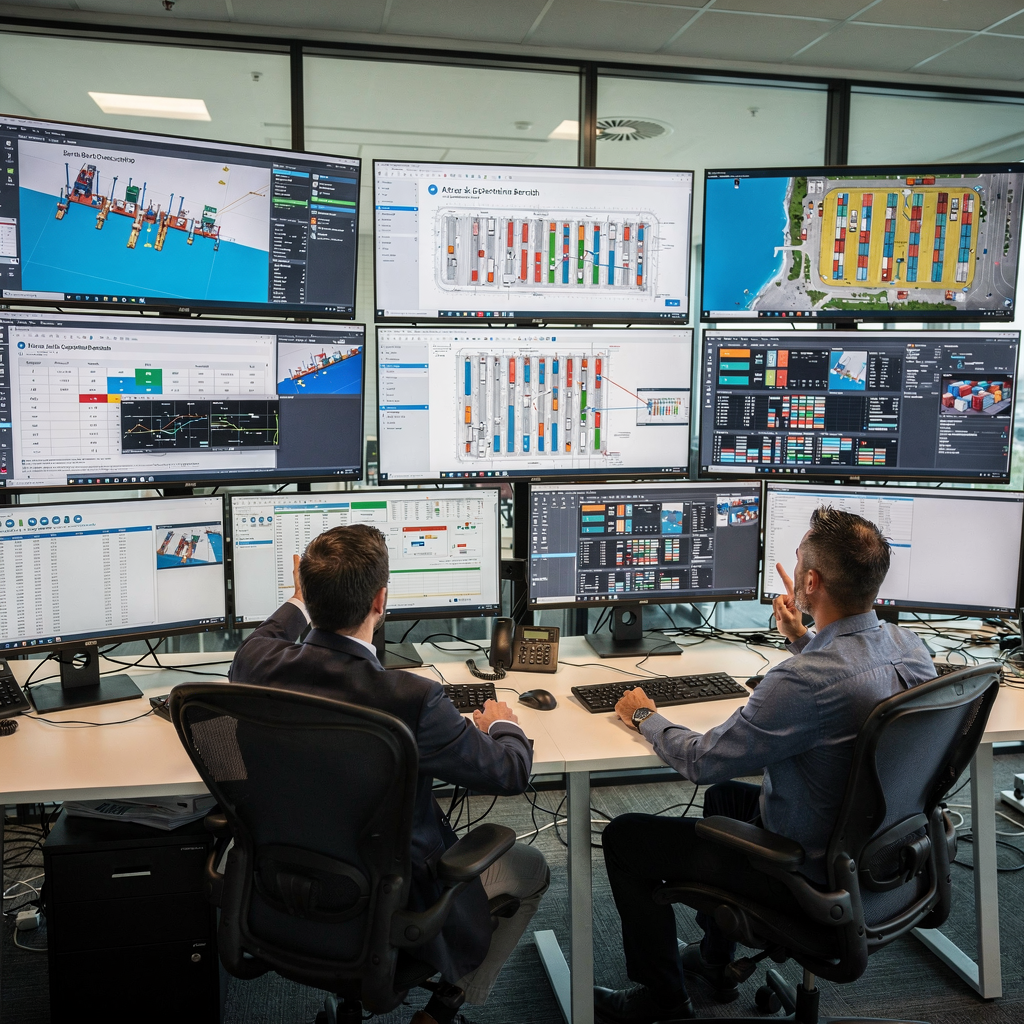
Steizar includes a truck appointment system that coordinates arrivals and reduces gate queues. Also, the automated billing module streams job records into accurate invoice generation. The system’s automated billing capability helps terminals close the revenue loop faster and with fewer disputes. This suite also supports APIs to integrate equipment telemetry, gate readers, and third-party logistics providers. In practice, integration reduces manual handoffs and improves throughput.
Steizar positions itself as a flexible platform, and terminals can tailor modules to their target market. The platform offers a secure interface and role-based access so teams monitor activities without exposing sensitive data. Also, terminals using this platform report shorter container dwell times, sometimes by up to 12 hours in high-turn environments (SourceForge). That reduction drives measurable savings and enhances service reliability.
If teams want to trial these capabilities, trial offers and training options exist from vendors and integrators. Also, combining a steizar module with simulation and digital twin tools can validate processes before live deployment. For more on simulation-led planning see our terminal digital twin resources terminal digital twin.
Drowning in a full terminal with replans, exceptions and last-minute changes?
Discover what AI-driven planning can do for your terminal
Comparative Review of Operating Systems, Terminal Operating System Solutions and TOS
When you compare steizar terminal operating system options with established names you must weigh customization, scalability, and user experience. A useful comparison examines Navis N4, Tideworks, and Octopi. Navis often emphasizes deep integration in large container terminals and a mature interface; Tideworks focuses on modularity and hybrid deployments; Octopi offers cloud-based simplicity and fast onboarding (SourceForge). In independent listings, these operating systems sit alongside newer entrants that target niche needs and smaller ports (Slashdot).
Also, consider how each provider supports operators. Support options vary by vendor. Some packages include on-site training, others lean on online manuals and mobile interfaces. A comparison must include maintenance and customer service levels, because long-term uptime depends on consistent help. The steizar offering markets flexible deployment and an intuitive interface, and it can integrate with legacy gear and modern telemetry. That makes it easier to tailor controls for specific operational rules and KPIs.
Cost matters too. When you compare price look at licence models, implementation charges, and the total cost of ownership over five years. Also, factor in the cost to integrate with gate hardware and with third-party carriers. To assess risk-free options, request trial offers and simulated deployments. For terminals that want to validate TOS impact, simulation-to-TOS testing clarifies expected gains; see our comparison of simulation and TOS workflows container terminal simulation vs TOS.
Finally, a direct quote reflects user experience: “The integration capabilities of Steizar have revolutionized how we manage terminal logistics, enabling us to handle higher volumes with greater precision and less downtime,” a senior manager observed (SourceForge). That testimonial shows how integration and customization influence real-world adoption.
Real-time Operation and Handling Optimisation
Real-time dashboards let managers monitor key metrics and react quickly. Also, real-time alerts flag conflicts before they escalate. The TOS provides a live dashboard that shows crane status, truck queues, and yard utilization. These views let planners sequence moves and allocate cranes to priority vessels, so terminals execute plans predictably. Also, a clear monitor of equipment health reduces downtime and avoids surprise breakdowns.
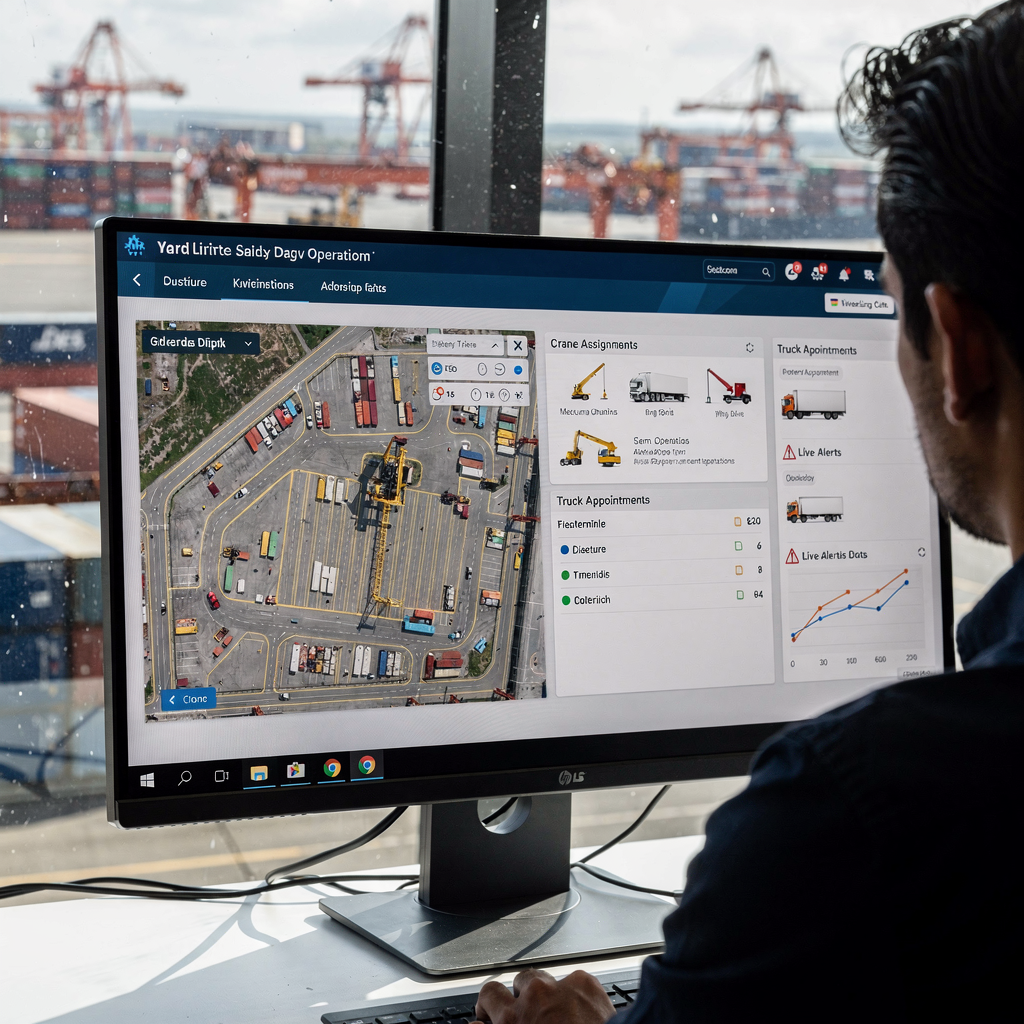
Automated crane scheduling plays a central role. It assigns lifts to cranes using rules and current conditions. Also, the feature reduces idle time and balances workload across quays. When combined with an AI-driven planner, automated scheduling can optimize multiple KPIs, such as quay productivity and yard congestion. Loadmaster.ai’s agents augment planning by testing sequences in a sandbox, and then deploying policies that reduce rehandles and driving distances. This improves throughput and keeps execution robust under disruption.
Operation workflows in a modern platform tie gate, yard, and quay activities. Also, they enforce constraints and route moves to minimize cross-yard travel. The platform’s visibility features support stakeholder communication so carriers and truckers receive accurate ETAs. In addition, terminals achieve higher terminal productivity when they integrate real-time data with planning logic and with human oversight. That combination leads to consistent performance across shifts, and to fewer firefighting incidents on peak days.
Drowning in a full terminal with replans, exceptions and last-minute changes?
Discover what AI-driven planning can do for your terminal
Feature Breakdown: How to Maximize Container Handling Efficiency
Start with yard strategy. A strong yard module places containers to reduce moves and to protect future plans. Also, it balances the workload between RTGs and straddles. The right yard layout and strategy maximize throughput and minimize rehandles. To test yard changes before live deployment, use simulation tools and digital twins. For example, our container-yard-simulation-system supports what-if scenarios and equipment layouts container yard simulation. That approach validates assumptions and helps tailor stow and stack rules to the terminal’s target market.
Automated billing improves revenue accuracy. By linking moves to job records the system produces timely invoice data and reduces disputes. Also, the invoice process benefits from a full audit trail and from secure role-based approvals. This reduces manual adjustments and accelerates cash collection. Terminals see immediate value when billing ties directly to recorded moves in the TOS database.
Integrated workflows reduce handoffs and speed turnarounds. For example, when truck appointments align with yard staging, gates clear faster. Also, mobile interfaces let gate clerks update records without delay. The combined effect increases equipment utilization and reduces idle time. To maximize gains, operators should adopt an execution plan that coordinates quay, yard, and gate activity, and that allows automated overrides when conditions change.
Finally, plan to measure impact. Track throughput, terminal productivity, and dwell time. Also, set KPIs for crane moves per hour and for gate cycle time. When you measure and iterate, improvements compound. Tools that automate, integrate, and monitor these areas deliver the most reliable efficiency gains.
Solution Pricing: ROI Comparison of TOS Options
Pricing for a terminal operating system depends on licence model, deployment, and integration scope. Some vendors offer perpetual licences with annual maintenance. Others use subscription fees for cloud-based services. Also, implementation charges include data migration, hardware integration, and training. When you compare price include the hidden costs such as business interruption during cutover, and the need to adapt legacy interfaces. To model payback, forecast the reduction in vessel turnaround, the improvement in throughput, and the reduction in operational costs.
Typical ROI scenarios show rapid payback when a TOS reduces dwell time and increases crane efficiency. For instance, terminals have reported a 25% increase in operational efficiency and a 10% reduction in costs in the first year after deploying advanced systems (SourceForge). Those improvements can compress payback to well under three years in many markets. Also, cloud-based licensing changes the cash flow profile and lowers upfront capital.
Support and maintenance fees vary by customer needs. Some providers include 24/7 support and on-site engineers. Others provide tiered customer service levels and remote support. Also, consider training options and trial offers during selection to reduce deployment risk. If you want to simulate the TOS impact before committing, explore tools that bridge simulation and live systems; for example our terminal operating system simulation integration pages explain methods and benefits TOS simulation integration.
Ultimately pick a provider with clear upgrade paths, transparent support options, and an ability to integrate with your legacy gear. Also, consider the value of augmenting a TOS with AI-driven agents that optimize decision-making under uncertainty. That combination often delivers more consistent gains and a faster path to realizing the system’s full functionality.
FAQ
What is a terminal operating system and why does it matter?
A terminal operating system coordinates quay, yard, and gate activities at a port. It matters because it provides visibility, schedules resources, and connects stakeholders so terminals run efficiently and reliably.
How does steizar terminal operating system compare to other solutions?
The compare steizar terminal operating system phrase highlights differences in customization and interface. Also, steizar focuses on modular features and on integration with existing equipment while other vendors may emphasize scale or cloud native design.
What’s the difference between steizar and legacy TOS products?
what’s the difference between steizar centers on modularity and on integration approach. Also, modern offerings often provide easier interfaces and faster deployment compared to legacy platforms that require extensive manual configuration.
Can a TOS automate billing and invoicing?
Yes, most modern platforms include an automated billing module that ties move data to charges and produces an accurate invoice. Also, this reduces disputes and speeds cash collection.
How can terminals validate TOS changes before deployment?
Terminals can simulate yard and quay scenarios with digital twin and discrete-event simulation tools. For more details see our discrete-event simulation resources discrete-event simulation. Also, simulation reduces risk during deployment.
What support options should I expect from a TOS provider?
Providers typically offer tiered support options, training options, and on-site or remote services. Also, ensure the vendor documents customer service levels and provides clear escalation paths.
Does steizar support integration with equipment telemetry?
Yes, modern platforms integrate with telematics and RTG/straddle telemetry to monitor equipment health. Also, integration enables more accurate scheduling and reduces unexpected downtime.
How fast can a terminal see ROI after a TOS implementation?
ROI depends on the scope and on process changes, but many terminals report measurable gains in the first year. For instance some terminals reported a 25% efficiency improvement and lower costs within 12 months (SourceForge).
Are there trial offers or simulation pilots available?
Many vendors provide trial offers or pilot deployments so you can evaluate performance before full roll-out. Also, simulation pilots help tailor configurations and prove expected gains without disrupting operations.
How does AI fit with a TOS deployment?
AI agents can augment a TOS by optimizing stowage, yard placement, and move sequencing in real time. Also, AI reduces manual rehandles and helps maximize throughput while maintaining operational guardrails.
our products
 stowAI
 stackAI
 jobAI
jobAI
Innovates vessel planning. Faster rotation time of ships, increased flexibility towards shipping lines and customers.
Build the stack in the most efficient way. Increase moves per hour by reducing shifters and increase crane efficiency.
Get the most out of your equipment. Increase moves per hour by minimising waste and delays.
stowAI
Innovates vessel planning. Faster rotation time of ships, increased flexibility towards shipping lines and customers.
stackAI
Build the stack in the most efficient way. Increase moves per hour by reducing shifters and increase crane efficiency.
jobAI
Get the most out of your equipment. Increase moves per hour by minimising waste and delays.