
port congestion and its impact on terminal operations
Port congestion has become a persistent obstacle for terminal operations. When vessels queue, berths sit idle, and cranes wait, the result is predictable. The situation raises costs and stretches schedules across the supply chain. Industry reporting finds vessel turnaround times can rise by up to 30%, which creates cascading delays and higher bills for carriers and shippers this increase in vessel turnaround times. The extra time at berth translates to storage fees and longer truck cycles. As a result, terminals face reduced throughput and lower operational margins.
Terminal staff then shift from planning to firefighting. Planners juggle equipment, berth windows, and trucking peaks. Decisions must balance quay speed and yard capacity. That trade-off often causes rehandles and longer moves. The pattern harms productivity and leads to inconsistent performance across shifts. Terminal operators need approaches that can see ahead. Predictive analytics offers that forward view and helps smooth demand spikes. Terminals can improve scheduling and reduce idle equipment when they apply these systems.
Delays to a single vessel ripple through the network. A missed cut-off means rerouting or delayed shipment. Trucks arrive and then wait in the port, which wastes driver time and increases emissions. Small delays add up into major disruption for global trade. To address the problem, operators are adopting AI tools and better data flows. For practical planning guides, teams can consult resources on simulation and terminal planning to model scenarios before they occur, such as detailed discrete event simulation and terminal planning techniques simulation for terminal planning. These models let teams test rules, evaluate schedules, and design guardrails that reduce rehandles and improve throughput.
Clear metrics help. Measuring moves per hour, driving distance, and container dwell time points to root causes. When terminals combine this measurement with advanced analytics, they can spot recurring bottlenecks. Then they can target precise fixes. That means fewer idle cranes, shorter truck queues, and more predictable vessel calls. The end result is better service for shipping companies and stronger resilience in the supply chain.
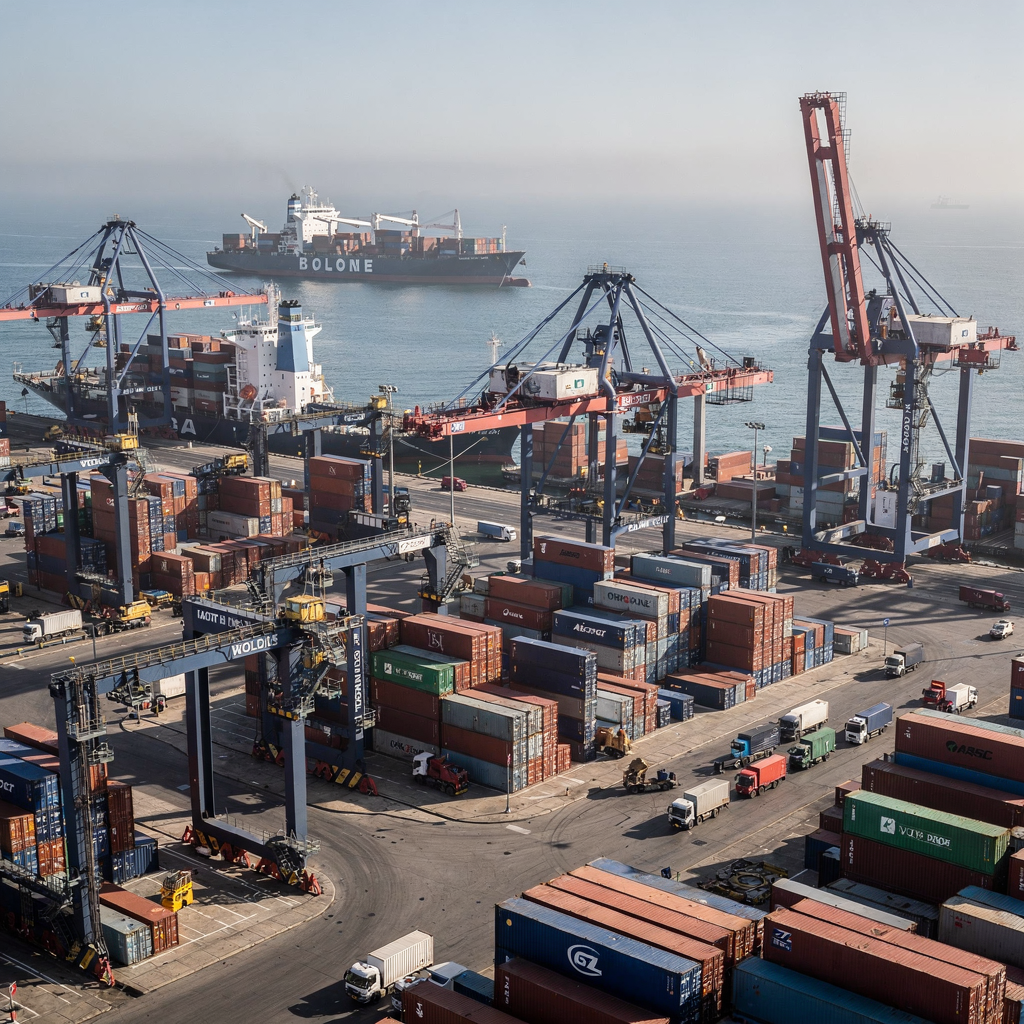
predictive analytics for real-time forecast in port operations
Real-time forecasting transforms how teams handle port tasks. By combining AIS feeds, gate scans, and equipment telemetry, terminals can create live predictions about arrivals and yard stress. For example, a full predictive approach that includes multiple ETAs across port stops is essential to streamline operations and reduce berth waiting times, and this has been highlighted by logistics leaders a full predictive approach for end-to-end forecasting. That transparency improves coordination with carriers and trucking partners.
Using real-time inputs, systems can forecast congestion on specific days and during peak windows. Forecasts guide resource moves and help reduce idle time for expensive equipment. Terminals see value when they use predictive analytics to align quay teams with yard crews and gate agents. The model can recommend when to hold a vessel or shift crane assignments. This helps avoid stacking shortages and prevents unnecessary reshuffles.
Technologies that support these forecasts include AI and machine learning models, remote monitoring, and richer data pipelines. Together, they increase the predictive accuracy of arrival times and dwell patterns. Studies show that predictive approaches can cut congestion-related delays by up to 20% and boost handling efficiency by double digits reducing congestion-related delays by up to 20%. In practice, teams run simulations and adjust parameters to reflect local constraints. These experiments can be done with tools that simulate terminal flows and test scheduling alternatives, such as discrete event simulation resources for port planners discrete event simulation for ports.
When terminals adopt these systems, they also improve decision-making. Operators can choose between faster quay moves or smoother yard flow depending on conditions. The real-time forecast reduces costly guesswork and supports clearer SLA commitments. Over time, the forecasts get better as more data and feedback are fed back into the models, and that continuous improvement helps maintain throughput during demand surges.
Drowning in a full terminal with replans, exceptions and last-minute changes?
Discover what AI-driven planning can do for your terminal
AI-powered predictive model for congestion management in gate operations
Gate operations often define the customer experience at a terminal. Slow gates cause queues and increase truck turn time. An ai-powered predictive solution for gate flows predicts busy windows and suggests staffing and lane configurations in advance. Using real-time and historical inputs, a predictive model can flag when to open more lanes or redirect trucks to off-peak slots. This reduces truck wait and keeps flows moving.
Gate-level models combine camera feeds, booking records, and trucking patterns. They use machine learning to identify trends and to recommend short-term changes. For example, predictive scheduling can shift arrivals and smooth peaks. It can also signal when a container should be express shipped to prevent stacking conflicts later. Gate forecasts reduce the need for last-minute changes and lower dwell times for inbound and outbound shipments.
At Loadmaster.ai, we train agents in a digital twin so they learn policies that balance gate load with quay and yard priorities. Our reinforcement learning agents act as a complement to supervised predictive models. They learn to trade off crane productivity against gate congestion and yard travel. This multi-objective control helps terminals avoid oscillation where fixing one area creates problems elsewhere. In addition, predictive maintenance and equipment status inputs feed the gate model. That keeps lanes open and reduces unexpected closures. Using AI and artificial intelligence together creates robust, adaptable control for busy terminals.
Several carriers and terminals report meaningful reductions in labor hours and more consistent gate performance after deploying advanced gate models. Predictive analytics helps teams plan shifts and align resources to forecasts, which translates into measurable improvements in throughput and fewer missed cut-offs. For further technical examples on reinforcement learning in container ports, readers may explore our research on reinforcement learning for port operations reinforcement learning for deepsea container port operations.
optimization of container terminal operations with predictive insights
Container terminal operations gain from tight feedback loops between forecasting and execution. Predictive insights inform where to place containers, how to sequence cranes, and when to schedule trucks. That approach reduces rehandles and balances workload across RTGs and straddles. When planners use these insights, they can optimize storage, reduce driving distance, and improve crane productivity.
Advanced models blend machine learning with RL-derived policies. While ML estimates dwell and arrival probabilities, RL agents test sequences to minimize total cost. This combination boosts optimization without overfitting to past mistakes. It also addresses the common pain where historical models only reflect past choices rather than better future strategies.
For practical implementation, teams often run scenario testing. They simulate peak demand, equipment faults, and unexpected vessel delays. This helps reveal weak points and allows for pre-planned mitigations. The foundation of predictive analytics here is creating a digital twin and then experimenting with policies until desired KPIs are reached. That technique supports strong operational efficiency and reduces the number of rehandles per vessel.
Terminal operators also benefit from integrated tools for yard strategy and stow planning. Using predictive insights helps protect quay productivity during arrival surges and shifts capacity to the yard when gates spike. The result is a smoother flow across the whole terminal. For more on balancing crane rates and yard strategies, readers can review strategies for improving gross crane rate in terminal operations gross crane rate improvement strategies. These tools make operations more resilient and reduce the risk of prolonged disruption.
Drowning in a full terminal with replans, exceptions and last-minute changes?
Discover what AI-driven planning can do for your terminal
predictive analytics solutions: implementing predictive analytics in terminal operating system
Implementing predictive analytics in a terminal operating system requires careful integration. The terminal operating system must accept telemetry, booking data, and external feeds. Then analytics tools can produce forecasts and actionable recommendations. The integration should be TOS-agnostic and use APIs or EDI for data exchange. That ensures flexibility and minimizes deployment risk.
Start by mapping key data sources. These include berth schedules, truck bookings, container inventories, and equipment status. Next, select analytics tools that can process large streams and supply prescriptive outputs. Predictive analytics solutions must also include human-in-the-loop controls so planners can override or refine suggestions. This keeps governance tight and supports safe deployments under regulatory frameworks like the EU AI Act.
When teams implement predictive analytics they should pilot in a sandbox. Use a digital twin to test scenarios before live deployment. Loadmaster.ai follows this path by training agents in simulated environments and then validating performance against real metrics. This cold-start approach avoids teaching the model past mistakes and provides immediate value. It also fits terminals that lack extensive historical data.
Finally, establish clear KPIs and feedback loops. Monitor reductions in delay, changes in moves per hour, and the impact on yard travel. Combine these with regular tuning of machine learning algorithms and algorithm policies. Together, these steps ensure that the system learns and adapts. For teams curious about TOS integration and architecture, see materials on terminal operating system best practices and TOS decoupling strategies for fleet control terminal operating system and decoupling fleet control logic from TOS.
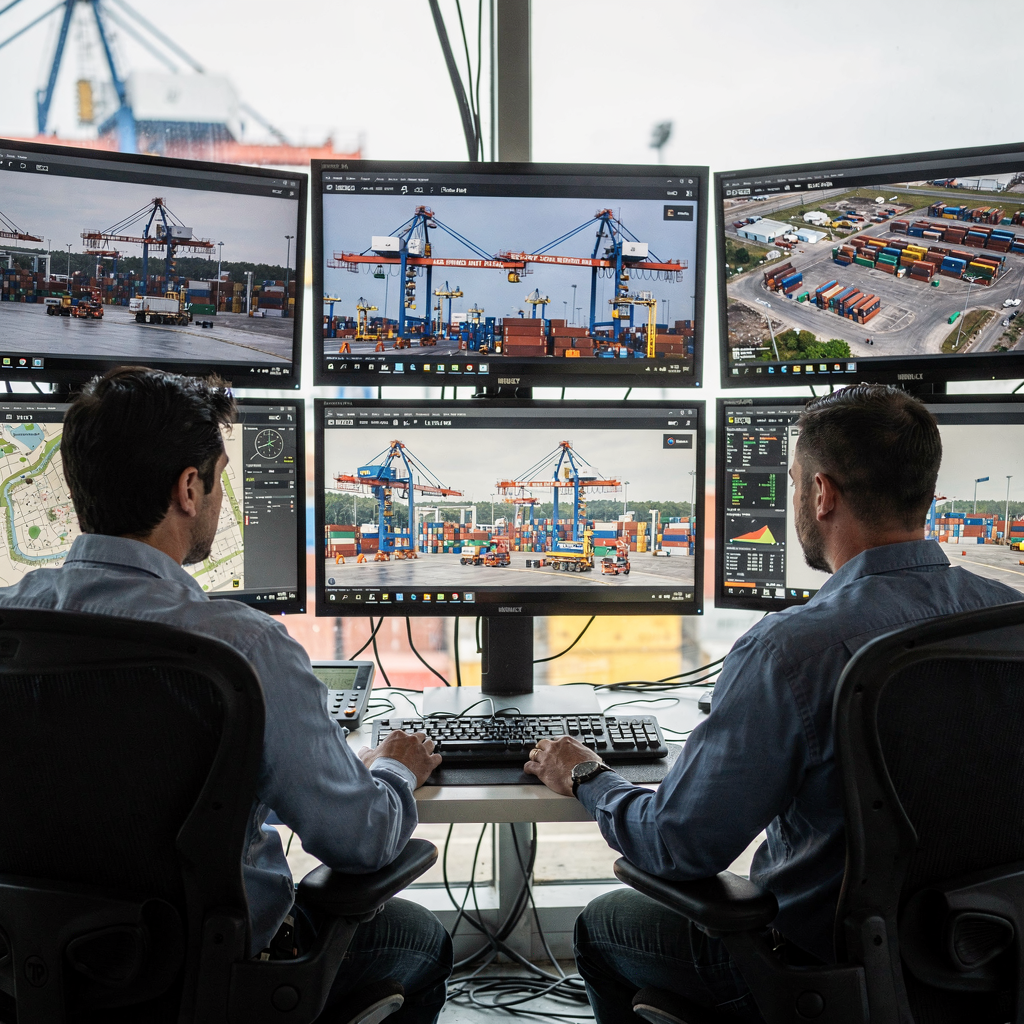
AI in supply chain logistics: mitigating disruption across various port
AI plays a growing role in logistics and port operations to mitigate disruption. By spotting patterns early, AI systems help teams re-route flows and reassign equipment before problems escalate. These systems use machine learning algorithms to predict vessel delays and container dwell. Then they recommend resource allocation that reduces idle time and keeps throughput steady.
Across the global supply chain, AI and artificial intelligence help firms cope with peaks and equipment breakdowns. They also improve transparency in the shipping industry by providing clearer ETAs and container locations. This visibility reduces uncertainty for shippers and carriers. In addition, AI-powered predictive maintenance keeps cranes and trucks operational and reduces unplanned downtime.
When deploying AI solutions, teams must manage data quality and governance. Using real-time data and machine inputs is vital for accurate forecasts. Also, combining ML with rule-based systems preserves safety and regulatory compliance. The result is improved decision-making at every layer of operations. For terminals focused on time-critical jobs, applying predictive KPIs and time-critical scheduling leads to better performance during vessel cut-off periods predictive KPIs for shortsea terminals.
Finally, while AI delivers technical gains, the human element remains central. Terminal staff still make trade-offs and set KPI weights. The best implementations keep planners in the loop and use AI to augment expertise. As a result, terminals can optimize supply chain operations, handle large amounts of data, and enhance overall port performance while reducing the chance of even more congestion.
FAQ
What is predictive analytics in the context of ports?
Predictive analytics uses data and models to estimate future conditions at a terminal. It applies statistics, machine learning, and AI to predict arrivals, dwell, and yard stress so teams can plan ahead.
How does AI reduce delays at a terminal?
AI identifies patterns and suggests resource allocation to avoid bottlenecks. It then recommends actions that cut wait times and reduce the risk of costly delay.
Can predictive analytics solve port congestion entirely?
No single tool solves all problems, but predictive analytics significantly reduces congestion by improving scheduling and resource allocation. It integrates with operations to lower rehandles and stabilize throughput.
What data feeds are needed for real-time forecasts?
Key feeds include AIS, gate scans, equipment telemetry, and booking records. Combining these inputs gives the models a complete picture for accurate forecast.
How do reinforcement learning agents help terminal operations?
Reinforcement learning trains agents in simulated environments to test many strategies quickly. These agents discover policies that balance quay speed, yard flow, and gate throughput under realistic constraints.
Is historical data required to implement predictive analytics?
Historical data helps, but simulation-based approaches can deliver value without large histories. Training in a sandbox can produce effective policies before live use.
How do predictive models affect staffing?
Models inform staffing schedules by predicting peak windows and recommending lane or crane allocation. This prevents understaffing and reduces wasted labor hours.
Are these systems compatible with existing terminal operating systems?
Yes, modern solutions integrate via APIs or EDI and can be TOS-agnostic. Integration focuses on exchanging telemetry and recommendations with minimal disruption.
What role does predictive maintenance play in terminals?
Predictive maintenance uses sensor data and AI to forecast equipment failures. That lets teams schedule repairs before breakdowns cause unplanned delay.
How can a terminal measure the success of predictive analytics?
Success is measured with KPIs like reduced dwell time, higher moves per hour, fewer rehandles, and lower truck turn times. Continuous monitoring and feedback ensure ongoing improvement.
our products
 stowAI
 stackAI
 jobAI
jobAI
Innovates vessel planning. Faster rotation time of ships, increased flexibility towards shipping lines and customers.
Build the stack in the most efficient way. Increase moves per hour by reducing shifters and increase crane efficiency.
Get the most out of your equipment. Increase moves per hour by minimising waste and delays.
stowAI
Innovates vessel planning. Faster rotation time of ships, increased flexibility towards shipping lines and customers.
stackAI
Build the stack in the most efficient way. Increase moves per hour by reducing shifters and increase crane efficiency.
jobAI
Get the most out of your equipment. Increase moves per hour by minimising waste and delays.