
Introduction: Challenges in Container Location Assignment
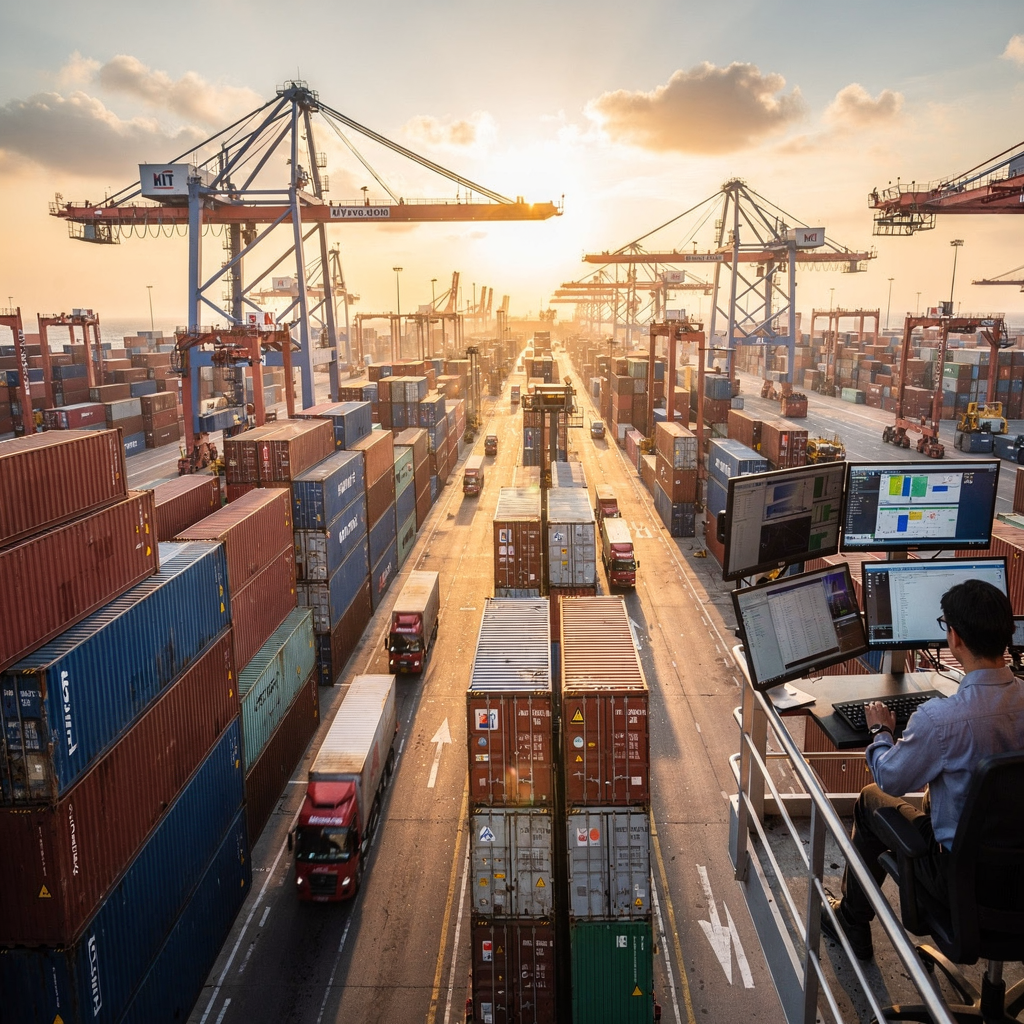
Container yards are complex. They host stacks of containers, lanes for trucks, and cranes that move loads. A typical container yard has blocks, bays, rows, and tiers. Yard planners assign slots and track the location of export containers and import boxes. The key operational steps include vessel unloading, yard transport, stacking, storage, and retrieval for loading back to a container ship or truck. Planners must also manage quay crane assignment and yard crane moves, and they must balance storage space, accessibility, and throughput.
Inefficient allocation raises costs and delays. For example, when planners place containers without prediction, terminal teams perform extra moves. Extra moves increase handling time and reduce operational efficiency, and they raise energy consumption and wear on handling equipment. Poor assignment often forces cranes to idle or to travel farther, which slows ship turnaround and hurts berth productivity.
Today, ports face pressure to speed up vessel turnaround and to make better use of limited storage space. Shippers demand shorter dwell times, and regulators push for lower emissions. Terminals therefore invest in software and automation to cut the number of container relocations and to improve space allocation. Modern terminal operators combine sensor feeds, historical patterns, and decision rules to manage the number of containers that enter each block, and they monitor the flow of containers in the yard.
Digital transformation changes expectations, and teams want adaptable systems that act in real time. Systems must handle uncertainties such as late arrivals, variable dwell times, and changes to quay crane schedules. For this reason, an algorithm that supports dynamic decisions can deliver real gains. For context on simulation and yard tools, see the overview of container terminal simulation software for deeper process examples container terminal simulation software. Also, many operators link yard planning with freight systems and asset tracking to reduce manual lookups and email delays; these integrations are discussed in an article about asset tracking for port operations asset tracking systems.
literature review: Existing Methods and Critical Findings
Historically, terminals used manual heuristics and rule-based systems to solve the allocation problem. Planners relied on simple rules: group export containers by destination, reserve front slots for early departures, and avoid blocking high-priority stacks. Those rules helped, and they were easy to implement. However, they struggled with stochastic arrivals and complex yard topologies. Studies in the literature review highlight that manual policies often lead to unnecessary reshuffles and longer retrieval times.
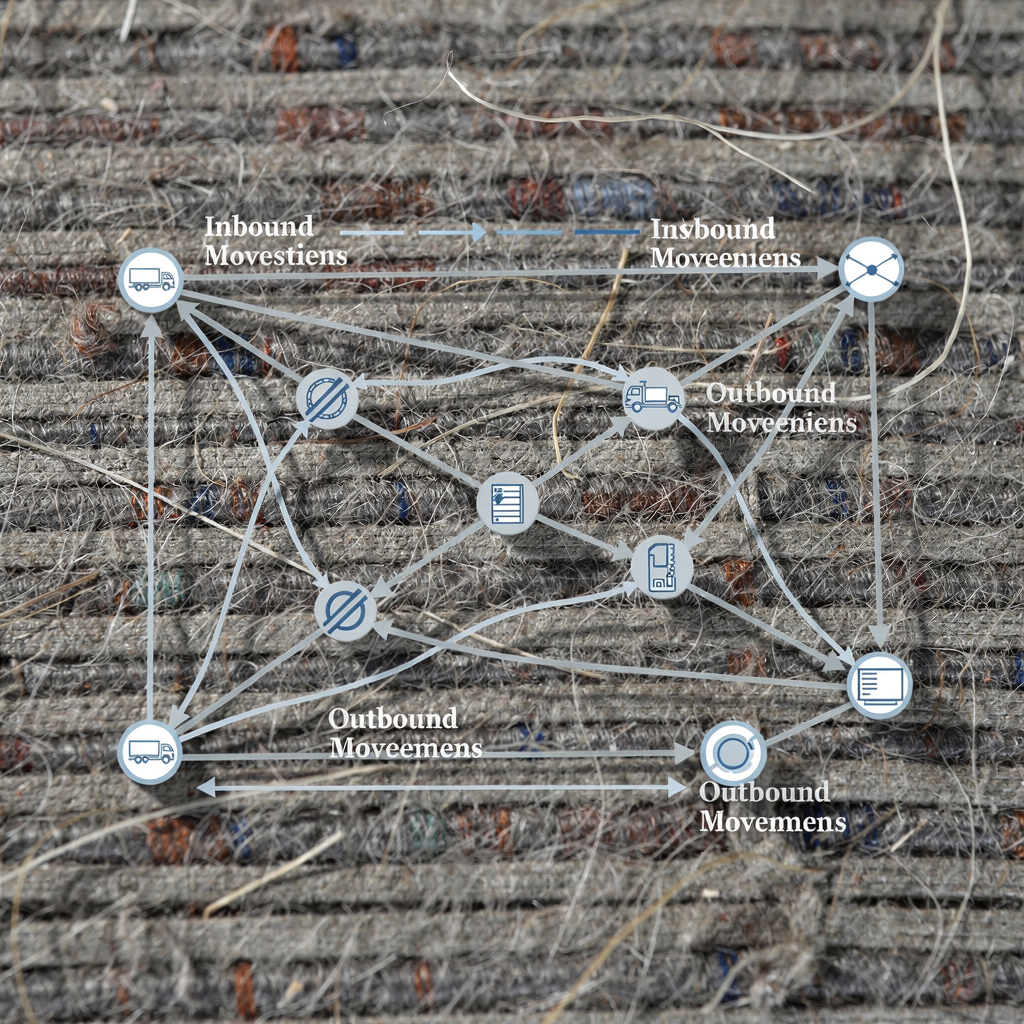
Academic advances now bring more rigorous approaches to yard planning. Researchers propose optimization models and simulation-driven processes that model container flow and storage constraints. A network-based mathematical model for inbound containers, for instance, shows how modeling yard topology and flow reduces unnecessary moves and improves throughput a network-based model for optimization of container location assignment. That optimization model frames the problem of container placement as a flow problem across nodes and edges, and it uses objective functions to minimize travel and reshuffle costs.
Other work applies reinforcement learning and multi-agent strategies to outbound storage decisions. One multi-agent system based on hierarchical reinforcement learning demonstrates improvements in ship-loading efficiency by learning placement policies that anticipate retrieval sequences A multi-agent system for outbound container storage location assignment. The study reports measurable gains tied to better alignment between yard stacks and loading priorities. In addition, heuristic and metaheuristic research shows practical gains in storage space utilization. Smart stacking strategies that exploit customer and booking information can improve space utilization by 10–15% and reduce reshuffles smart stacking for import containers.
Quantitative evidence supports these methods. A summary of yard planning and crane allocation techniques notes space allocation and crane coordination improvements that translate into throughput gains and energy savings AI-driven container port yard management systems. Case studies show that smarter allocation reduces idle time and shortens vessel stays, which helps both terminal margins and ship schedules. The literature also explores combined planning problems such as berth allocation and yard layout integration, and researchers examine integrated berth allocation to improve end-to-end port operation performance.
Drowning in a full terminal with replans, exceptions and last-minute changes?
Discover what AI-driven planning can do for your terminal
algorithm: AI-Driven Approaches for Container Placement
AI and machine learning open new ways to approach container allocation. Agents can observe the yard, predict arrivals, and make placement decisions. A multi-agent, hierarchical design splits tasks among specialised agents that handle prediction, assignment, and local move sequencing. This MAHRL approach trains agents to place containers where retrieval cost will be low and where reshuffles will be minimal. Agents learn from simulated runs, and they refine policies with experience.
Reinforcement learning works well where the objective is dynamic and sequential. In this setting, an agent receives a reward when retrievals are fast and penalties when the system forces reshuffles. The learning method therefore shapes decisions that reduce unproductive moves. Studies show that a learning agent can adapt to changes in booking patterns and to sudden shifts in arrivals, and this improves the container retrieval process a reinforcement learning method for container terminal storage space. Agents can also use machine learning predictions as state inputs to accelerate convergence and to reduce exploration risk using machine learning predictions as state inputs.
Multi-agent systems enable decentralised decision making. One agent might assign a block, and another might sequence moves for a yard crane. This split reduces the computational burden and improves robustness. For example, the multi-agent system study reports better ship-load efficiency and lower crane idle time when agents coordinate retrieval windows multi-agent system case study. The system also aligns with operator constraints and with real-time signals from terminal operating systems.
AI approaches are not a silver bullet, and they require good reward definitions and reliable state information. Still, AI-driven assignment delivers adaptive policies that improve solution quality and that adapt to the real-time pace of a container terminal. Implementations in automated container terminal pilots show promising gains in reduced moves and increased throughput, and they pave the way for broader adoption in modern container port environments.
mathematical model: Network and Optimisation Frameworks
Network-based mathematical models formalise the spatial and temporal aspects of yard layout. These models represent yard blocks as nodes and transport routes as edges. The aim is to find a mapping from arriving containers to nodes that minimises total travel and reshuffle costs. A well-crafted mathematical model defines objective functions that balance short-term retrieval efficiency and long-term space utilization. The model with the goal of minimizing unnecessary moves typically includes constraints for stack heights, stacking rules, and handling equipment availability.
Objective functions are central. A common approach uses a weighted sum of travel distance, reshuffle count, and retrieval delay. The model is then solved with exact or approximate solvers, depending on scale. Researchers show that a two-stage stochastic or deterministic mathematical model can manage uncertainty in arrivals while offering an optimal solution for moderate yard sizes. For inbound containers at inland terminals, a network-based model demonstrated reduced manipulations and improved throughput in European terminals network-based model case study. The implementation results reported lower total moves and improved space allocation.
Solving high-dimension models can be challenging. Therefore teams combine optimization model outputs with heuristics and metaheuristics. For example, a model may provide target block allocations, and a neighborhood search or tree search algorithm refines local placements. The design often links to yard crane scheduling where coordinated moves reduce conflicts. Also, academics test integrated berth allocation and yard policies to measure system-level gains; these studies show that aligning berth and yard decisions yields better performance than isolated planning.
Practitioners should match model granularity to operational needs. A large model gives high-quality results but requires computation and reliable data feeds. Conversely, lighter models run fast and integrate with TOS updates. For actionable deployment, terminals instrument equipment and use digital twins and real-time data for state updates. Readers who want practical yard optimization tools can review yard planning software for small inland container terminals yard planning software and solutions that tie optimization outputs to execution container terminal yard optimization software.
Drowning in a full terminal with replans, exceptions and last-minute changes?
Discover what AI-driven planning can do for your terminal
Heuristic and Metaheuristic Strategies for Smart Stacking
When scale prevents exact solutions, heuristic and metaheuristic strategies shine. Heuristic rules such as grouping by destination or departure time remain useful, and they also provide easy-to-audit policies. Metaheuristics then improve on those rules. Genetic algorithm approaches evolve placement patterns, and simulated annealing algorithm runs can escape local optima when swapping stacks. Tabu search and neighborhood search procedures further refine placements to reduce reshuffle counts. A genetic algorithm often balances diversification and intensification, and practitioners combine it with greedy initialization to find near-optimal layouts quickly.
Smart stacking leverages customer data and booking windows. By predicting dwell times, planners create stacks that lower the number of container relocations during retrieval. Smart stacks place containers with similar retrieval windows together so that yard cranes perform sequential lifts with minimal repositioning. Such storage allocation methods cut retrieval time and improve storage space usage. Studies quantify these gains: smarter stacking and allocation strategies can lift space utilization by 10–15% and reduce handling moves smart stacking for import containers.
Software vendors now expose heuristic algorithm to solve the problem inside planning suites. These tools let operators set business rules and run metaheuristic searches overnight, and they present practical schedules for crane crews. In practice, terminals combine heuristic algorithm outputs with execution rules to adapt to late arrivals, and they feed results back to operator dashboards. For yard-level AI modules and planning software, see an overview of AI modules for automated container port planning AI modules for automated container port planning.
Finally, heuristics also address the container relocation problem through specialized algorithms for the container relocation problem and algorithms for the container relocation that schedule minimal reshuffles. Implementing these methods reduces crane travel and lowers energy consumption. Many terminals pair heuristics with operator knowledge and with software that monitors container handling equipment to ensure feasible schedules and safe stacking.
Conclusion and Future Outlook
Smart methods for container allocation deliver clear benefits. They reduce unnecessary handling, increase throughput, and lower energy consumption. For example, studies show space utilization improvements of 10–15% when smart stacking is used, and AI-driven assignment can improve ship-loading efficiency by reducing crane idle time smart stacking and multi-agent systems. These efficiency gains matter for port operation economics and for environmental impact.
Adoption challenges remain. Terminals must integrate models with TOS, and they must ensure data quality. They also need operator buy-in and clear interfaces so that staff trust automated recommendations. Hybrid workflows that combine automated suggestions with human oversight work well, and tools that automate administrative work, such as inbound email triage, can accelerate adoption.
Emerging trends point to wider use of digital twins, real-time data feeds, and integrated berth allocation and yard policies. Integrated berth allocation and quay crane planning combined with yard allocation can unlock system-level gains where berth and yard decisions align. Future research will examine two-stage stochastic models, integrated berth and yard models, and approaches that adapt to the real-time state of the yard. Researchers are also exploring the use of learning methods that blend reinforcement learning with predictive ML models to adapt quickly to changing demand using ML predictions as state inputs.
To sum up, combining mathematical model approaches, AI-driven agents, and pragmatic heuristics yields robust solutions to the assignment problem and to the broader optimization problem in marine container terminals. Terminals that apply these tools can expect improved solution quality and more predictable operations. As adoption grows, further work will quantify gains across different port sizes and will refine models that minimize the number of container moves while meeting operational constraints. For readers who want practical guidance on yard planning and AI-driven systems, see resources on yard planning software and AI-driven yard management yard optimization software solutions and AI-driven container port yard management systems.
FAQ
What is the container allocation problem and why does it matter?
The assignment problem in container yards decides where to place each arriving container to reduce moves and retrieval time. It matters because better decisions cut crane work, shorten ship turnaround, and lower energy consumption.
How do multi-agent systems improve storage allocation?
Multi-agent systems distribute tasks among specialised agents that handle prediction, assignment, and local sequencing. This division lets systems adapt faster and coordinate yard crane moves to reduce reshuffles.
Can reinforcement learning work in real terminals?
Yes, reinforcement learning can learn placement policies from simulation and from live feedback, and pilots have shown improved ship-loading efficiency in case studies multi-agent system study. Still, RL needs good state inputs and safe exploration strategies before full deployment.
What are practical heuristic methods for smart stacking?
Practical methods include grouping by destination, matching dwell windows, and using metaheuristics like genetic algorithm and simulated annealing to refine placements. Those techniques are fast and easy to integrate with TOS systems.
How much can smart algorithms improve yard performance?
Studies report space utilization gains of 10–15% and reduced reshuffles when smart stacking and AI are applied smart stacking research. Exact gains vary by terminal and implementation.
What data does an algorithm need to make good allocations?
Algorithms need container identifiers, expected departure times, container position and size, quay crane schedules, and handling equipment status. Real-time feeds and clean booking data improve accuracy and adapt to disruptions.
How do network-based models help inbound container flows?
Network-based mathematical models capture yard topology and transport routes, and they optimise placements to reduce travel and reshuffle costs. They have shown benefits in European inland terminals network-based model.
Are these solutions compatible with existing terminal operating systems?
Yes. Most solutions integrate via APIs and present recommendations to operators inside the TOS. Integration reduces manual lookups and helps teams act on optimised plans faster, and automation tools can reduce email bottlenecks that often delay execution.
What role do heuristics play versus exact optimization?
Heuristics offer speed and simplicity for large problems where exact optimization is impractical. Exact models yield high-quality benchmarks, and combining them with heuristics delivers near-optimal, deployable plans.
What should future research focus on?
Future research should explore integrated berth allocation and yard policies, two-stage stochastic models, and adaptive learning methods that update with real-time feeds. Testing in diverse terminal sizes will also clarify which methods scale best.
our products
 stowAI
 stackAI
 jobAI
jobAI
Innovates vessel planning. Faster rotation time of ships, increased flexibility towards shipping lines and customers.
Build the stack in the most efficient way. Increase moves per hour by reducing shifters and increase crane efficiency.
Get the most out of your equipment. Increase moves per hour by minimising waste and delays.
stowAI
Innovates vessel planning. Faster rotation time of ships, increased flexibility towards shipping lines and customers.
stackAI
Build the stack in the most efficient way. Increase moves per hour by reducing shifters and increase crane efficiency.
jobAI
Get the most out of your equipment. Increase moves per hour by minimising waste and delays.