
simulation and simulation model for port berth scheduling: a risk-free digital twin allocation
Berth scheduling defines how incoming vessels are assigned to berths to maximize throughput and minimize delays. First, key performance metrics include crane productivity, turnaround times, berth utilization and vessel capacity utilization. Second, planners also track idle time, demurrage and waiting times to control costs. Third, port authorities measure port capacity and port efficiency to guide investment decisions. For planners, a clear simulation model lets them test choices without operational risk. Therefore, a risk-free digital twin offers a sandbox to try new policies before they touch quayside crews.
Discrete event simulation and discrete event techniques recreate ship arrivals, service times and crane sequences. In a brief example, a simulation model reproduces stochastic arrivals, quay crane breakdowns and yard congestion. Then, users can simulate a single berth scenario or a full multi-berth layout to study resource conflicts and cascade effects. As Dr. Jane Smith notes, “Simulation tools provide a risk-free environment to test and refine berth scheduling strategies, enabling ports to adapt to fluctuating demand and operational uncertainties effectively.” [source]
When you construct a simulation model you set variables in a simulation model such as arrival distributions, processing times and equipment availability. Next, the model records metrics like crane operations, yard throughput and truck dispatch times. A digital twin gives more: it supports real-time updates and what-if scenario analysis so planners can evaluate rerouting, tide shifts or tug availability. For further reading on building a digital replica of a terminal see a practical guide to how to simulate container terminal operations. Loadmaster.ai uses a digital twin to train RL agents in a risk-free space, which helps planners move from firefighting to proactive control. Also, this approach reduces reliance on historical data and lets AI learn by trial in a controlled environment. Finally, the combination of DES and a validated simulation model reduces uncertainty and helps gain stakeholder consensus on scheduling logic and business processes.
port simulator and port simulation software: decision support for terminal optimization and logistics
A port simulator empowers planners with visual scenarios and metrics. First, platforms such as AnyLogic and vendor suites provide different strengths. For example, AnyLogic and anylogic software give flexible libraries for freight flows and agent interactions. Second, proprietary offerings such as Koerber’s berth tools embed specialized algorithms for berth allocation and vessel planning. Read a vendor brief on Koerber’s approach that claims improved berth efficiency and cost reduction [source]. Third, enterprise teams often compare features using a checklist that covers integration, real-time telemetry, and reporting.
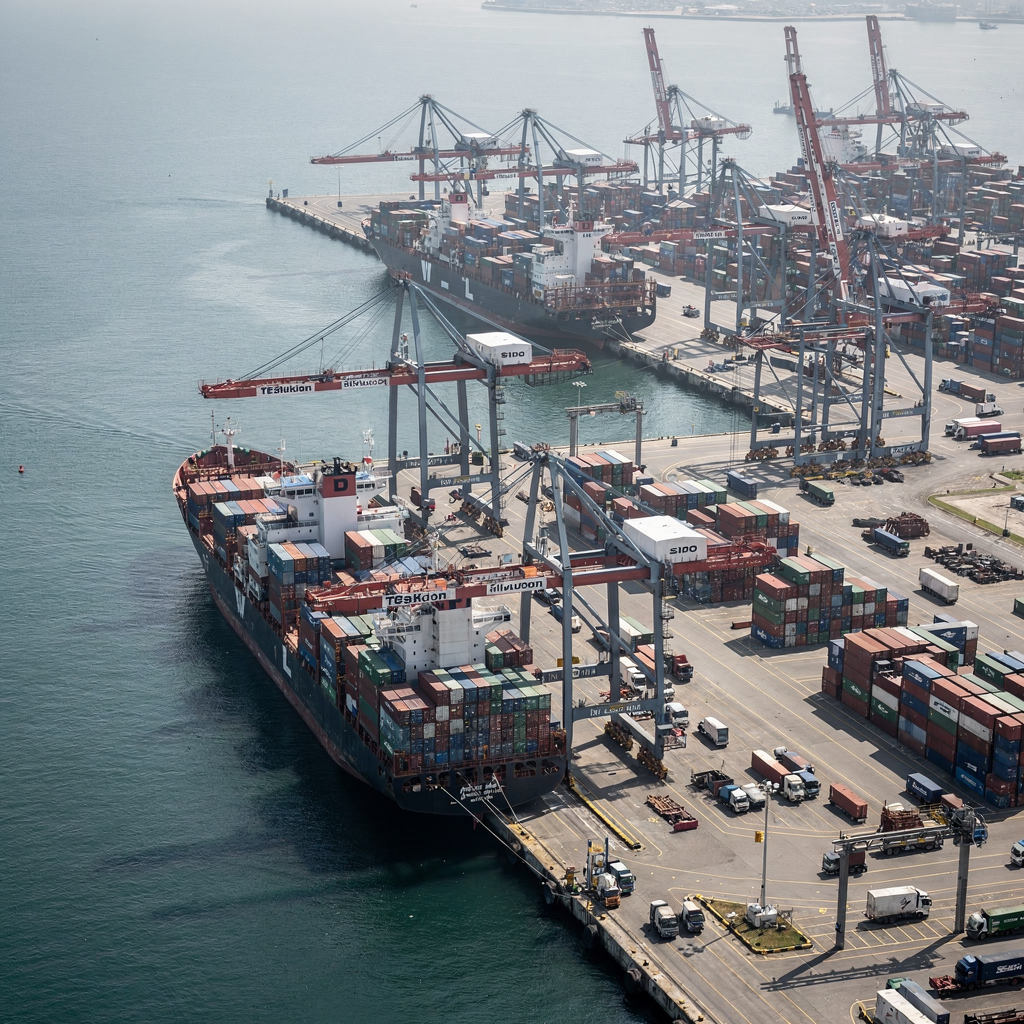
Terminal simulation software and a port simulator are used as planning tools and as operational decision support. They integrate with terminal operating systems to streamline quay-to-gate workflows. For planners who want to improve terminal layout or yard flows, a terminal simulation software trial can show the trade-offs between container stacking patterns and crane productivity. For practical examples, see our comparison of what simulation software do container terminals use and the review of port logistics simulation software reviews.
These tools feed dashboards that recommend berth assignment, resource allocation and dispatch priorities. They display KPIs for vessel capacity utilization and reduced idle time, and they help terminal operators reconcile quay schedules with hinterland trucks. A single dashboard can surface uncoordinated crane operations and suggest sequencing changes to cut demurrage. In addition, port simulator outputs influence the broader supply chain by reducing waiting times at the quay and smoothing truck arrival patterns. The right tool for port and terminal decision making can therefore leverage telemetry to improve downstream logistics and reduce emissions from idling vessels.
Drowning in a full terminal with replans, exceptions and last-minute changes?
Discover what AI-driven planning can do for your terminal
optimize throughput and reduce bottleneck in terminal design
Optimization algorithms are central to maximizing throughput. Mixed-integer programming, heuristics and search methods help sequence vessel calls and crane assignments. For many terminals, heuristic methods give good results fast, while exact methods tend to be heavier on computation. For that reason, combined frameworks that embed optimization inside a simulation loop are common. Academic work has shown that simulation-based optimization can identify near-optimal berth sequences under uncertainty [source]. Consequently, operations teams often deploy hybrid approaches to balance runtime and solution quality.
Common bottleneck sources include quay cranes, container yard layouts and road network congestion. A congested container yard leads to extra truck moves and longer turnaround times. Similarly, poorly sequenced crane operations create idle time and fuel more demurrage. To address this, terminal design options focus on equipment mix, berth spacing and container stacking strategies. For instance, adjustments to container stacking and crane Service lanes can reduce travel distances and rehandles. The design choice should be validated in a simulation model that records throughput, berth utilization and yard utilization metrics.
Key indicators for design decisions include crane productivity, average turnaround times and yard utilization. Port capacity planning often uses scenario testing to understand peak demand. Also, simulation modeling helped a set of real-world terminals realize up to a 15% reduction in container handling time in academic surveys [source]. To streamline workflows and improve terminal operations, planners need planning tools that can test changes quickly. Read about tools for capacity decisions in our article on terminal simulation software for capacity investment decisions. Finally, optimize port layouts by testing scenarios that shift peaks, change staffing, or reassign crane work to avoid a single bottleneck.
simulation software case studies in real-world port and terminal operations
Case studies provide concrete proof of value. Black-box simulation-based optimization work in Colombia, for example, provided actionable insights that improved logistics efficiency in a multipurpose setting [source]. Also, surveys covering hundreds of publications show simulation is widely used to reduce handling times and waiting times in high-traffic hubs [source]. These studies are useful when stakeholders ask for quantitative evidence before investment.
Real-world pilots from vendors claim improved berthing efficiency and reduced costs. For instance, Koerber’s marketing references improved profit and efficiency from their berth scheduling module [source]. In practice, terminals that adopt simulation tools see fewer rehandles, steadier crane utilization and lower idle time and demurrage. Case studies also emphasize the importance of linking simulation outputs to execution systems so that optimized plans drive gate and yard activity.
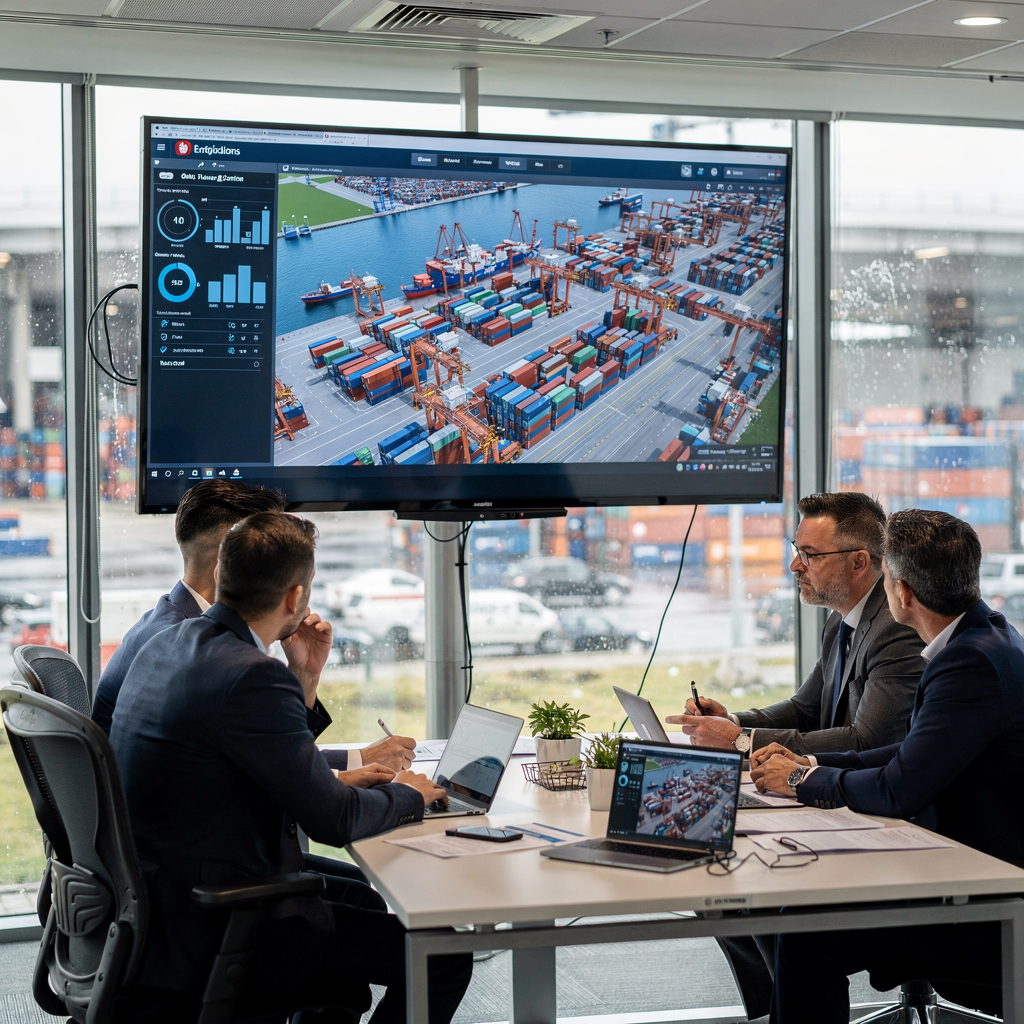
Lessons learned include the value of clean telemetry, the need for robust system requirements, and the benefit of iterative testing. A pragmatic approach is to start small with a digital twin simulation software pilot and expand once results are proven. In the real-world the payoff includes reduced demurrage, better vessel capacity utilization and more predictable performance across shifts. For more technical reading, explore research on simulation for ports and digital twins [source] and practical reviews in our enterprise simulation tools for port logistics guide.
Drowning in a full terminal with replans, exceptions and last-minute changes?
Discover what AI-driven planning can do for your terminal
efficiency and throughput with digital twin simulation through automation
Efficiency and throughput with digital metrics are straightforward to define in a digital twin. Efficiency measures moves per hour and equipment uptime. Throughput measures total TEU processed per day or per berth. Then, comparing digital twin outputs to live data validates the model and builds trust. A good digital twin accepts real-time feeds and adapts the state of the model to match live conditions.
Automation accelerates decision making. Algorithms can automate berth scheduling and crane sequencing, and automation can reduce dispatch delays at peak times. Loadmaster.ai uses closed-loop RL agents to automate quay planning and yard placement, which helps cut waiting times and reduce rehandles. The platform spins up a digital twin and trains StowAI, StackAI and JobAI inside that environment. Then, agents are tested against explainable KPIs before deployment. This approach helps terminals improve terminal operations while keeping planners in the loop.
Validation is critical. Teams compare simulated throughput with measured terminal throughput and adjust model parameters. When the digital twin matches key KPIs, it becomes a trustworthy assistant. Continuous learning loops feed telemetry to the twin so the AI adapts to new vessel mixes. Finally, automation reduces human workload, improves system performance, and creates a more consistent service level that boosts efficiency and customer satisfaction.
model allocation strategies: resource allocation and optimize decision support
Resource allocation in a model is the core of operational planning. Planners must assign cranes, tugs and trucks while guarding constraints. A model that includes resource allocation variables supports what-if testing for demand peaks and unplanned disruptions. In practice, resource allocation algorithms schedule crane rotations, set job priorities and recommend tug assignments to minimize overall delay.
Optimization outputs serve as decision support at the planning desk. A clear dashboard presents recommended sequences, estimated turnaround times and expected demurrage costs. Also, planners can override automated suggestions and record the impact in the next simulation run. Adaptive strategies are necessary for resilience: shift crane capacity toward congested berths, postpone low-priority moves in peak periods, or reroute trucks to spread gate inflow. These tactics reduce bottleneck stress and improve berth utilization.
Best practices for model accuracy include frequent calibration with historical data and periodic validation with live performance. However, Loadmaster.ai’s approach trains RL agents without relying solely on historical data, which helps avoid repeating past mistakes. Use planning tools that expose scheduling logic and include guardrails for safety. Finally, maintain a clear upgrade path for scheduling rules and keep models aligned with changing system requirements. When teams combine simulation is a powerful tool with robust governance, they streamline workflows, gain stakeholder consensus, and achieve measurable gains in port efficiency and throughput.
FAQ
What is berth scheduling and why does it matter?
Berth scheduling is the process of assigning arriving vessels to specific berths and time windows. It matters because better schedules reduce vessel waiting times, demurrage and idle time while improving crane operations and overall port efficiency.
How does a digital twin help with port planning?
A digital twin replicates the terminal’s physical layout and operations in software. It allows planners to test scenarios risk-free and to validate changes before they affect the live environment.
Which simulation method is most common for ports?
Discrete event simulation is widely used to model ship arrivals, cargo handling and equipment usage. It captures stochastic events and helps teams understand queuing and resource contention.
Can simulation reduce ship waiting times?
Yes. Studies have shown simulation-driven scheduling can reduce handling times by up to 15% and decrease waiting times at berths [source]. This leads to lower costs and emissions.
What role do optimization algorithms play?
Optimization algorithms sequence vessel calls and assign cranes to minimize delays and maximize throughput. They range from heuristics to mixed-integer programming and are often embedded within simulation loops.
Which software platforms are used for port simulation?
Platforms include AnyLogic and vendor-specific suites like Koerber’s berth scheduling solutions. For an overview, review our guide to what simulation software do container terminals use.
How do digital twins support automation?
Digital twins provide a realistic training ground for automated agents and control logic. They let teams validate automation against KPIs and reduce operational risk before deployment.
What metrics should terminals track in a simulation?
Track crane productivity, berth utilization, turnaround times, vessel capacity utilization and yard utilization. Monitoring these metrics helps quantify improvements and justify investments.
Are there proven case studies for simulation benefits?
Yes. Academic and industry case studies report gains in efficiency and reduced handling times. See black-box optimization examples and reviews of simulation tools for practical evidence [source].
How can my terminal get started with simulation?
Begin with a focused pilot that models a critical berth or yard block and validate against live data. For guidance, explore resources on terminal capacity planning software and consider a phased rollout with an emphasis on risk-free testing.
our products
 stowAI
 stackAI
 jobAI
jobAI
Innovates vessel planning. Faster rotation time of ships, increased flexibility towards shipping lines and customers.
Build the stack in the most efficient way. Increase moves per hour by reducing shifters and increase crane efficiency.
Get the most out of your equipment. Increase moves per hour by minimising waste and delays.
stowAI
Innovates vessel planning. Faster rotation time of ships, increased flexibility towards shipping lines and customers.
stackAI
Build the stack in the most efficient way. Increase moves per hour by reducing shifters and increase crane efficiency.
jobAI
Get the most out of your equipment. Increase moves per hour by minimising waste and delays.