
Literature review: container handling and operational challenges
The literature review of port container terminals highlights the interplay between hardware, software, and human planners. Researchers apply discrete-event simulation to represent ship calls, yard stacking, and gate flows and they compare scenarios to identify bottlenecks and benefits. A notable result comes from a case study at El-Dekheilla port that reported a 51% reduction in ship service time by combining simulation and genetic algorithms Simulation and optimization of container terminal operations: a case study. In addition, other studies show simulation can lift crane productivity and berth occupancy statistics by large margins Simulation and Optimization of Container Terminal.
Many papers compare quay planning, container storage, and truck handling. They report improvements in turnaround time and moves per hour, and they quantify trade-offs between quay throughput and yard congestion. For example, machine learning linked with simulation enabled predictive models of handling and waiting across a whole year for Algiers, which improved scheduling accuracy Machine Learning and Simulation for Efficiency and … – MDPI. A review also notes that terminals differ substantially by terminal layout, equipment and level of automation, which makes direct transfer of solutions difficult; the study warns against one-size-fits-all remedies Simulation-based optimization at container terminals.
The academic conversation covers modeling choices, experimental design, and operations research approaches. Authors such as Steenken and Stahlbock are often cited for early frameworks, and UNCTAD reports provide high-level seaport statistics. Studies examine automated container terminals and conventional yards, and they compare material handling, routing, and crane assignment strategies. For practitioners who want practical steps, our enterprise simulation tools for port logistics provide templates that map these findings into pilot projects and proofs of concept. First, readers should use this body of work as both evidence and inspiration. Second, they should adapt models to local constraints. Third, they should test reorganization options before committing capital to construction of new quayside or yard blocks.
Simulation model development for handling operations
Developing a simulation model for container handling begins with a clear event list and a concise resource map. A discrete-event framework suits the stochastic nature of arrivals, and it schedules events such as berth allocation, crane moves, and truck service. The model must include ship berthing and handling, quay cranes, yard stacking, and external truck dispatch. For credibility, the model separates deterministic paths from random variables and it captures service variability with distributions for interarrival times and unload durations. The discrete-event simulation core coordinates events and resources with timestamps, and it lets planners run simulation experiments for what-if questions.
Sub-models add realism. A berthing sub-model computes berth allocation while a gantry crane sub-model assigns moves and sequences the stow plan. Yard logic captures storage space and storage time and the yard crane movements. A truck flow module tracks external trucks and gate service. These blocks interact, and they expose KPIs such as queue lengths, storage utilization, and crane productivity. To resolve NP-hard scheduling tasks, teams integrate heuristic optimization, notably genetic algorithms, to evolve stowage sequences and dispatch rules. A simulation model using GA can test thousands of schedules and reveal robust patterns that reduce rehandles and shorten waits.
When teams design the sub-models they should include handling equipment types such as yard crane and automated guided vehicles and they should allow for different arrival patterns and vessel mixes. The model for the container must encode container types, destination blocks, and special handling constraints. To learn more about practical steps on building and validating these components, see our guide on how to simulate container terminal operations. Finally, keep models modular. That way you can swap a gantry crane logic for a model of automated guided vehicles, and you can extend the framework for an intermodal container terminal without rewriting core rules.
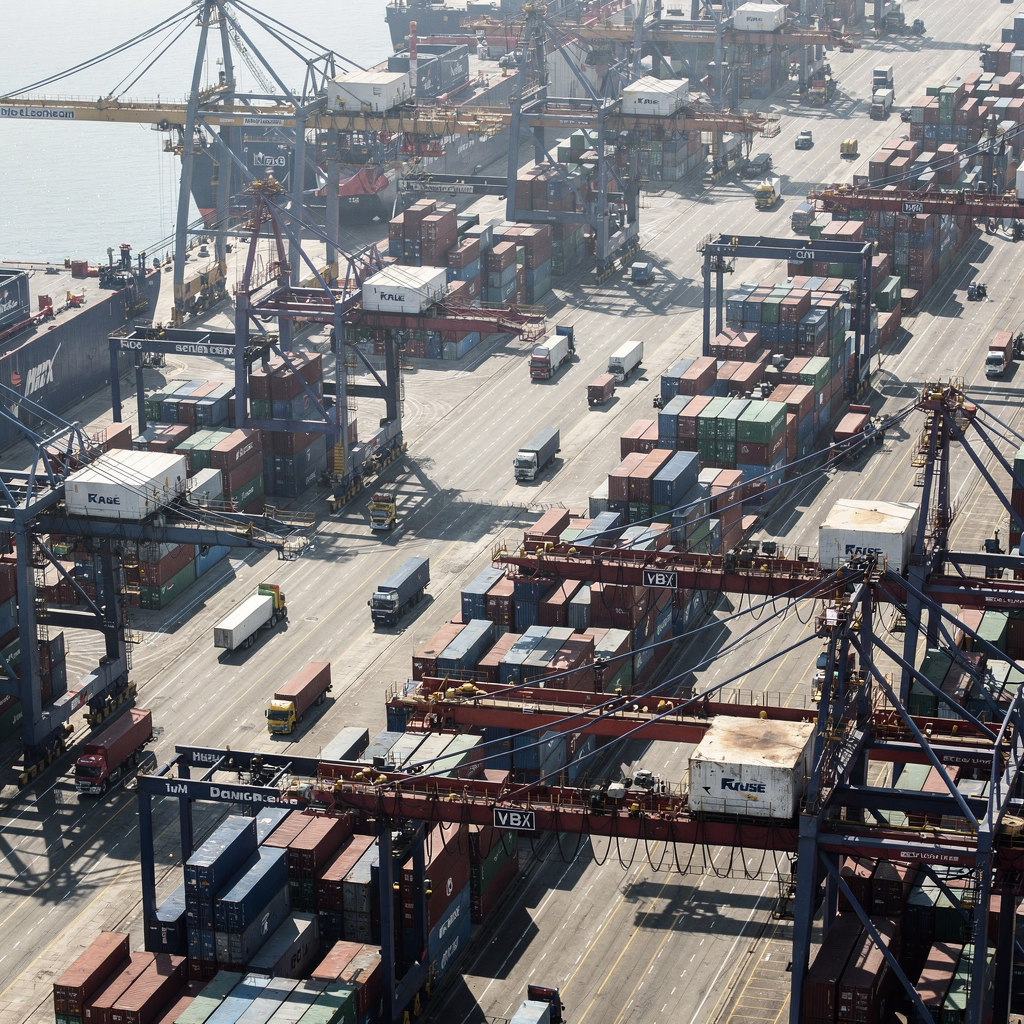
Drowning in a full terminal with replans, exceptions and last-minute changes?
Discover what AI-driven planning can do for your terminal
Simulator configuration and validation
Choosing a simulator matters. Popular platforms include AnyLogic, Simio, and FlexSim and each offers strengths for discrete-event modelling. The simulator must support detailed resource definitions, event logging, and integration with external data feeds. In practice, teams map vessel schedules, container mix, and equipment specs into the simulator and then run batches of scenarios that span normal and peak days. Input data should also include handling technology characteristics and the travel times between quayside and depot blocks. Calibration requires matching model outputs to recorded KPIs such as moves per hour and average berth waiting.
Data inputs are often the hardest part. Teams ingest vessel arrival timetables, container TEU and TEU mix, crane cycle times, and gate truck arrival curves. They add equipment specs for gantry crane reach, yard crane lift times, and automated guided vehicles speeds. Historical logs, terminal operating system traces, and yard design blueprints are useful. To make simulation credible, practitioners compare outputs against observed KPI distributions and not just averages. Validation steps include warm-up period removal, replication for statistical confidence, and sensitivity analysis on uncertain parameters. A good process tests the model under stress and compares queue and storage space metrics against the terminal’s records.
Model verification ensures logic correctness. Validation confirms that the simulator reproduces known patterns. For example, one should check that the model for the container reproduces known storage time and that unloading containers rates resemble historical peaks. Experts run evaluation of different algorithms for berth allocation and they compare results to past decisions to build trust. For more on which platforms teams typically use, consult our review of what simulation software do container terminals use?
Case study: El-Dekheilla Port performance enhancement
The El-Dekheilla case study is a strong example of applied simulation-based optimization. Baseline measurements showed long vessel queues and high berth waiting averages driven by peak-period arrivals. Planners built a detailed simulation that modeled ship calls, quay crane sequencing, yard dispatch, and truck inflows. Using that simulator they fed a GA to evolve stowage and crane schedules. The simulation showed a dramatic drop in service metrics after optimization: reports indicate a 51% reduction in ship service time for loading and unloading operations Simulation and optimization of container terminal operations: a case study.
Beyond service time, the study reported better yard utilization and improved crane productivity. Specifically, cranes achieved more productive moves per hour while yard blocks saw fewer rehandles and reduced storage space pressure. Planners also noted reduced waiting queues for external trucks at the gate and shorter storage time for priority exports. These gains translated to lower operational costs and to lower penalties for delayed container ships. The optimization balanced quay throughput against yard congestion and it demonstrated how integrated modeling produces operational trade-offs that matter in daily planning.
At Loadmaster.ai we apply similar principles but we extend them with reinforcement learning agents that learn policies inside a digital twin. Our StowAI, StackAI, and JobAI agents train against explainable KPIs inside a sandbox, and they adapt to changing vessel mixes without requiring clean historical data. The El-Dekheilla study validates the power of simulation and heuristic optimization; when teams add policy search and closed-loop training they often secure further gains. For supplementary reading on terminal capacity planning and decision support, see our terminal capacity planning software resources and our terminal decision support simulation pages.
Drowning in a full terminal with replans, exceptions and last-minute changes?
Discover what AI-driven planning can do for your terminal
Intermodal integration and supply chain impacts
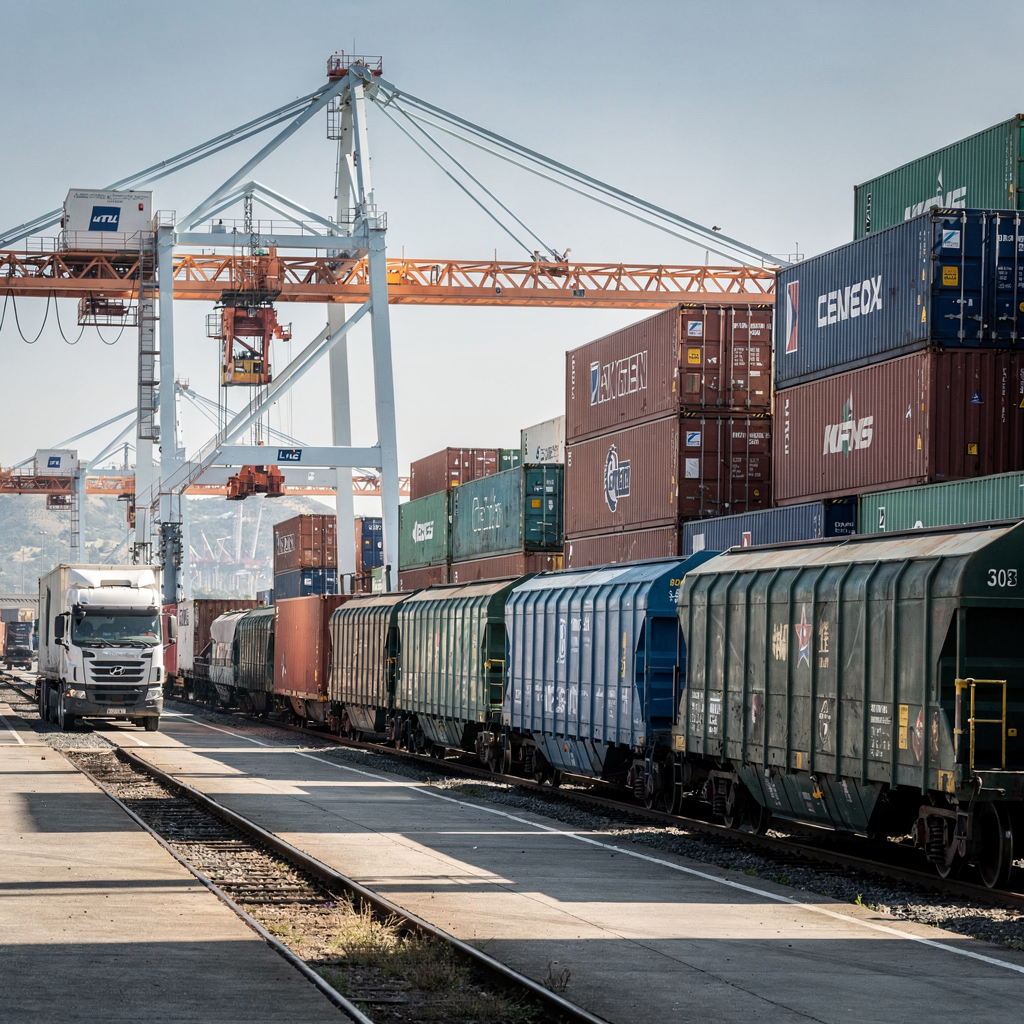
Intermodal links between port and hinterland shape terminal performance, so modeling them matters. An intermodal container terminal must coordinate vessel arrivals with rail slots and truck routing to avoid bottlenecks. The model should capture rail wagons, terminal sidings, and truck arrival peaks. It should also represent depot operations, and it should register container storage and transfers to rail or road. Simulating these links helps planners reduce container dwell times and to optimize transfer windows for multimodal shipments.
When terminals model transport systems they can quantify supply chain effects such as lead-time changes and cost shifts. For example, reducing gate queue and smoothing truck arrival windows cuts mean door-to-door times, and it lowers truck idling. Better scheduling of rail lifts increases throughput for hinterland pairs and it strengthens the terminal’s role as an intermodal hub. Additionally, simulation can test the effect of different booking and dispatch rules for external trucks or rail manifests and it can highlight capacity limits at the depot and at the yard.
Beyond immediate terminal KPIs, these improvements ripple across the supply chain. Shippers experience shorter and more reliable transit times. Carriers face lower berth delays and improved predictability for container ships. Planners can also explore reorganization of yard design and storage space allocation to reduce double-handling and empty moves. Our work with operators often shows measurable cost savings and time savings after linking rail and road scheduling into the simulation. For guidance on integrating TOS data and simulation, see our simulation and optimisation tools for TOS and our terminal process planning tools.
Simulation outcomes and best practices
Across studies, simulation-based interventions deliver measurable gains. Many reports cite 30–50% improvements in specific KPIs such as crane productivity and service time, and the El-Dekheilla example is a prominent data point showing a 51% reduction in ship service time Simulation and optimization of container terminal operations. Practically, teams should structure models to be adaptable, and they should treat the simulation as a decision support asset rather than as a one-off study. Short validation loops and iterative updates produce trust, and they ease deployment of optimized rules into live operations.
Best practices include modular model construction, robust input data management, and multi-objective optimization. Use of digital twins and live feeds improves responsiveness, and combining simulation with AI yields policies that generalize beyond historical patterns. For example, reinforcement learning can train policies in simulation, and then those policies can guide quay dispatch to reduce driving distances and rehandles without relying on large historical datasets. To support adoption, teams must also define clear performance measures that reflect business goals and regulatory constraints.
Future research directions should include stronger integration of real-time telemetry, expansion of simulation scenarios to include climate or labor disruption, and more comparative work across port terminals such as Rotterdam and Genoa to learn transferable practices. Finally, to avoid common pitfalls, designers should document assumptions, run sensitivity tests, and plan for staged rollouts. For resources on digital twin deployment and terminal optimisation, consult our terminal optimisation digital twin article, and then consider pilot projects that use simulation-based training before going live.
FAQ
What is discrete-event simulation and why is it used for terminals?
Discrete-event simulation models systems where state changes occur at distinct points in time. It is used for terminals because arrivals, crane moves, and gate services occur as discrete events and because the approach captures variability and queues accurately. Practitioners use discrete-event simulation to evaluate scheduling, layout changes, and resource allocation without disrupting live operations.
How do I validate a simulator against real terminal data?
Validation requires comparing simulator KPIs to historical records such as berth occupancy and crane moves per hour. You should run multiple replications, remove warm-up bias, and perform sensitivity analysis to ensure the simulator behaves like the real system under different workloads. Calibration often involves adjusting cycle-time distributions and travel times until model outputs align with observed statistics.
Can simulation reduce ship turnaround time?
Yes. Experiments show substantial reductions in service time when planners use optimization and simulation together, including a 51% reduction reported in a published case study Simulation and optimization of container terminal operations. The gains come from better crane sequencing, reduced rehandles, and improved yard assignment.
What tools can I use to build a container terminal simulation?
Tools such as AnyLogic, Simio, and FlexSim are common choices for discrete-event modelling of terminals. Each provides visualization, event scheduling, and integration options. For guidance on which platform fits which use case, consult the resource that reviews what simulation software do container terminals use?
How does intermodal modeling improve supply chain outcomes?
Modeling rail and truck interfaces helps align vessel slots with hinterland capacity, which reduces container dwell time and gate queues. By simulating multimodal transfers, planners can optimize manifest timing and reduce overall door-to-door lead times. The result is smoother flows and often lower logistics costs.
What role do heuristic algorithms play in scheduling?
Heuristics such as genetic algorithms help search large scheduling spaces for near-optimal stowage and crane sequences. They work well when exact optimization is computationally infeasible and when you need robust solutions quickly. Typically, teams run genetic algorithms inside the simulator to evaluate candidate schedules against KPI objectives.
Are digital twins necessary for terminal optimization?
Digital twins add value by linking live telemetry to a virtual model so teams can test scenarios and monitor KPIs in near-real time. They are not strictly necessary, but they accelerate iteration and support continuous improvement. For terminals ready to adopt live integration, a digital twin provides a platform for safe policy testing.
How do automated guided vehicles affect yard operations?
Automated guided vehicles change handling patterns and can reduce driving distances and human variability. Simulation can compare AGV fleets to conventional trucks and yard cranes to quantify effects on storage utilization and moves per hour. The outcome often informs investments in handling technology and yard design.
What are common pitfalls when running simulation studies?
Common issues include poor data quality, oversimplified assumptions, and lack of stakeholder buy-in. To avoid these problems, document assumptions, use representative input distributions, and present results with confidence intervals. Engage operations staff early so they trust the model and its recommendations.
How can my terminal start with simulation if historical data are limited?
You can build a model from first principles and expert estimates and then run simulation experiments to generate training experience for AI agents. Our approach at Loadmaster.ai illustrates that teams can train policies in a sandbox without large clean histories. Start small, validate with a pilot, and expand the model as better data become available.
our products
 stowAI
 stackAI
 jobAI
jobAI
Innovates vessel planning. Faster rotation time of ships, increased flexibility towards shipping lines and customers.
Build the stack in the most efficient way. Increase moves per hour by reducing shifters and increase crane efficiency.
Get the most out of your equipment. Increase moves per hour by minimising waste and delays.
stowAI
Innovates vessel planning. Faster rotation time of ships, increased flexibility towards shipping lines and customers.
stackAI
Build the stack in the most efficient way. Increase moves per hour by reducing shifters and increase crane efficiency.
jobAI
Get the most out of your equipment. Increase moves per hour by minimising waste and delays.