
Simulation in a terminal operating system
Simulation plays a central role inside a Terminal Operating System (TOS). First, it builds a virtual representation of quay operations, yard flows, and gate activity. Next, it feeds planners with what-if scenarios and clear simulation outputs. In practice, simulation complements live data streams and helps teams predict the impact of new policies before they change live operations. For example, planners can test crane sequences or revise stacking rules in a controlled environment, without disrupting live operations. These tests let teams validate outcomes and improve allocation decisions.
Also, simulation supports resource planning and reduces firefighting. Planners get early warnings for a bottleneck, so they can act ahead of time. Furthermore, a virtual terminal provides a safe place to test dispatch rules, experiment with quay crane cycles, and refine service times. Therefore, teams can protect quay productivity and yard balance at the same time. If you want a quick primer on the software that supports TOS and terminal planning, see an overview of leading terminal operating systems for practical context best terminal operating systems.
Simulation helps with capacity planning, equipment control, and staff scheduling. In addition, it supports scenario testing for disruptions such as delayed vessels or gate surges. The ability to compare alternatives is key. For instance, one can model different quay crane deployment plans and directly compare predicted moves per hour, crane idle time, and travel distances. In many cases, operators see productivity gains after implementing tested changes. Planners who adopt this efficient way to trial changes reduce unnecessary moves and improve throughput.
Finally, simulation aligns with digital twin integration and decision support. A TOS that includes simulated scenarios speeds decision-making and makes allocation choices transparent. For examples of open-source and enterprise options, read an introduction to open source terminal modeling and the enterprise simulation tools used in port logistics open-source terminal simulation software and enterprise simulation tools for port logistics. In short, simulation gives planners a low-risk way to test and refine strategies while maintaining live operations.
Container terminal simulation model
A container terminal simulation model represents the physical layout, equipment, and processes of a terminal. It treats each element—quay cranes, RTGs and straddle carriers, AGV fleets, gates, and yard blocks—as interacting components. Discrete-event elements capture vessel calls, truck arrivals, and container moves, while stochastic elements reflect variability in service times. The model developed for a terminal can include capacity planning, container stacking rules, and dispatch logic. It can also include detailed travel distances and service times to forecast realistic outcomes.
Tools such as CONTROLS and PTV Vissim are often used for logistics emulation and traffic studies. CONTROLS supports in-depth container terminal simulation modeling to study yard congestion and quay productivity CONTROLS. Also, PTV Vissim helps planners evaluate terminal traffic and external truck flows to reduce gate queues and improve berth access PTV Vissim. Together, these software tools enable teams to test crane allocation, check quay crane cycles, and confirm predicted gains in throughput.
Model accuracy depends on inputs, so planners must use accurate inputs for arrival patterns and equipment speeds. Then, simulation outputs such as predicted congestion, average container moves, and equipment utilization become reliable decision aids. For example, a container terminal simulation software package can forecast yard congestion under a peak call and recommend a revised stacking plan that reduces rehandles. Moreover, planners can simulate a new quay layout or test an alternative deployment of quay cranes to balance workloads.
Also, one can use AnyLogic or Simio when a hybrid approach is needed for combined process and traffic simulation. AnyLogic supports agent-based and discrete-event representations, while Simio offers flexible discrete-event modeling. For a practical guide on how simulation models integrate with TOS and how planners can validate results, examine enterprise tools that connect models to operations enterprise simulation tools. When teams model carefully, they increase the odds that layout or policy changes will improve throughput and reduce unnecessary moves.
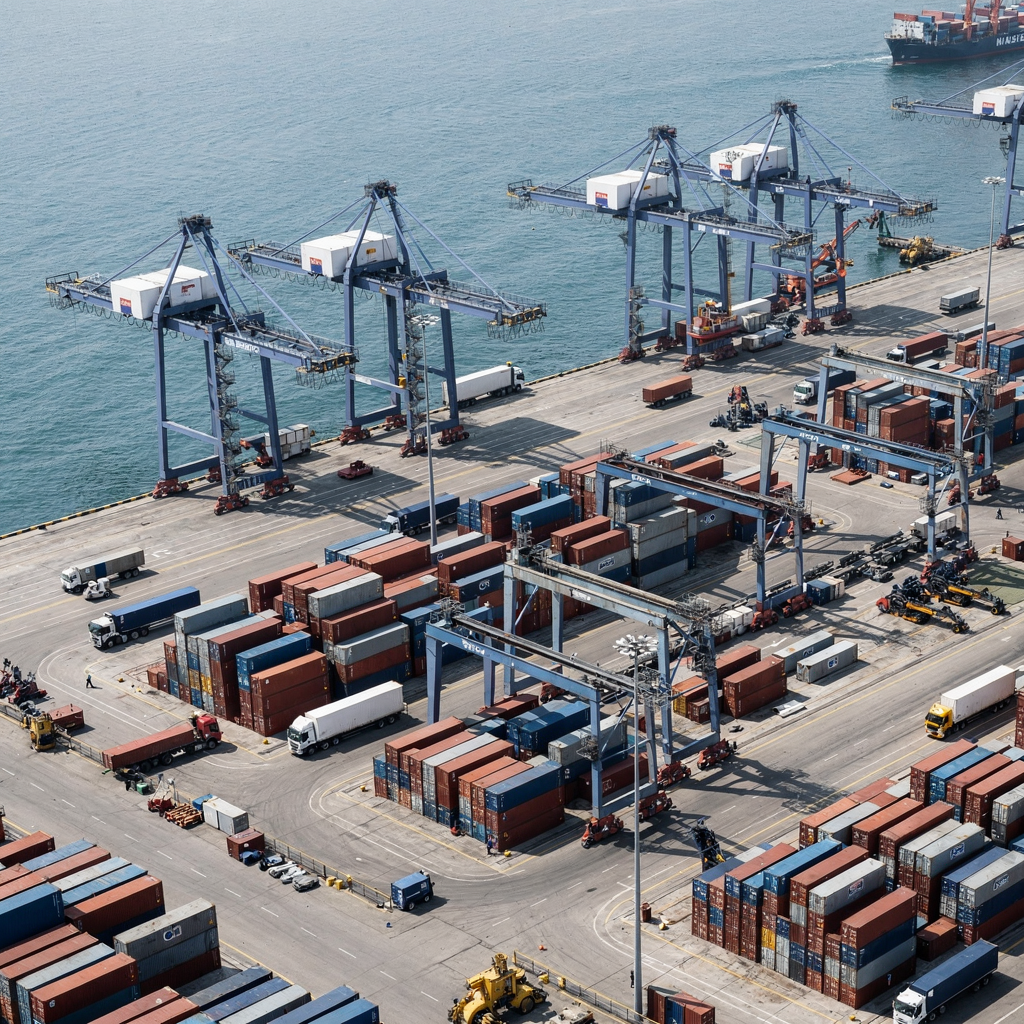
Drowning in a full terminal with replans, exceptions and last-minute changes?
Discover what AI-driven planning can do for your terminal
Real-time control for terminal operation
Real-time control methods validate scenarios on the live terminal using constrained experiments and monitored rollouts. First, a digital twin mirrors the live terminal and streams telemetry. Then, controllers test recommended rules with a tight guardrail. This approach lets dispatchers trial a change at scale without risking service levels. Real-time control connects the TOS, equipment control systems, and dashboards to ensure safe deployment and measurable outcomes.
Digital twin integration makes it possible to run thousands of policy variations in simulation, and then deploy the best policies for short, supervised trials. For example, digital twins can be used to train RL agents in a sandbox and then hand them over to operations with human oversight. Loadmaster.ai follows this pattern: we spin up a digital twin of a terminal and then train agents to improve quay productivity and reduce travel distances. This path supports cold-start readiness and safer deployment into live operations.
Real-time monitoring dashboards provide continuous feedback on service times, crane idle time, and dispatch performance. Operators can validate a policy by observing key metrics for a fixed window and then revert if needed. Case studies show that real-time control and digital twin deployment prevented delays during gate surges and reduced equipment idle time when a terminal switched to dynamic dispatch rules. A decision support paper even argues that “the proposed DSS can be part of a digitized Terminal Operating System (TOS) that efficiently performs operational planning and real-time decision-making” source.
Finally, real-time control shortens the feedback loop between planners and execution. Dispatch teams can test control changes and validate outcomes fast. As a result, terminals improve the consistency of decisions across shifts. For further context on TOS options that pair well with closed-loop control, see comparisons of leading systems and specific integrations like Kaleris and Kalmar SmartPort TOS comparison and Kalmar SmartPort. These resources help teams choose a TOS that supports trial-and-learn approaches.
Optimization and simulation tools for port and terminal
Optimization and simulation tools together form the backbone of modern terminal optimisation. In ports, they tackle berth allocation, equipment scheduling, labour assignment, and container stacking. Optimization algorithms suggest allocation plans that balance quay productivity and yard congestion. Meanwhile, simulation verifies the plan under stochastic demand and variable service times. The combined workflow reduces costs and increases reliability.
Leading solutions range from discrete-event packages to specialized optimisation engines. Tools such as CONTROLS and PTV Vissim address logistics emulation and traffic, while AnyLogic and Simio support hybrid scenarios. There is also a market for tailored solutions that embed learning algorithms to improve allocation and sequencing. For an example of port-level benefits, industry reports cite productivity improvements ranging from 10% to 25% after terminals adopt integrated digital technologies ESCAP and better TOS practices PortTechnology.
Optimization reduces unnecessary moves and increases moves per hour by recommending better crane and truck assignments. For instance, an algorithm might suggest alternate crane deployment to reduce walking time for RTGs and to limit crane idle time. Decision support elements help planners pick among trade-offs; they present ranked options and expected gains. One practical benefit is improved quay productivity and yard flow with fewer rehandles. In some pilots, targeted optimise-and-test cycles produced gains in throughput of about 15% study.
Also, tools that integrate with TOS via APIs support safe rollout. Loadmaster.ai exemplifies an approach that trains RL agents in a digital twin and then integrates the learned policies with operational guardrails. This reduces dependence on historical data and helps maintain profitability while improving productivity. For terminals exploring software options, review terminal operating alternatives and integration guides container terminal TOS alternatives. These readings show how software tools and optimisation combine to deliver measurable value.
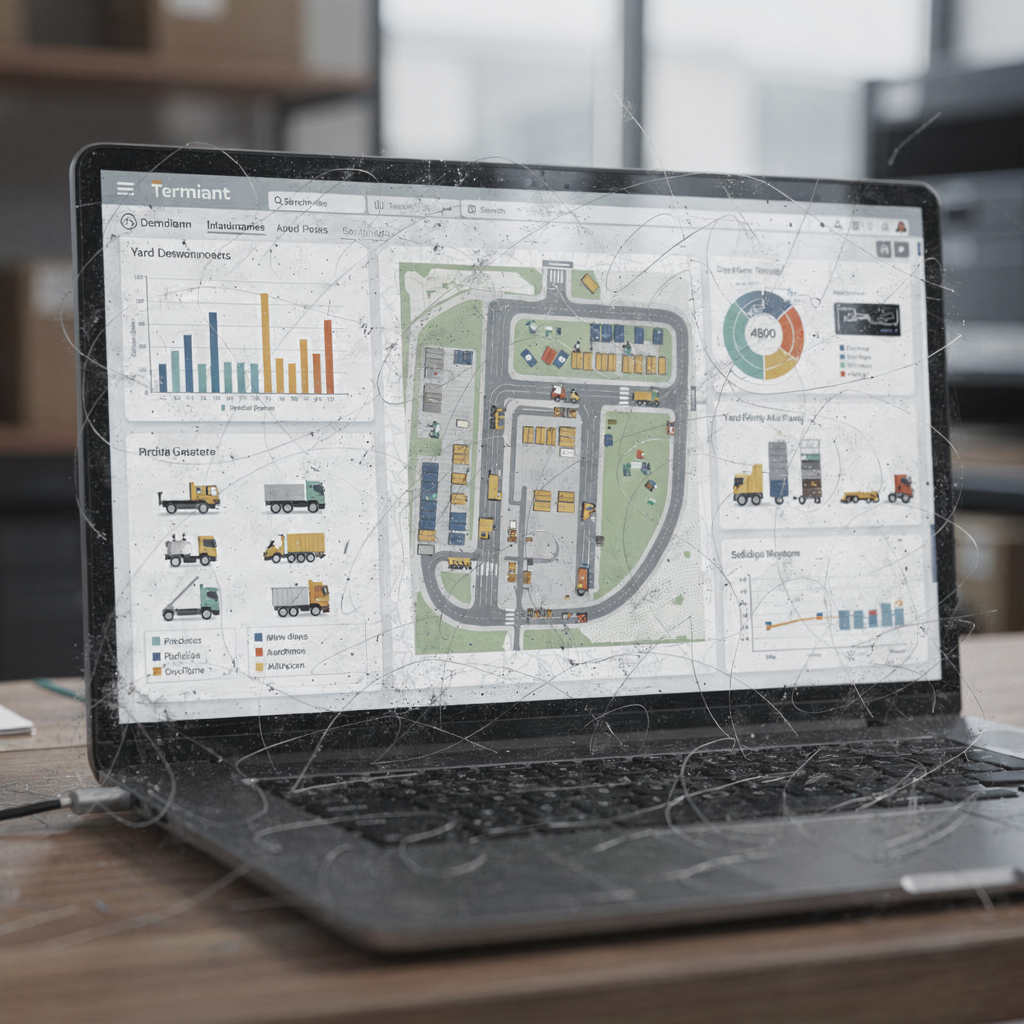
Drowning in a full terminal with replans, exceptions and last-minute changes?
Discover what AI-driven planning can do for your terminal
Simulation software and emulation to optimise throughput
Simulation software and emulation serve different but complementary roles when you optimise throughput. Simulation software typically explores a wide range of scenarios and produces statistical forecasts. Emulation mimics the real TOS interfaces and validates control logic in near-live conditions. Both approaches reduce risk when changing layouts, introducing automation, or adjusting dispatch rules.
When planners want to validate a new yard layout, emulation can test equipment control and dispatch messages before they touch the terminal. For example, an emulation exercise may validate that a change in stacking policy does not overload RTGs and straddle carriers. Then, simulation modeling can quantify expected throughput improvements and forecast quay crane cycles under the new policy. Teams can therefore validate outcomes and estimate gains before committing to physical upgrades.
Practically, an emulation-led approach guides layout changes and equipment upgrades. A virtual terminal provides a way to test control changes at scale. For instance, a case study shows targeted optimise-and-test cycles lifted throughput by 15% after a combination of improved dispatch, refined container stacking, and adjusted crane sequences case study. These gains came from fewer unnecessary moves, better travel distances, and more balanced RTG and quay crane workloads.
Also, simulation software such as AnyLogic and Simio supports discrete-event and agent-based variants to represent complex interactions. Simio often helps with discrete-event capacity planning, while AnyLogic allows hybrid designs. In addition, tools like Loadmaster.ai use digital twin technology and trained agents to optimise container moves and to increase moves per hour. Teams that combine emulation with careful simulation modelling achieve faster and safer adoption of new policies, improving throughput and profitability in an efficient way.
Using tos to simulate supply chain
Using a terminal operating system as the hub for supply chain simulation extends planning beyond the gate. A TOS that integrates digital twins and supply chain models can test how upstream vessel delays or downstream rail disruptions ripple through the terminal. As a result, teams can define recovery actions and pick robust policies for labour assignment and berth allocation. This helps maintain service levels during stress.
Decision support features inside a TOS enable planners to weigh trade-offs and to prioritise goals. For instance, a decision support module might balance quay productivity against yard congestion, recommend which containers to protect, and propose changes to train policies. A respected paper argues the proposed DSS can join a digitized TOS to boost operational planning and decision-making source. Therefore, the TOS becomes a platform for resilience planning and recovery actions.
Digital twin technology and digital twin integration allow planners to train agents and to test policies under many stress scenarios. Especially reinforcement learning can find policies that reduce rehandles and improve quay productivity and yard flow. Loadmaster.ai uses RL agents—StowAI, StackAI, and JobAI—to close the loop between simulation and execution. These agents train in a sandbox, then deploy with safe constraints so terminals see consistent performance across shifts and less dependence on historical data.
Finally, terminals that use simulation and TOS together can better protect profitability and service. Planners can run scenario testing for a port-wide labour strike or a dramatic change in vessel mixes. The virtual experiments help validate recommended recovery actions, improve allocation decisions, and confirm that quay cranes and yard equipment will remain balanced. To explore how a TOS can link to simulation tools in production, read about TOS integrations and specific products that align with closed-loop approaches terminal control integrations. In short, simulation and tos integration future-proofs terminal management and supports smarter decision-making.
FAQ
What is the difference between simulation and emulation in terminal planning?
Simulation creates a statistical or process-level representation of terminal operations to explore scenarios and forecast outcomes. Emulation mirrors the TOS interfaces and control messages to validate execution logic in near-live conditions.
Which tools are commonly used for container terminal modeling?
Tools such as CONTROLS and PTV Vissim are widely used for logistics emulation and traffic simulation. AnyLogic and Simio are common choices for hybrid and discrete-event models.
Can a TOS run predictive scenarios without disrupting live operations?
Yes. A digital twin connected to the TOS lets planners run what-if scenarios in a sandbox, then validate outcomes before applying changes to live operations. This reduces risk and improves confidence.
How much throughput improvement can simulation and optimisation deliver?
Industry reports note productivity improvements in the range of 10%–25% for terminals that adopt integrated digital solutions and optimisation practices ESCAP. Targeted pilots have reported throughput gains of around 15% after optimise-and-test cycles case study.
What is a digital twin and how does it help terminals?
A digital twin is a live virtual replica of a terminal that receives telemetry and mirrors operational states. It helps train agents, test policies, and measure expected impacts before changes reach the yard or quay.
Do optimisation tools require historical data to work?
Some traditional methods rely heavily on historical data, but reinforcement learning approaches can train in simulation without long histories. This reduces dependence on past data and helps discover better policies.
How do simulation outputs support decision-making?
Simulation outputs quantify metrics like predicted container moves, equipment utilization, and expected queue lengths. Planners use these outputs to compare alternatives and validate allocation changes.
What role do quay cranes play in optimisation efforts?
Quay cranes are central to berth productivity and vessel turnaround. Optimisation focuses on crane deployment, sequencing, and reducing crane idle time to improve moves per hour and vessel planning.
How can small and medium terminals afford simulation tools?
Open-source options and scalable enterprise packages make simulation accessible. Terminals can start with focused pilots, use digital twin integration, and expand tools as ROI becomes clear. Check open-source simulation options for starters open-source options.
What is a practical first step to use simulation in my terminal?
Start with a small model of a critical block or a single berth, add accurate inputs, and run scenario testing for common disruptions. Then, validate outcomes in an emulation sandbox and roll out changes under real-time control with guardrails.
our products
 stowAI
 stackAI
 jobAI
jobAI
Innovates vessel planning. Faster rotation time of ships, increased flexibility towards shipping lines and customers.
Build the stack in the most efficient way. Increase moves per hour by reducing shifters and increase crane efficiency.
Get the most out of your equipment. Increase moves per hour by minimising waste and delays.
stowAI
Innovates vessel planning. Faster rotation time of ships, increased flexibility towards shipping lines and customers.
stackAI
Build the stack in the most efficient way. Increase moves per hour by reducing shifters and increase crane efficiency.
jobAI
Get the most out of your equipment. Increase moves per hour by minimising waste and delays.