
business impact: Operational context of empty containers at Valparaiso terminal
Valparaíso plays an outsized role in Chilean trade, serving as a key hub for both exports and imports. The port moves packed containers and empty boxes that support inland logistics and vessel rotations. This chapter presents the business impact of empty flows and explains why a focused study of an empty container matters to planners and operators. Empty containers cycle through the port, the gate, and the yard. They affect quay productivity and yard congestion. A focused case study of an empty operation at Valparaíso Chile helps show these effects with numbers and process detail. For context, one published case provides a practical look at empty container stacking operations at Valparaíso (case study of an empty).
Empty containers at the yard generate storage costs, handling moves, and scheduling challenges. High container dwell reduces available slots and increases rehandles. Many terminals measure container dwell and link it to the marketing strategy of the depot and to contracts that dictate free time. In practice, empty container depot are strongly linked to trade patterns and to repositioning decisions that shipping lines make. When the depot is divided into two operational zones, planners can isolate inbound empties from outbound units. This split helps operations of the dry-container area and can cut retrieval times. Planners need to consider only the operations that affect the depot and the contracts that constrain movement.
Yard congestion drives equipment idle time and higher costs. For example, cranes and yard trucks can sit idle during peak windows when stacks block lanes. Gate-out trucks retrieving a container can queue long enough to delay vessel operations. Effective stack design reduces unnecessary moves. Our experience at Loadmaster.ai shows that smart policies and RL-trained agents can reduce rehandles and even out workloads. For readers who want technical modelling guidance, see our walkthrough on how to model container yard operations (how to model container yard operations).
Empty handling links directly to port revenue and to terminal service levels. Operators who reduce dwell and rehandles gain measurable throughput improvements. The next chapters describe a discrete-event simulation model and hands-on container storage and retrieval processes that help derive recommendations for improved stacking and scheduling.
simulation: Simio model design for empty container storage and retrieval
Simio offers a flexible platform to build a discrete-event simulation model of yard work. The software combines discrete-event mechanics with API-driven data feeds and scheduling features. Users can model sources, servers, transporters, and sinks to represent loading and unloading, truck queues, and yard stacks. In practice, a model must represent the operations of a shipping line along with yard constraints. A well-built model captures the arrival process, stacking rules, and the routing of material handling equipment that moves containers between sections.
Begin with model components. Sources generate incoming loads and gate-outs. Servers represent stacking slots and cranes. Transporters model RTGs, straddles, and yard trucks. Sinks capture exports and empty returns. The model with a related database can store move histories and telemetry. This design supports 24 hour operations and lets you test policies related to the stacking. For a reference on combining simulation and scheduling, see Simio’s technical flyer (PDF Simio – Seamlessly combining simulation and APS).
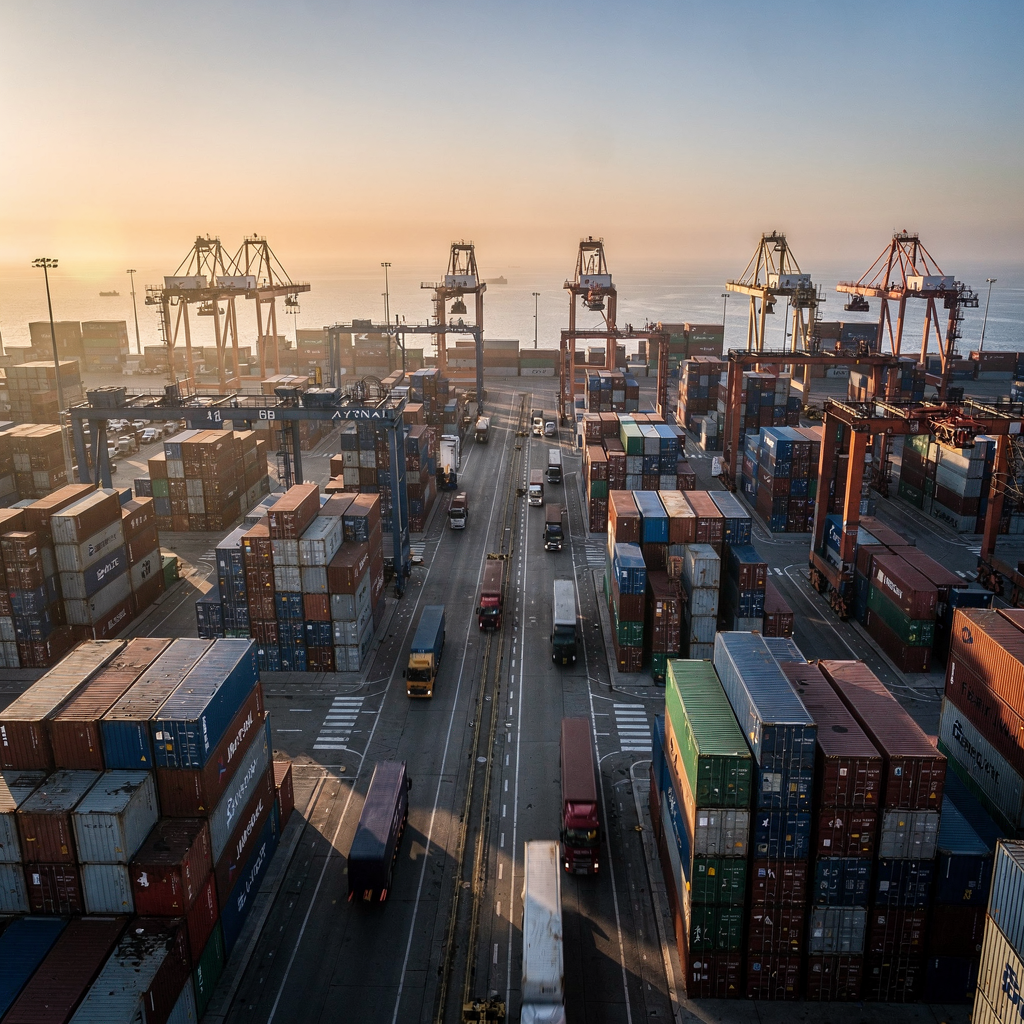
Layout matters. The yard is organized into container blocks, and the sections are organized into container rows and columns. You must represent the operations and the lanes so that gate-out trucks retrieving a container can reach a specific location. Effective layout modeling also models capacity of eight containers deep in some blocks and height limits in others. The model must represent stacking and retrieving rules and respect safety margins. To help teams who plan yard models, our site links to terminal optimisation digital twin guidance (terminal optimisation digital twin).
Model logic should include stochastic arrivals and service times. That enables stochastic simulation experiments and stress tests. Use sensors and telemetry to feed the model in near real time where possible. Simio supports creating Process Digital Twins that evolve with operational data (Simio: Digital Twin Simulation Software). When you build a discrete-event simulation model, keep traceability high and log every move so that validation can compare simulated outputs with the real system.
Drowning in a full terminal with replans, exceptions and last-minute changes?
Discover what AI-driven planning can do for your terminal
container handling: Stacking, retrieval and resource allocation processes
Stacking and retrieving are the core activities in container storage and retrieval processes. Stacking strategies influence rehandles and retrieval times. Typical rules include block stacking with a fixed maximum height and a buffer lane for trucks. Stacking of empty containers often uses different blocks than loaded containers. This separation reduces contamination of operations and reduces handling complexity. Classes of container also matter: empties, loaded exports, and inbound imports each have different priorities and handling rules.
Operational rules may enforce FIFO, LIFO, or priority-based retrieval algorithms. FIFO favors long-stored containers. LIFO reduces handling for recent arrivals. Priority rules protect on-time delivery for export loads. When the stack height hits the capacity of eight containers deep, planners must decide whether to reshuffle. Policies related to the stacking and the dispatching and routing of material should reduce rehandles during peak vessel windows. For complex deployments, our StackAI agent can test many stacking operations at this empty yard to balance moves with crane productivity.
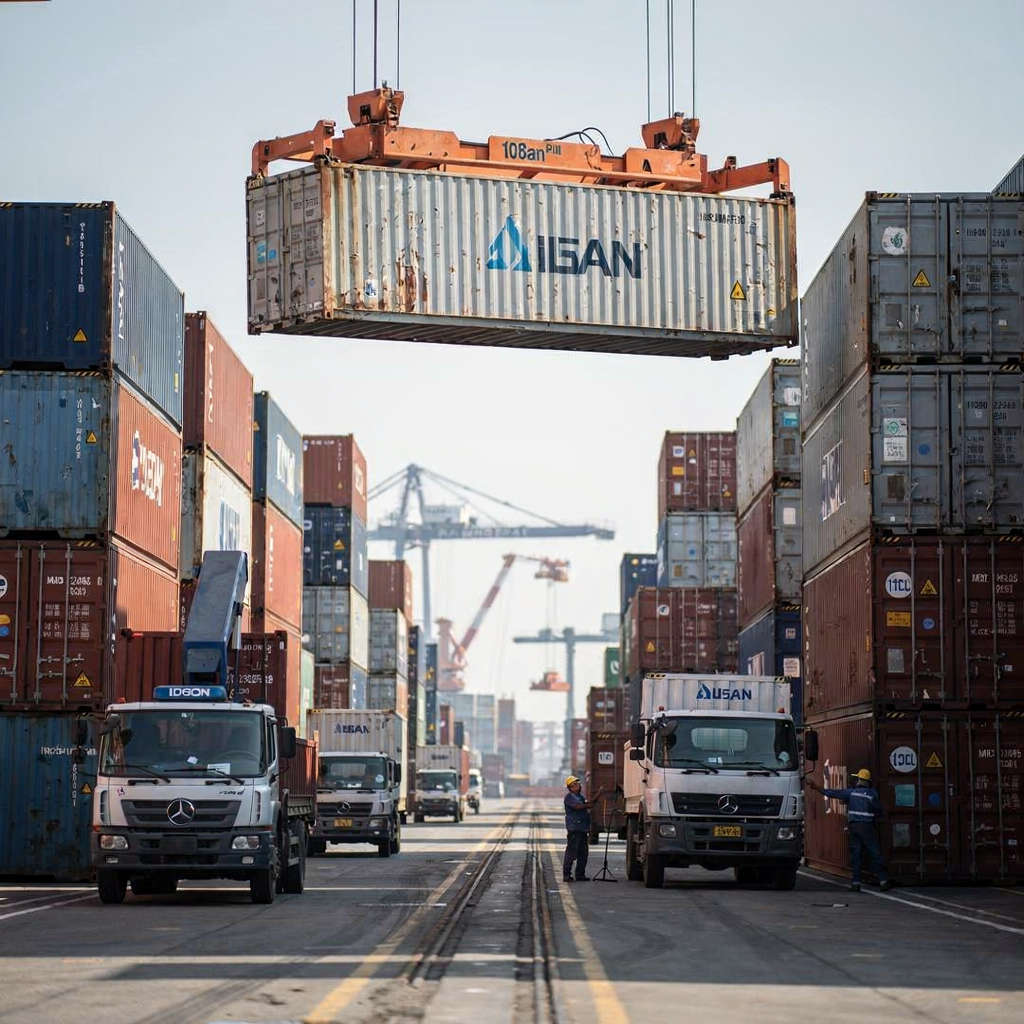
Resource allocation pairs cranes and yard trucks to tasks. Assignments must minimize travel distance and idle time. Routing of material handling equipment becomes a near-term optimization problem. Gate operations require quick matching of trucks arriving to the depot with available slots. Gate-out trucks retrieving a container should not wait for a long reshuffle. In practice, stacking and retrieving logic is integrated with terminal operating systems and with planning tools. If you need scheduling simulations that include equipment logic, check terminal equipment scheduling simulation solutions (terminal equipment scheduling simulation solutions).
Operators must also monitor container dwell and the repositioning operations of a shipping line that move empties between ports. Generally associated with repositioning operations, these moves create distinct peaks. By testing either type of container sequence in a controlled model, planners can tune stacking policies and determine the current performance of the yard.
simulation: Data integration and model calibration for accuracy
Data quality governs model credibility. Use terminal logs, TOS records, and sensor feeds to populate arrival distributions and service times. Real-time tracking systems provide timestamps for moves and can be fed into the model with a related database. When you use real telemetry, you narrow the gap between the model and the real system. This link supports confidence when running simulation experiments to test new policies.
Calibration aligns the model to actual throughput and resource usage. Start by matching average moves per hour and crane utilization. Then tune service-time distributions until the model reproduces observed cycle times and queue lengths. One published seaport model used historical logs to align simulated vessel calls with yard throughput (Initial Model for Simulation of a Seaport Using the Simio Methodology). Statistical comparison and confidence interval analysis are standard validation techniques. Use hypothesis tests to compare means and variances between simulated and observed outputs.
Validation also examines rare events and tail risks. Conduct sensitivity runs with increased arrival bursts to see how the system behaves under stress. A Delft study used constraints on minimum on-time delivery percentages to validate Inter Terminal Transport choices (A Simio simulation model for the evaluation of Inter Terminal Transport). The process closes the loop: collect new data, refine the model, and then re-test the model. This practice improves the model’s ability to represent the operations that planners face daily.
When calibrating, document assumptions and record which variables were adjusted. Use cross-validation across multiple weeks. Finally, when the model matches the yard in baseline runs, proceed to run simulation scenario tests for peak demand, reduced equipment, and disrupted arrival patterns. These experiments produce the actionable insights operations teams need to change policies and to reduce container dwell.
Drowning in a full terminal with replans, exceptions and last-minute changes?
Discover what AI-driven planning can do for your terminal
business impact: Performance metrics and on-time delivery analysis
Understanding performance metrics gives operators the power to act. Throughput, resource utilisation, and on-time delivery rates are the three core KPIs. Throughput measures containers moved per hour or per day. In the Valparaíso study, yard throughput and on-time delivery were primary goals. Tracking crane, truck, and labour usage reveals idle time and bottlenecks. Resource utilisation rates let teams target staffing and equipment shifts.
On-time delivery depends on yard access and on stacking and retrieval choices. A terminal can improve on-time delivery by prioritizing export stacks and by increasing buffer lanes for busy periods. The model can simulate loading and unloading interactions and the transport of cargo and empty between quays and the yard. When planners run simulation scenario stress tests that increase arrivals by 20%, the model estimates how on-time delivery suffers and which resources cause the delay.
Operationally, measurement includes container dwell. Long dwell increases storage costs and adds rehandles. Companies should track dwell by class and by block to find trouble spots. The empty containers at the yard should be profiled by duration and by destination to find inefficiencies. For more advanced modelling of terminal performance, see our comparison and tools for terminal decision support (terminal decision support simulation).
Simio and other tools help quantify changes. As the authors note, “Simio’s combination of discrete event simulation and advanced planning capabilities provides a powerful toolset for modeling complex logistics systems, including container terminals” (Simio and Simulation 7e). That endorsement supports why model-driven changes lead to measurable gains. In practice, simulation experiments guide whether to add yard trucks, change stacking of empty containers, or adjust shifts. Those choices translate to lower costs and faster turnarounds.
container handling: Best practices and future improvements
Best practices emerge from rigorous model tests and from field trials. Simulation results often highlight optimal stacking heights, lane layouts, and buffer sizes. For example, reducing average stack height by one tier can cut reshuffles, while adding a buffer lane at the gate can reduce queue delays. Different application of stacking policies should be tested via controlled runs. A successful approach combines policies, real-time control, and dynamic scheduling.
Recommendations for improved stacking policies include dynamic placement rules that weigh expected retrieval time against travel distance. Use priority-based assignments for imminent exports. Job sequencing should preserve quay productivity while limiting yard churn. Loadmaster.ai applies RL agents to learn policies that balance these trade-offs and that adapt to new vessel mixes without relying on large historic datasets. Our closed-loop approach trains agents in a digital twin and then deploys them with operational guardrails.
Future study directions include AI-driven optimisation, larger scale digital twins, and integration with TOS systems for live scheduling. A practical next step is to build a simulation model with a related database and to run stochastic simulation experiments that stress-test rules under variable demand. Research should also examine how the marketing strategy of the depot and customer contracts influence stacking choices. Because container depot are strongly influenced by commercial terms, planners must align operational rules with contractual constraints.
Finally, operational improvements hinge on monitoring and governance. Implement explainable KPIs and audit trails. Test policies in a sandbox before rollout. Where possible, include the inland transport of cargo and the routing of material handling equipment in tests. Doing so will ensure that recommendations are robust and that the terminal gains both efficiency and resilience.
FAQ
What is a Simio container simulation?
A Simio container simulation uses the Simio platform to model container yard, quay, and gate operations. It leverages discrete-event mechanics and scheduling features to test policies and predict performance.
Why model empty containers separately?
Empty containers have different handling rules and storage needs than full boxes. Modeling them separately helps reduce rehandles and optimizes yard space. It also clarifies repositioning operations of a shipping line.
How does calibration improve model accuracy?
Calibration aligns the model with observed throughput and utilization. Teams tune service-time distributions and arrival profiles until metrics match the real system. This step increases confidence in scenario predictions.
What data sources are needed for a credible model?
Use TOS logs, gate timestamps, and sensor feeds to populate service and arrival distributions. A model with a related database makes it easier to replay and validate moves against historical records.
Can simulation help on-time delivery rates?
Yes. Models quantify the impact of yard layouts and resource allocation on on-time delivery. By testing staging and retrieval rules, planners can improve service levels and reduce delays.
What stacking rules should I test first?
Start with simple FIFO and LIFO rules, and then test priority-based retrieval for urgent exports. Also test different stack heights and buffer lane sizes to find trade-offs between space use and rehandles.
How do you validate a model under peak demand?
Run simulation scenario experiments that increase arrivals and reduce equipment to simulate stress. Compare queue lengths, moves per hour, and service times with actual peak-day logs.
Should the yard be split for empties and fulls?
Splitting can reduce interference between handling patterns and lower reshuffles. Many operators separate empty container blocks from loaded blocks to streamline stacking and retrieving.
What role does AI play in yard operations?
AI can learn dynamic placement and sequencing rules that outperform static heuristics. Reinforcement learning agents can optimize multi-objective KPIs without relying on large historical datasets.
Where can I learn more about terminal simulation tools?
Loadmaster.ai curates resources and guides on terminal modelling. For example, see our comparison of terminal tools and best practices for yard planning on our site. Explore materials on terminal performance modelling software and integration approaches to expand your toolkit.
our products
 stowAI
 stackAI
 jobAI
jobAI
Innovates vessel planning. Faster rotation time of ships, increased flexibility towards shipping lines and customers.
Build the stack in the most efficient way. Increase moves per hour by reducing shifters and increase crane efficiency.
Get the most out of your equipment. Increase moves per hour by minimising waste and delays.
stowAI
Innovates vessel planning. Faster rotation time of ships, increased flexibility towards shipping lines and customers.
stackAI
Build the stack in the most efficient way. Increase moves per hour by reducing shifters and increase crane efficiency.
jobAI
Get the most out of your equipment. Increase moves per hour by minimising waste and delays.