
Crane fundamentals: container handling in modern ports
Crane equipment defines how efficiently a container yard flows. In modern container terminals, several crane types share duties across quay, yard, and gate. For example, ship-to-shore cranes focus on loading and unloading vessels. Meanwhile, yard cranes and gantry crane models handle container stacking and internal transfers. A rubber tyred gantry crane brings mobility into the yard, and it complements fixed STS systems. First, understand that cranes are the backbone of intermodal logistics. Second, recognise that each type of mobile gantry crane offers a different balance of maneuverability and lifting capacity. Third, note how the spreader, the lifting mechanism, and the control systems interact to place containers with millimetre tolerance.
Historically, early lifting gear served small harbours. Over time, mechanisation scaled to handle heavy loads and high throughput. Today, cranes are designed for tight spaces, fast cycle times, and automated interfaces. As terminals became busier, uptime grew more important. Consequently, terminal throughput depends heavily on crane reliability. For example, a single prolonged outage on a quay crane can slow vessel turnaround and cause cascading delays in the yard. Therefore, preventive maintenance and rapid repair protocols reduce downtime and protect throughput.
Operators and planners also focus on space utilization. Good yard planning balances stacking height and the number of blocks available. That balance influences how often a crane must reshuffle stack containers. In practice, effective planning reduces rehandles and increases equipment productivity. For instance, Loadmaster.ai trains agents in a digital twin so planners can test sequences before going live. That approach boosts increased productivity while keeping operations predictable and safe. In short, whether you discuss cranes at the quay or rubber-tyred gantry models in the yard, the coordination of people, machines, and software governs how well a terminal performs.
rtgs mobility and planning for efficient stack management
RTG machines bring flexibility to container yards. As mobile gantry crane variants, rtg units are equipped with rubber tires that allow them to move along truck lanes and across yard surfaces. This maneuverability helps crews access deep stacks without fixed rails. For operators, that means fewer permanent aisles and better yard space utilization. In addition, rtg cranes can move containers from trucks directly into stacks and then reposition to another block if needed. That flexibility cuts non-productive moves and helps keep truck lanes clear.
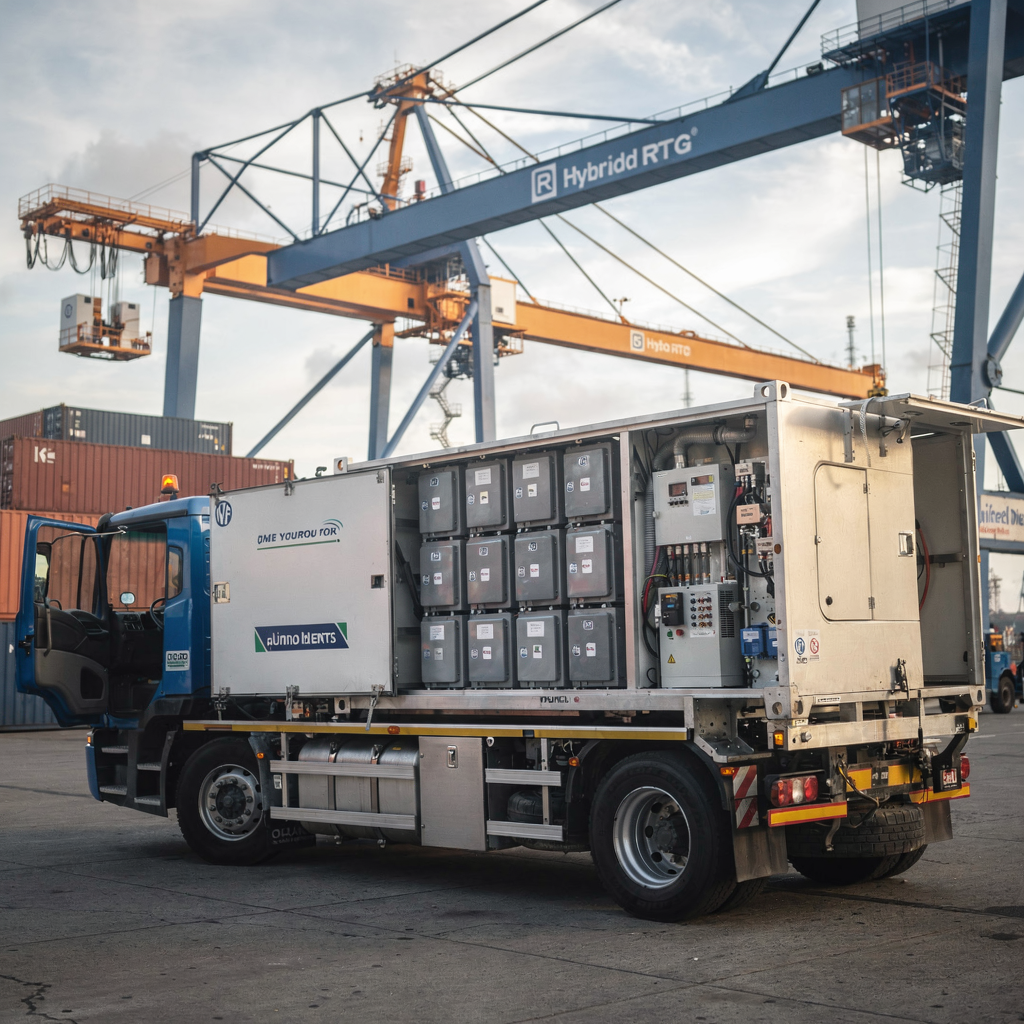
Yard planning for rtgs emphasises reducing repositioning. Good plans aim to limit moves that simply reshuffle containers. Consequently, planners try to cluster containers by departure window, by weight class, and by destination. In practice, this reduces the need for a crane to cross half the yard and then return. Also, planners must consider ground conditions. A firm yard surface enables heavier stacking and reliable rubber-tired gantry operation. So, combining solid pavement with smart placement reduces wear and improves safety.
For terminals that handle mixed volumes, rtgs offer a cost-effective alternative to fixed gantry designs. However, rtgs require coordination to avoid idle moves. Data shows RTG cranes are active roughly half the time and idle around thirty percent of the day, a pattern that signals scheduling opportunity (Aston Research Explorer). To cut idle time, terminals can adapt dispatch rules, and to guide that change, Loadmaster.ai simulates hundreds of scenarios. That simulation helps StackAI place and reshuffle to balance the yard and reduce travel distances, which in turn lowers fuel burn and wear on rubber tires. Thus, implementing focused planning yields better space utilization and fewer unnecessary moves.
Drowning in a full terminal with replans, exceptions and last-minute changes?
Discover what AI-driven planning can do for your terminal
rtg crane mechanics: power units, controls and safety
Understanding the mechanical and electrical heart of an rtg crane clarifies why hoist motors dominate energy use. Core components include a diesel engine, a generator set, hoist motors, and a control cabin. The hoist assembly carries the spreader, the lifting mechanism that locks to container corners. Hoist motors account for about sixty percent of total power consumption during operation, so improving hoist efficiency targets the largest energy sink (Analysis of energy usage for RTG cranes). In addition, limit switches, braking systems, and the drive system protect both cargo and crew.
Safety interlocks prevent hazardous moves. For example, if a limit switch senses an overtravel, the control systems cut power to the affected function immediately. That electronic protection reduces damage and limits downtime. Meanwhile, operator cabins include precise control interfaces. These interfaces offer joystick feedback, position readouts, and remote control capabilities. As a result, a crane operator can place containers with precise control, often to within a few millimetres. That precision matters when loading high-density stacks or when automated truck trailers approach a narrow lane.
RTG cranes are often powered by diesel engines, and that fact shapes maintenance cycles and emissions budgets. Regular maintenance keeps engines efficient and reduces the chance of unexpected failure. At the same time, modern control systems enable regenerative braking and energy recovery. Those functions capture hoist energy during lowering cycles and feed it back into batteries or the local grid. That approach reduces the required generator size and extends engine life. For ports reviewing their fleet, comparing diesel-powered units with hybrid and electric options highlights the trade-offs among fuel, capital expense, and maintenance needs.
gantry versatility: from fixed to rubber tyred gantry solutions
Gantry designs vary from rail-mounted models to rubber tire gantry options. Rail-mounted gantry crane systems deliver high repeatability and low rolling resistance, which supports fast cycle rates. In contrast, rubber-tired gantry machines improve yard layout flexibility and allow reconfiguration without major civil works. For terminals deciding between systems, the choice hinges on expected throughput, construction costs, and long-term flexibility. A rail solution can serve very high throughput with predictable vessel schedules. Alternatively, rubber tire gantries lower upfront construction costs and allow the operator to adapt stacking patterns as volumes change.
Design differences also affect yard throughput. A fixed gantry can move heavier loads faster along a dedicated track, but it limits overall yard flexibility. Conversely, an rtg can move heavy containers between blocks, and it can be relocated to different sections as demand shifts. That mobility gives a technological advantage when traffic mixes fluctuate. Additionally, regenerative braking and energy recovery options apply to both drive system types. Energy storage systems can capture kinetic energy, and then either recharge local batteries or reduce generator load. Evidence shows that regenerative systems can recover roughly half of the energy wasted in typical cycles, translating into measurable fuel savings (ScienceDirect).
When evaluating total cost, terminals must weigh construction costs, operating cost, and the projected lifetime of heavy equipment. Rail foundations and tracks add capital expense but can pay back through higher hourly rates. Rubber tyre gantry options decrease capital barriers and offer rapid deployment. In practice, many operators adopt a mix: fixed gantry cranes along busy quays, and mobile RTG units for flexible stacking zones. That hybrid approach supports both steady high-volume flows and seasonal spikes. Finally, integrating collision prevention systems and real-time replanning software improves efficiency across both types of gantry installations, and readers interested in automation can learn more about collision solutions from our resource on collision prevention systems for container terminals (collision prevention systems).
Drowning in a full terminal with replans, exceptions and last-minute changes?
Discover what AI-driven planning can do for your terminal
rubber tyred gantry crane innovations: energy recovery and hybrid systems
Technological innovation has shifted how rtg cranes are powered. Energy-storage systems (ESS) pair with diesel gensets or with grid feeds to reduce fuel consumption and emissions. Field studies estimate that energy recovery can save roughly 32,600 litres of fuel per crane annually, and that converting that energy into useful work reduces CO2 emissions by about 8,100 tonnes per crane in equivalent savings scenarios (Analysis of energy usage for RTG cranes). These are compelling figures for any environmental strategy.
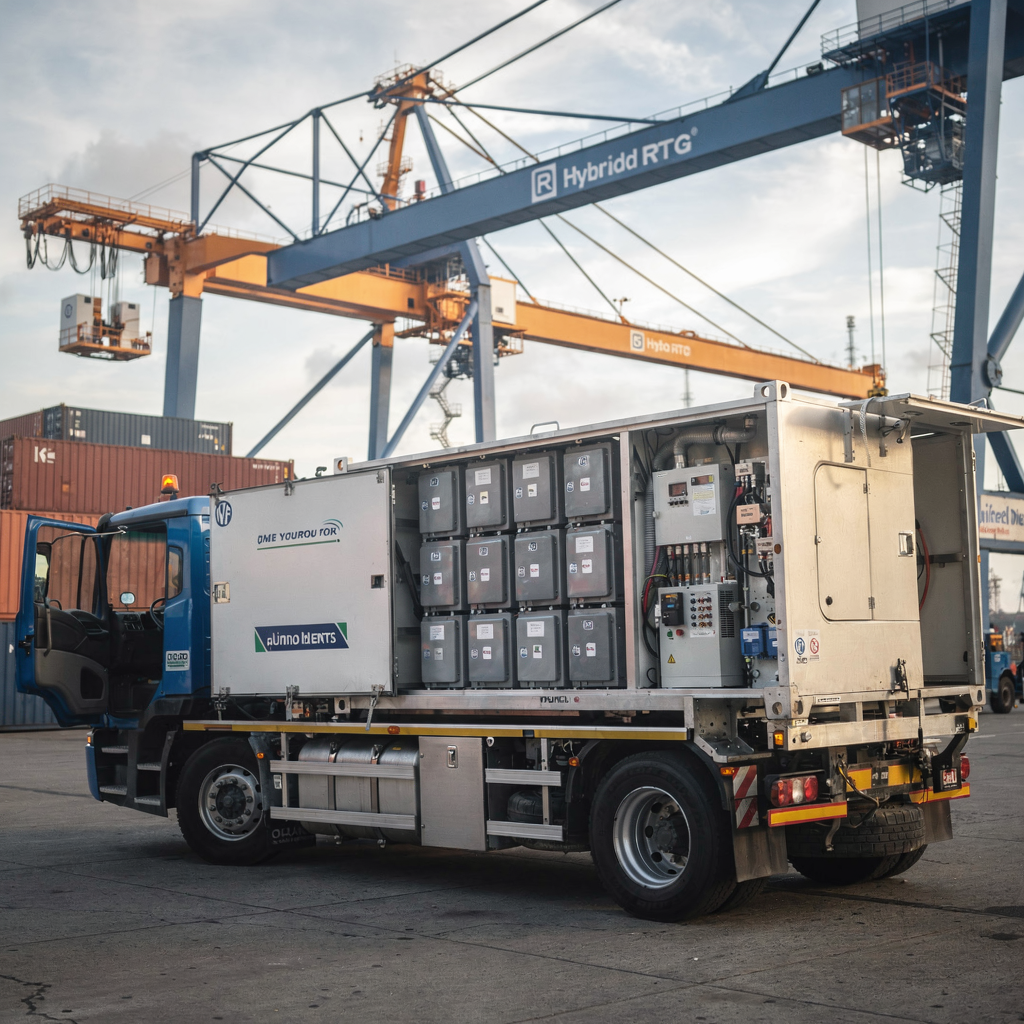
Hybrid power units already operate in commercial terminals. For example, the Port of Salalah introduced hybrid RTGs that optimise power by capturing energy during lowering and transferring it to on-board storage, which reduces diesel run-hours and wear (Port of Salalah hybrid RTGs). In other cases, manufacturers like Mitsubishi Heavy Industries supply electric RTG models that take power from the grid, eliminating local diesel gensets and cutting operational emissions (Mitsubishi Heavy Industries). As a Mitsubishi representative said, “Our electric RTG cranes mark a major step forward in sustainable port operations” (source).
ESS integration also yields operational benefits. When an rtg cranes are equipped with batteries, the diesel engine can downsize and run closer to optimal load points, extending engine life and reducing maintenance. Further, short bursts of power during peak lifts pull from stored energy instead of spinning a larger generator, which improves fuel efficiency. For terminals considering retrofits, a phased approach often works best: start with regenerative hoist retrofits, then add ESS, and finally evaluate full grid-tied electrification. Companies can simulate each stage using digital twins to estimate payback and emissions impacts. For readers interested in planning and operational optimisation, our piece on real-time replanning capabilities explains how software can schedule equipment to reduce unnecessary running hours (real-time replanning).
intermodal flow: crane used in RTG operations at port hubs
RTG cranes knit together ship-to-shore, truck, and rail flows in intermodal terminals. In many yards, a crane used to move containers from trucks into a stack then frees the truck for the next load. At other times, rtg cranes transfer containers to temporary holding blocks before rail loading. Consequently, the rtg plays a key role in smoothing peaks between modes. Efficient container handling operations therefore depend on synchronised moves, and scheduling that reduces conflicts improves throughput.
Observed operational patterns highlight potential savings. Instrumented studies show that RTG cranes operate about fifty percent of the day and remain idle near thirty percent, a distribution that suggests better scheduling could cut fuel use and engine wear (study). To act on that insight, terminals can deploy short-term load forecasting models. For instance, Artificial Neural Network models forecast hour-by-hour power needs using temperature and human activity as inputs (load forecasting research). Those forecasts let dispatchers reduce running hours and stage equipment only when needed.
Automation and AI also make a difference. Loadmaster.ai offers closed-loop optimisation where StowAI and JobAI coordinate to minimise rehandles, and StackAI balances yard placement. That approach reduces shift-to-shift variability and the loss of tribal knowledge. By simulating millions of decisions in a digital twin, RL agents learn policies that cut travel distance, balance workloads, and protect quay productivity. As a result, intermodal yards can lower operating costs while improving resilience. For readers wanting to benchmark crane productivity and strategies, our analysis of gross crane rates provides practical metrics and comparative data (benchmarks for gross crane rate).
FAQ
What is an RTG crane and how does it differ from other cranes?
An RTG crane is a rubber-tyred gantry unit that moves on rubber tires rather than on rails. It differs from fixed gantry cranes by offering greater flexibility in yard layout and by allowing reconfiguration without major civil works.
How much energy do hoist motors consume on RTG machines?
Hoist motors make up roughly 60% of an RTG’s energy consumption during operations, so improving hoist efficiency yields large fuel savings. That fact guides retrofit priorities for terminals seeking lower operating costs and emissions.
Can RTG cranes be hybrid or fully electric?
Yes, hybrid RTG systems with ESS are in service, and fully electric RTG models also exist that take power from the grid. Both approaches reduce diesel run-hours and lower CO2 emissions when compared with traditional diesel-powered units.
Are there measurable fuel savings from regenerative systems?
Field analyses estimate that regenerative energy systems can save around 32,600 litres of fuel per crane annually in certain operating profiles. Those savings come from capturing energy during lowering cycles and reusing it for lifts or storage.
What operational pattern do RTG cranes typically show?
Instrumented data indicates RTG cranes are active about 50% of the time and idle around 30% of the time. This pattern highlights opportunities to optimise schedules and reduce unnecessary running hours.
How do RTG cranes affect intermodal flows?
RTG cranes connect ship-to-shore, truck, and rail links by moving containers between modes and holding areas. They improve throughput by reducing truck wait times and by staging containers for rail loading or onward transport.
What maintenance practices keep RTG fleets reliable?
Regular maintenance of the diesel engine, electrical systems, hoist motors, and limit switches reduces the risk of failure. Preventive servicing and condition monitoring help protect uptime and reduce unexpected downtime.
Can AI improve RTG crane utilisation?
Yes, reinforcement learning agents can optimise placement and dispatch, lowering rehandles and balancing workloads. Loadmaster.ai uses digital twins to train agents that improve scheduling and yard space utilisation without requiring historical data.
What are the environmental benefits of electric RTGs?
Electric RTGs cut local emissions and noise pollution, and they reduce fuel costs when grid electricity is cheaper than diesel. They also simplify maintenance by reducing reliance on diesel engines and gensets.
How should a terminal choose between rail-mounted gantry and RTG options?
Terminals should weigh expected throughput, construction costs, and flexibility needs. Rail-mounted gantry cranes suit very high, predictable volumes, while RTGs offer lower capital expense and reconfigurability for changing traffic mixes.
our products
 stowAI
 stackAI
 jobAI
jobAI
Innovates vessel planning. Faster rotation time of ships, increased flexibility towards shipping lines and customers.
Build the stack in the most efficient way. Increase moves per hour by reducing shifters and increase crane efficiency.
Get the most out of your equipment. Increase moves per hour by minimising waste and delays.
stowAI
Innovates vessel planning. Faster rotation time of ships, increased flexibility towards shipping lines and customers.
stackAI
Build the stack in the most efficient way. Increase moves per hour by reducing shifters and increase crane efficiency.
jobAI
Get the most out of your equipment. Increase moves per hour by minimising waste and delays.