
Port and Container Port Context in the Maritime Supply Chain
Deep-sea hubs sit at the heart of global trade. Ports manage flows of TEUs, connect shipping lanes, and shape supply chain resilience. A maritime container terminal must balance berth schedules, crane assignment, and yard space to meet demand. First, ports measure throughput and turnaround time. They also track restow moves and rehandles to estimate hidden costs. Second, planners evaluate berth occupancy and intermodal links to sustain velocity. Third, terminals align vessel stowage with yard stacking to avoid congestion and long truck waits.
Key performance metrics include throughput, turnaround time, and the number of restow moves per vessel. For example, restowing can increase vessel port stay by up to 15% [Port of Antwerp study]. That statistic shows how restow cost affects schedules and downstream delivery. Shipping lines face higher delays and higher fuel costs when port calls lengthen; the NOAA analysis links handling inefficiencies to greater fuel use and emissions [NOAA]. Therefore, restow cost matters far beyond the quay.
Container ship stowage drives many decisions at sea and ashore. A tight stow plan can increase crane productivity but force more internal moves later. Conversely, a conservative allocation reduces rehandles but lowers TEU density. Planners use performance measures to decide. Loadmaster.ai trains AI agents in a digital twin to balance these trade-offs. As a result, a planner can protect quay productivity while avoiding yard congestion.
In practice, port and terminal coordination affects inland transport and customs processing. Better visibility shortens gates and reduces dwell time. For further reading on stacking choices and placement of containers, see our guide on container stacking optimization techniques container stacking optimization. Overall, ports that integrate stowage thinking into vessel planning gain scheduling flexibility, cost control, and improved supply chain outcomes.
Restow Costs in Container Terminal Operations
Restow cost covers the extra moves needed to access a target container. It comprises labour, equipment hours, and lost crane time. Each restow adds handling minutes and raises the risk of downstream delays. Labor includes crane operators and shifters. Equipment use includes quay crane moves, straddle carriers, and RTGs. Time cost reflects berth occupation and missed sailings. Terminal operation must count all three when they model expenses.
Quantitative research places restow impact in sharp relief. Studies show restows can lengthen port stay by up to 15% [Antwerp report]. This can translate to lost productivity and higher per-TEU handling costs. In real cases, optimizing restow operations at the Port of Antwerp returned around 10–12% productivity gains [Antwerp]. Those gains came from smarter placement of export boxes, reduced shifter moves, and tighter crane cycles.
Restow cost depends on container mix, vessel stowage, and terminal constraints. Heavy import streams with mixed box sizes drive more rehandles. Shallow stowage sequences and poor placement of high-priority cargo cause extra moves. Terminal layout also matters. Narrow lanes and distant yard stacks force longer driving distances for straddle carriers and trucks. That increases labour hours and fuel consumption. The NOAA economic work links handling inefficiencies to wider fuel and emissions costs [NOAA].
To minimize restow cost, planners must consider stowage choices when they draft vessel plans. A planner can trade off TEU density against expected rehandles. Loadmaster.ai helps by training StowAI to propose sequences that reduce shifters while retaining executability. In practice, this approach reduces rehandles and evens workload across quay cranes and yard crews. That improves productivity and limits congestion at peak times. For a deeper look at reducing fuel and energy in yard operations, read our article on reducing fuel consumption in container port yard operations fuel saving strategies.
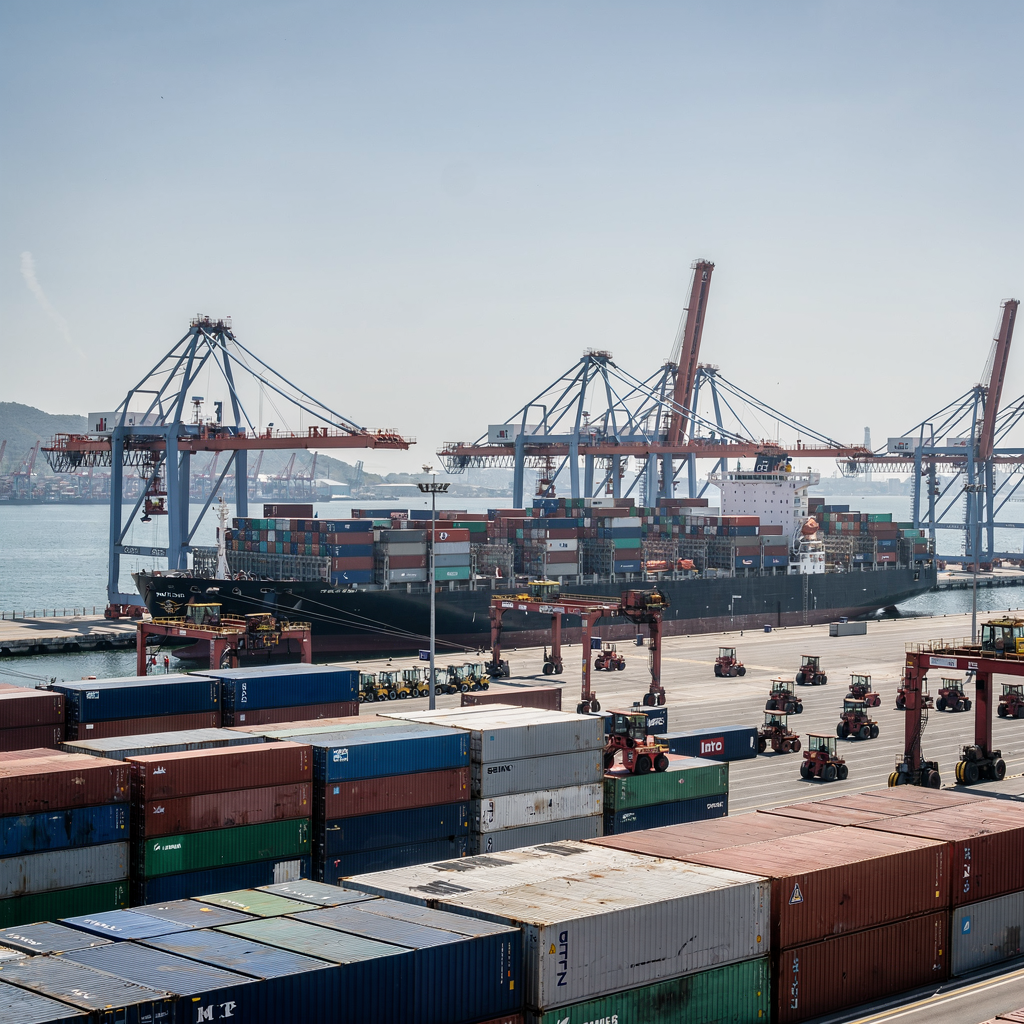
Drowning in a full terminal with replans, exceptions and last-minute changes?
Discover what AI-driven planning can do for your terminal
Model and Simulation Model Approaches for Restow Cost Optimisation
Mathematical model development underpins cost-aware vessel planning. Early work argued that “a decision support system for port planning must integrate restow cost considerations” [Fan, 2002]. Practitioners now combine linear programming and integer programming to formulate stowage allocation and crane scheduling. A linear programming relaxation often guides initial solutions. Then integer constraints enforce discrete placements and moves. Genetic algorithm and combinatorial heuristics refine these plans when the problem scales up.
Simulation models let teams test plans before execution. A simulation model represents quay crane cycles, truck trips, and yard stacks. Planners can simulate “what-if” changes to allocations, berth schedules, or container mix. That reveals hidden costs of a plan that looks good on paper. For example, a plan that optimizes TEU density might increase rehandles in practice. Simulation shows this early. It saves time and money.
Optimisation uses multiple techniques. Exact methods solve small, structured instances. Heuristics and metaheuristics scale to realistic terminal sizes. A hybrid approach often works best. First, use linear programming to set baseline allocations. Next, apply a genetic algorithm to reshuffle high-impact blocks. Then, calibrate with a simulation model to verify robustness under stochastic arrivals.
Decision makers want objective, explainable outputs. A decision support system that couples model outputs with visualisation helps verify placement of containers and the cost of trade-offs. Loadmaster.ai’s approach trains RL agents in a digital twin so policies emerge from repeated simulate-test cycles. This reduces dependence on historic datasets while producing robust, cost-effective plans. For more on berth forecasting and schedule testing, see our predictive berth availability modeling guide predictive berth availability modeling. The combined use of model and simulation delivers plans that are both executable and resilient.
Computational and Discrete Event Simulation Techniques
Computational methods represent container handling at fine granularity. Discrete event simulation tracks events such as crane start, container unload, and truck arrival. This method models interactions among quay crane, yard, and gate processes. It helps planners see bottlenecks and verify crane scheduling rules. In practice, discrete event simulation replicates how a real terminal behaves under stochastic arrivals.
Key elements include quay crane cycles, truck moves, and yard stacking logic. A simulation traces yard stacks and the placement of containers over time. It shows where rehandles cluster and how straddle carriers or RTGs perform under different workloads. By matching simulated outputs with real telemetry, teams can calibrate and validate models. Calibration ensures that the simulated quay crane productivity and driver travel times reflect the terminal’s reality.
Real-time data feeds improve fidelity. Telemetry for quay crane position, gate timestamps, and truck GPS allow models to adjust predictions. That enables operational decisions at the dispatcher and helps planners adjust crane assignment and allocation rules. Computational experiments also support risk assessment and capacity planning. For example, a simulation can test the robustness of alternative stowage under peak TEU surges.
This work ties directly into terminal management and automation. By simulating crane assignment and job sequencing, operators can validate automated routines before deployment. The simulation also supports a verification loop to verify that policy changes indeed minimize travel, balance workload, and protect berth schedules. For methods that reduce empty gantry time and improve ASC productivity, see our article on automating stacking crane optimization automated stacking crane optimization. Finally, computational models here form the backbone of decision support tools used by planners and dispatchers.
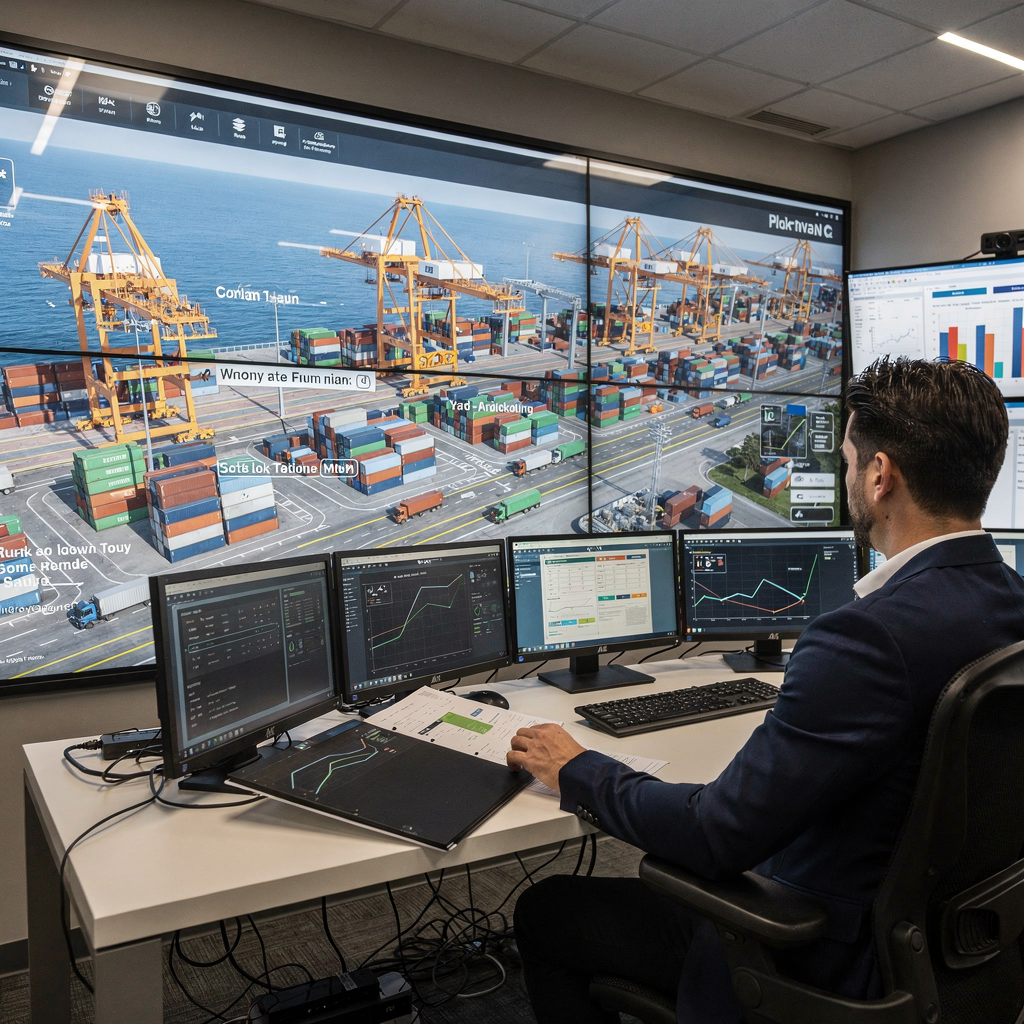
Drowning in a full terminal with replans, exceptions and last-minute changes?
Discover what AI-driven planning can do for your terminal
Real-Time Decision Support, Automation and Knowledge-Based Systems
A modern decision support system must operate in real-time. It should ingest information and data from TOS feeds, crane telemetry, and gate systems. The system then recommends operational decisions and reroutes moves. Loadmaster.ai embeds three agents for closed-loop control: StowAI for vessel stowage, StackAI for yard placement, and JobAI for execution. These agents learn policies in a digital twin, avoiding dependence on historical datasets.
Knowledge-based systems complement learning agents. They codify rules, safety checks, and hard constraints. Together, the AI agents and knowledge-based systems collaborate. The combination ensures explainable, enforceable plans for the decision-maker. For example, StowAI proposes sequences that minimize shifters while keeping crane productivity high. StackAI balances yard density and reduces travel times. JobAI organizes real-time dispatch to keep equipment busy and wait times low.
Automation matters when speed and scale increase. Robotic moves or semi-automated straddle carriers execute short-term plans without human delay. That said, stakeholder alignment remains critical. Terminals must set KPI weights and guardrails so automation aligns with business rules. Planners need tools to verify or override AI recommendations quickly. The system must also support deployment with audit trails and governance to meet regulatory requirements, including EU AI Act readiness.
For terminals seeking operational enhancement, combining real-time agents with visualization enables faster, more consistent choices. This reduces firefighting and stabilizes performance across shifts. If you want practical ways to cut internal transport energy and moves, review our piece on optimizing equipment moves to save fuel equipment move optimization. Ultimately, AI-driven automation and knowledge systems produce resilient planning that adapts to delays, breakdowns, and changing vessel mixes.
Case Study: Stakeholder Communication, Mitigation and Resilience in Port Planning
This case study explores how one major European terminal approached restow cost reduction. The terminal used modelling and simulation to test alternative stowage rules. The project combined a simulation model, optimisation heuristics, and stakeholder workshops. Planners, quay operations, and ground handlers met to review scenarios. They compared baseline plans to AI-suggested sequences and examined impacts on berth schedules, gate throughput, and yard stacks.
Results showed measurable gains. The terminal reduced rehandles, shortened vessel port stay, and improved productivity by an estimated 10–12% [Antwerp findings]. Stakeholder communication proved essential. Regular briefings helped terminations of proposed changes, clarified KPIs, and aligned operational priorities. The simulation confirmed that minor changes to placement of high-priority exports could minimize future restows and protect quay crane cycles.
Mitigation measures focused on building resilience. The team created alternative stowage plans and buffer zones in yard stacks. They also introduced flexible crane scheduling and contingency allocations to handle congestion. To support these changes, a knowledge-based system captured rules and a decision support system presented trade-offs to the planner. This ensured that decisions made during daily operations remained consistent with strategic goals.
Finally, the project highlighted the value of closed-loop learning. By training policies in a sandbox, the terminal verified experimental results before deployment. The approach reduced risk and preserved operational continuity. For terminals interested in job-level dispatch improvements, our article on ASC job scheduling and yard optimization explains relevant tactics ASC job scheduling. This case study shows that cross-stakeholder alignment, simulation validation, and iterative deployment create cost-effective, resilient operations at a deep-sea container port.
FAQ
What is a restow cost and why does it matter?
Restow cost refers to the extra moves and resources used to access containers blocked by others. It matters because each restow adds labour, equipment time, and berth occupation, which can delay sailings and raise handling costs.
How do simulation models help planners reduce rehandles?
Simulation models reproduce real terminal events so planners can test “what-if” scenarios. They reveal where rehandles cluster and allow teams to compare alternative stowage and allocation plans before execution.
What optimisation techniques work for stowage planning?
Planners use a mix of linear programming, integer programming, heuristics, and genetic algorithm approaches. Exact methods handle small instances; metaheuristics scale for large, combinatorial settings.
Can AI work without historical datasets?
Yes. Reinforcement learning agents can be trained in a digital twin by simulating millions of decisions. This cold-start approach avoids inheriting past mistakes from noisy datasets.
How do real-time systems interact with human planners?
Real-time systems provide recommendations, visualisations, and actionable alerts while preserving human oversight. Planners set KPI weights and guardrails so the system aligns with operational rules.
What role do quay cranes play in reducing port stay?
Quay crane scheduling directly affects how fast a vessel is served. Better crane assignment and balanced workloads reduce idle time, speed unload and load cycles, and thus shorten port stay.
How does stakeholder communication improve deployment?
Frequent workshops and shared simulation results help stakeholders agree on trade-offs and mitigation plans. Clear communication speeds adoption and reduces friction during deployment.
Is automation safe for live terminal use?
Yes, when paired with hard constraints, audit trails, and explainable KPIs. Safe deployment uses sandbox testing, staged rollouts, and continuous monitoring to verify outcomes.
What are practical mitigation measures for peak congestion?
Create buffer zones in yard stacks, prepare alternative stowage plans, and reweight KPIs to protect quay productivity. These steps increase resilience during surges.
Where can I learn more about stacking and equipment optimisation?
Our resources cover container stacking optimisation, equipment move savings, and berth prediction. For focused reading, see our article on container stacking optimization techniques container stacking optimization.
our products
 stowAI
 stackAI
 jobAI
jobAI
Innovates vessel planning. Faster rotation time of ships, increased flexibility towards shipping lines and customers.
Build the stack in the most efficient way. Increase moves per hour by reducing shifters and increase crane efficiency.
Get the most out of your equipment. Increase moves per hour by minimising waste and delays.
stowAI
Innovates vessel planning. Faster rotation time of ships, increased flexibility towards shipping lines and customers.
stackAI
Build the stack in the most efficient way. Increase moves per hour by reducing shifters and increase crane efficiency.
jobAI
Get the most out of your equipment. Increase moves per hour by minimising waste and delays.