
Terminal Transformation: The Case for Reskilling
Ports are changing fast. Automation is driving that change. As a result, the nature of work at the container terminal shifts from manual lifts to digital tasks. For example, leading hubs such as Rotterdam and Antwerp are moving toward high degrees of mechanisation. Some studies show automation levels in those hubs reach as high as 70–80% in specific blocks, which forces a rethink of roles and training (Rotterdam/Antwerp automation levels). Therefore, terminal leaders must plan for people as well as machines.
That planning must acknowledge hard numbers. Research suggests manual handling tasks could fall by 40–60% once terminals adopt widespread mechanised flows and autonomous vehicles (handling reduction estimates). Also, ports with early automation pilots report a shift in demand toward technicians, IT staff, and supervisors. Consequently, the pressure to reskill dockworkers and planners is real. For example, an industry review found that automation can turn heavy lifting roles into supervision and system-control roles (Container Terminal Automation study).
Reskilling is more than training. It is a cultural move. Terminal operators must work with unions and port authorities to design fair transitions. Otherwise, the risk is social friction and slow adoption. For ports, staying competitive matters. Thus, a proactive approach that blends technical training, safety refreshers, and career planning makes terminals more resilient.
In short, the terminal transformation demands active human investment. Staff need digital skills, safety awareness, and system thinking. Also, as terminals incorporate automated stacking cranes, automated guided vehicles, and remote-control crane interfaces, new job profiles emerge. Therefore, reskilling is the primary lever to keep port labour relevant, protect livelihoods, and preserve port efficiency while terminals pursue greater productivity and sustainability.
Port Automation Trends: Workforce Implications
Automation brings new machines to the quay and yard. Automated guided vehicles and remote-control cranes now work alongside human crews. In addition, AI-driven gate systems check credentials and speed entry. As a result, the skill mix on a container terminal is changing fast. For example, ports that introduce automated container flows then need more technicians and planners. An industry-backed report found a roughly 30% rise in demand for IT and technical skills within five years of automation adoption (ITF Transport 2040).
Next, automation also affects operational metrics. Terminals see gains in moves per hour, and they often reduce turnaround time for trucks. However, these gains require staff who can manage software, monitor systems, and troubleshoot networks. Thus, reskilling must include basics like radio frequency troubleshooting, cybersecurity awareness, and real-time yard management skills. Also, terminals must prepare for new maintenance tasks tied to automated systems and cargo handling equipment.
Lessons come from many ports. San Pedro Bay, Shanghai, and European semi-automated hubs show similar patterns. First, the operator role becomes broader. Second, planners need better digital tools. Third, training that pairs simulation with on-the-job coaching shortens learning curves. For example, terminals that use AI-enabled simulations reduce onboarding time and raise operator confidence. Accordingly, training that mirrors real terminal scenarios works best.
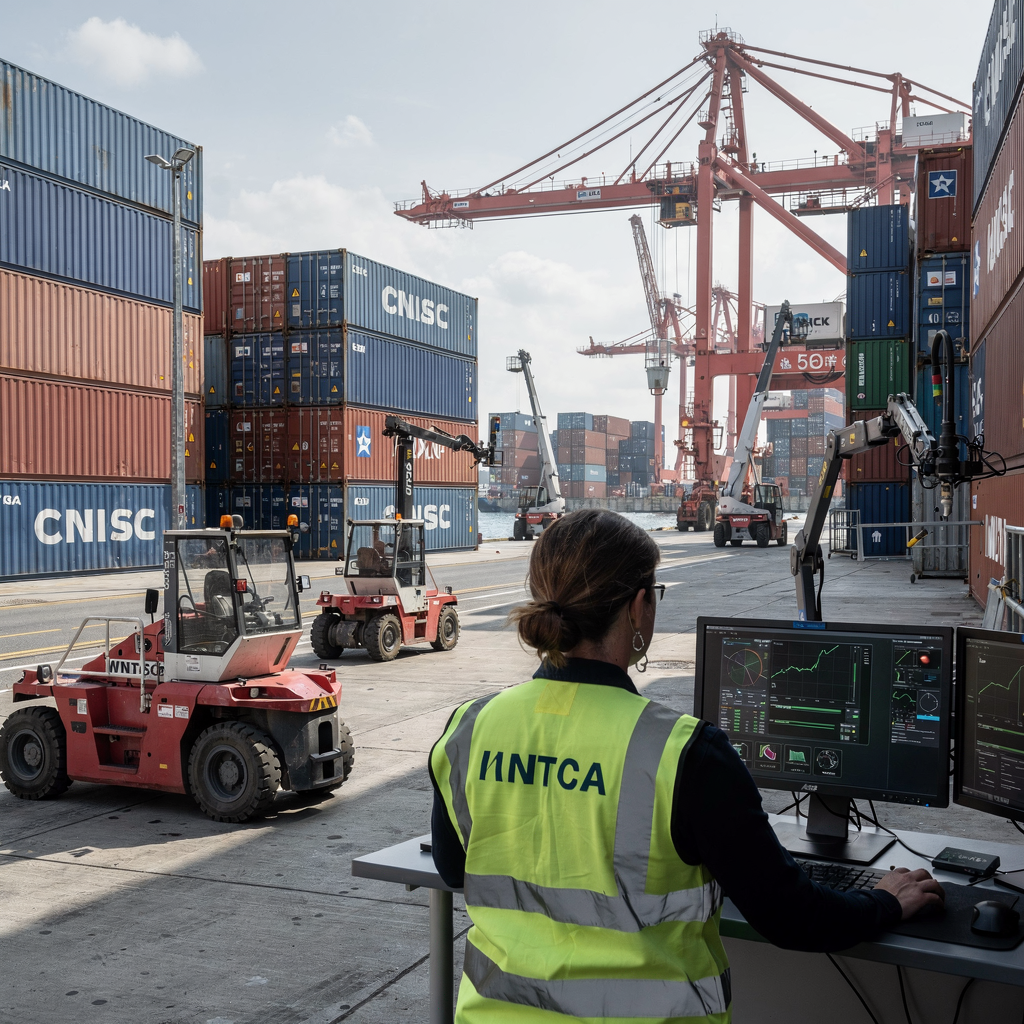
Finally, port authorities must balance technology with social responsibility. Training programs that focus only on machines risk losing skilled people.
Drowning in a full terminal with replans, exceptions and last-minute changes?
Discover what AI-driven planning can do for your terminal
Container Terminal Challenges: Skills Gaps and Barriers
The shift to automation exposes clear skills gaps. Many terminals report shortages in IT-savvy workers who can configure networks and secure systems. Also, technicians who can maintain ASCS and other electromechanical systems are scarce. During the COVID-19 peak, the sector suffered a roughly 25% shortfall in skilled port workers, which intensified the push for reskilling and recruitment (COVID-era labour shortfall). Therefore, ports must act fast.
Resistance to change is another barrier. Workers fear job loss and role erosion, and unions rightly press for guarantees. A leading researcher captured this social dimension: “The transition from strength to skill requires not only new capabilities but also a cultural shift within port labor communities” (research quote). Hence, effective programs combine technical instruction with career pathways and social protections.
Operational issues also matter. Inefficiency on a terminal can grow if new technologies are introduced without training. For instance, human intervention remains necessary to avoid misrouted containers, reduce rehandles, and prevent human error in exception cases. Consequently, training must include diagnostics for equipment downtime and procedures for manual overrides. In addition, port leaders should track metrics such as processing times, productivity, and retention to measure impact.
At the organisational level, culture matters. Long-standing practices, tribal knowledge, and informal coordination often sustain daily operations. Losing that knowledge when senior staff retire can create gaps. Therefore, knowledge capture, mentoring, and cross-training reduce risk. Also, a stakeholder-led approach involving terminal operators, unions, and port authorities ensures buy-in. Finally, blending classroom modules with shadowing helps workers adapt faster and keeps the terminal running smoothly during the transition.
Automation Technologies: Defining New Competencies
As terminals automate, the demand for new competencies rises. Workers now need skills in robotics maintenance, data analytics, and network security. Also, familiarity with automated guided vehicles and AGVs in yard flows is becoming essential. In addition, technicians must know how to inspect sensors, maintain EV chassis for automated trucks, and service cargo handling equipment. Thus, technical curricula must widen.
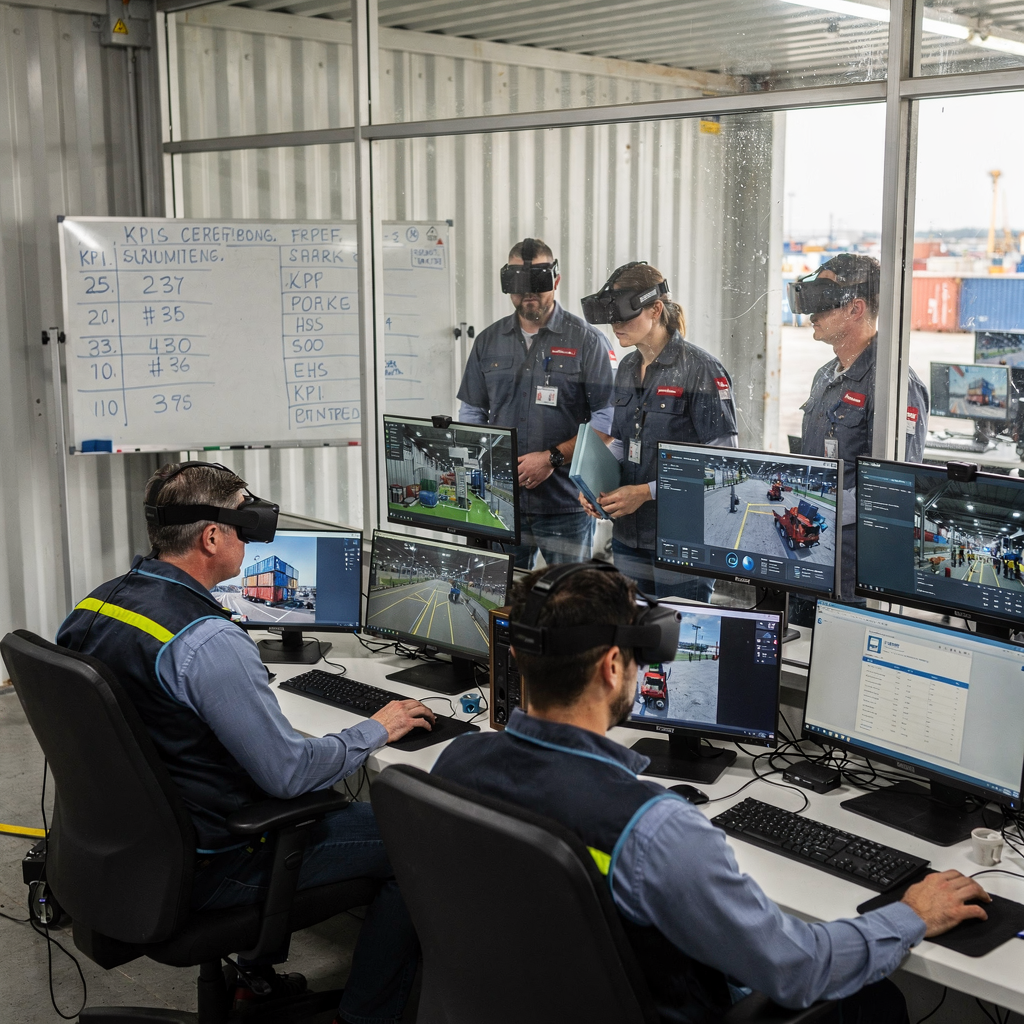
Artificial intelligence plays a role too. Planners and operators must understand how AI recommends moves and sequences. In that sense, practical training that includes AI-driven simulators or virtual reality reduces risk and teaches decision-making without disrupting live operations. For example, terminals can use simulation to practice responses to congestion, equipment downtime, or berth delays. This helps staff understand how an automation system behaves and where human judgement remains critical.
Certification pathways also help. Accredited training in cybersecurity, radio frequency identification, and ASCS maintenance proves competence. Moreover, short courses on network security reduce risks from cyber threats. In fact, ports must plan for cybersecurity as a core skill to protect systems and shipment flows. Finally, soft skills matter. Communication, teamwork, and problem solving improve collaboration between on-site crews and remote control rooms.
For practical implementation, terminals can partner with technology providers to co-develop courses. For instance, Loadmaster.ai works with terminal operators to model operations in a digital twin, then tests policies before live deployment. This hands-on method trains staff on AI recommendations, and it helps reduce rehandles while protecting productivity. Also, terminals benefit when training connects to live KPIs such as optimize operations, reduce congestion, and improve safety. In short, well-designed competency programs prepare people for the future without sacrificing current port performance.
Drowning in a full terminal with replans, exceptions and last-minute changes?
Discover what AI-driven planning can do for your terminal
Automate to Empower: Reskilling Strategies
Reskilling should be strategic. First, terminals need collaborative programmes where terminal operators, unions, and tech providers co-create curricula. Such collaboration helps align skills with the terminal’s operational goals and avoids redundant training. For example, co-designed modules that focus on troubleshooting an automation system or on dynamic slotting improve both confidence and competence. See our guide on decentralized AI agents for integrated quay, yard and gate coordination for practical context decentralized AI coordination.
Second, incremental learning works best. Introduce technologies in phases. Pair classroom lessons with on-the-job shadowing and simulation exercises. For instance, a blended pathway could start with VR sessions for crane ergonomics, then move to supervised remote crane control, and finally to independent operation. This staged approach reduces risk and keeps productivity steady. Also, portable micro-credentials speed time-to-competence and encourage continuous improvement.
Third, invest in tools that accelerate learning. AI-driven simulators and scenario-based training compress experience into shorter timeframes. In many terminals, scenario training reduces onboarding times by up to 20% while improving safety records. Moreover, practical exercises that reproduce congested conditions or berth delays teach staff to prioritise moves and to maintain service levels. To learn more about dynamic yard strategies, explore our work on dynamic slotting in container port yards dynamic slotting.
Finally, ensure career pathways. Workers should see that new roles lead to better pay and clearer career progression. That helps reduce resistance and keeps talent in the sector. Also, training that includes sustainability elements helps terminals meet greenhouse gas emissions targets while improving cost savings. Overall, reskilling turns automation into empowerment, not displacement.
Streamline Operations through Continuous Learning
Long-term success requires a culture of continuous learning. Terminals that build lifelong learning into their operations stay adaptable. First, establish regular upskilling windows. Second, measure training outcomes with clear KPIs. For example, track retention rates, productivity gains, equipment downtime, and safety incidents. These metrics show whether reskilling reduces inefficiency and whether it helps optimize operations. In addition, scenario-based capacity exercises can reveal gaps before they affect throughput.
Also, create feedback loops. Use digital twins and simulation to test process changes. Loadmaster.ai’s approach of training RL agents in a sandbox mirrors that method, and it allows human teams to learn alongside the system before changes go live. For more on simulation-led learning, see our explanation of explainable AI for planners explainable AI for planners. This kind of learning reduces surprise and builds trust between humans and algorithmic policies.
Policy design matters too. Port authorities and terminal operators should fund joint initiatives for continuous development. Public grants, apprenticeship credits, and employer-supported training can make lifelong learning affordable. Also, create career maps that link specific trainings to new roles and pay scales. This makes the path forward clear for displaced workers.
Finally, align learning with sustainability and competitiveness. Training on EV maintenance, energy-efficient practices, and reduced rehandles supports a sustainable future and lower greenhouse gas emissions. Likewise, cross-training in intermodal coordination and yard management improves turnaround time and reduces congestion. A proactive approach to reskilling therefore safeguards livelihoods and boosts port competitiveness while helping terminals become fully automated where appropriate.
FAQ
What skills do port workers need as terminals automate?
Port workers will need technical skills such as robotics maintenance, data analytics, and basic cybersecurity. They will also benefit from soft skills like teamwork, problem solving, and communication to work effectively with AI tools and remote operators.
How much can automation reduce manual handling jobs at a container terminal?
Studies indicate manual handling tasks can drop by about 40–60% depending on automation levels and layout. Terminals with high mechanisation see the biggest reductions, while other roles evolve rather than disappear.
Will automation replace dockworkers completely?
No. Automation changes tasks more than it eliminates them. Many roles shift to supervision, technical maintenance, and system control. Training and reskilling can help dockworkers move into these new positions.
How should terminals design reskilling programmes?
Design programmes through collaboration among terminal operators, unions, and tech providers. Use phased learning, simulation, and on-the-job coaching. Also, tie micro-credentials to career advancement to encourage participation.
Can simulation reduce onboarding time?
Yes. AI-driven simulators and scenario-based training compress real-world experience safely. Many terminals report meaningful reductions in onboarding time and improved safety.
What role do terminal operators and port authorities play?
Terminal operators must implement practical training and performance metrics. Port authorities should enable funding, policy support, and stakeholder coordination. Together they reduce disruption and protect livelihoods.
How does cybersecurity factor into reskilling?
Cybersecurity is essential as operations digitise. Workers need basic training in network hygiene, incident response, and radio frequency systems to protect automated and connected equipment.
Are there examples of successful reskilling efforts?
Yes. Collaborative training initiatives backed by industry groups and labour federations have shortened onboarding and increased technical staffing. These programs combine classroom learning with real terminal scenarios.
How can terminals measure reskilling success?
Use metrics such as retention rates, productivity improvements, reduced equipment downtime, and fewer rehandles. Tracking these KPIs shows whether training translates into better terminal performance.
Vendors can provide simulation tools, explainable AI, and sandbox environments for safe practice. They can also co-develop curricula with terminals so that training aligns with live operational needs.
our products
 stowAI
 stackAI
 jobAI
jobAI
Innovates vessel planning. Faster rotation time of ships, increased flexibility towards shipping lines and customers.
Build the stack in the most efficient way. Increase moves per hour by reducing shifters and increase crane efficiency.
Get the most out of your equipment. Increase moves per hour by minimising waste and delays.
stowAI
Innovates vessel planning. Faster rotation time of ships, increased flexibility towards shipping lines and customers.
stackAI
Build the stack in the most efficient way. Increase moves per hour by reducing shifters and increase crane efficiency.
jobAI
Get the most out of your equipment. Increase moves per hour by minimising waste and delays.