
Terminal Operations: Defining Unproductive Moves
Unproductive container moves happen when a CONTAINER is handled without directly loading or unloading cargo. They include repositioning, reshuffling, and extra lifts that add no value. These moves increase cost and slow vessel turnaround. They also accelerate wear on handling equipment. For example, studies show unproductive moves can represent up to 20–30% of total moves in a yard, which reduces terminal productivity and raises operating cost (Heuristic, Hybrid, and LLM-Assisted Heuristics for Container Yard …). This statistic highlights how common the inefficiency is.
Causes range from mismatched truck arrival patterns to poor stacking strategies. When the arrival sequence of trucks does not match the stacking order, operators must reshuffle containers. This creates delays, and it increases the number of TEU moves that do not move cargo toward a vessel. Equipment cycles rise, and throughput drops. In some terminals, better synchronization reduced unproductive moves by about 18% and improved operational efficiency (Integrated optimization of truck appointment quotas …). The evidence supports targeted changes in scheduling and yard planning.
Quantifying the impact helps prioritize fixes. Unproductive moves lengthen turnaround time. They also add to maintenance costs for cranes and yard machinery. For terminals that track cost per move, the extra lifts can add 10–25% to handling cost per box. Also, congestion in the storage yard increases waiting time for trucks or trains, which reduces throughput and harms the global supply chain. Terminal operators who measure gross moves per hour can spot these patterns quickly (case evidence).
Industry benchmarks vary by port and by automation level. Automated container terminal sites report lower unproductive ratios. Manual or semi-automated operations often have higher reshuffle counts. To compare, collect baseline metrics such as number of containers handled per shift, proportion of extra lifts, and average crane idle time. Then track changes after interventions. Terminal operators should also measure the number of containers that require relocation per vessel call. Doing so reveals bottleneck areas and makes areas for improvement visible.
Finally, data-driven triage matters. If emails and alerts about yard issues are slow to reach planners, corrective action lags. Systems that automate operational email, extract intent, and route tasks can reduce human delay and improve response. This frees planners to focus on reducing unproductive moves and improving terminal efficiency.
Container Yard Optimization, Stack Planning and Container Stacking Strategies
Yard layout and slot allocation determine how often you must reshuffle. A compact layout with clear lanes reduces travel time. Yet, space constraints force trade-offs. When available space is limited, careful STACK planning is required to minimize the relocation problem. Slot allocation must balance density with accessibility. Good allocation reduces the sequence of container changes that require extra lifts. To achieve this, terminals apply optimization routines that group containers by expected retrieval sequence and by size and weight.
Under uncertain data, heuristic and hybrid strategies shine. Heuristic approaches provide fast, practical rules for stack placement, while hybrid algorithms add search and learning layers to adjust to changing yard conditions. Research shows that applying these techniques cut unproductive moves by 15–25% in some case studies (Heuristic, Hybrid, and LLM-Assisted Heuristics for Container Yard …). That is a substantial gain for terminals that need to increase throughput without expanding available space. In practice, operators test multiple stacking heuristics and compare lifts-per-container metrics to choose the best rule set.
Stack sequencing techniques emphasize retrieval-friendly placement. By anticipating the sequence of container retrieval and by storing frequently accessed boxes near gate lanes, terminals minimize reshuffles. Tools that forecast arrivals and modal changes feed this process. For further context, see advanced yard planning and decision support tools that integrate vessel and yard plans (integrating vessel and yard planning). These systems help allocate slots so that the arrangement of containers aligns with truck appointment patterns and with berth windows.
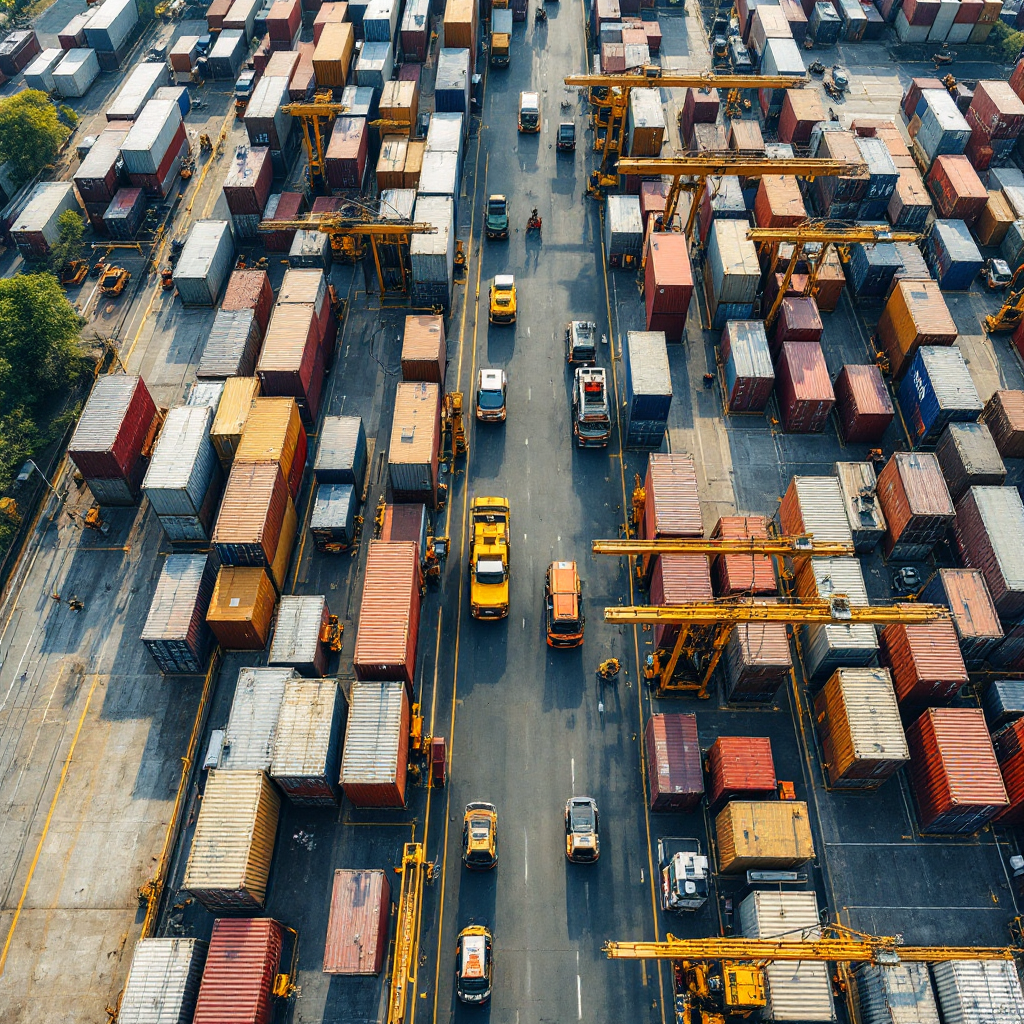
Container storage strategy also matters. When container is stored for a long dwell, it should be placed to avoid blocking short-dwell boxes. This reduces container relocation and lowers crane idle time. Container stacking must also respect weight and safety rules. Terminal operators can pair stacking heuristics with machine learning models that predict arrival sequences. That hybrid approach improves retrieval rates and it helps to optimize container placement in the storage area.
Finally, testing and iteration are key. Pilots should measure handling operations, number of containers that require relocation, and TEU throughput before and after changes. Linking yard performance to berth planning improves entire terminal operations. For deeper methods on yard planning, see the next-generation yard planning software and decision support research (yard planning decision support). These links offer practical steps to optimize container stacks and to reduce the need to move boxes more than necessary.
Drowning in a full terminal with replans, exceptions and last-minute changes?
Discover what AI-driven planning can do for your terminal
Real-time Yard Management for Visibility and Control
Real-time visibility turns reactive work into proactive action. A digital twin and IoT sensors feed live position and status for every container and for each truck. Together, they form a continuous picture that reduces surprises. This is critical because terminals operate with uncertain arrival patterns, and because yard conditions change fast. Real-time data enables planners to reroute equipment, to adjust slot allocation, and to lower the number of unproductive moves.
Integrating data from RTGs, AGVs, yard crane systems, and truck appointment platforms creates a single source of truth. That single truth supports dashboards that present KPIs, alerts, and recommended actions. Dashboards improve visibility and control, and they help terminal operators make quicker, more accurate decisions. For implementations focused on predictive repositioning, see predictive equipment repositioning studies which detail how pre-positioning tasks can minimize non-productive moves (predictive equipment repositioning).
Real-time container tracking also helps in retrieval planning. When the system knows which container must be retrieved next, it can tell yard teams where to stage machines and how to sequence lifts. This reduces unnecessary travel and improves the efficiency of container operations. In automated container terminal settings, the effect is even stronger because machines follow precise routes and timings. Still, even semi-automated yards benefit from real-time routing and job scheduling for autonomous equipment (real-time job scheduling).
In addition, real-time yard tools reduce human email and task friction. When alerts from gate systems or vessel changes are common, operations teams receive many emails and messages. Automating this flow with AI agents can route issues and draft responses so planners can act faster. Faster responses mean fewer reshuffles, and therefore better terminal productivity.
To maintain steady throughput, the operator must monitor crane cycles and yard crane availability. Watching these metrics in real-time prevents bottleneck formation. It also allows the operator to reassign tasks and to rebalance container allocation across the storage yard. The result is improved terminal efficiency, lower handling costs, and a smaller carbon footprint due to fewer unnecessary container movements.
Heuristic Optimization in Container Terminal Operations
Heuristic methods address practical constraints fast. They provide rules that produce good stack layouts and retrieval sequences without excessive compute time. Heuristic algorithms are effective when data is noisy or incomplete, and they scale well for large yards. For many terminals, combining heuristics with meta-heuristic search yields better outcomes. For example, simulated annealing or tabu search layers can refine stack decisions that heuristics first propose. This hybrid approach improves terminal operations and reduces the number of container relocations.
Machine learning adds adaptive power. ML can predict truck arrival windows, dwell times, and modal shifts in cargo flow. When learning models feed heuristics, the system adapts to current traffic and to changes in container traffic. Research has shown that hybrid and LLM-assisted heuristics offer tangible gains in reducing unproductive moves and in improving handling operations (evidence on heuristics and hybrids). That combination also helps solve the relocation problem more robustly under uncertainty.
Practical constraints remain. Terminal planners must consider handling equipment availability, safety rules, TEU weight distribution, and available space. Also, algorithms must produce output that operators can trust and act upon quickly. Clear visualization and scenario testing help build trust. Performance gains vary, but case studies show up to 15–25% reductions in unproductive moves when heuristics are matched with better appointment systems and stack policies (integrated optimization study).
When implementing these solutions, use phased pilots. Start with non-critical stacks, then expand to more active storage zones. Track retrieval of containers within the stack and the number of extra lifts per retrieval. Use those metrics to refine the heuristic rules. In many ports, this iterative approach improved terminal productivity while avoiding major disruptions to daily operations. Also, collaboration with terminal operators ensures the optimization respects local rules and safety practices.
Drowning in a full terminal with replans, exceptions and last-minute changes?
Discover what AI-driven planning can do for your terminal
Supply Chain Coordination and Berth Allocation
Synchronization across the supply chain reduces misalignments. When truck appointments mirror berth schedules, the number of reshuffles falls. Integrated truck appointment systems align external arrivals with the stacking order. They also smooth gate flows and reduce dwell time in the storage yard. Research highlights that “the inconsistency between the arrival order of external trucks and the stacking order of imported containers results in numerous unproductive container moves” (source). Fixing that mismatch yields measurable gains.
Berth allocation plays a strong role. If berth windows are tight, cranes rush and stacking decisions become short-term. Better berth planning reduces pressure on the yard, and it lowers the need to reshuffle containers for quick vessel calls. For berth call optimization strategies and examples, see related berth planning work which explains how improved berth allocation lifts yard performance (berth call optimization). Coordinating across shipping lines, hauliers, and terminal operators ensures that container allocation and arrival sequences are harmonized. This collaboration reduces the arrangement of containers that conflict with truck arrival sequences and with vessel needs.
Integrated allocation policies also support intermodal flow. When trucks or trains are scheduled in advance and when the allocation of containers considers modal transfer times, retrieval sequencing becomes smoother. The result is fewer extra lifts and higher terminal productivity. A systemic policy that links berth, yard, and gate planning reduces the bottleneck at the interface between vessel and yard. It also improves the efficiency and precision of container movements across the terminal.
Finally, metrics matter. Measure reductions in reshuffles, TEU throughput changes, and handling cost per TEU. Those KPIs prove the value of the coordination effort. Terminals that read these metrics can continue to refine allocation policies. In many cases, modest changes to allocation rules cut the number of unproductive moves and improved turnaround across the whole port ecosystem.
Terminal Operating Excellence in Maritime Logistics: Ensuring Every Container in Container Port
Adopting a systemic approach improves terminal efficiency and sustainability. Every intervention must align with yard planning, berth scheduling, and supply chain coordination. AI, automation, and electrification work together to optimize container flow and to reduce energy use. When systems are integrated, terminal operating practices shift from firefighting to steady-state control. For example, predictive tools help optimize terminal operator tasks and improve decision loops.
AI-driven automation touches multiple layers. It helps with email and exception handling, it informs allocation decisions, and it suggests crane and yard crane work plans. As a result, teams reduce time wasted on manual lookups and on routing messy requests. This frees human planners to focus on higher-value tasks such as strategy and yard planning.
Looking ahead, real-time operations and predictive analytics will dominate the future of container yard work. Tools that forecast modal shifts and that recommend pre-positioning of handling equipment reduce unnecessary container movements. For those interested in predictive analytics and scheduled port-of-discharge planning, related research provides practical guidance and examples of measurable gains (predictive analytics for POD planning). The combination of heuristic optimization, real-time data, and supply chain coordination yields steady improvements in terminal productivity and terminal efficiency.
To minimize the number of unproductive moves, terminals must align stack policy with appointment systems, with berth allocation, and with equipment scheduling. This integration reduces the relocation problem and supports reliable throughput. It also lowers handling costs and reduces carbon emissions through fewer lifts. Port terminals that invest in these capabilities will enjoy better performance, and they will strengthen their role in the global supply chain.
FAQ
What are unproductive container moves?
Unproductive container moves are relocations or lifts that do not directly advance cargo to a vessel or a gate. They include reshuffles, repositioning for access, and other moves that add cost without moving cargo closer to its destination.
How much can terminals reduce unproductive moves?
Case studies show reductions in the range of 15–25% after applying integrated scheduling and stacking strategies. One study reported an approximate 18% cut from better synchronization of truck appointments and stack planning (study).
Can automation eliminate reshuffles?
Automation lowers reshuffles but does not eliminate them entirely. Automated container terminal systems reduce human error and improve precision, which cuts unproductive moves, yet planning and data quality still matter.
Are heuristics useful for yard planning?
Yes. Heuristic rules are fast and robust under noisy data. When combined with learning or meta-heuristics, they reduce extra lifts and improve retrieval sequencing (evidence).
How does berth allocation affect yard moves?
Poor berth allocation increases pressure on cranes and forces short-term stacking that causes reshuffles. Coordinated berth and yard planning smooths work and lowers needless container relocation.
What role does real-time data play?
Real-time data provides visibility and control, which lets operators reroute equipment and adjust allocations quickly. It helps reduce surprises and it lowers the need for extra moves.
Can email automation help terminal operations?
Yes. Automating the email lifecycle reduces time lost on triage and manual lookups. That speeds decisions and gives planners more time to focus on reducing unproductive moves.
What metrics should terminals track to reduce unproductive moves?
Track extra lifts per retrieval, TEU throughput, crane cycles, and dwell time in the storage yard. These KPIs reveal bottlenecks and quantify improvements after changes.
Is stacking strategy different for automated yards?
Automated yards benefit from precise, repeatable placement, which reduces reshuffles. However, the same principles of retrieval-friendly stacking and alignment with appointments still apply.
How do supply chain partners help reduce reshuffles?
Sharing schedule and appointment data with shipping lines, hauliers, and terminal operators aligns arrival order and stacking plans. This reduces conflicts, lowers unnecessary container movements, and improves overall operational efficiency.
our products
 stowAI
 stackAI
 jobAI
jobAI
Innovates vessel planning. Faster rotation time of ships, increased flexibility towards shipping lines and customers.
Build the stack in the most efficient way. Increase moves per hour by reducing shifters and increase crane efficiency.
Get the most out of your equipment. Increase moves per hour by minimising waste and delays.
stowAI
Innovates vessel planning. Faster rotation time of ships, increased flexibility towards shipping lines and customers.
stackAI
Build the stack in the most efficient way. Increase moves per hour by reducing shifters and increase crane efficiency.
jobAI
Get the most out of your equipment. Increase moves per hour by minimising waste and delays.