
container terminal: Understanding Truck Turnaround Time
Truck Turnaround Time (TAT) appears in the chapter title and the acronym TAT will describe it from here on. TAT measures the period a vehicle spends from GATE entry to its departure after handling. It starts at arrival and ends at departure time. This interval covers gate processing, yard travel, container handling, and any required paperwork. Accurate TAT data helps terminal managers schedule resources and plan shifts. First, short TATs improve throughput. Second, they lower operational cost. Third, they reduce emission from idling trucks.
Terminals vary in performance. Major terminals report average ranges between 60 and 120 minutes per truck, which offers a baseline for benchmarking (60–120 minutes). Shorter TATs free berth space and help vessels sail on schedule, and shorter TATs reduce dwell in the yard. For planning, terminal operators track arrival patterns and service time per call. They also watch average waiting time at the gate and the waiting time of trucks at the yard. Simulation and statistical tools support these measurements, and these tools let teams test layout and staffing changes before spending capital.
Efficient TAT matters for three reasons. First, it increases capacity of container handling so the terminal can process more boxes per vessel call. For instance, studies estimate that each minute saved in container handling can boost terminal capacity by about 0.5% (0.5% per minute). Second, it lowers transportation cost for carriers and reduces cost of shipping a container by trimming delays and detention fees. Third, it cuts emissions from idling trucks and benefits communities living in and around the terminal.
Terminal managers and container terminal operators must monitor truck arrivals, the number of trucks queued, and vessel arrival schedules to match resources to demand. They should also coordinate with carriers and hinterland partners to flatten peak arrival times. Finally, teams that combine operational rules with real-time data tend to keep service time predictable and improve the flow of trucks through the gate.
congestion: Causes, Costs and Port Performance
Congestion at container terminals stems mainly from clustered truck arrivals and gate bottlenecks. When many vehicle arrivals occur near the same vessel arrival, gates clog. Then, trucks queue outside the terminal. This pattern of truck arrival causes long lines and idle engines. Peak-hour arrivals often generate truck congestion that spreads to city streets. As a result, terminals face lost productivity and higher operational costs.
The financial toll of delays adds quickly. A delay of about £40 (USD 50) per truck can escalate to thousands over time. For example, a handful of daily delays can translate into more than £16,000 (USD 20,000) a year for a single terminal when aggregated across many trucks (example cost data). Thus, cutting waiting time delivers tangible savings. Also, reducing the total waiting time for trucks improves carrier satisfaction and shortens cycle times for drayage fleets.
Environmental costs add another dimension. Each truck that idles releases CO₂ and NOx, and those emissions harm local air quality and public health. Research highlights that long TATs often increase emissions, and that reducing dwell at gates directly reduces port-area emissions (study on emissions and TAT). Consequently, green port goals and EU or national emissions targets often push terminals to act.
A real-world example illustrates the stakes. Port of Rotterdam has experienced spikes in gate queues that affected daily throughput and hinterland schedules. When congestion increased, carriers faced longer service time and trucks endured longer waiting time. Terminal operators responded by adjusting gate hours and piloting appointment rules, and those pilots helped reduce gate queues. At the same time, port congestion could get worse if terminals do not balance arrival time with yard capacity. Therefore, planners must measure and manage arrival time, monitor average waiting time, and use tools that anticipate surges in truck arrival pattern.
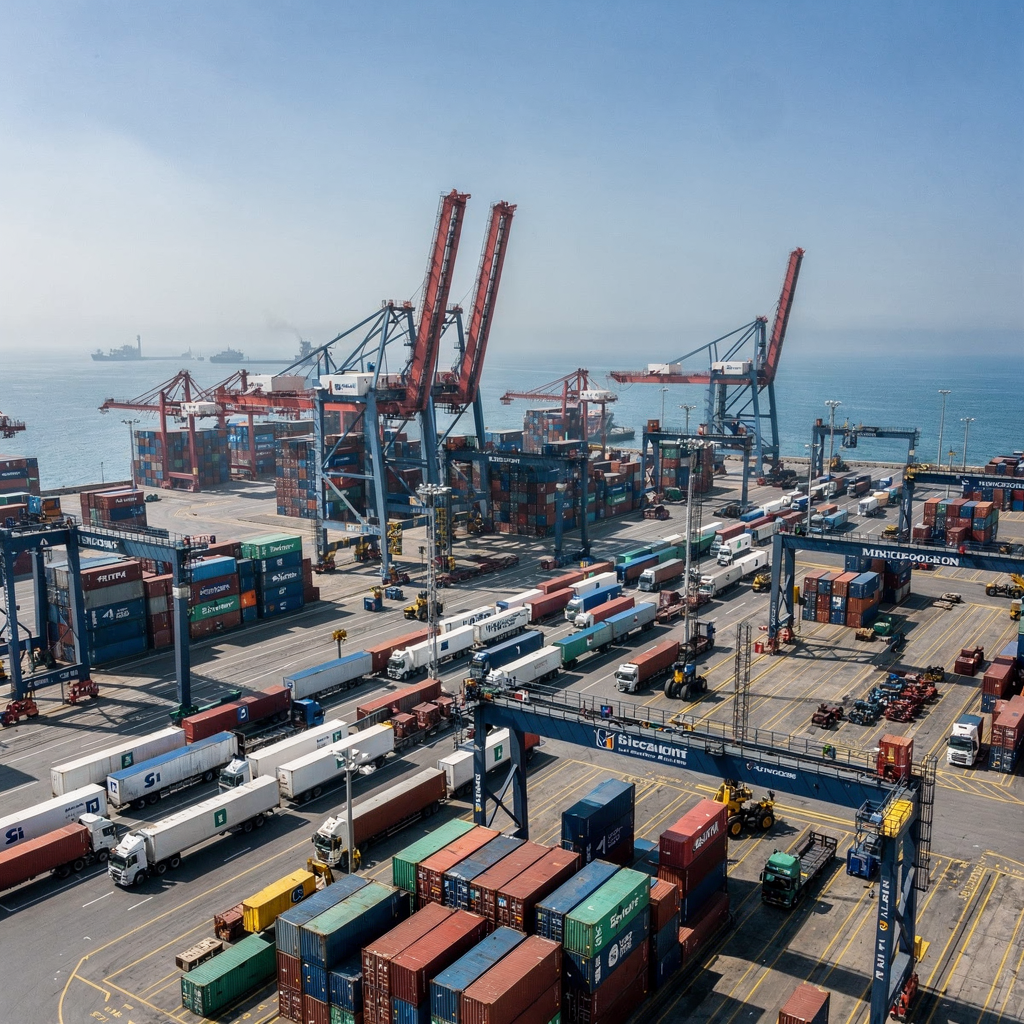
Drowning in a full terminal with replans, exceptions and last-minute changes?
Discover what AI-driven planning can do for your terminal
truck appointment: Scheduling to Smooth Traffic Flows
Truck appointment systems reduce peak pressure by allocating time slots before trucks enter. In practice, drivers book a slot and the terminal releases access for that window. This approach spreads arrivals, shortens queues, and stabilizes service time inside the yard. A well-designed appointment system uses dynamic quotas and real-time updates to adapt to vessel arrival shifts and yard congestion. Implementing a truck appointment system has shown marked benefits; research reports up to a 30% reduction in waiting times and about 20 minutes saved per truck on average (30% waiting time reduction).
Design matters. Best practices include balanced slot allocation across carriers, short time windows that match handling of containers, and a policy for no-shows. Also, terminals should allow controlled walk-ins to keep flexibility. An appointment system to regulate gate flow must tie into berth allocation and quay crane planning so that truck slots align with vessel lifts. For operators, integrating the slot tool with the TOS and carrier portals reduces confusion and speeds gate checks.
One major Asian container port implemented a truck appointment and quota system and reported smoother truck arrivals and improved gate throughput. In that case, container terminal operators coordinated with carriers and updated slots when vessel arrival times shifted. As a result, the terminal cut peak queues and reduced the average waiting time by notable margins. That rollout shows how coordinated rules and digital booking can manage the number of trucks during peak windows.
However, appointments must avoid over-centralization. If managers set rigid quotas that do not reflect daily demand, they risk underutilizing capacity. Also, the consequences of limiting truck arrivals can include longer vessel berths if trucks cannot access boxes in time. Therefore, terminals should pilot appointment policies and use data to tune quotas. For more on gate design and booking mechanics, see a technical primer on gate optimization explained.
Equipment and Yard Optimisation Strategies
Optimising quay and yard equipment reduces in-yard handling of containers and shortens gate cycles. Coordinated crane deployment and yard crane scheduling help trucks receive boxes faster. Terminal operators who synchronise quay crane lifts with yard crane sequences often lower the overall service time for each truck. In practice, that coordination reduces the internal delays that create peak gate queues.
Investment choices must rely on analysis. Simulation models allow teams to compare yard layouts, crane counts, and traffic patterns before committing capital. These simulation methodologies are developed to better predict yard congestion and to assist terminal operators in deciding whether to add lifts or reshape stacks. For example, using simulation, a terminal can evaluate yard cranes versus truck turn performance and decide which investment yields the best throughput gain (methodologies for reducing truck turn). Each minute saved in container handling is material; industry studies estimate a 0.5% capacity uplift per minute saved (0.5% per minute).
Layout choices also matter. Adjusting lanes, adding fast pickup rows, and designing direct routes for container trucks reduce yard travel and minimize the number of cranes a truck needs to wait on. Additionally, hybrid solutions that combine extra cranes at peak times with automated appointment quotas can smooth flows. For deep dives on quay crane productivity and planning, see research about optimising quay crane productivity in container terminals (optimising quay crane productivity).
Finally, synchronized equipment and clear operating rules reduce human friction. Terminal staff and carriers need consistent service time targets, and the TOS must route work to the right crane at the right time. If operators align resource pools dynamically, they can better accommodate the truck traffic that moves through the gate. Advanced approaches like dynamic equipment-pool allocation use live demand signals to reassign cranes and tractors, and these techniques can markedly cut total waiting time and handling of containers (dynamic equipment allocation).
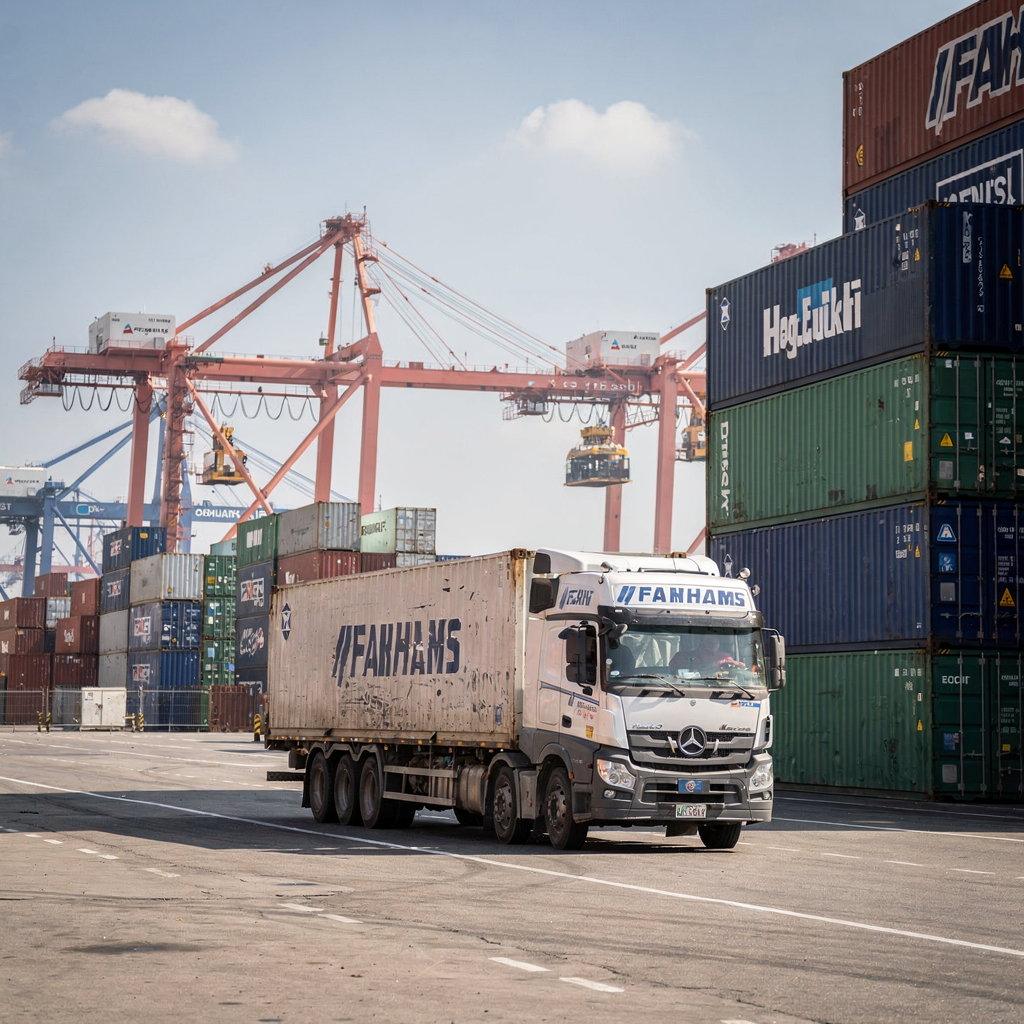
Drowning in a full terminal with replans, exceptions and last-minute changes?
Discover what AI-driven planning can do for your terminal
Real-Time Visibility and Data-Driven Predictive Models
Real-time visibility gives operators and drivers the context they need to avoid congested periods. Affordable tracking solutions and dock-management software provide live gate status, queue length, and estimated service time. These tools reduce uncertain waiting time and help dispatchers change plans before queues form. In fact, studies show that predictive scheduling and visibility can cut unplanned delays by roughly 15% through proactive rerouting and better slot use (study on predictive scheduling).
Deep learning models have improved TAT forecasts and the estimation of arrival time distributions. These models learn from historical gate scans, vessel arrival logs, and yard movements to predict when a specific truck will finish service. Using such forecasts, drivers avoid planned peak windows and carriers time their truck arrivals to fit slots. A recent deep learning study highlighted better TAT estimation and the potential for drivers to avoid congested times (deep learning estimation of TAT).
Integration matters. When carriers, terminal operator systems, and truckers share a feed, each party sees gate status and yard density. That shared feed reduces the chance of late arrivals and eliminates duplicate emails. This automation reduces manual triage and ensures accurate, traceable communications. As a result, teams can focus on exceptions rather than routine confirmations.
Additionally, small investments in sensors, RFID, and mobile apps help. Those investments bring the yard into a single pane for control-room staff. When combined with predictive analytics and simulation, terminals can test changes and then apply the best options in live operations. For more on predicting yard congestion and planning interventions, review work on predicting yard congestion in terminal operations (predicting yard congestion). Ultimately, data-driven visibility reduces the waiting time of trucks and helps terminals deliver consistent service time.
Environmental and Economic Benefits of Faster Turnaround
Faster truck processing improves both the bottom line and the air quality near terminals. First, reduced idling cuts emissions; less idling directly lowers CO₂ and NOx outputs. For communities close to terminals, this reduction improves air quality and supports social licence to operate. Second, efficient TAT raises capacity utilisation, which increases revenue per berth and per container. When a terminal speeds processing, it can handle more container via their terminals without physical expansion.
Cost savings follow. Shorter cycles reduce fuel consumption and lower maintenance costs for fleets. In addition, fewer detention charges and lower time-in-port fees help carriers and shippers. Each minute shaved off handling and gate checks compounds into per container savings and better predictability for inland transport. Terminals that streamline processes also cut administrative burden, and that reduces transportation cost across the chain.
Environmental policy plays a role. Many regulators and port authorities set emission targets that require terminals to act. By reducing truck dwell, terminals meet regulatory goals and improve their standing with regulators and the public. For example, appointment regimes and equipment optimisations count toward green port targets and can form part of compliance plans.
Finally, the economic case for change is strong. Research seeks to assist terminal operators by quantifying benefits and by showing how statistical and simulation methodologies can choose the best investments. Operators are taking measures to reduce their terminals’ truck turn, and those measures improve capacity of container handling while addressing problems associated with port congestion. Together, the environmental and economic benefits make a compelling argument for continuous improvement and for solutions that combine scheduling, real-time visibility, and automation tools.
FAQ
What is Truck Turnaround Time (TAT) and why does it matter?
TAT measures the interval from when a truck enters the terminal gate to when it exits after container handling. It matters because faster TAT increases throughput, cuts costs, and reduces emissions from idling trucks.
How much can a truck appointment reduce waiting time?
Research shows that a well-run truck appointment can cut waiting time by up to 30%, often saving around 20 minutes per truck on average (source). The actual gain depends on adherence, slot design, and integration with yard operations.
What tools help predict gate congestion?
Deep learning models, RFID tracking, and dock-management software help forecast gate queues and arrival time. These tools use historical scans and real-time inputs to predict busy periods and to guide drivers away from peaks (deep learning study).
Can adding cranes always reduce truck delays?
Adding cranes can cut container handling time, but benefits depend on yard layout and feeder resources. Simulation helps determine whether additional crane investment outperforms other changes like slot control or layout tweaks (methodologies).
How do ports measure success after changes?
Ports track metrics such as average waiting time, service time, gate throughput, and emissions from idling trucks. They also monitor carrier satisfaction and detention claims to assess operational and commercial impact.
What are common pitfalls when introducing appointment systems?
Pitfalls include rigid quotas that mismatch demand and poor communication to carriers. Terminals must allow flexibility, monitor no-shows, and integrate the system with berth and crane planning.
How does real-time visibility improve operations?
Real-time feeds let terminal staff and truckers see gate status and yard density, which reduces surprises and unplanned waits. When combined with automated messaging, teams avoid manual emails and respond faster to exceptions.
How do environmental goals link to turnaround improvements?
Reducing dwell and idling lowers CO₂ and NOx, helping terminals meet emissions targets. Faster TATs also reduce time trucks spend near residential areas, improving local air quality.
Can AI automate communication with carriers about bookings?
Yes. AI agents can read booking emails, confirm slots, and generate context-rich replies using ERP and TMS data.
Where can I read more about gate optimisation and yard congestion?
For deeper technical resources, see material on container terminal gate optimisation and yard congestion prediction, such as articles at LoadMaster that explain gate design and predictive yard analysis (gate optimisation) and (yard congestion prediction).
our products
 stowAI
 stackAI
 jobAI
jobAI
Innovates vessel planning. Faster rotation time of ships, increased flexibility towards shipping lines and customers.
Build the stack in the most efficient way. Increase moves per hour by reducing shifters and increase crane efficiency.
Get the most out of your equipment. Increase moves per hour by minimising waste and delays.
stowAI
Innovates vessel planning. Faster rotation time of ships, increased flexibility towards shipping lines and customers.
stackAI
Build the stack in the most efficient way. Increase moves per hour by reducing shifters and increase crane efficiency.
jobAI
Get the most out of your equipment. Increase moves per hour by minimising waste and delays.