
container terminals and twistlock handling: causes of crane idle time
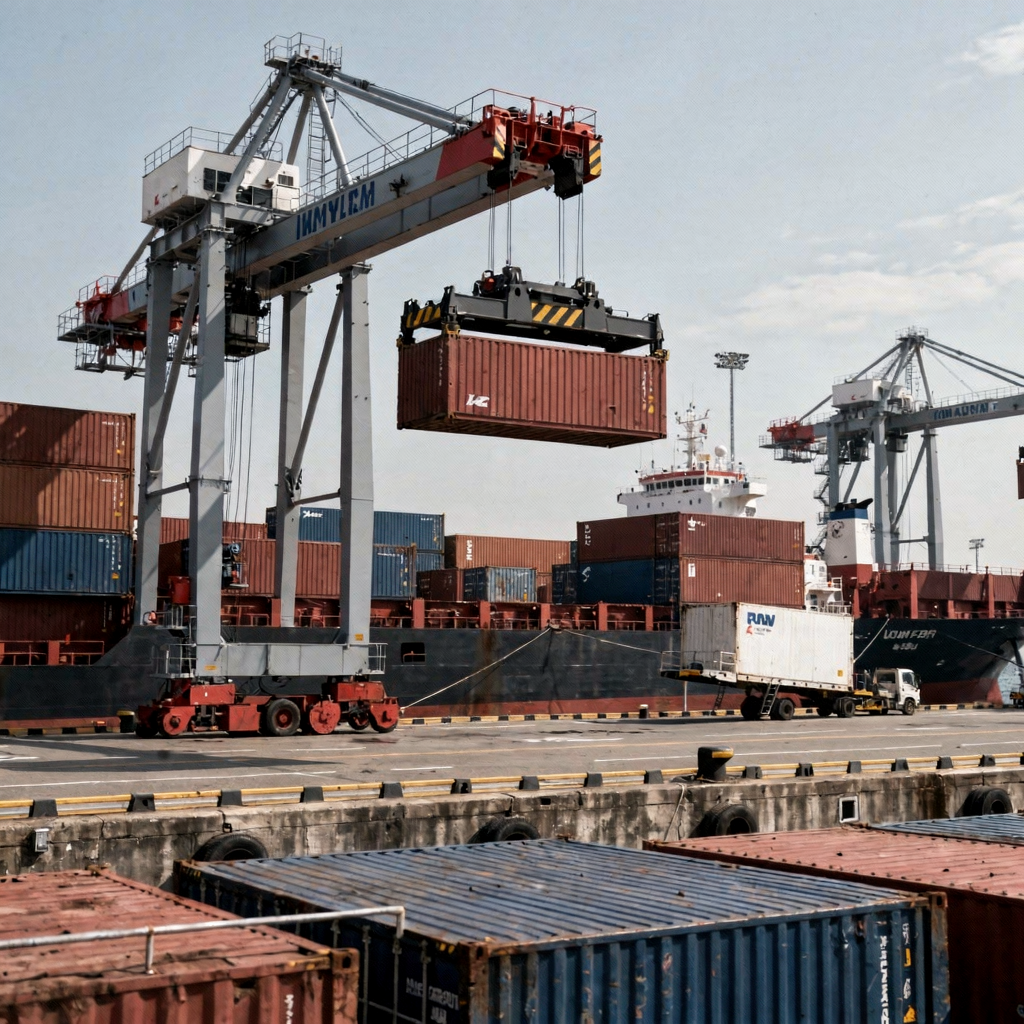
Crane idle time hits container terminals when spreader operations stop and waits stack up. And this pause matters because every minute off the hook pushes ship calls later and raises berth occupancy. A recent technical handbook documents “loss of time due to jammed twistlocks” and quantifies how stuck locking mechanisms add measurable delays to handling cycles Cranes – Design, Practice, and Maintenance. And studies observed that jammed twistlocks can account for 5–15% of active operation time during a lift sequence this source. So a terminal trying to optimise throughput must treat twistlock handling as a root cause for delays.
Manual engagement and manual handling of twistlocks increase variability and cause unplanned stops. And when a twistlock is placed incorrectly the spreader cannot release. Then the crane must pause while technicians climb and fix the latch. This situation creates downtime in container terminals and reduces moves per hour. A targeted analysis of port productivity links those interruptions to longer ship turnaround and lower hourly pick-and-place rates Increased port productivity and its impact on the Jamaican economy. And this makes the problem both operational and economic.
Terminal operators face trade-offs. They must balance safe manual fixes against the time required to resolve jams. And they must balance staff safety with throughput targets. Short training gains can cut some pauses, but without systems to automate twistlock handling the human factor stays central. For more on how berth and crane planning reduces queuing and handoffs, see practical tips in container terminal berth and crane planning best practices container terminal berth and crane planning best practices. Also, practical changes to spreader design and handling workflows can drop the frequency of jams and shrink idle periods.
terminal productivity loss and port performance metrics
Key metrics expose the impact of twistlock delays. Vessel turnaround shows how long a ship stays alongside. Berth occupancy measures how busy each berth remains. Throughput reflects boxes moved per day. When twistlocks jam, vessel turnaround lengthens and berth occupation increases. A field study found terminals could see delays up to 30 minutes per vessel call because of twistlock issues study. And that delay cascades into lower weekly throughput and higher port stay for calling ships.
Idle and idle time are not synonyms alone. Idle signals wasted equipment and labour. Idle time costs money and fuels congestion. Ports that tackle these stops saw cargo transit time fall by roughly 10–20% at leading terminals after broader efficiency measures were applied reported improvements. So removing even modest fractions of twistlock-related waits can produce outsized gains. For terminals using automation elsewhere, integrated planning and a better TOS interface also shave minutes per lift. See how predictive maintenance reduces deepsea container port crane downtime for related interventions predictive maintenance.
Metrics matter at multiple levels. Per berth, a single stuck twistlock can increase berth occupancy and force rescheduling. Per container, small delays add up, and the cumulative effect becomes visible on weekly throughput and freight cycles. Carriers face knock-on effects when port stays grow. And shipping lines adjust calls in response. To optimize these numbers terminals must combine equipment upgrades with process changes and staff training. This combined response reduces congestion and preserves the terminal’s competitive position.
Drowning in a full terminal with replans, exceptions and last-minute changes?
Discover what AI-driven planning can do for your terminal
automate removal and replacement of twistlocks: pinsmart ii automates the removal in the terminal
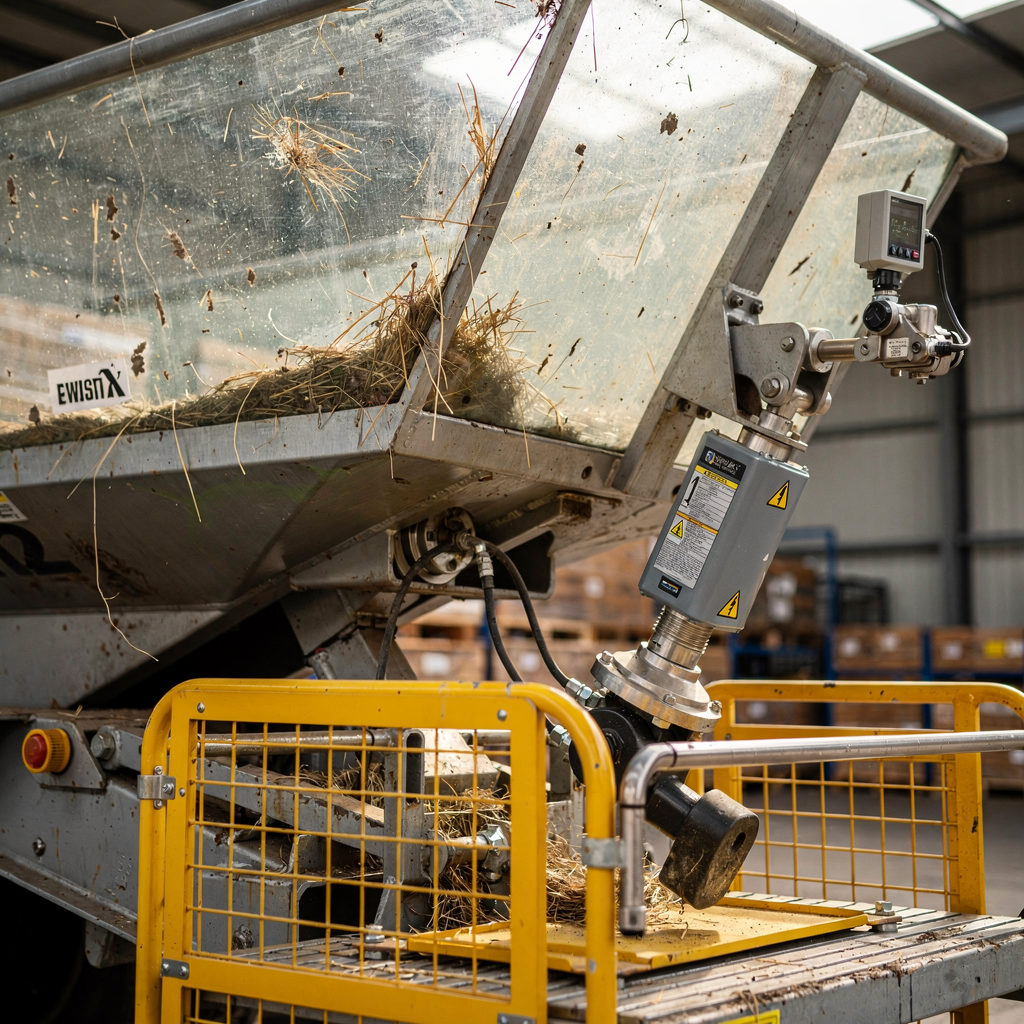
Automate the removal and replacement of twistlocks to cut human fixes and to shorten the time required per cycle. Pinsmart II is one practical technology that automates the removal and replacement of twistlocks at the quayside. The design integrates with spreader controls and with crane telemetry to detect locked and stuck twistlocks, and then to actuate a removal routine without manual access. Pinsmart II automates the removal and it replaces the need for technicians to work under suspended loads. And pinsmart will memorise common fault states and speed retrieval routines on repeat incidents.
The process flow is straightforward and safe. Sensors identify a jam. The spreader aligns and signals the pinsmart controller. The controller then retracts or deploys a capture mechanism, moves the twistlock clear, and re-stows the device. This reduces the frequency of manual handling and reduces the dangers of working under containers. Reduced human intervention also lowers exposure to hazards and helps terminals comply with planned maintenance windows and scheduled maintenance plans. Terminals using such devices report fewer jams and less handoffs during a discharge process, and they can better align schedules for multiple cranes.
Data from pilots shows fewer interventions and measurable drops in handling time. And fewer jam incidents mean fewer unscheduled breaks and lower unplanned equipment calls. The benefits include improved terminal productivity and a smoother ship turnaround. Pinsmart II also helps to handle all twistlocks across mixed equipment fleets. It can integrate with the spreader logic and with the TOS to flag persistent faults. For terminals seeking automated container handling, combining devices like this with closed-loop AI agents drives robust gains in throughput and in safety. See Loadmaster.ai work on optimising idle times in container ports for similar coordination approaches optimizing idle times.
automation and optimisation for faster crane cycle times
Automation shortens cycle times by removing delays at the pick and at the release. Real-time monitoring connects spreader state to crane operation and to the terminal scheduler. And software-driven workflows coordinate spreader and crane actions so units align before the lift. That eliminates many waits. Terminals that synchronize crane operation with yard dispatch and AGV traffic reduce handoffs and idle periods. Loadmaster.ai applies closed-loop AI to adjust sequences in real time, and the system learns to optimize trade-offs between quay productivity and yard congestion.
Software can also track and predict twistlock faults. Analytics spot patterns that humans miss and recommend preventive maintenance before operators face jams. A current study links better analytics and faster interventions to a drop in maintenance needs and to improved robustness of operations Port innovation review. And terminals implementing these features report 8–12% faster pick-and-place cycles when automation coordinates spreaders, AGV routing, and quay crane motion. This improves crane utilization, and it increases crane moves per hour without increasing staff.
Optimisation also reduces rehandles and long driving distances in the yard. AI-driven integrated planning and dynamic job allocation help balance workloads across RTGs and straddle carriers. That balance minimizes congestion and supports planned maintenance windows. To learn more about synchronizing travel and schedules for gantry cranes and job dispatch, see synchronizing asc gantry travel with job scheduling in container ports synchronizing gantry travel. The net result is lower handling time, fewer rehandles, and higher profitability for terminals that combine hardware upgrades with software optimisation.
Drowning in a full terminal with replans, exceptions and last-minute changes?
Discover what AI-driven planning can do for your terminal
twistlocks automation improves crane safety and reduces the dangers of working under containers
Safety drives many adoption decisions. The dangers of working under containers are well known. And manual fixes frequently require technicians to enter the quayside environment under a suspended load. Automated systems remove that need. They handle jams remotely and reduce less human intervention. That lowers accident risk and allows terminals to enforce safer workflows. For terminal operators the result is fewer injury reports and reduced liability.
Automated twistlock units also support compliance with planned maintenance and with preventive maintenance programs. When a spreader flags a recurring latch issue the system can schedule preventive work before a failure forces a stop. This reduces unplanned equipment calls and the maintenance needs that interrupt the discharge process. Terminals find that automation improves crane safety and that it shortens response times to faults. And the combination of hardware and software gives operations more predictability under changing operational conditions.
Beyond safety, the productivity gains are measurable. Terminals that eliminate manual access under containers see fewer lost workdays and better staffing stability. This supports higher throughput and steadier berth use. With fewer handoffs and with fewer emergency climbs, the quay crane team can focus on efficient loading and unloading. And when automated units document faults they feed that data into analytics and to the maintenance team. For more on AI-driven stowage and yard balance that complements twistlock automation, see AI-assisted vessel planning for shortsea container terminals AI-assisted vessel planning.
terminal productivity and port efficiency in container terminals
Combine these gains and the sum becomes larger than the parts. Automated removal and replacement of twistlocks cuts manual fixes. Software-driven optimisation reduces idle and bottlenecks. Integrated planning and real-time analytics improve robustness under variability and external factors. Together they increase throughput and shorten ship turnaround. Terminals see better berth utilisation and lower congestion when multiple cranes coordinate and when AGV flow matches quay rhythms.
Practical comparisons show measurable wins. Terminals that adopted automated twistlock devices plus coordinated software reported higher throughput and lower berth time. The current study and port innovation literature note cargo transit time reductions of 10–20% when idle causes are addressed across systems study and review. And that improvement reduces operational costs and increases profitability for shipping lines and terminal owners.
Future trends point to AI-driven spreaders, predictive maintenance and fully automated quayside stacks. Machine learning will inform when a twistlock is likely to jam and when to schedule scheduled maintenance. Automating container operations and automating coordination across the yard and quay will further lower downtime in container terminals. And when systems can handle edge cases with less human intervention terminals will achieve stable, repeatable results. For resources on equipment dispatching that cuts empty driving and aligns fleet moves, see container terminal equipment dispatching to reduce empty driving equipment dispatching.
FAQ
What causes crane idle time related to twistlocks?
Crane idle time often stems from jammed or misaligned twistlocks and from the time required to get technicians under a load to fix the latch. Also, manual handling and poor spreader alignment add pauses that cascade into longer berth occupancy.
How much time do twistlock jams add to vessel calls?
Field studies show twistlock problems can create delays up to 30 minutes per vessel call in some terminals. And aggregated effects translate into measurable increases in berth occupancy and cargo transit times.
Can automation eliminate all twistlock jams?
Automation cannot eliminate every mechanical fault, but it can reduce jams, speed recovery, and avoid many cases where technicians must access under a container. Automated twistlock devices and analytics lower the frequency and severity of incidents.
What is Pinsmart II and how does it help?
Pinsmart II automates the removal and replacement of twistlocks and integrates with spreader controls, so terminals can clear jams remotely. Pinsmart II automates the removal and reduces the need for risky manual interventions and for repeated handoffs.
Does twistlock automation affect safety records?
Yes. By removing the need to work under suspended loads, automation reduces the dangers of working under containers and lowers accident rates. It also supports preventive maintenance and fewer unplanned equipment calls.
How does software optimisation speed up cycle times?
Software coordinates spreader state, crane motion, and yard moves to ensure readiness before lifts. This alignment trims wait time, cuts handling time, and boosts pick-and-place rates across multiple cranes.
Will automation increase operational costs?
Automation has upfront costs, but it reduces operational costs over time through fewer delays, less rehandling, and lower maintenance needs. Improved throughput and shorter ship turnaround also raise profitability.
How do terminals integrate automation with existing systems?
Modern devices connect to TOS and telemetry via APIs and standard interfaces. Terminals often pilot technology on a block before scaling and use integrated planning to align quay and yard actions.
What role does AI play in reducing idle time?
AI can optimise sequences, predict faults, and rebalance workloads to keep equipment busy. Reinforcement learning agents can simulate millions of scenarios so terminals gain robust policies without relying only on historical data.
How quickly can a terminal expect results after deploying twistlock automation?
Results vary, but many terminals see measurable reductions in intervention counts and faster cycle times within weeks of deployment when automation is paired with optimised scheduling. And combining hardware fixes with optimisation yields the fastest, most durable gains.
our products
 stowAI
 stackAI
 jobAI
jobAI
Innovates vessel planning. Faster rotation time of ships, increased flexibility towards shipping lines and customers.
Build the stack in the most efficient way. Increase moves per hour by reducing shifters and increase crane efficiency.
Get the most out of your equipment. Increase moves per hour by minimising waste and delays.
stowAI
Innovates vessel planning. Faster rotation time of ships, increased flexibility towards shipping lines and customers.
stackAI
Build the stack in the most efficient way. Increase moves per hour by reducing shifters and increase crane efficiency.
jobAI
Get the most out of your equipment. Increase moves per hour by minimising waste and delays.