
Understanding real-time density of container terminal and yard management logistics
Real-time yard density matters because it links yard occupancy to vessel turnaround and dwell time. When planners see live density they can allocate space and crews fast. As a result, berth schedules suffer less delay and the terminal avoids costly idle time. The global importance of efficient terminals is clear: container terminals handle the vast bulk of maritime trade, and that impacts port performance and supply chains. For example, researchers note how terminals underpin resilient port and terminal networks across trade lanes that assess resilience and sustainability.
Daily yard occupancy can swing dramatically. Studies report swings of 30–40% within a single day due to vessel arrivals, departures, and intermodal transfers (PDF) A Literature Review. Consequently, peak congestion can form fast and then vanish just as fast. Therefore, terminals without live visibility often move from reactive firefighting to crisis mode. Continuous monitoring changes that pattern. It supports smarter allocation of bays, cranes, and labor, thus reducing pointless reshuffles and lowering container dwell.
Real-time visibility creates a foundation for better yard management. First, sensors and tracking provide exact container position in the yard. Next, operators use that data to update short-term yard planning and resource allocation. Then they adjust stacking and gate sequences to match vessel schedules. A measurable effect appears: ports that adopt continuous monitoring report meaningful operational gains, including reduced dwell time and less congestion literature overviews show these dynamics. For readers wanting technical follow-up on software tools and yard optimization, our piece on terminal operations yard optimization software solutions explains how dashboards and rulesets tie into real-time feeds terminal operations yard optimization software solutions. Finally, operators who pair live density with planning achieve steadier terminal flow, higher throughput, and fewer surprises.
modern terminal automation and analytics for smarter terminal operation
IoT sensors, RFID tags, AGVs and drones form the automation layer that feeds modern terminal decision engines. They capture container movement, container position, and container weight. Then edge gateways stream real-time data into analytics platforms. As a result, planners see yard occupancy patterns and crane workloads instantly. This sensor fabric enables a smart port approach and it supports smarter terminal responses to peaks and shocks.
Automation reduces manual checks and speeds inspections. For instance, drones can scan stack containers and verify positions faster than human walks. AGVs and straddle carrier telemetry feeds report queue times and travel distances. Meanwhile, RFID and BLE tags confirm container identity as trucks pass gate systems. Together these systems cut uncertainty and raise terminal performance.
Analytics dashboards turn raw sensor output into actions. They highlight hotspots, predict when a lane will block, and suggest stacking moves. In practice, an analytics view helps yard planners and crane operators to optimize shifts and crane splits. If you want detail on how TOS and analytics interact to lower vessel turnaround, read our analysis of the role of TOS optimization in reducing container terminal vessel turnaround time role of TOS optimization. Additionally, analytics can feed automated stacking recommendations and alert crews to imminent congestion.
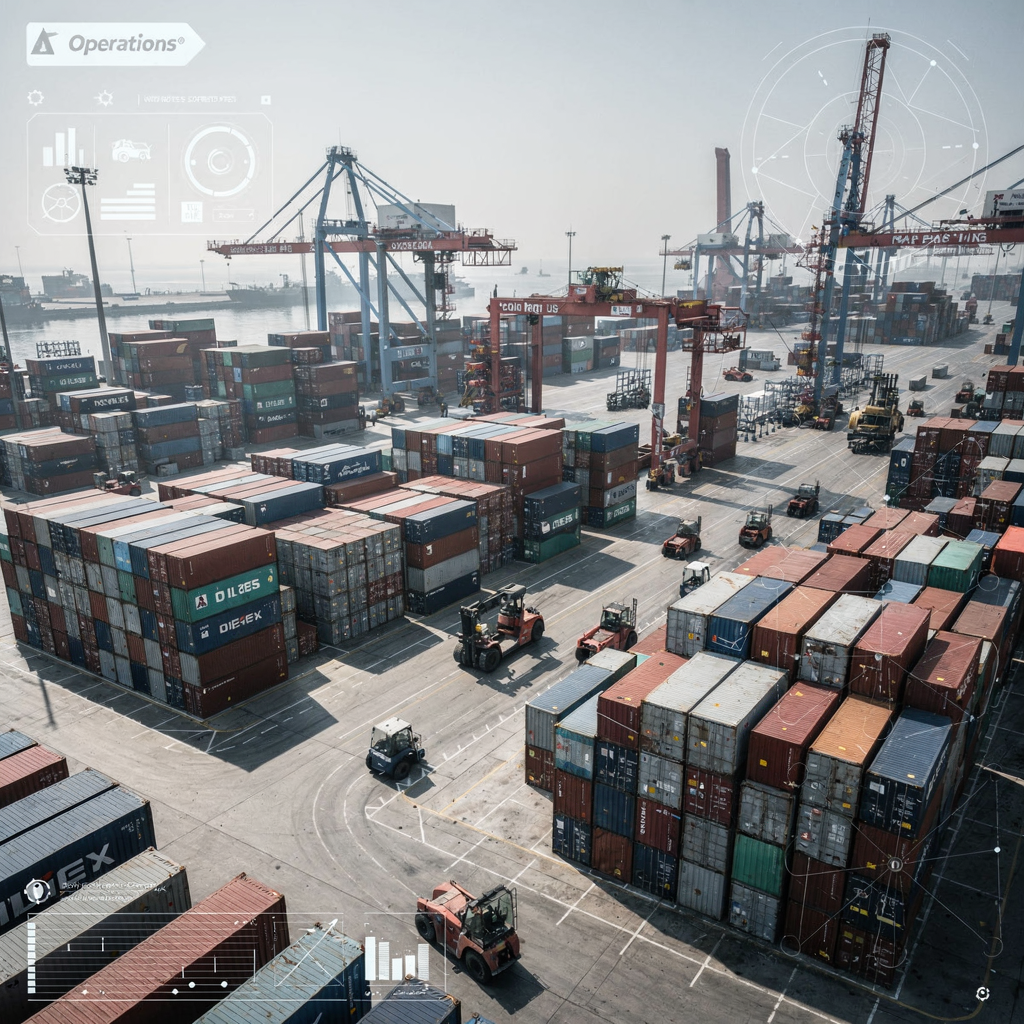
Overall, combining automation with analytics converts data into faster decisions. It helps to reduce inefficiency, to balance crane productivity, and to optimize allocation of yard equipment. Furthermore, it makes the terminal more resilient during surge volumes. The modern terminal that connects sensors, analytics and control can adapt to traffic peaks and reduce delay while keeping safety high.
Drowning in a full terminal with replans, exceptions and last-minute changes?
Discover what AI-driven planning can do for your terminal
optimize container handling and stacking strategies with terminal operating system
Algorithmic stacking strategies can significantly reduce reshuffles and move counts. They aim to group containers by vessel, by destination, and by expected dwell. Thus, stacks become easier to retrieve and rehandles drop. Automated stacking logic also considers container weight and height to protect stack stability. This layered approach to stacking strategies improves crane cycles and reduces travel times for yard equipment.
Integration with a terminal operating system is critical. The terminal operating system provides the canonical plan for quay, yard, and gate. It feeds container position, vessel schedules and handling equipment status to the stacking algorithms. Then the algorithms return placement suggestions and execution orders. That closed loop cuts the need for manual overrides and reduces inconsistent planning outcomes. For more on synchronized AI across quay, yard and gate, see our write-up on decentralized AI agents coordinating quay, yard, and gate operations decentralized AI agents.
Advanced strategies like automated stacking and automated stacking cranes can be combined with traditional RTG and straddle carrier work. For example, an RL-trained yard strategist can balance future accessibility with current throughput. Loadmaster.ai uses this idea to train StackAI policies in a digital twin, thus reducing rehandles without prescribing fixed rules. The outcome includes higher crane productivity and fewer idle cycles. In practice, terminals report improved handling rates and smoother yard throughput after such integrations.
Moreover, operators can schedule stacking with short-term predictive outlooks to avoid late congestions. These schedules help allocate cranes and to stage containers near the quay when vessel operation demands spike. Finally, integrating stacking logic into the terminal operating system locks the plan and the execution together, producing a consistent, auditable workflow for yard operations and terminal management.
implementing a container yard management system to boost operational efficiency and productivity
A container yard management system merges several elements: a dashboard, alerts, KPIs, and control loops. The dashboard surfaces yard occupancy, gate queues, and crane productivity. Alerts notify yard planners of imminent congestion and of empty yard blocks that require reallocation. KPIs such as moves per hour, average dwell time and crane utilization appear in near real-time. Together they let supervisors steer operations toward measurable goals and higher productivity.
Core components include interfaces for yard planners, integration with gate systems, and telemetry from handling equipment. The system should support yard and gate workflows, and it must expose APIs for the terminal operating system. Security matters, so data-security measures and role-based access protect container tracking feeds. Interoperability standards matter too. Terminals need common schemas to exchange information across vendors and across port and terminal partners. Standardized EDI and telemetry APIs shorten integration time and reduce vendor lock-in.
Case studies show concrete gains. Ports that implemented real-time yard management and digital twin testing reported a 15–25% reduction in container dwell time and significant productivity gains Chamber of Marine Commerce study. Additionally, digital twin experiments validate control logic before live deployment, which cuts rollout risk. For terminals interested in a phased AI rollout, our guide on future-proofing port operations with AI provides practical steps and governance ideas future-proofing port operations with AI.
To ensure adoption, involve yard planners early. Train them on dashboards and alert thresholds. Then tune KPIs to reflect local priorities, whether that is minimizing moves, maximizing quay throughput, or leveling crane productivity. Finally, secure the stack with audits so that the system becomes a trusted decision partner rather than another siloed tool.
Drowning in a full terminal with replans, exceptions and last-minute changes?
Discover what AI-driven planning can do for your terminal
predictive analytics and container tracking in terminal planning and throughput
Predictive analytics forecast yard occupancy and prevent bottlenecks before they form. By analyzing vessel schedules, truck arrival windows and historic patterns, predictive models give planners a short-term view of yard occupancy. These forecasts let teams reassign stacks, to stage containers, and to re-sequence trucks. The result is fewer last-minute shifters and lower delay.
Real-time container tracking then closes the loop. Each container position update refines the forecast and tightens the yard plan. That live feedback enables dynamic berth and yard planning. For example, terminals that combine predictive models with execution-level tracking can shift workload between cranes and avoid hotspots. Studies show that adoption of integrated predictive and tracking systems improved yard space utilization by up to 20% in some North American ports, which translated into substantial cost savings Chamber of Marine Commerce and improved throughput metrics market analyses.
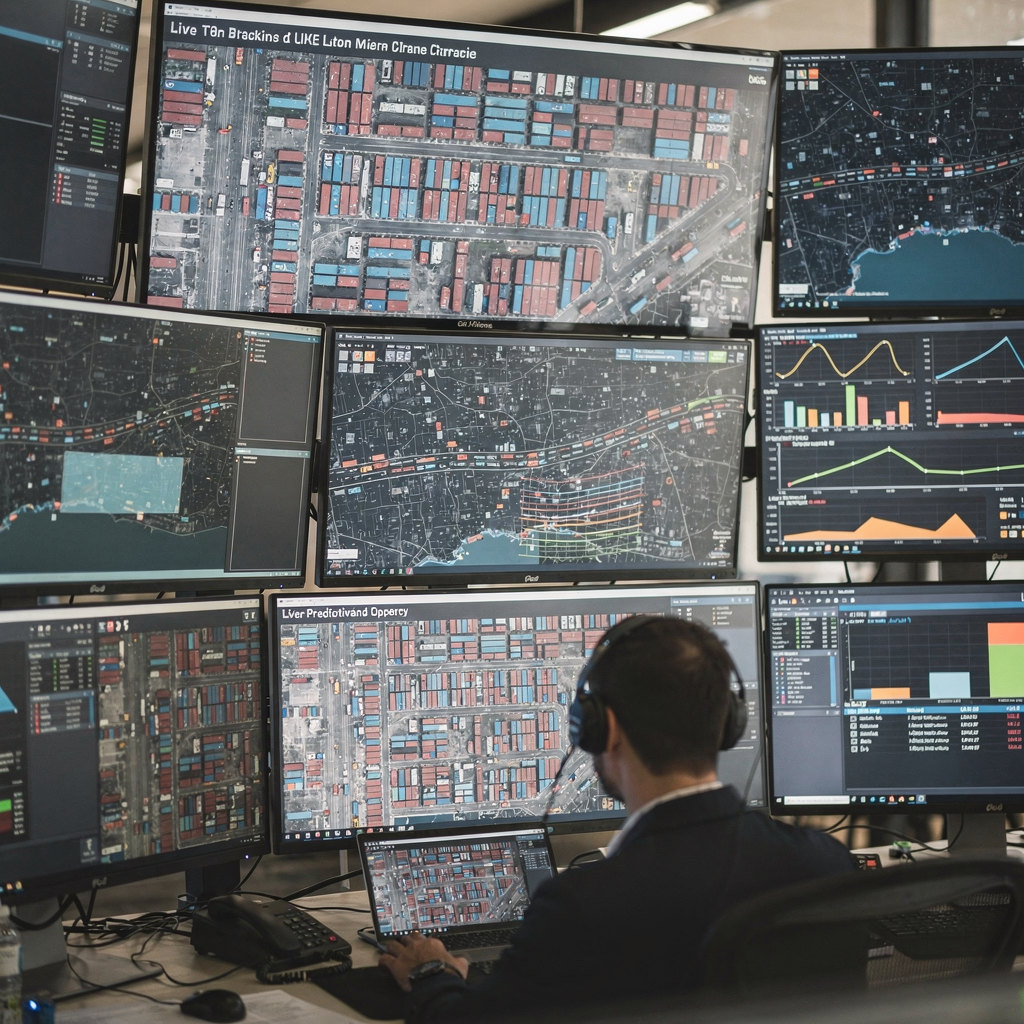
Operators should prefer a data-driven approach. Use real-time data, then layer predictive analytics for 6–24 hour planning horizons. This approach helps to avoid stack containers becoming buried under later arrivals. It also reduces unnecessary crane moves and lowers yard equipment wear. For terminals aiming to move from reactive firefighting to proactive control, combining forecasting with live container tracking is the practical next step. Lastly, coordinating predictive outputs with execution agents, such as job dispatchers and quay schedulers, delivers consistent throughput improvements and steadier terminal capacity.
overcoming bottleneck: future of container terminal management, supply chain adaptation and regulatory compliance
Emerging trends include AI-driven decision support and expanded use of digital twin simulations. AI agents now learn policies that balance quay productivity, yard congestion, and driving distance. For example, reinforcement learning can explore policies that human rule engines miss. These agents can run safely in a digital twin before they touch live operations. The digital twin validates strategies against many scenarios and it reduces deployment risk.
Next-generation systems will increase global terminal resilience. They will integrate berth planning with yard operating and gate flows. They will also embed regulatory compliance checks into execution so that audit trails document decisions for inspectors and for governance frameworks. Regulatory compliance remains a challenge, especially for cross-border data flows and for restricting container tracking data. Terminals should adopt privacy-by-design, and should segment data where required.
The future of container operations includes more coordinated resource allocation across modes. Terminals will sync with inland networks and with rail and trucking partners. This integration reduces empty yard time and lowers the chance of a single bottleneck cascading through the supply chain. For terminals exploring AI coordination across roles, see our article on decentralized AI agents coordinating quay, yard, and gate decentralized AI agents. Additionally, planning tools that manage multi-objective trade-offs help operators protect quay productivity while reducing yard congestion.
Finally, practical steps for scaling include piloting in a limited block, auditing KPIs, and iterating with yard planners. Companies like Loadmaster.ai use sim-trained RL agents to generate robust policies that require no historical data and that improve stability across shifts. Thus terminals can achieve higher terminal efficiency, lower inefficiency, and more predictable performance. As the smart port ecosystem grows, terminals that combine predictive, automation and compliant governance will overcome the next bottleneck and keep global trade moving.
FAQ
What is real-time yard density monitoring?
Real-time yard density monitoring tracks how full container yards are at any moment. It combines sensor inputs and analytics to show occupancy, stack utilization, and potential congestion so planners can act quickly.
How does monitoring yard density reduce dwell time?
Monitoring improves visibility so teams can stage containers correctly and avoid rehandles. As a result, dwell time drops because planners can reallocate space and coordinate cranes before delays escalate.
Which technologies enable smart yard monitoring?
Key technologies include IoT sensors, RFID tags, AGVs, drones and analytics platforms. Together these capture container movement and feed predictive models and dashboards for fast decisions.
Can predictive analytics prevent yard bottlenecks?
Yes. Predictive analytics forecast yard occupancy and identify likely hotspots. Then planners can reassign stacks, shift crane splits, or stage containers to prevent bottlenecks.
Is integration with a terminal operating system required?
Integration with a terminal operating system improves coordination across quay, yard, and gate. It ensures placement decisions and execution orders align with vessel schedules and equipment status.
What are expected efficiency gains from yard monitoring?
Case studies report 15–25% reductions in container dwell time and up to 20% better yard space utilization in some ports. These improvements translate into higher throughput and lower costs source.
How do digital twins fit into implementation?
Digital twins simulate terminal environments and test new policies before live deployment. They let teams validate changes safely and measure impact on terminal processes and terminal capacity.
What data-security measures matter most?
Role-based access, encrypted telemetry, and segmented networks protect container tracking feeds. Terminals should also maintain audit trails and comply with data transfer regulations to ensure regulatory compliance.
How can small terminals start with these systems?
Start with a pilot block, basic sensor deployment, and clear KPIs. Then scale analytics and AI modules as confidence grows, and train staff on dashboards and alerts to improve adoption.
How does Loadmaster.ai support real-time optimization?
Loadmaster.ai trains RL agents in a digital twin to optimize stacking, stowage and job dispatch without relying on historical data. This approach helps terminals move from reactive firefighting to proactive policy-driven control and more consistent productivity.
our products
 stowAI
 stackAI
 jobAI
jobAI
Innovates vessel planning. Faster rotation time of ships, increased flexibility towards shipping lines and customers.
Build the stack in the most efficient way. Increase moves per hour by reducing shifters and increase crane efficiency.
Get the most out of your equipment. Increase moves per hour by minimising waste and delays.
stowAI
Innovates vessel planning. Faster rotation time of ships, increased flexibility towards shipping lines and customers.
stackAI
Build the stack in the most efficient way. Increase moves per hour by reducing shifters and increase crane efficiency.
jobAI
Get the most out of your equipment. Increase moves per hour by minimising waste and delays.