
container terminal operations in maritime logistics: the challenge of real-time replanning
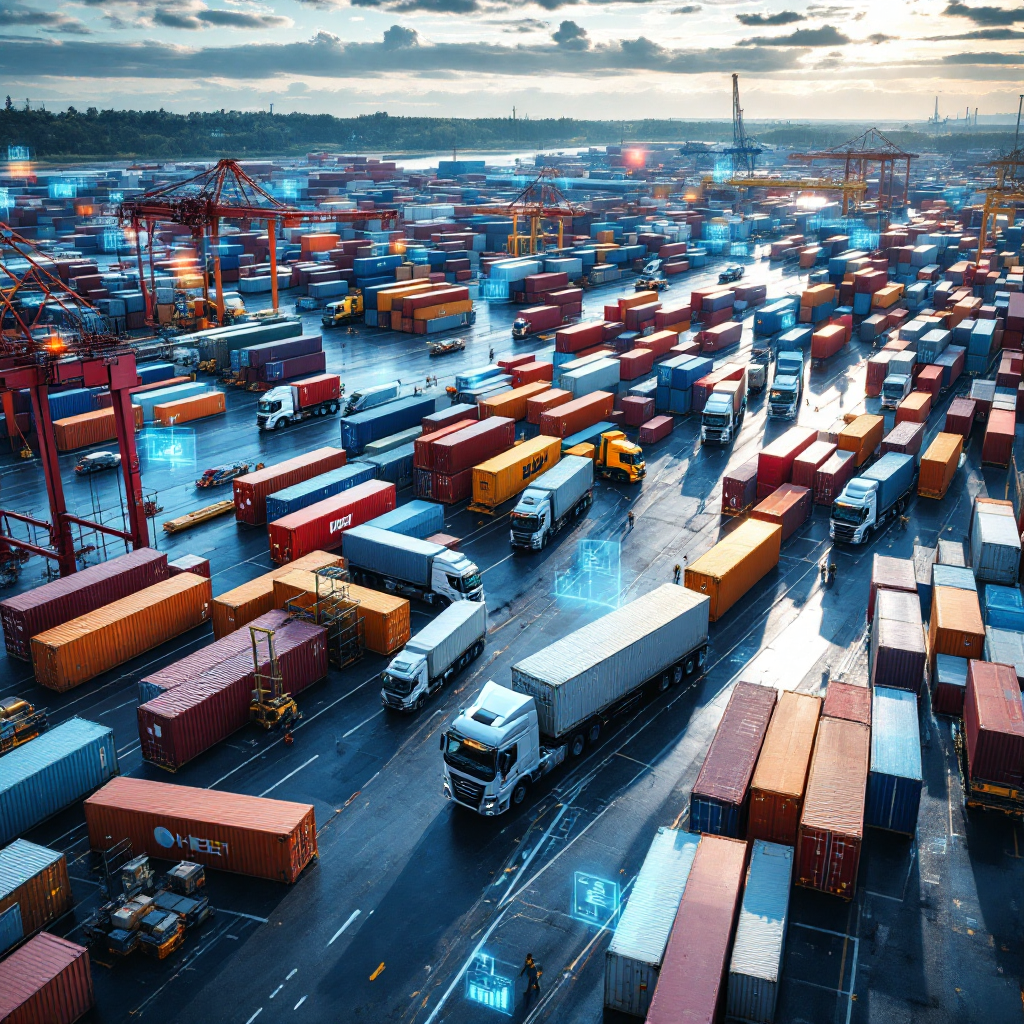
Container terminals act as a critical node in maritime logistics. They handle huge container volumes that support global trade, and they shape how goods move from ship to inland transport. The layout of the container and the yard footprint dictate many daily choices. Terminals move thousands of container stacks each day. As a result, any delay in processing a stack creates ripple effects across the port and the broader supply chain.
Common disruptions include vessel arrival variability, equipment breakdowns and yard congestion. Vessel schedules shift, and the estimated time of arrival for berths can change with limited notice. A broken crane or a stalled yard truck can create a local bottleneck. When that happens, terminal operators must reassign tasks fast. If they do not, a single disruption can cause long delay across feeder services and truck lanes.
Industry data shows that 65% of terminal leaders cite yard utilisation as their top operational challenge, yet only 31% use real-time analytics to respond to issues this survey. That gap leaves many ports exposed. Terminals that lack live visibility struggle to match container arrivals to yard space, and they create avoidable idle time for cranes and trucks. As a result, customer expectations fall and supply chain partners face higher costs.
Real-time replanning matters because it helps maintain throughput and reduce supply chain delay. By reacting to actual conditions, teams can reallocate equipment, sequence moves, and shift stacking strategies without stopping the yard. For terminals that aim to automate routine tasks, real-time control enables faster decision cycles. In practice, this means fewer reshuffles, faster truck turn times and improved berth productivity. Port managers who integrate live feeds from gate systems and vessel trackers gain a clearer picture and can act more quickly.
For example, combining accurate container tracking with live vessel data lets teams prioritize unloads and reserve yard blocks in minutes rather than hours. That speed cuts idle time and restores balance across the yard. Easy wins appear when teams focus on measuring delays and then applying short feedback loops. In the next sections we look at tools that provide decision support and simulation, and how they help terminals adapt to change and protect throughput.
decision support system: real-time decision support for real-time decisions to optimise logistics
A decision support system transforms raw signals into clear, executable tasks. It ingests live feeds from terminal operating systems, gate sensors and vessel trackers, and then it recommends moves. Real-time data streams feed models that predict short windows of congestion, and operators receive suggestions to reroute trucks or reassign a crane. That capability reduces idle resources and improves container movement across the yard.
Decision support creates a bridge between data and action. A true decision support system will combine TOS inputs, GPS traces and sensor data. Then it produces a ranked list of actions for yard crews, so that a truck driver gets a clear next step and a crane operator knows the next lift. The software can also provide real-time decision support to surface urgent conflicts and avoid a downstream delay.
Terminals that adopt decision support see strong gains. For instance, real-time decisions that drive yard moves can raise throughput by up to 30% when the recommendations align with human execution and operations rules survey results. In practice, this may mean sending an extra tractor to a congested block, or switching a crane to a different bay to balance workload. Those moves often use prescriptive analytics that weigh truck queues, stacking constraints and quay schedules.
Integration is a common hurdle. Many terminals still run legacy TOS software that resists modern APIs. To optimize the flow, systems must integrate with open interfaces so that real-time decisions reach crews and automated equipment. Teams often need middleware or adapters to push recommendations into radios, tablets and machine controllers. Also, human-machine workflows must be clear so that the operator accepts or escalates a plan.
Finally, a decision support approach works best when it ties into other processes. For example, automatic email triage and resolution for operational exceptions can speed responses to schedule changes. When email becomes automated, the whole decision loop tightens and the yard reacts faster.
Drowning in a full terminal with replans, exceptions and last-minute changes?
Discover what AI-driven planning can do for your terminal
digital twin simulation to automate scheduling in the container yard
Digital twin is a live, virtual replica of a yard layout, equipment and container flows. It runs simulation engines that test “what-if” scenarios without impacting active operations. Using a digital twin, teams can evaluate different crane allocation patterns, alter container stacking plans, and check the consequences for truck queues. The twin mirrors the physical yard with time-synced data, and so it provides a safe space to refine policies before applying them in the real world.
Simulation helps terminals automate scheduling while keeping human oversight. For example, a twin can test a shift in container stacking strategy to reduce reshuffles. It can also examine staff schedules and propose new allocations to cover predicted peaks. Early adopters reported both energy savings and faster assignments after using a twin to trial options as noted by research. The twin also captures performance history, enabling calibration against historical KPIs so that its predictions remain accurate.
To deploy a digital twin you typically follow discrete steps. First map the physical layout and inventory, and then connect telemetry feeds from cranes, trucks and gate sensors. Next feed historical throughput numbers and failure logs into the model for calibration. Finally, run a staged roll-out where scheduled scenarios are validated offline, and then moved into monitored production. This path helps protect operations while delivering value fast.
Digital twin use cases include load balancing, energy-aware sequencing and slot assignment automation. Terminals that test crane allocation scenarios can reduce energy consumption and improve assignment speed. For example, trials have suggested up to 20–25% energy savings and faster slot assignments when a twin informs the plan. To learn more about how twin models combine with operational AI, see a related study on unlocking efficiency with digital twin technology digital twin case study.
Using a twin also helps when terminals need to adapt to changes in container volumes. The model reveals weaknesses in layout and highlights where infrastructure and equipment upgrades will yield the best return. In short, a calibrated virtual yard gives teams the confidence to automate scheduling choices and to implement them with fewer surprises.
optimisation with AI for the smart port: predictive planning in terminal operations
AI-driven predictive planning forecasts demand spikes and potential equipment faults. It trains on historical patterns, weather, vessel schedules and maintenance logs to spot likely trouble before it arrives. Then it recommends concrete actions, such as pre-positioning empty slots or scheduling preventive maintenance. The aim is to reduce unplanned downtime and to improve the efficiency of container handling across the terminal.
AI models provide value across many port operations. For example, predictive planning can alert teams when a vessel will likely miss its window, so planners can reshuffle cranes and change assignation without a scramble. This proactive approach reduces disruptions and supports steadier throughput predictive planning overview.
Impact figures are persuasive. Implementing AI-driven predictive planning has reduced unplanned downtime by roughly 15–25% in pilots, and it has boosted crane productivity by around 10%. Those gains come when training data is high quality, and when models receive continuous feedback from operations. Requirements include cloud-based compute for model training and cross-functional teams that pair data science with subject matter experts.
For a smart port to benefit, teams must also ensure accurate telemetry and consistent labeling. Garbage in gives poor forecasts. That is why data governance and steady data pipelines are essential. When a terminal combines predictive models with a decision support layer, the result is automated prescriptive actions that the operator can accept or tweak. This combination supports real-time decision making and helps optimize the scheduling of trucks, cranes and yard moves.
AI also supports container allocation and stacking strategies that reduce reshuffles. For terminals aiming to automate container handling, models can propose optimal allocation of containers to blocks so that future moves require fewer lifts. See practical techniques for optimizing container stacking and yard density prediction in research and tools such as an AI-based yard solution optimizing container stacking and yard density prediction.
Drowning in a full terminal with replans, exceptions and last-minute changes?
Discover what AI-driven planning can do for your terminal
berth allocation and container stacking in port terminal operations for an automated terminal
Berth allocation balances vessel size, tide windows and quay crane availability. Good berth allocation reduces waiting and shortens vessel turnaround times. Algorithms address the berth allocation problem by modeling constraints and by seeking the optimal location for each incoming ship. Those models usually account for handling rates, draft limits, and arrival uncertainty. Then planners can assign berths that minimize berth idle time and crane reassignments.
Container stacking strategies must minimize reshuffles and handling time. Smart stacking places import boxes near exit gates and groups export boxes by vessel and load sequence. An automated container terminal uses ASC and AGV equipment to move boxes with precision. When stacking strategies align with quay operations, the number of internal moves falls. That reduces wear on equipment and quickens loading and unloading cycles.
Dynamic berth‐stack optimisation can cut vessel turnaround by up to 12% when berth decisions connect to yard stacking rules. Automated equipment needs clear signals, so TOS integration is essential. Seamless TOS integration lets cranes accept sequencing orders and lets AGV fleets receive prioritized tasks. That tight coupling between berth allocation, crane sequencing, and yard stacking supports consistent throughput and better resource planning.
Automated systems benefit from real-time tracking of key assets and from efficient container tracking of high-priority boxes. When terminals can monitor container locations and pair those with berth plans, they reduce search time and speed export readiness. For operators, that means better visibility into container volumes and more accurate ETAs for shippers and truckers. If you want detailed approaches to optimize quay crane operations with sequencing, see this guide on quay crane optimization with container sequencing software quay crane sequencing.
Finally, terminals must consider empty container handling and the location of empty stacks. Efficient empty container placement supports fast reloads and decreases unnecessary travel. Clear rules for allocation of containers and for stacking strategies keep automated gear productive and the port responsive under pressure.
integrate analytics to improve container port management in ports and terminals
Integrated analytics unify siloed data from yard, gate, berth and vessel ETA sources. A unified analytics platform makes it possible to monitor KPIs in one place, and it provides a single source of truth for planners and operators. Dashboards can show yard utilisation, truck wait times, berth productivity and carbon footprint. These views support faster decisions and better collaboration across teams.
Practical dashboards deliver measurable outcomes. For example, systems that integrate analytics across the terminal have produced an 18% drop in truck idling and a 22% boost in berth productivity in case studies where the analytics layer drove operational changes prescriptive analytics example. Those improvements come when the port couples analytics with execution tools that can push tasks to crews and automated equipment.
To integrate, start with data mapping and cataloging. Then create pipelines that bring gate scans, crane logs and vessel messages into the same store. Use common identifiers for every container so that analytics can follow each box through the yard. This enables accurate and efficient reporting and helps teams adapt to changes quickly. When analytics find an emerging trend, teams can change stacking rules or reroute trucks to avoid port congestion.
Best practices include phased roll-outs, staff training and continuous model retraining. Also, it helps to provide decision support aligned with business rules so that users trust the recommendations. For terminals looking to improve container stacking and yard operations through AI, a deep dive into yard AI techniques can provide useful methods yard AI approaches. In addition, consider tools that minimize internal truck travel time for better scheduling and lower emissions truck travel reduction.
Analytics are not a one-off project. They need ongoing feeding and retraining to stay accurate. With the right governance, they make the port more resilient, they reduce the chance of a major disruption and they help improve customer satisfaction by shortening response times and reducing unexpected delay. When analytics combine with automation and real-time monitoring, the modern port becomes more predictable and more productive.
FAQ
What is real-time replanning in a container terminal?
Real-time replanning means adjusting schedules and resource assignments as events happen. It uses live data to reallocate cranes, trucks and yard space to keep throughput steady and to reduce delay.
How does a decision support system help terminal operators?
A decision support system ingests feeds from TOS, gate sensors and vessel trackers, and then it recommends actions. It reduces manual triage, and it helps an operator execute the best next move quickly.
What role does a digital twin play in the yard?
A digital twin provides a virtual model of the yard to test what-if scenarios. It lets teams try stacking and crane allocation changes without affecting active operations, and it helps automate scheduling safely.
Can AI reduce unplanned downtime at a port?
Yes. Predictive planning with AI can forecast equipment failures and demand spikes, which reduces unplanned downtime by an estimated 15–25% in pilots. The models require good data and continuous retraining to remain accurate.
How do berth allocation algorithms improve turnaround times?
Berth allocation algorithms consider vessel size, tide windows and quay crane availability to assign berths optimally. Better berth allocation can reduce vessel turnaround times and improve overall port productivity.
What is the benefit of integrating analytics across a container port?
Integrated analytics break down data silos across yard, gate and berth systems. They enable dashboards that track KPIs and support decisions that lower truck idling and boost berth productivity.
How can terminals reduce container reshuffles?
Terminals reduce reshuffles by adopting smarter container stacking strategies and by using AI to plan allocations. Slotting boxes by export sequence and by gate flow lowers unnecessary handling.
What is container tracking and why is it important?
Container tracking provides the location and status of each box across the yard and beyond. It improves visibility, and it enables faster searches and better coordination for loading and unloading.
How does automation affect yard staffing?
Automation changes staffing needs by shifting people from repetitive tasks to supervisory and exception handling roles. Training and clear escalation paths are essential for a smooth transition.
By reducing manual triage and routing operational emails to the right owners, it speeds the real-time coordination that supports replanning and helps maintain throughput.
our products
 stowAI
 stackAI
 jobAI
jobAI
Innovates vessel planning. Faster rotation time of ships, increased flexibility towards shipping lines and customers.
Build the stack in the most efficient way. Increase moves per hour by reducing shifters and increase crane efficiency.
Get the most out of your equipment. Increase moves per hour by minimising waste and delays.
stowAI
Innovates vessel planning. Faster rotation time of ships, increased flexibility towards shipping lines and customers.
stackAI
Build the stack in the most efficient way. Increase moves per hour by reducing shifters and increase crane efficiency.
jobAI
Get the most out of your equipment. Increase moves per hour by minimising waste and delays.