
terminal operating system
The terminal operating system sits at the heart of yard management and daily flow. It records moves, schedules cranes, and tracks containers from gate-in to load-out. Terminal operators rely on it for visibility and control. A well-configured terminal operating system links berth plans, yard maps, and gate transactions so staff can make fast, informed decisions.
Data from the terminal operating system feeds predictive models. AI ingests TOS logs and turns raw events into forecasts and recommendations. For example, a container terminal operating system can supply timestamps, container IDs, and stacking positions. Those fields let AI models predict container dwell time and recommend repositioning before a vessel arrives. This use of historical and real-time data supports predictive analytics and helps optimize yard layout and task sequencing.
Integration points matter. When the TOS integrates with berth planning, AI can align housekeeping tasks with expected vessel windows. That reduces unnecessary moves and speeds up loading and unloading. Also, linking the TOS to gate operations allows planners to anticipate truck peaks and prepare lanes. You can read more on the role of TOS optimization for reducing vessel turnaround time in a focused guide on TOS optimization role of TOS optimization in reducing container terminal vessel turnaround time.
Real-time feeds from the TOS also enable automation and workflow alerts. This automation reduces manual triage and keeps information aligned across ERP, TMS, and WMS. In practice, that reduces mis-routed containers and delays.
Standards and APIs make the integration of AI smoother. If the TOS exposes structured events, AI systems can query and score those events continuously. Then, planners get clear repositioning tasks and priorities. That allows terminals to anticipate peaks, to minimize congestion, and to streamline container throughput. For a deeper dive into terminal automation fundamentals see this primer on container terminal automation container terminal automation fundamentals.
predictive maintenance
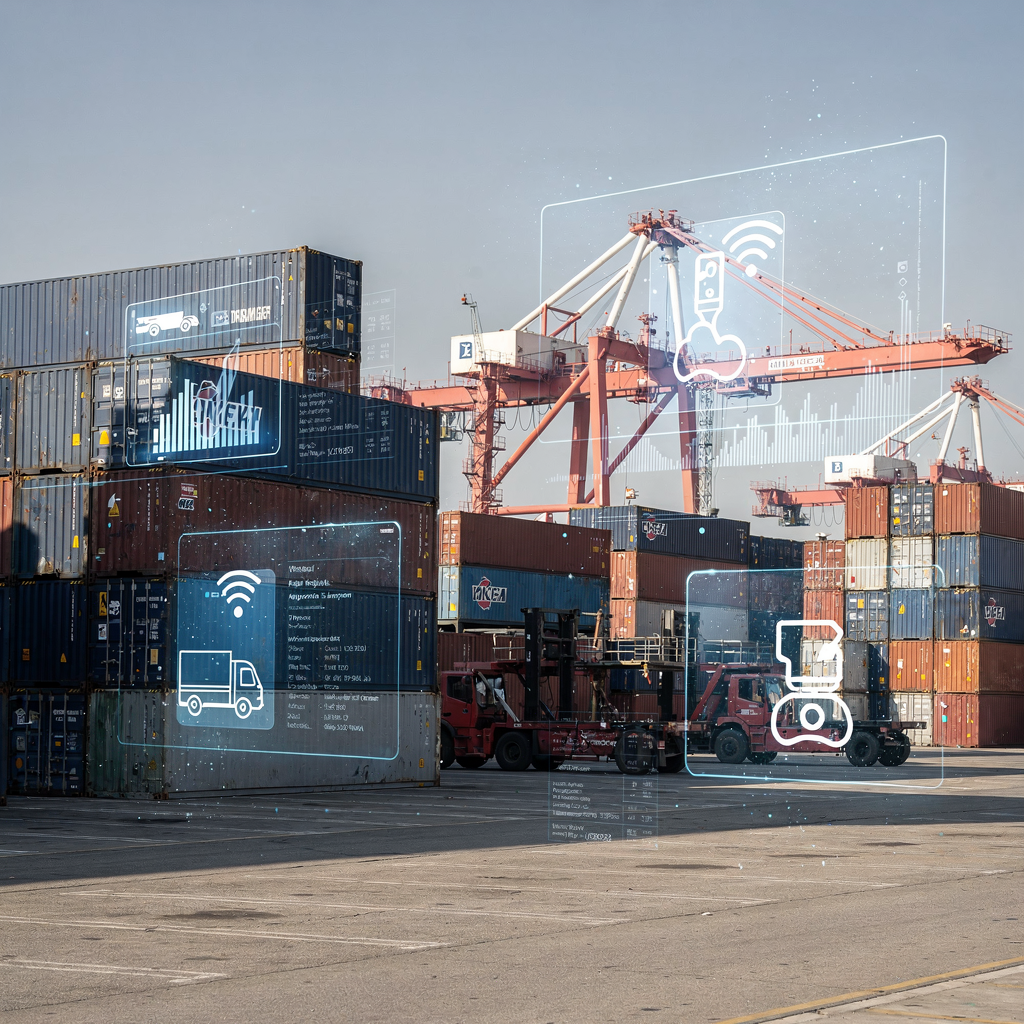
AI-driven predictive maintenance changes how ports keep cranes and yard equipment running. Sensors collect vibration, oil temperature, and motor current. Machine learning ingests that telemetry and learns patterns that precede failures. As a result, maintenance teams can act before a breakdown occurs and therefore minimize downtime. This approach contrasts with reactive repairs that occur after a fault.
Predictive maintenance for STS cranes, RTGs and straddle carriers uses specific models. These models detect anomalies, then flag units for inspection. In trials, predictive strategies cut breakdowns and unscheduled downtime by 10–15% in similar environments, which supports terminal resilience and throughput. See research on predictive maintenance for STS cranes for more context predictive maintenance for STS cranes.
AI predictive maintenance depends on structured data and integration. Historical service records and real-time telemetry must be combined. A data-driven approach links sensor trends to repair logs and operator notes. That enables algorithms to forecast remaining useful life and to schedule service windows during slack periods. In practice, this reduces crane idle hours and keeps quay productivity high.
Predictive maintenance also supports safety and sustainability. By reducing emergency repairs, shops run planned parts ordering and energy usage drops. That aligns with sustainable terminal operations goals. The benefits extend beyond fewer failures. Terminals get steadier throughput and better labor planning. Ports that combine predictive maintenance with yard housekeeping can better mitigate congestion and maintain vessel schedules.
To implement AI-driven predictive maintenance successfully, terminals need clear thresholds, governance, and explainable alerts. Teams should test models via simulation and pilot programs before wide rollout. For techniques on managing planning trust during AI deployment, see a practical discussion on planner trust and AI deployment managing planner trust during AI deployment. This staged approach supports adoption and keeps downtime low.
Drowning in a full terminal with replans, exceptions and last-minute changes?
Discover what AI-driven planning can do for your terminal
ai in container terminals
AI in container terminals covers a wide set of applications and benefits. First, AI helps with yard scheduling and congestion management. Second, it supports berth allocation and crane sequencing. Third, it forecasts vessel arrival variability and truck flows. This combination allows terminals to optimize resource allocation and to streamline container handling.
Machine learning models forecast container dwell times and vessel arrival patterns. The use of predictive analytics improves accuracy in berth windows and yard demand. Research shows that predictive scheduling algorithms can improve vessel turnaround time accuracy by approximately 10–12% predictive analysis for optimizing port operations. That improvement helps terminals allocate cranes and yard space more effectively.
AI systems also process RFID and IoT feeds to provide up-to-the-minute visibility. Those systems link to the terminal operating system and to planning dashboards. Then, planners see congestion hot spots and can trigger proactive housekeeping moves. This reduces rehandles and shortens vessel dwell. In fact, discrete-event simulation work on housekeeping indicates potential reductions in container handling times up to 15–20% simulation for performance evaluation of the housekeeping process.
These applications of AI deliver operational efficiency and better customer service. AI models provide task assignments for cranes and for automated container handlers. They also help predict container volume and the distribution of empty container returns. For readers interested in how AI modules allocate tasks to equipment in real time, this resource on equipment task allocation is useful AI modules for real-time equipment task allocation in container ports.
In short, using AI enables smarter, faster responses across the yard and quay. It supports a transition toward smart port concepts and port terminal automation. As maritime logistics become more data-driven, AI will remain central to optimizing container terminal performance and to transforming global port operations.
application of ai in container
The application of AI in container yards goes beyond alerts and dashboards. Real-world implementations include ML scheduling, clustering algorithms for stack placement, and simulation-based optimisation to test repositioning strategies. Teams train ai models on historical moves, on container attributes, and on vessel schedules to recommend housekeeping actions that reduce crane moves and save time.
Simulation-based optimisation plays a crucial role in testing strategies before live rollout. Researchers use discrete-event simulation to model yard operations under different housekeeping policies and traffic mixes. This lets planners evaluate trade-offs and choose rules that minimize rehandles and congestion. For example, one study describes yard repositioning as moving containers “closer to the point along the berth from which the containers will be boarded,” which speeds up discharge and loading operations simulation-based optimization for housekeeping.
Data sources feed the AI pipeline. TOS logs provide move histories. Vessel schedules supply arrival and departure forecasts. RFID, GPS, and IoT sensors add real-time location and condition data. Combining these sources produces a richer signal for predictive models and for digital twin simulations. Digital twin technology enables planners to run “what-if” scenarios and to validate ai algorithm outputs before committing yard moves.
Practical deployments show measurable gains. Terminals that apply these methods see better berth utilization and fewer rehandles. They also streamline container flows and improve the predictability of operations. When implementing AI, teams should start with a pilot, then scale after validation. For detailed reader guidance on scheduling and yard software solutions see yard optimization software solutions terminal operations yard optimization software solutions.
Also, the application of ai in container contexts must be supported by clear governance and data pipelines. This reduces errors, improves turnaround on decisions, and helps teams focus on strategy rather than inbox triage.
Drowning in a full terminal with replans, exceptions and last-minute changes?
Discover what AI-driven planning can do for your terminal
real-time
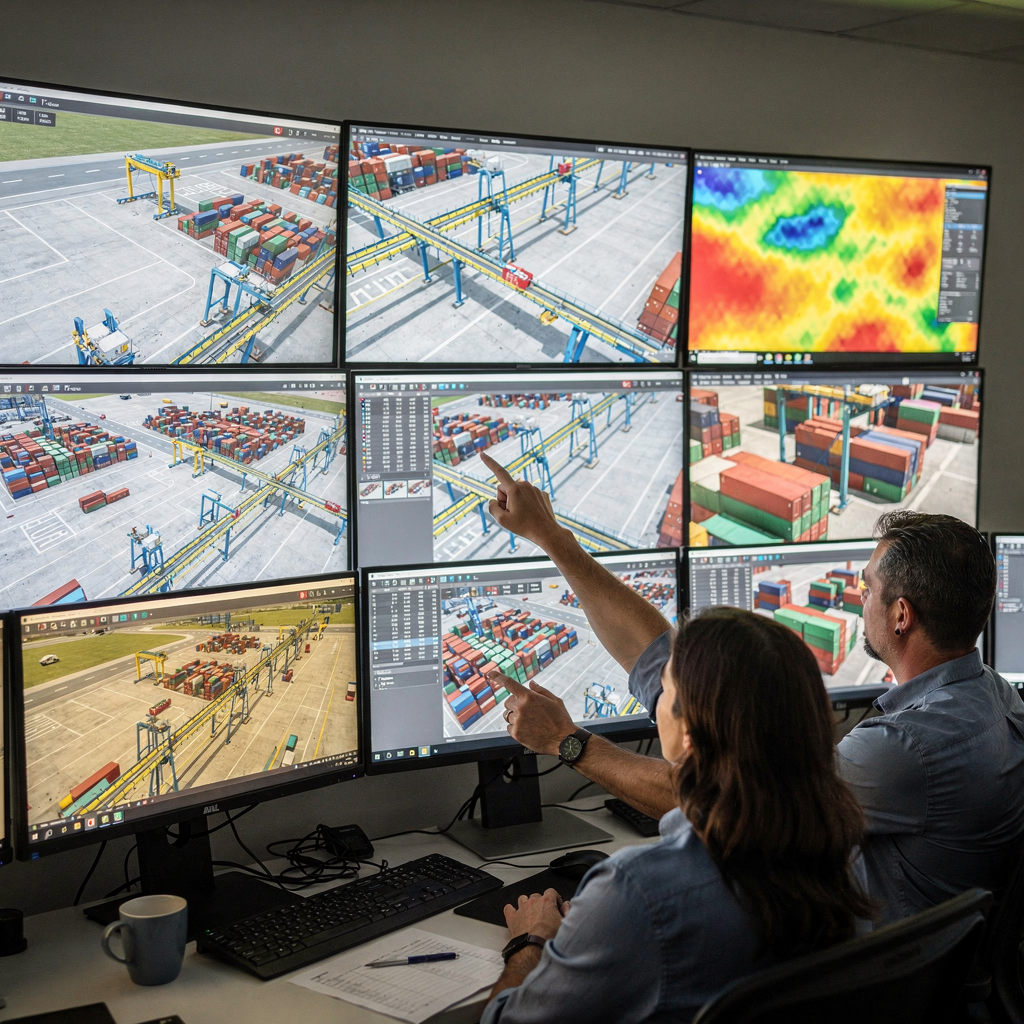
Real-time data integration is essential for effective housekeeping decisions. Sensors, GPS trackers, and terminal systems stream updates continuously. These feeds allow AI to refresh scores and to issue dynamic assignments. That helps planners respond to sudden congestion or to an early berth arrival. The value of real-time data is highest when dashboards and alerts present concise, actionable insights to staff.
Dynamic dashboards show yard heatmaps, crane utilization, and pending reposition tasks. They let terminal operators spot bottlenecks and reprioritize work. Alerts can notify operators of high-risk stacks or of impending truck surges so teams can act fast. This live awareness helps prevent small issues from turning into major disruption.
Historical and real-time records combine to improve forecasting. AI models blend long-term trends with the current state to predict short-term moves. That means planners can predict container arrivals, predict container dwell time, and assign housekeeping tasks that reduce rehandles. This approach improves operational efficiency and reduces berth delays.
Real-time integration also supports automated container handling when available. AGV fleets and automated cranes depend on up-to-the-minute instructions and safe speed profiles. In mixed human-machine yards, clear real-time signals prevent conflicts and keep lanes clear. For teams planning just-in-time vessel arrivals and trying to align yard moves with berth windows, practical strategies are discussed in this guide to just-in-time vessel arrival strategies just-in-time vessel arrival strategies.
Finally, real-time flows power incident response and mitigation. When congestion spikes, AI suggests temporary stacking changes and recommends which containers to move to release space. These fast decisions minimize idle crane time and help maintain schedule integrity. The net result is fewer delays, lower cost, and a more resilient port operation.
benefits of ai
AI delivers measurable benefits across modern container terminals. First, it improves throughput. Studies indicate up to 15–20% faster container handling through targeted housekeeping and scheduling improvements simulation for performance evaluation. Second, AI increases the accuracy of vessel turnaround forecasts by roughly 10–12% predictive analysis for optimizing port operations. Together, these gains support higher throughput and lower per-container cost.
Cost savings appear in several places. Reduced dwell time and fewer rehandles cut labour peaks and crane idle hours. Predictive maintenance lowers emergency repairs and spare parts rush costs. In addition, better scheduling reduces fuel use for yard equipment, which supports efficiency and sustainability goals. Terminals that adopt AI often report improved customer satisfaction due to more reliable ETAs and clearer communication.
There are also broader strategic gains. AI supports the digital transformation of port operations and helps terminals to anticipate demand and to mitigate disruption. When implemented well, AI planning and analytics allow terminals to predict container volumes and to allocate space for empty container returns. This capability allows terminals to optimize for ultra-large container vessels and for fluctuating global trade flows.
Finally, benefits of predictive approaches extend to safety and compliance. Fewer emergency moves mean less rushed work and fewer incidents. That improves the working environment and reduces risk. For ports seeking to future-proof operations and to pursue efficiency and sustainability, advanced AI and digital twin technology become important enablers. These technologies help terminal operators optimize capacity and to remain competitive in the evolving port industry.
FAQ
What is predictive housekeeping in a container terminal?
Predictive housekeeping uses AI and predictive analytics to move containers proactively so loading and unloading are faster. It relies on data from TOS, sensors, and vessel schedules to forecast needs and to recommend container movements.
How does a terminal operating system support predictive models?
The terminal operating system provides timestamps, stacking locations, and move histories that AI needs to learn patterns. When the TOS exposes structured events, models can forecast dwell times and suggest optimal repositioning.
Can predictive maintenance reduce crane breakdowns?
Yes. AI-driven predictive maintenance analyzes sensor data and past repairs to forecast issues and plan service. Case studies show reductions in unexpected breakdowns of about 10–15% when these methods are applied.
What is the role of simulation in housekeeping strategy?
Simulation-based optimisation tests housekeeping policies under many scenarios before live rollout. This helps planners compare trade-offs and pick strategies that minimize rehandles and congestion.
Which data sources are required for effective AI in container terminals?
Key sources include the terminal operating system, vessel schedules, RFID and IoT sensors, and historical service logs. Combining historical and real-time inputs improves model accuracy and responsiveness.
How does real-time data prevent yard congestion?
Real-time feeds show current stack utilization and equipment status so planners can act quickly. Dynamic dashboards and alerts enable on-the-fly moves that stop small buildups from becoming major congestion.
What efficiency gains can terminals expect from AI?
Research indicates possible gains such as 15–20% faster container handling and about a 10–12% improvement in vessel turnaround accuracy. These numbers depend on terminal size and implementation quality.
Is integration with existing systems difficult?
Integration requires APIs, data governance, and staged pilots. Many terminals start with targeted pilots connected to the TOS and then scale after validating model outputs and business rules.
It reduces manual triage and speeds communication, which lowers coordination overhead and helps teams focus on implementation.
Will AI replace terminal staff?
No. AI augments staff by reducing repetitive tasks and improving decision support. Terminal operators still control exceptions, and teams use AI insights to make faster, safer, and more consistent decisions.
our products
 stowAI
 stackAI
 jobAI
jobAI
Innovates vessel planning. Faster rotation time of ships, increased flexibility towards shipping lines and customers.
Build the stack in the most efficient way. Increase moves per hour by reducing shifters and increase crane efficiency.
Get the most out of your equipment. Increase moves per hour by minimising waste and delays.
stowAI
Innovates vessel planning. Faster rotation time of ships, increased flexibility towards shipping lines and customers.
stackAI
Build the stack in the most efficient way. Increase moves per hour by reducing shifters and increase crane efficiency.
jobAI
Get the most out of your equipment. Increase moves per hour by minimising waste and delays.