
The Role of predictive analytics in logistics at container ports
First, predictive analytics transforms how a port plans and acts. Specifically, historical and real-time data feed machine learning algorithms and train predictive model that forecast arrival times, berth windows and equipment needs. Consequently, terminals can reduce idle crane time and improve resource allocation. For example, AI-based forecasting models cut forecasting errors by as much as 20–50% when compared to traditional spreadsheet methods, and they enable data-driven choices that reduce logistics costs near 25% AI-based forecasts cut errors by 20–50%. Also, this improvement shortens planning loops and supports better vessel arrival slotting.
Next, port operators ingest datasets that include vessel schedules, truck ETAs, sensor feeds and yard inventory. Then, machine learning ingests that dataset to identify patterns, predict berth conflicts, and suggest allocation of cranes, staff, and chassis. As a result, terminals lower waiting hours and speed throughput. In one set of deployments, predictive crane maintenance and scheduling improved terminal throughput by roughly 10%. Therefore, the combination of equipment monitoring and scheduling boosts operational efficiency and reduces unscheduled downtime.
Furthermore, predictive analytics in logistics improves decision-making across teams. Operations, planning and gate staff receive actionable alerts and scenario estimates. For instance, a predictive analytics-based maintenance ticket can surface before a bearing fails, letting crews swap parts during a planned lull. Consequently, logistics teams cut manual triage time and improve response speed, which supports faster on-the-day decisions at busy container terminals.
Finally, to learn how planning differs when teams move from reactive to proactive practice, see resources on predictive versus reactive planning in deepsea container ports predictive versus reactive planning. Overall, predictive analytics helps ports forecast more reliably, optimize resource allocation, and improve port management in measurable ways.
Forecast and supply chain visibility to reduce port congestion
First, enhanced visibility depends on real-time tracking and milestone-level event logs. Real-time location feeds for vessels, trucks and containers let planners compare predicted arrival times to actual progress. As a result, teams can reroute labor, reserve a berth slot, or reschedule yard moves. For example, integrating AIS, gate timestamps and yard sensors creates a combined dataset that reduces uncertainty and supports better decision-making.
Second, forecast algorithms anticipate vessel berthing delays and yard stacking conflicts by modeling weather, tidal windows and terminal occupancy. For proof, smart port technology and predictive handling reduce container dwell times by up to 30% in some implementations smart port technologies reduce dwell times by up to 30%. Consequently, waiting hours at quay fall and trucks spend less time idling. Also, planners can smooth peaks by shifting chassis and assigning gates ahead of time.
Third, operators combine milestone logs and predictive alerts to limit port congestion. Specifically, logistics and supply chain managers use event-driven forecasts to adjust quay crane assignments and change yard stacking priorities. Moreover, real-time orchestration tools integrate with transportation systems so gate appointment windows align with forecast demand. For more on yard and gate congestion reductions driven by haulier arrival predictions, read the study on reducing yard and gate congestion reducing yard and gate congestion.
Finally, better visibility supports stakeholders beyond the terminal. Shippers, carriers and inland hauliers receive clearer timelines and fewer surprises. Thus, supply chain visibility raises predictability across global trade networks and reduces the chance that congestion cascades along the supply chain. In short, accurate forecast and clear event logs make ports less prone to congestion and more capable of handling variable demand.

Drowning in a full terminal with replans, exceptions and last-minute changes?
Discover what AI-driven planning can do for your terminal
predictive analytics in logistics leverage machine learning and predictive model for terminal efficiency
First, terminals leverage IoT sensor networks, CCTV feeds and equipment telematics to collect a continuous dataset. Then, using machine learning models, analysts identify early signs of failure and assess throughput bottlenecks. For instance, vibration and temperature sensors on crane gear feed a predictive model that forecasts maintenance windows. Consequently, crews schedule repairs at low-impact times and avoid emergency stops.
Second, algorithms optimize quay crane and yard mover scheduling to maximize throughput. Specifically, decision tree and neural network approaches sequence jobs, minimize empty moves, and align container handling with vessel plans. As a result, many terminals report 10–15% gains in productivity and fewer unscheduled interruptions. Furthermore, predictive scheduling can reduce quay waiting and improve container flow into the yard.
Third, integration matters. Modern terminals connect predictive analytics to terminal operating systems, gate controls and dispatch. Using machine learning, systems propose crane assignments and suggest yard reblocks that lower shuttle distances. In practice, analytics to improve container handling reduces congestion and speeds cargo delivery. For deeper techniques on crane productivity and scheduling, see crane productivity optimization techniques in port operations crane productivity optimization techniques.
Finally, using predictive tools increases resilience. When weather, labour moves or a late vessel launch risk throughput, the system simulates scenarios and offers fallback plans. Consequently, terminal managers make faster, better-informed choices. Also, visible metrics such as mean absolute percentage error and on-time gate appointments support continuous improvement. Thus, predictive analytics helps terminals improve port operations while balancing short-term throughput with long-term capacity planning.
analytics matters: benefits of predictive maintenance for shipment and management systems
First, predictive maintenance prevents expensive breakdowns. Sensors and analytics identify wear patterns long before a failure occurs. Therefore, maintenance teams schedule repairs during low-traffic windows, reducing both downtime and safety risk. For port operators, the improved reliability shortens crane repair cycles and keeps shipment moves on schedule.
Second, predictive maintenance integrates with management systems to improve resource allocation. For example, work orders triggered by predictive alerts feed into planning systems that assign staff and spare parts automatically. As a result, personnel schedules become more efficient and spare-part inventory shrinks.
Third, the benefits extend to safety and cost. Early fault detection reduces the likelihood of catastrophic failures and cuts maintenance spend over time. Furthermore, predictive analytics helps prioritise tasks by severity and impact, yielding smarter duty-rosters and lower overtime. Studies show that predictive maintenance reduces unscheduled downtime and supports modest cost savings while improving safety outcomes.
Finally, predictive analytics-based strategies also improve shipment reliability. When equipment runs reliably, vessel loading and truck dispatch proceed as planned. In turn, carriers meet ETAs more consistently and shippers see fewer exceptions. For a focused look at how predictive analytics supports yard congestion management, consult predictive analytics for port operations and yard congestion predictive analytics for port operations and yard congestion.
Drowning in a full terminal with replans, exceptions and last-minute changes?
Discover what AI-driven planning can do for your terminal
transportation management: forecasting container arrival and shipment workflow optimisation
First, transportation management platforms ingest forecast outputs and align truck and rail movements. Thus, gate appointments match vessel schedules and yard capacity. For example, systems that forecast arrival times reduce truck queuing and avoid gate spikes. Also, synchronized appointment systems and chassis pools cut turnaround times by up to 20% and reduce yard congestion.
Second, forecast demand data supports empty-container repositioning and chassis allocation. Consequently, logistics providers lower repositioning costs and shorten empty-miles. In practice, combining demand forecasting with dynamic appointment slots smooths peaks and spreads handling work across available hours. For deeper operational tactics, see optimizing empty container repositioning and yard optimization references optimizing empty container repositioning and real-time container terminal yard optimization strategies.
Third, automated workflows reduce human friction. Specifically, predictive insights route emails, generate gate passes, and update TMS entries. Therefore, operations teams spend less time on manual lookups and more time on exception resolution.
Finally, the net result is smoother shipment flow and lower transportation costs. Systems that forecast arrival times and optimize gate procedures shrink idle time, reduce truck idling, and improve on-time pickup rates. Consequently, ports and carriers gain through faster cycles and clearer metrics for continuous improvement.
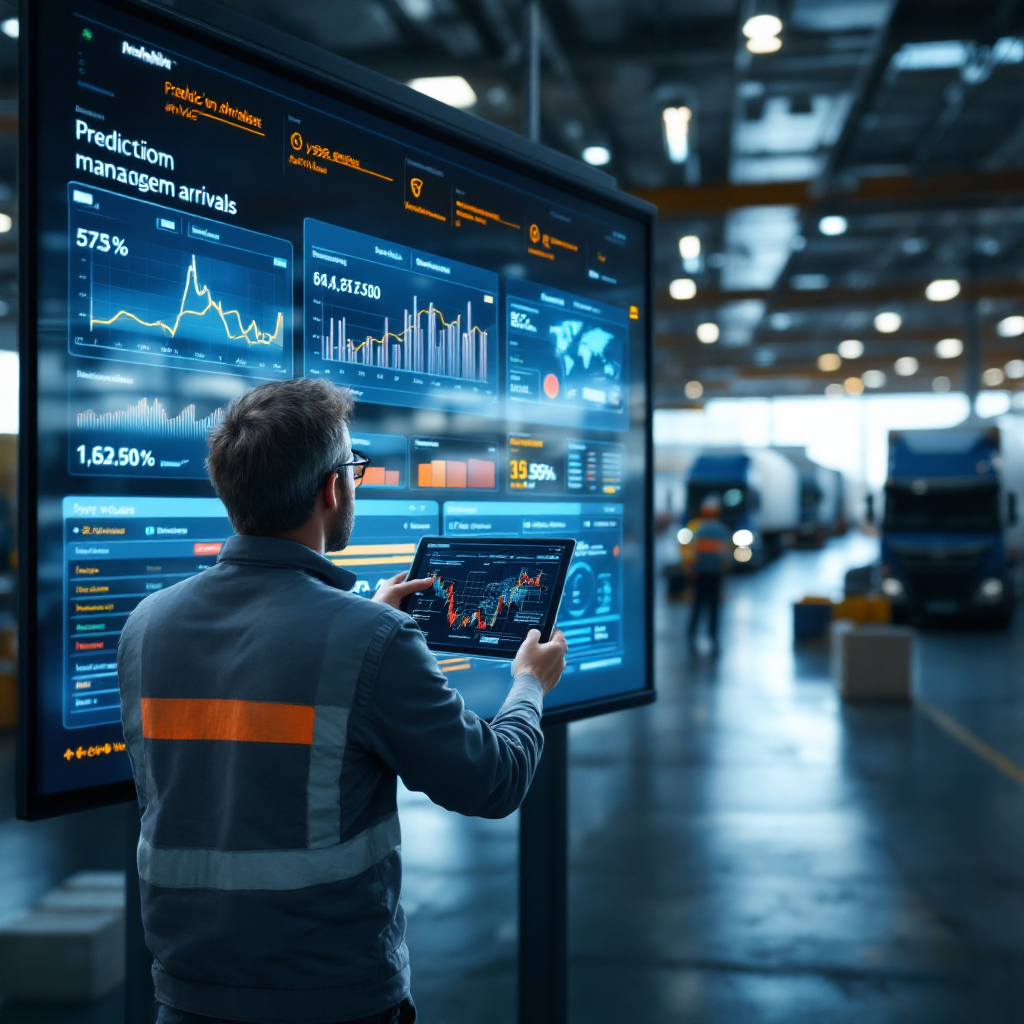
Supply chain resilience: leverage predictive analytics to combat congestion at ports
First, ports face volatility from weather, labour events and shifts in global trade. Predictive analytics identifies early signals from multiple data sources and issues alerts. For example, AI models use traffic, weather and border statistics to forecast delays before they happen AI predicts traffic, weather and border delays. Consequently, operators activate contingency plans and reassign capacity.
Second, building resilience requires connected infrastructure. Digital shipping corridors and interoperable systems allow forecasts to propagate across stakeholders. As MDPI notes, technical infrastructure and logistical efficiency are critical success factors for connected corridors critical success factors for digital shipping corridors. Therefore, ports that invest in analytics and connectivity strengthen regional logistics and the broader global supply chain.
Third, predictive alerts empower proactive response. For instance, a forecast that flags a high probability of congestion triggers rebooking windows, staffing adjustments, or temporary hour extensions. In turn, the terminal keeps movement flowing and avoids costly pile-ups. Also, systems that produce actionable, milestone-level notifications give logistics teams the foresight to minimize disruption.
Finally, looking ahead, smart-port investments and simulation tools will deepen resilience and connectivity. As smart-port markets grow, ports will leverage neural network models, richer datasets and digital replicas for scenario planning. For readers wanting simulation and emulation approaches, see the digital replica of terminal operations for scenario simulation digital replica of terminal operations. Overall, predictive analytics increases agility and helps ports absorb shocks while supporting global trade recovery.
FAQ
What is predictive analytics in container port logistics?
Predictive analytics uses historical and current data plus machine learning to forecast events such as vessel arrival times, equipment failures and yard congestion. It helps port teams make proactive decisions that reduce delays and improve throughput.
How does predictive analytics reduce port congestion?
Forecast algorithms and real-time tracking identify likely bottlenecks and suggest reassignments or alternative slots before congestion grows. As a result, ports lower dwell times and reduce waiting hours at quay.
Can predictive maintenance cut equipment downtime?
Yes. Predictive maintenance flags early signs of failure and schedules repairs during low-impact periods, reducing unscheduled downtime. This approach improves safety and saves maintenance costs over time.
What data sources feed predictive models at terminals?
Terminals use AIS, gate sensors, crane telematics, CCTV feeds, weather data and carrier schedules to build a comprehensive dataset. Combining those sources lets machine learning identify patterns and produce accurate forecasts.
How do forecasts improve transportation management?
Forecasts align truck and rail slots with vessel plans and yard capacity, which reduces truck queuing and idling. Also, they support better chassis and empty-container management to lower transportation costs.
What role do AI and machine learning play?
Machine learning and neural network algorithms analyze patterns, predict failures and sequence workloads for cranes and movers. They allow terminals to optimize handling and make stronger operational decisions under uncertainty.
Are there measurable benefits from adopting predictive analytics?
Yes. Implementations report forecasting error reductions of 20–50% and logistics cost savings up to 25% forecasting improvements and cost savings. Some smart ports also report dwell time reductions of around 30% dwell time reductions.
How can smaller terminals start with predictive tools?
Start by instrumenting critical assets and integrating gate and vessel data into a single dataset. Then pilot a focused use case, such as crane maintenance or haulier arrival prediction, before scaling platform-wide.
What is the link between predictive analytics and supply chain visibility?
Predictive analytics augments visibility with forecasts and milestone predictions, turning raw tracking data into actionable timelines. Consequently, stakeholders across the network can make informed decisions faster.
As a result, teams reduce manual triage time and increase consistency in their operational communications.
our products
 stowAI
 stackAI
 jobAI
jobAI
Innovates vessel planning. Faster rotation time of ships, increased flexibility towards shipping lines and customers.
Build the stack in the most efficient way. Increase moves per hour by reducing shifters and increase crane efficiency.
Get the most out of your equipment. Increase moves per hour by minimising waste and delays.
stowAI
Innovates vessel planning. Faster rotation time of ships, increased flexibility towards shipping lines and customers.
stackAI
Build the stack in the most efficient way. Increase moves per hour by reducing shifters and increase crane efficiency.
jobAI
Get the most out of your equipment. Increase moves per hour by minimising waste and delays.