
Container Terminal Stack: Balancing Density and Efficiency in Port Operations
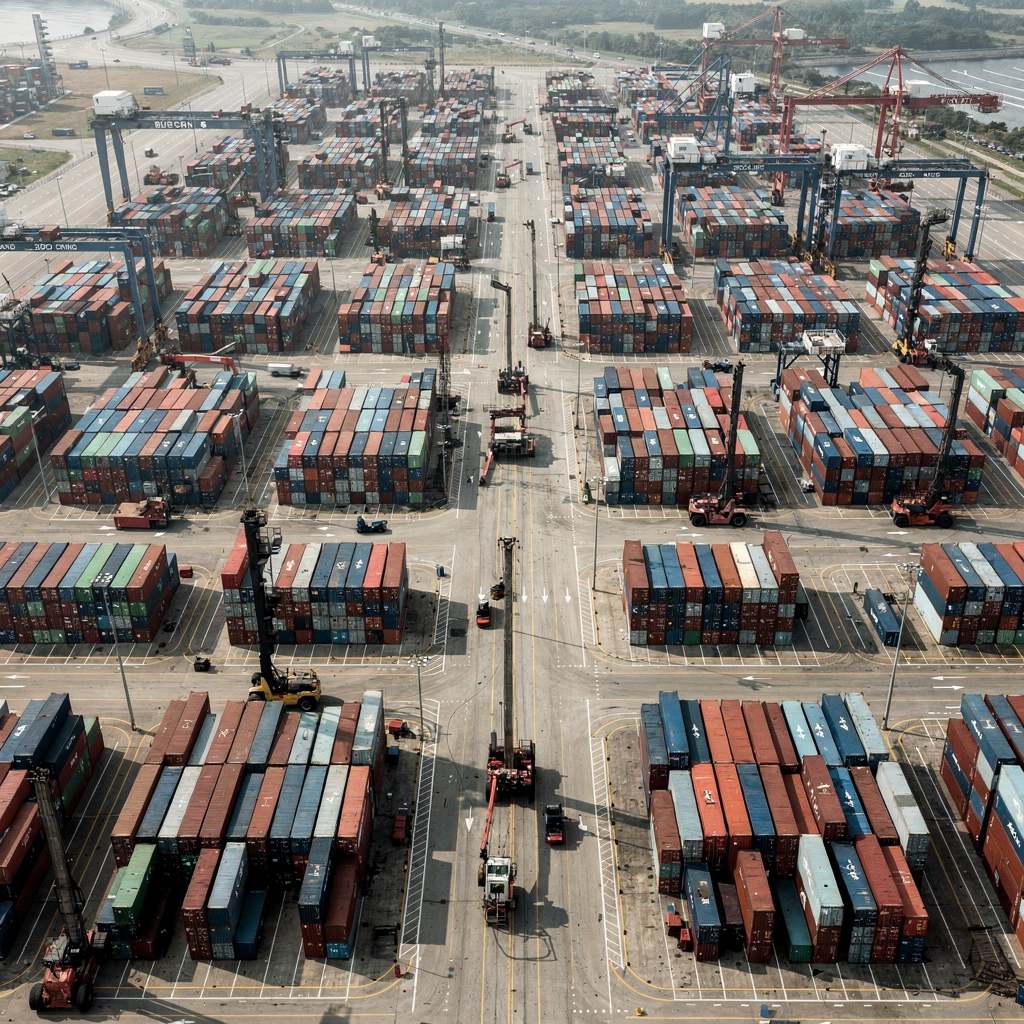
Yard STACK DENSITY defines how many container units sit per unit area in a TERMINAL. It directly affects throughput and the cost to handle containers. When operators increase density they can store more TEU without expanding the footprint, and therefore reduce the need for new storage space. Yet higher density often raises the chance of congestion, longer retrieval times, and more container rehandling. Operators must weigh benefits and trade-offs in each decision.
Typical inland TERMINAL densities sit between 30 and 50 TEU per acre, and this range sets a practical benchmark for inland yards. For example, increasing average stack height from three to five containers can raise yard density by roughly 40% when handling equipment allows it Seaport Capacity Manual. This change can increase the number of containers stored per acre, but it can also slow retrieval when quay calls arrive.
To balance density with operational fluidity terminals must focus on smarter container LOCATION and clearer handling rules. Space ALLOCATION and container LOCATION planning reduce unneeded moves. For export containers, careful grouping by vessel and berth sequence lowers reshuffles and saves crane cycles. Research indicates a 10% rise in yard DENSITY can increase overall terminal THROUGHPUT by about 5–7% terminal productivity study. Thus, modest density gains often pay back quickly.
Operators must consider equipment, layout and OPERATIONS when setting an optimal stack height. Reach STACKERS and GANTRY CRANES change the calculus. Handling EQUIPMENT and container WEIGHT limits also matter. Meanwhile, export CONTAINERS and import containers follow different yard rules and must occupy complementary zones to reduce interference. In short, DENSITY is not a single number. It is a system result of STORAGE SPACE, handling EQUIPMENT, and the number of containers present at any time. To learn more about yard layout tactics, see resources on inland terminal yard efficiency and yard congestion prediction inland container terminal yard efficiency and predicting yard congestion.
Container Operations and Yard Crane Scheduling: Streamlining Inland Terminals
Container OPERATIONS cover receiving, storing, relocating and loading containers. Each step adds moves and cost. Effective YARD CRANE SCHEDULING reduces unnecessary moves and helps to optimize flow. In practice, terminals group export CONTAINERS by vessel and by BERTH, then assign storage rows to minimize crane travel. Yard CRANE SCHEDULING must prioritize sequences that reduce crane idle time, and that minimize container rehandling.
Core tasks include gate checks, storage LOCATION selection, and final retrieval. A good yard schedule uses LOAD/UNLOAD lists to guide placement and to pre-position containers close to the quay. This reduces transfers and accelerates quay cycles. For instance, placing import containers close to the gate lowers gate dwell and speeds outward flows. Similarly, strategies of import containers often keep import containers close to the gate to reduce gate delays.
Scheduling must incorporate real-time data. Vessel ETAs, truck appointments, and container WEIGHT information change rapidly. Systems that use such data improve DECISION-MAKING and reduce mistakes. By integrating automated email AGENTS with the TOS, terminals can pass real-time instructions to yard teams and keep crane queues tight. That reduces slack and cuts unnecessary handoffs.
YARD CRANE SCHEDULING also responds to container FLOWS. When export CONTAINERS surge, cranes shift to quick-turn stacks. When import flows peak, cranes stage boxes toward the gate and then return to stacking. Reinforcement learning and predictive scheduling bring clear gains; see applied case studies on crane scheduling optimization for deeper methods reinforcement-learning in crane scheduling. Also, cloud-based yard optimization tools help operators coordinate schedule changes and improve coordination with berth planning cloud-based yard optimization solutions.
Drowning in a full terminal with replans, exceptions and last-minute changes?
Discover what AI-driven planning can do for your terminal
Heuristic Algorithm to Optimize Yard Stack Density
A HEURISTIC approach offers practical speed where exact methods stall. Exact OPTIMIZATION models can solve small instances, yet struggle with dynamic, real-time yard problems. Conversely, a HEURISTIC algorithm delivers good solutions fast, and so it fits yard tempo. The algorithm I outline below focuses on ALLOCATION of containers into stacks with multi-criteria goals. It balances density, minimises reshuffles, and reduces crane travel time.
Step one: cluster inbound and outbound containers by vessel, berth, and departure window. Step two: assign clusters to storage zones based on proximity to the quay and gate. Step three: within each zone apply a greedy best-fit stacking rule that places heavier or slower-moving boxes lower and closer to crane lanes. The heuristic uses simple scoring: proximity score, reshuffle risk, and stacking height cost. It then iteratively refines ALLOCATION by swapping candidate containers when the swap lowers total handling time.
This method explicitly aims to minimize container rehandling while attempting to OPTIMIZE density. The objective function mixes terms to MINIMIZE crane travel, minimize reshuffles, and maximize usable storage space. The algorithm supports constraints for container WEIGHT, type of container, and segregation rules for HAZMAT or special cargo. It also accounts for number of containers arriving in a given period and for container relocation problem patterns observed in live yards.
Heuristic choices include stack formation, repositioning thresholds, and when to trigger a replan. For example, if stacks reach a threshold height and crane queues grow, the system lowers new stacking to favor retrieval speed. The approach can plug into a TERMINAL OPERATIONS dashboard and can interact with an optimization model for periodic recalibration. For more on solving the container matching and replan problems see applied solutions solving the container matching problem. This heuristic blends fast response with measured gains. It helps operators achieve higher DENSITY while keeping operations smooth.
Multi-objective Optimization and Simulation for Terminal Planning
Multi-objective models let planners trade off competing goals. In a container TERMINAL, objectives often include maximizing DENSITY, minimizing handling costs, and minimizing turnaround time. Multi-objective OPTIMIZATION can produce Pareto fronts that show trade-offs. Planners then pick balanced strategies that suit their KPIs. The approach also supports policy tests like stacking policies and gate slot changes.
SIMULATION complements optimization. Simulation models recreate yard dynamics and let teams test policies before change. They model crane cycles, truck arrivals, and container flows. For example, a simulation can show how a 10% increase in yard DENSITY translates to a 5–7% rise in terminal THROUGHPUT study on terminal productivity. That metric helps quantify the value of densification.
Simulation also evaluates stacking strategies and automated moves. It can test scenarios for automated container terminals and for manual yards that use reach STACKERS or gantry systems. A realistic SIMULATION includes variability in vessel arrival, truck lateness, and the volume of containers per call. It should report on crane utilization, container rehandling, and yard handling delays. Tools that combine SIMULATION outputs with an optimization model improve decision support. For example, planners can use digital twins and predictive analytics to enhance their planning and design, and to reduce the risk of misallocation AI and smart port digital twins.
Finally, multi-objective OPTIMIZATION supports strategic choices like whether to raise average stack height or to invest in new handling equipment. Simulation then shows the operational impact. Together they form a practical route to improve yard operations and to enhance their operational efficiency across the whole chain.
Drowning in a full terminal with replans, exceptions and last-minute changes?
Discover what AI-driven planning can do for your terminal
Crane Systems and Dynamic Container Placement Strategies
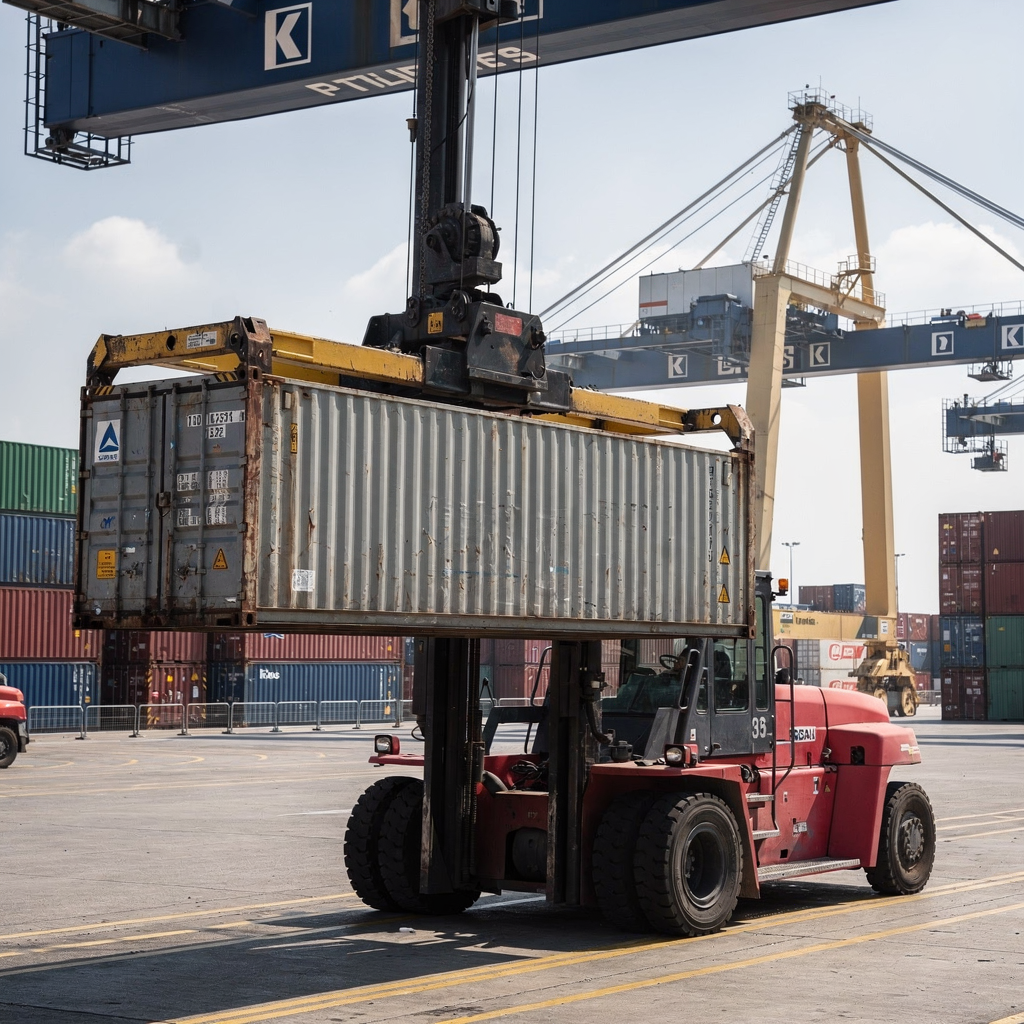
Handling EQUIPMENT changes what is possible in a yard. Reach STACKERS, gantry cranes, and hybrid systems allow higher stacks and denser arrangements. Yet higher stacks also bring higher container rehandling risks and slower access. Raising average stack height from three to five containers typically boosts yard DENSITY by about 40% when the right equipment is present Seaport Capacity Manual. That gain can stretch yard capacity without new land, and thus reduce footprint pressures.
Dynamic container placement adapts to vessel schedules and to evolving container flows. The approach moves containers proactively to reduce future reshuffles. For instance, export CONTAINERS due on the same berth are grouped and staged near the quay. Similarly, import containers are staged toward the gate when truck appointments rise. These strategies require good INFORMATION. When information is available about ETAs and truck windows, the yard can stage boxes with confidence.
Dynamic strategies also use ALLOCATION and yard crane sequencing together. A CRANE receives a prioritized work list that reduces deadhead travel. Then the yard team executes short moves that align with gate and vessel flows. Container allocation decisions can consider container WEIGHT, type of container and the required number of containers per slot. The result is higher utilization of yard space and fewer costly relocations.
Advanced control systems tie real-time sensors, the TOS and optimization engines. Real-time DECISION-MAKING lets operators adjust stacking POLICIES when a berth change occurs or when transshipment windows shrink. For operators planning equipment investments, simulation and optimization show whether adding gantry cranes or adopting automated stackers reduces long-term costs. This helps solve the optimization problem of balancing capital expenses and daily operational savings. The field continues to evolve as marine container terminals and inland TERMINALs adopt smarter, data-driven approaches.
Port Algorithm for Container Terminal Stack Improvements
A port-wide ALGORITHM must integrate data, constraints and policy. It should take real-time input on vessel ETAs, truck appointments, container types, and the number of containers arriving. Then it must produce container ALLOCATION and crane schedules that minimize handling and maximize density. The system should run continuously and trigger replans when new data arrives.
At its core the ALGORITHM combines HEURISTIC placement with periodic optimization. The HEURISTIC ensures rapid reactions to immediate needs, while the optimization model recalibrates strategic ALLOCATION at longer intervals. Multi-objective optimization blends priorities: minimize reshuffles, minimize crane travel, and maximize usable yard space. The ALGORITHM must also respect constraints such as container WEIGHT limits, segregation needs, and stacking POLICIES to avoid unsafe loads.
Expected gains include lower handling costs, fewer moves per container, and extended effective yard capacity. Research shows that modest density improvements can deliver measurable throughput gains (5–7% throughput increase for a 10% density gain). Operators also reduce the carbon footprint when they reduce crane travel and vehicle moves. Reducing the carbon from yard operations helps sustainability goals.
Finally, the ALGORITHM should feed human workflows and automated systems. This reduces manual triage and speeds execution. When combined with predictive analytics and SIMULATION, the port algorithm becomes the driving force behind smarter, faster yard operations that keep cargo moving.
FAQ
What is yard stack density and why does it matter?
Yard stack DENSITY measures how many containers fit in a given area of the yard. It matters because it affects storage capacity, handling time, and overall TERMINAL throughput. Increasing density can avoid land expansion but may raise retrieval times and rehandling.
How does crane scheduling reduce container rehandling?
Yard crane scheduling sequences moves to avoid unnecessary reshuffles. By prioritizing containers that will be loaded soon and grouping work by berth, cranes execute fewer deadhead moves. That lowers container rehandling and reduces crane travel time.
What is a heuristic ALGORITHM for yard allocation?
A HEURISTIC ALGORITHM uses practical rules to place containers quickly. It trades optimality for speed. Operators use it in real time to assign storage LOCATION and to reduce immediate reshuffle risk while an optimization model runs in the background.
How do simulation models help terminal planners?
SIMULATION models recreate yard dynamics and test policies without risking live operations. They measure impacts on crane utilization, container rehandling, and throughput. That lets planners choose policies that balance DENSITY and service quality.
Can raising stack height always improve capacity?
Raising stack height increases capacity but only if handling EQUIPMENT and safety rules allow it. For example, increasing stacks from 3 to 5 containers can boost density by about 40% when supported by appropriate equipment Seaport Capacity Manual. However, taller stacks may slow access and increase rehandling unless managed carefully.
What role does information play in dynamic container placement?
Information drives better DECISION-MAKING. When ETAs, truck windows, and container details are known, the yard can stage containers to minimize reshuffles. Information reduces uncertainty and lets dynamic strategies succeed.
How many TEU per acre are typical in inland yards?
Typical inland yards aim for 30–50 TEU per acre depending on equipment and policies. That range balances storage needs with the practical limits of handling equipment and access lanes.
How can automation reduce email burdens in terminal operations?
It grounds replies in ERP, TMS and WMS data and reduces manual triage. This saves time and improves clarity when allocation and scheduling change.
What is the container relocation problem?
The container relocation problem arises when stored containers block access to others, requiring extra moves. Heuristic ALGORITHMs and optimized stacking POLICIES aim to minimize the number of reshuffles and the cost of these relocations.
How do terminals balance density with throughput?
Terminals test policies using multi-objective optimization and SIMULATION. They pick stack heights and storage rules that increase capacity while keeping crane cycles and turnaround within targets. The goal is to maximize usable storage without materially degrading service levels.
our products
 stowAI
 stackAI
 jobAI
jobAI
Innovates vessel planning. Faster rotation time of ships, increased flexibility towards shipping lines and customers.
Build the stack in the most efficient way. Increase moves per hour by reducing shifters and increase crane efficiency.
Get the most out of your equipment. Increase moves per hour by minimising waste and delays.
stowAI
Innovates vessel planning. Faster rotation time of ships, increased flexibility towards shipping lines and customers.
stackAI
Build the stack in the most efficient way. Increase moves per hour by reducing shifters and increase crane efficiency.
jobAI
Get the most out of your equipment. Increase moves per hour by minimising waste and delays.