
Container Terminal and Terminal Operating System Overview
The container terminal sits at the heart of global logistics and connects ocean carriers, shippers, and hinterland networks. First, the terminal processes inbound and outbound cargo, and then it routes containers to trucks, rail, or storage. Next, berth coordination and yard operations determine how fast vessels can be serviced. Therefore, the efficiency of the terminal directly affects supply chains and delivery windows. For example, research shows a well-configured terminal operating system can cut cycle times for vessel handling by up to 15–20%, and it can help increase throughput by 10–25%. As a result, port calls shorten and shipping schedules become more reliable.
The terminal operating system acts as the central nervous system for day-to-day terminal operations. It schedules quay tasks, manages yard space, assigns handling equipment, and controls gate flows. In addition, the terminal operating system integrates berth planning, yard management, vessel scheduling, and gate handling so that operations avoid conflicts and maintain smooth operations. The TOS provides real-time visibility and reporting systems, and it often supports state-of-the-art tos features such as simulation and optimization modules.
Tactical benefits include fewer rehandles, better quay crane productivity, and balanced workloads across the yard. Indeed, a systematic review reported average productivity gains around 18%, with some terminals achieving up to 30% improvement in specific performance indicators. Therefore, terminal operators who focus on configuration and continuous improvement can materially increase throughput and reduce costs. At the same time, terminal staff must balance priorities such as quay productivity versus yard congestion and driving distances. Loadmaster.ai applies reinforcement learning to address those trade-offs by training AI agents in a digital twin, so terminals can optimize without relying solely on historical patterns. For more on digital twin integration, see our guide to digital twin integration with container terminal operating systems.
Terminal Operations and Optimization Strategies
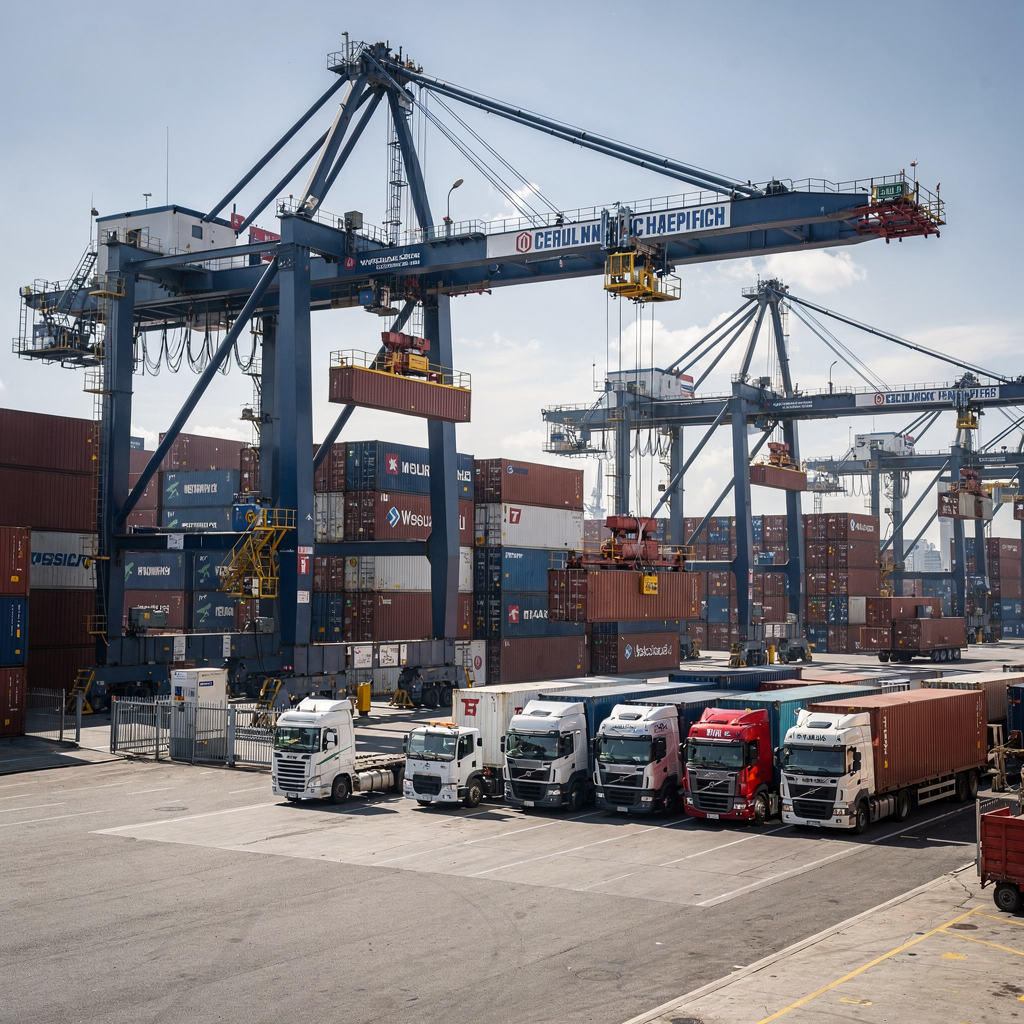
Terminal operations depend on coordinated decision-making across berth, yard, gate, and equipment layers. First, key performance drivers include crane productivity, truck turnaround, and container inventory balance. Next, common bottlenecks appear as yard congestion, long driving distances, and uneven crane workload. Therefore, optimizing those elements can shorten vessel stays and improve the efficiency of terminal operations overall. Research highlights that modular integration and hierarchical control reduce conflicts and increase predictability. For example, an integrated approach aligns berth planning with yard management and gate systems to prevent local optimization that harms global performance (Mili, 2024).
Furthermore, data-driven scheduling and simulation models let teams predict bottlenecks before they occur. Simulation-based approaches can train planners and test allocation rules under many scenarios. In addition, machine learning and reinforcement learning enable dynamic decision making. For instance, data-driven methods have shown potential to increase throughput while reducing operational costs and environmental impact (Data-Driven Analysis and Optimization). Consequently, terminals that invest in optimization modules and real-time monitoring achieve better moves per hour and fewer rehandles.
Practical techniques to optimize terminal performance include modular integration of software modules, prioritized sequencing at the quay, and dynamic allocation of yard operations. Also, introducing optimization modules for stacking and routing reduces unnecessary moves. Evidence supports this approach: operations research studies report average gains of 18%, and some projects produced up to 30% improvements in crane productivity and yard utilization (systematic review). Therefore, to increase throughput, terminals must combine process redesign, modern tos capabilities, and continuous performance monitoring. Our team at Loadmaster.ai complements existing platforms by providing closed-loop agents that optimize crane sequencing, yard placement, and job allocation, so operator decisions scale across shifts. See how AI can improve stowage planning in our article on AI in port operations: stowage planning.
Drowning in a full terminal with replans, exceptions and last-minute changes?
Discover what AI-driven planning can do for your terminal
tos, tos Platforms and Legacy Systems Integration
Choosing the right tos platforms matters for long-term terminal management and flexibility. Leading TOS vendors offer modular architectures with modules for berth planning, yard management, gate systems, and reporting systems. For example, some solutions provide a virtual terminal environment for testing changes before rollout. In addition, advanced tos and modern tos designs expose APIs to external systems and enterprise systems so that equipment telemetry, gate systems, and port community systems can integrate seamlessly.
However, integrating a new tos with legacy systems introduces risks. Legacy systems often use different data formats and inconsistent operational data. As a result, data cleansing and robust ETL processes become essential. Also, user adaptation poses another barrier; terminal staff require training and time to adopt new workflows. A case study at the Port of Mombasa highlights these challenges, noting issues with system integration and user adaptation during TOS deployments (Mombasa study).
To reduce disruption, I recommend a phased migration. First, run parallel systems while validating results. Next, prioritize data cleansing and reconcile container tracking feeds against physical counts. Then, run pilot blocks and extend change gradually. Also, deliver targeted training for terminal operator teams and dispatchers so they gain confidence. In addition, establish reporting systems that surface performance metrics and operational performance trends. For terminals that need safe experimentation, our approach uses a sandbox digital twin to test AI-driven policies before production rollout. If you want guidance on integration architecture, review our piece on managing latency and data consistency in port API integrations.
Automation in Port Terminal and Intermodal Operations with Rail Terminals
Automation plays a major role in reducing manual effort and improving reliability. First, key automation KPIs measure quay crane utilization, gate queue times, and yard crane productivity. Also, automation systems monitor throughput and equipment uptime using real-time monitoring and real-time data feeds. Therefore, terminals can react faster to disruptions and adjust allocation of handling equipment dynamically. For example, automation KPIs guide decisions about when to assign additional quay crane labor or when to prioritize yard reshuffles.
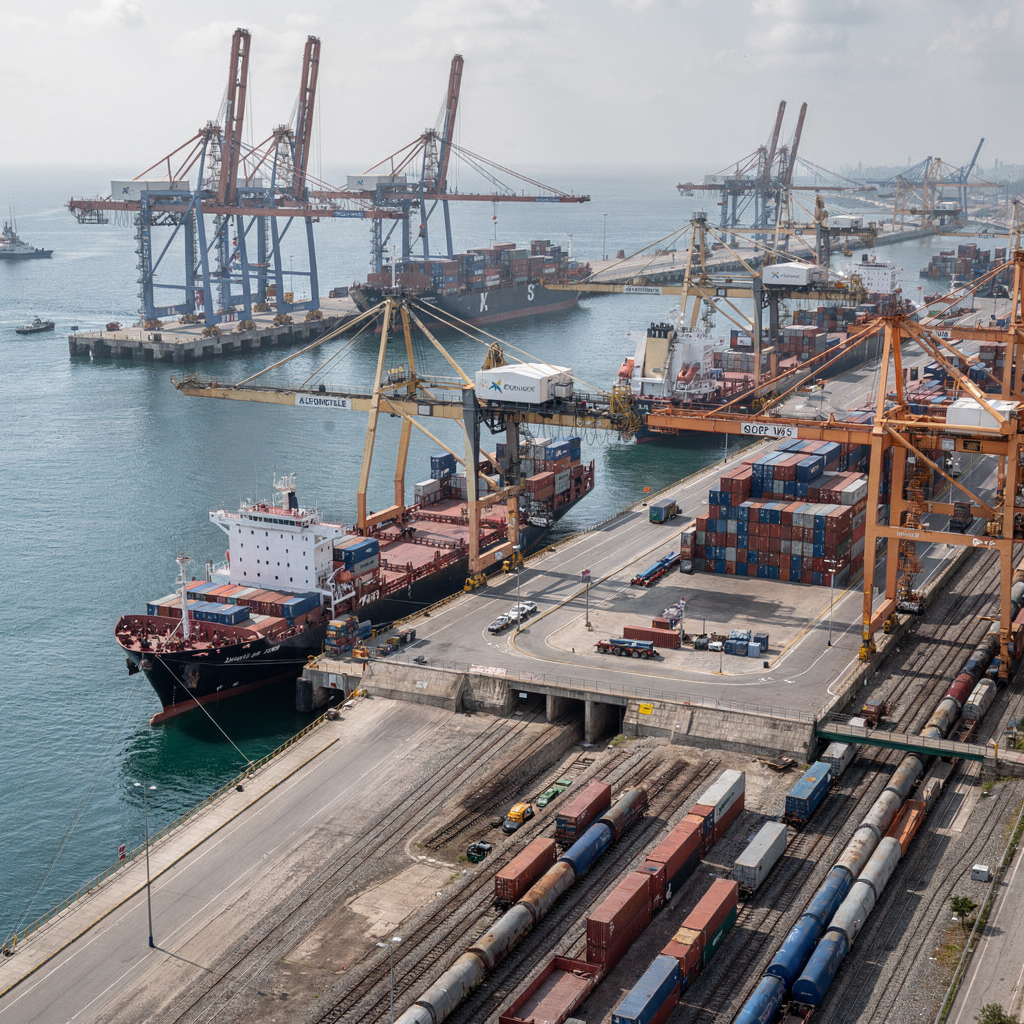
Intermodal coordination with rail terminals increases asset utilisation and reduces truck dwell. In addition, synchronized scheduling between the terminal and rail terminals reduces peak congestion and shortens door-to-door times. Consequently, smoothing the handoff between modes supports an efficient container flow across terminal and hinterland. In practice, digital twins and big data analytics allow real-time equipment deployment and predictive job sequencing. One study shows data science and simulation models can evaluate operational performance and identify bottlenecks for improvement (operational performance evaluation).
Furthermore, specific equipment matters. Quay crane and yard crane assignments, straddle carriers, reach stackers, and reach stackers’ prioritizations all influence stacking systems and container movements. Therefore, terminals must measure performance monitoring and adjust KPIs in real time. Loadmaster.ai integrates reinforcement learning agents—StowAI, StackAI, and JobAI—to coordinate quay crane sequences and yard placement. As a result, operators see fewer rehandles, shorter driving distances, and higher moves per hour. For more on equipment job allocation, read our post on container terminal equipment job allocation optimization.
Drowning in a full terminal with replans, exceptions and last-minute changes?
Discover what AI-driven planning can do for your terminal
Complex Terminal Operating and Challenges in Port Terminal
Complex terminal layouts create operational strain. In a multi-berth, high-density site, conflicts arise between berth scheduling and yard operations. First, vessels with tight windows demand fast quay crane cycles. Next, yard space limits force frequent reshuffles. Therefore, planning must consider trade-offs in allocation, travel distance, and crane interaction. Indeed, the central nervous system role of the TOS becomes more important as the number of constraints grows.
Key challenges include system integration, resistance to change, and poor data quality. Also, legacy systems often lack the APIs required for seamless exchange of operational data. As a result, terminals face inconsistent container tracking and reporting systems. A port study observed that computer-based terminal operating systems struggled with integration and user adaptation at Mombasa (Mombasa experience), and that underscores the need to prepare IT infrastructure and staff training.
To cope with complexity, terminals can employ layered controls and hierarchical decision making. For instance, a higher-level scheduler reserves yard blocks for incoming vessels, while local dispatchers optimize day-to-day terminal operations. Also, digital transformation programs help; a state-of-the-art tos or modern tos with simulation models can test rules and quantify benefits. Importantly, ensure data governance and cleansing workflows operate continuously. In addition, pilot projects help win stakeholder buy-in. For guidance on synchronising fleet and execution layers, consult our article on synchronizing fleet management and TOS execution.
Leading tos Solutions and Future Optimization in terminal
Leading tos solutions now embed AI, simulation models, and cloud-native architectures. First, vendors such as Navis provide modular products, and Navis N4 is commonly used by large terminals. Also, open APIs let advanced tos integrate with enterprise systems and external systems. As a result, a modern stack enables real-time visibility and performance monitoring. In addition, state-of-the-art tos platforms increasingly offer virtualization and a virtual terminal to test scenarios before changes reach live operations.
Future trends include digital twins, predictive maintenance, and AI-driven decision layers. For example, digital twins let teams simulate vessel calls and yard layouts to quantify expected gains before rollout. Additionally, predictive maintenance reduces unexpected downtime for quay crane and yard crane assets. Therefore, terminals can protect throughput while lowering lifecycle costs. Studies also show that closed-loop, data-driven control can boost throughput and reduce environmental impact (data-driven optimization).
Best practices for ongoing optimization emphasize stakeholder collaboration, continuous measurement, and phased deployments. First, agree on operational performance metrics and performance indicators. Next, iterate on optimization modules and keep reporting systems current. Also, run pilots that measure efficiency and productivity across terminal functions. Loadmaster.ai focuses on reinforcement learning agents that do not require large historic datasets. Instead, our agents learn in simulation and then deploy with guardrails, which helps terminals meet the specific needs of their layout and operations. For a deep dive on building a digital twin, see building a digital twin of an inland container terminal.
Finally, terminals that combine best-of-breed leading tos with specialized AI for stowage, stacking, and job allocation can achieve steady gains. Consequently, terminals can improve overall performance, reduce rehandles, and ensure efficient container handling while keeping terminal staff in control of policy and priorities.
FAQ
What is a terminal operating system?
A terminal operating system is software that coordinates activities such as berth planning, yard management, vessel scheduling, and gate handling. It acts as the central nervous system for the terminal and provides real-time visibility, reporting systems, and control over container handling systems.
How much can optimization improve terminal performance?
Optimization can yield substantial gains. For instance, studies report average productivity gains around 18% and up to 30% for specific KPIs like crane productivity and yard utilization (systematic review). Also, cycle time reductions of 15–20% and throughput increases of 10–25% have been observed in practice (good practices and data-driven studies).
What are common bottlenecks in terminal operations?
Common bottlenecks include yard congestion, uneven crane workload, long driving distances, and gate queues. Poor data quality and legacy systems also create friction and reduce the efficiency of terminal operations.
How do you integrate a new tos with legacy systems?
Best practice is a phased migration with parallel runs, robust data cleansing, and targeted user training. Also, use a sandbox or virtual terminal to validate changes before full deployment so that terminal staff can adapt without risking live performance.
What role does automation play in ports?
Automation reduces manual tasks and improves predictability. Key automation KPIs measure quay crane utilisation, gate throughput, and yard crane productivity. Automation systems combined with real-time monitoring help terminals adapt to delays and reroute handling equipment.
How can intermodal coordination with rail terminals improve operations?
Coordination reduces truck dwell and smooths peak demand. By synchronizing schedules with rail terminals, terminals can improve container flow and increase throughput while lowering congestion across terminal and hinterland links.
What challenges did Mombasa face when implementing a TOS?
The Port of Mombasa reported challenges such as system integration issues and user adaptation difficulties. These experiences illustrate why training, IT readiness, and phased rollouts are essential for successful adoption (Mombasa study).
What future features should terminals consider in a TOS?
Terminals should evaluate digital twins, predictive maintenance, AI-driven sequencing, and cloud-native architectures. These features enhance planning, allow safe experimentation, and improve resilience across terminal operations.
How does Loadmaster.ai complement existing TOS platforms?
Loadmaster.ai supplies reinforcement learning agents that run in a sandbox digital twin, then integrate with leading tos platforms via APIs. The agents optimize stowage, stacking, and job allocation while preserving operator control through explainable KPIs.
Where can I learn more about digital twins and TOS integration?
For practical resources, review our guide on digital twin integration and related posts on container terminal planning and optimization. In particular, explore our article on digital twin integration with container terminal operating systems and our piece on next-generation container terminal planning architecture.
our products
 stowAI
 stackAI
 jobAI
jobAI
Innovates vessel planning. Faster rotation time of ships, increased flexibility towards shipping lines and customers.
Build the stack in the most efficient way. Increase moves per hour by reducing shifters and increase crane efficiency.
Get the most out of your equipment. Increase moves per hour by minimising waste and delays.
stowAI
Innovates vessel planning. Faster rotation time of ships, increased flexibility towards shipping lines and customers.
stackAI
Build the stack in the most efficient way. Increase moves per hour by reducing shifters and increase crane efficiency.
jobAI
Get the most out of your equipment. Increase moves per hour by minimising waste and delays.