
Understanding Risk in Port Transportation
Operational risk in port TRANSPORTATION is the chance of loss or disruption from failed processes, people, systems, or external events that affect cargo movement and terminal flow. Ports handle thousands of moves per day, and even small failures ripple across supply chains and shipping networks. For that reason, a clear definition helps stakeholders align on priorities, and on what to measure and to prevent. First, define the domain. Then, list sources and their likely impact. Finally, set objective acceptance thresholds so teams can evaluate threats and act.
Key sources include infrastructure and capacity constraints, interorganisational inefficiencies, cyber vulnerabilities, and environmental hazards. Port congestion, for example, can increase vessel turnaround times by up to 30% and generate billions in economic losses; this has been linked to “management issues in parallel with weak infrastructures and shortages” [“PORT CONGESTION PROBLEM, CAUSES AND SOLUTIONS”]. That quantitative point makes trade-offs tangible. Use the figure as a trigger for investment decisions, and for scenario planning.
Interorganisational complexity raises organisational factors that can amplify common failures. The STAMP-informed literature highlights the need for collaborative governance across port authorities, terminal operators, carriers, and logistics providers [STAMP-Informed framework]. Cyber threats now compound physical bottlenecks. The International Association of Ports and Harbors warns that “operational cyber risk management oversight lies with those individuals who have ultimate responsibility for port operations,” and that attacks have surged in recent years [IAPH Cybersecurity Guidelines]. Use that guidance to assign clear roles and to build a PROTOCOL for rapid response.
To assess the likelihood and the potential consequences, combine quantitative modeling and qualitative judgment. Port stakeholders should measure vessel wait, crane productivity, and gate throughput. They should then map how a single breakdown can cascade. Practical steps include assigning stakeholder responsibilities, running tabletop exercises, and conducting a literature review to capture prior failures and mitigation patterns [UNECE risk assessment]. These actions support a safe and efficient ecosystem and help reduce the chance of catastrophic loss.
Marine and Maritime Assessment Frameworks
Choosing an assessment methodology matters. Common approaches include STAMP-informed classification, FMEA, Bow-Tie, and HAZID. Each has strengths. FMEA excels at component-level failure modes and is strong for maintenance and equipment planning. Bow-Tie is best when mapping barriers and controls around a central hazard, and HAZID helps to identify early hazards at system design stages. The STAMP-informed framework helps when multiple organisations interact, because it focuses on governance and feedback loops rather than on single-component failures. Use a combined approach to cover technical and organisational dimensions.
Distinguish marine contexts from broader maritime settings. Marine assessment often covers shipboard systems, offshore interfaces, and vessel-level barriers. Maritime assessment expands to include ports, inland logistics, and international supply chains. For example, shipboard checklists and ISM code compliance focus on the vessel, while port-centric frameworks must include terminal layout, gate processes, and cargo handling. That difference changes what modeling and scenario work you run, and it changes which stakeholders you involve.
Interorganisational coordination is core. Ports require shared protocols, shared data, and clear escalation pathways. A robust framework assigns roles to port operators and to carriers, ensures certification where needed, and embeds maritime training into onboarding. Use formal agreements to define authority for decisions, and to govern joint exercises. Many terminals benefit from digital twins and AI-informed planning; see how digital twin integration supports terminal TOS execution for deeper context digital twin integration with TOS. In addition, tools that optimize quay and yard trade-offs reduce dependence on tribal knowledge and improve repeatability and auditability.
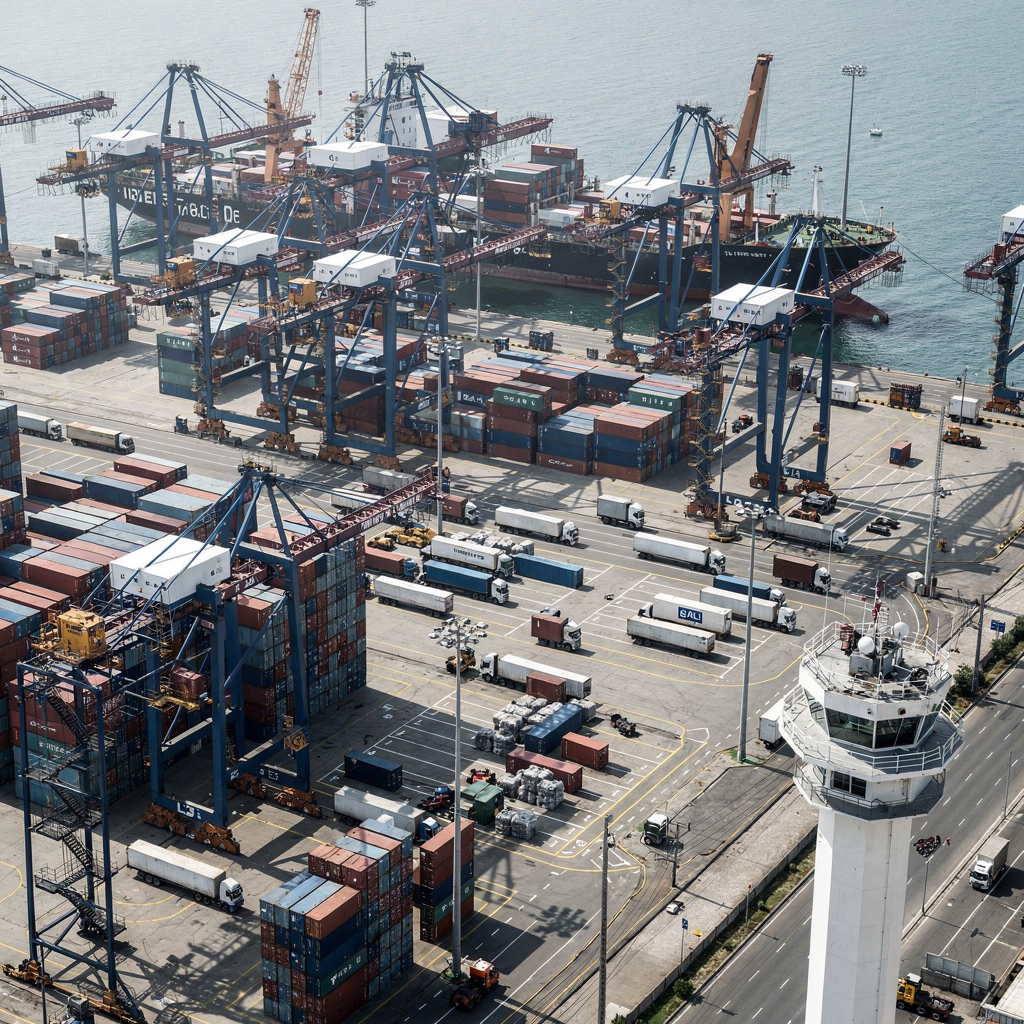
When selecting assessment methodologies, include both quantitative and qualitative tools. Quantitative modeling yields numbers for likelihood and consequence. Qualitative workshops capture organisational factors and hidden dependencies. Use these insights to design barrier layers, to set risk acceptance criteria, and to prioritize investments. For further reading on AI-assisted stowage and planning that can reduce rehandles and yard congestion see a practical primer on AI in port operations AI in port operations stowage planning.
Drowning in a full terminal with replans, exceptions and last-minute changes?
Discover what AI-driven planning can do for your terminal
Integrating a Safety Management System in Port Operations
Embedding a safety management system across terminal workflows improves both safety and throughput. A safety management system combines policy, processes, and procedures to manage safety and to drive continuous improvement. Under ISO standards and the ISPS Code, the system must set clear objectives, assign responsibilities, and require documentation and certification. The ISM code under IMO sets expectations for vessel safety, and ports should align with those principles to ensure consistent governance across shipboard and shore interfaces. Achieve this by mapping how the SMS interacts with daily tasks, and by specifying who owns each safety checkpoint.
Daily embedding means turning procedures into habits, and into measurable KPIs. Make checklists part of gate processing, and integrate inspection tasks into yard shifts. Ensure personnel training covers both hazardous-cargo handling and cyber awareness. A formal training matrix helps to document competency and to plan maritime training sessions at a maritime academy or through in-house programs. Also, combine procedural audits with scenario drills to validate readiness and to test barriers. Use a mix of quantitative metrics and qualitative feedback to evaluate the system.
Leadership accountability is crucial. Leaders must sponsor the SMS and must own escalation protocols. As the IAPH guidance notes, those with ultimate responsibility for operations should oversee cyber and operational safeguards [IAPH Cybersecurity Guidelines]. This leadership role means setting an aim for effective safety and for operational resilience, and then ensuring resourcing for training, tools, and inspections. It also means creating clear escalation rules so port operators and terminal supervisors can act without delay. Finally, link SMS records to broader governance and to audits so compliance is demonstrable to regulators and to customers.
Operational Risk Assessment Procedures
A step-by-step approach keeps assessment focused and actionable. Start with risk identification. Use workshops, site walks, and data review to list hazards, and include both physical and cyber items. Then perform analysis. Apply qualitative matrices and quantitative modeling to assess likelihood and consequence, and to rank items for attention. Choose appropriate tools such as risk registers, scenario analysis, and cyber checklists. After analysis, perform evaluation against risk acceptance criteria and decide whether to mitigate, to accept, or to transfer the exposure.
Tools and techniques include risk registers that list controls and barriers, scenario tables that stress test processes, and cyber checklists aligned to IAPH guidance. For hazardous-cargo handling, run a HAZID, and build Bow-Tie diagrams to show barrier layers and residual exposure. For cyber threats, use a checklist to verify segmentation, patching, backups, and incident playbooks. A sample case: assess a ransomware attack on terminal systems. Map the attack surface, list critical systems, quantify potential downtime, and identify manual fallback protocols. Then test the fallback in a drill to verify execution.

Include practical examples in assessments. For cargo with hazardous goods, ensure protocols for storage, segregation, and emergency response are tested. For cyber, ensure controls operations include backups, air-gapped procedures, and prioritized restoration sequences. Use quantitative modeling to estimate economic impact from a 20–30% increase in turnaround time and to compare mitigation costs against potential losses [congestion study]. Remember to document each step, to assign owners, and to schedule follow-up audits. A sound process links assessment outputs to the wider management system and to continuous improvement cycles.
Drowning in a full terminal with replans, exceptions and last-minute changes?
Discover what AI-driven planning can do for your terminal
Applying a Management System to Reduce Risks
Apply targeted systems to address specific exposures. An environmental management system (EMS) helps prevent and to control pollution and hazardous materials. EMS controls include segregation of hazardous cargo, spill kits, and incident reporting protocols tied to environmental protection requirements. For cyber, deploy a cybersecurity management system aligned with IAPH guidance and with clear roles for recovery and for communication. Together, these systems form an integrated structure that supports sustainable and compliant terminals.
Training is central. Personnel training should cover safe handling, emergency response, and cyber hygiene. Use simulation-based drills and maritime training modules to keep skills current. Loadmaster.ai’s digital twin and RL agents illustrate how simulation helps planners and dispatchers explore trade-offs without risk to live operations; see the approach for digital twin pilots and for optimizing idle times digital twin integration with TOS and optimizing idle times. Those pilots also reduce dependence on historical models and improve robustness during disruptions.
Monitoring, incident response, and regular inspection close the loop. Use KPIs to track barrier performance and to detect drift. Implement incident logging so that each event yields lessons and that mitigation work is auditable. Also, define clear recovery objectives, and ensure exercises validate execution of manual and automated fallbacks. Finally, maintain regulatory compliance and certification by scheduling audits and by updating procedures as risks evolve.
Continuous Maritime Operation Assessment to Reduce Risks
Continuous assessment keeps ports adaptive. Define key performance indicators that reflect safety, throughput, and resilience. Typical indicators measure crane moves per hour, gate times, dwell, and near-miss counts. Also include cyber metrics like mean time to detect and to recover. Run periodic audits and compliance checks to verify procedures and to find gaps. Use a feedback loop so lessons from incidents inform policy and training. That loop should be systematic and formal, and should include gap analysis and structured corrective actions.
Audit cycles should combine internal reviews with third-party inspection and with regulatory oversight. Audits test both documentation and practice. They reveal gap areas in competency and in controls operations. Use audit findings to update the SMS and to schedule focused maritime training sessions at a maritime academy or through vendor partners. Also, adopt a culture where reporting near misses is rewarded so that prevention improves over time.
Finally, treat continuous assessment as a dynamic program, not a checklist. Use quantitative dashboards and qualitative reviews to evaluate the effectiveness of barriers and to reassess likelihood as conditions change. Embed adaptive protocols so that governance, execution, and preventive measures evolve with new vessel mixes, new cargo types, and new technology. That approach yields a more robust terminal, better occupational health outcomes, and a safer maritime environment.
FAQ
What is operational risk assessment in ports?
Operational risk assessment is the process of identifying hazards, analyzing their likelihood and impact, and setting controls to prevent or to reduce incidents. It combines workshops, data, and modeling so stakeholders can prioritize mitigation and allocate resources.
Which frameworks are best for port assessments?
Common frameworks include STAMP-informed, FMEA, Bow-Tie, and HAZID. Select the mix that covers both technical equipment faults and organisational factors, and that aligns with the intended assessment scope.
How does a safety management system help terminals?
A safety management system standardizes procedures, defines responsibilities, and drives audits and training. It supports effective safety and ensures that both daily tasks and emergency protocols are documented and tested.
How should ports assess cyber vulnerabilities?
Use cyber checklists, segmentation, backups, and incident playbooks aligned with IAPH guidance. Test recovery through drills and ensure leadership owns cyber oversight so response is rapid and coordinated [IAPH].
What KPIs matter for continuous assessment?
Track crane productivity, gate times, dwell, MTTR for systems, and near-miss reporting. Combine quantitative dashboards with qualitative audit reviews to identify trends and to trigger corrective measures.
How do ports handle hazardous cargo safely?
Apply HAZID and Bow-Tie analysis, segregate storage, and train personnel on emergency response. Maintain spill kits and coordinate with local authorities and EMS procedures to limit environmental harm.
How often should audits be performed?
Perform internal audits quarterly and third-party inspections annually or when conditions change. Use audits to uncover gaps and to drive certification and compliance efforts.
Can AI improve terminal risk control?
Yes. AI and digital twins can simulate millions of scenarios and propose robust plans that reduce rehandles and yard congestion. Simulation helps to validate protocols without disrupting live operations; explore how AI supports stowage planning AI stowage planning.
What role do stakeholders play in assessment?
Stakeholders must collaborate on governance, share data, and agree escalation protocols. Clear roles reduce delays in decision-making and improve the effectiveness of preventive measures.
Where can I learn more about improving terminal resilience?
Review resources on digital twin pilots, AI-driven planning, and TOS integration to understand practical implementations. For example, examine resources on digital twin integration and on optimizing idle times to see operational examples digital twin integration and optimizing idle times.
our products
 stowAI
 stackAI
 jobAI
jobAI
Innovates vessel planning. Faster rotation time of ships, increased flexibility towards shipping lines and customers.
Build the stack in the most efficient way. Increase moves per hour by reducing shifters and increase crane efficiency.
Get the most out of your equipment. Increase moves per hour by minimising waste and delays.
stowAI
Innovates vessel planning. Faster rotation time of ships, increased flexibility towards shipping lines and customers.
stackAI
Build the stack in the most efficient way. Increase moves per hour by reducing shifters and increase crane efficiency.
jobAI
Get the most out of your equipment. Increase moves per hour by minimising waste and delays.