
Introduction to Yard Cranes and Reshuffle Impacts
Yard reshuffles occur when operators move a container more than once inside the storage area to reach a target box. These extra moves inflate handling time, slow down workflows, and raise costs. Research shows reshuffles can account for up to 30% of total container handling time in the yard, and that figure drives the urgency of better practices (study on reshuffling and stacking). As a result, reducing reshuffles yields faster container retrieval and improves the overall flow.
Yard cranes now sit at the heart of container storage and retrieval operations. Wide-span yard cranes reach across many stacks, and they change how operators plan stacking and access. These machines offer larger coverage than older cranes. Therefore they can lower the need for internal moves. Yet they introduce scheduling complexity because one crane must serve a broader footprint. That trade-off matters for terminals and for the yard crane scheduling problem.
The goal in modern terminal planning is simple: minimize reshuffles to boost productivity and reduce cost per move. To reach that goal, teams apply models from operations research, integer programming, mixed-integer linear programming (milp) and heuristic tactics. They also test hybrid approaches like a bi-level genetic algorithm or local search to balance objectives. Practically, terminals measure gains in terms of makespan, waiting time, and number of container moves. For clarity, the industry sometimes frames this as the container relocation problem or CRP. Linking yard activity to quay cranes matters too because smoother yard operations reduce vessel dwell and speed discharging and loading.
Operators in automated container terminals add layers of automation. In those settings, automated stacking cranes and automated guided vehicles coordinate with yard cranes. Systems at container terminals now integrate scheduling, routing, and dispatch so equipment and handling equipment act in concert. That frees planners to focus on solving the CRP and the yard crane scheduling problem.
literature review: Strategies for Reshuffle Minimisation
Early literature review work identified static reshuffling models and offered several solution paths. Researchers compared integer programming formulations with heuristic and combinatorial optimization techniques. They examined objective functions that prioritize fewer moves, shorter travel time, or lower total waiting time. One influential survey notes, “Minimizing the number of reshuffles can increase productivity of the yard cranes and the efficiency of the terminal,” and it underlines the operational importance of reshuffle minimization (quote and study).
Across recent studies, five primary heuristics emerged for wide-span crane operations. These heuristics operate on rules such as priority-based stacking, travel-time estimates, and greedy strategy placement. They often combine priority rules with path planning logic and stacking limits. For instance, some heuristics rank containers by departure time and stack them to minimize blocking. Others add routing-aware rules that reduce crane travel. Comparative work shows that these methods strike different balances between solution quality and computational effort (state-of-the-art yard crane scheduling).
Quantitative findings from multiple sources report consistent ranges. Implementing optimized reshuffling strategies can reduce reshuffles by about 15–25% in typical yards (space allocating strategies). In turn, some terminals observe up to a 20% increase in yard crane productivity when reshuffles fall sharply (productivity gains). Energy metrics improve too; optimized scheduling that reduces travel distance can cut crane energy use by roughly 10% (energy and scheduling). These statistics shaped subsequent research directions and established benchmarks for future computational results.

Beyond empirical studies, researchers tested hybrid approaches that inject heuristics into formal optimization problems. They measured solution quality against benchmarks and case study data. They also compared runtime and ease of deployment. That work shaped a pragmatic tiering: use exact methods for small blocks, use heuristics for real-time dispatch, and use hybrid approaches for near-optimal solutions on medium-sized yards.
Drowning in a full terminal with replans, exceptions and last-minute changes?
Discover what AI-driven planning can do for your terminal
Challenges in Wide-Span Crane Scheduling
Scheduling across a broad yard footprint increases complexity. Wide-span cranes change the shape of the scheduling problem because a single crane can serve many stacks, yet must minimize travel and blocking. The yard crane scheduling problem grows combinatorial as the number of container and stack permutations rises. As a result, planners face a combinatorial optimization challenge that combines path planning, routing, and stack assignment.
Container priority, stacking height and crane travel distance create tough trade-offs. If you prioritize early departures, you may increase travel distance. If you reduce travel, you may raise the number of reshuffles. Those trade-offs form the objective function in models. In practice, the scheduling scheme must balance multi-objective goals: loading and discharging and minimizing makespan while keeping reshuffle counts low.
Yard layout constraints further shape results. A newly constructed u-shaped yard layout, for example, changes routing and can increase path conflicts among automated guided vehicles and internal trucks. Those constraints affect total waiting time and time of agvs. In mixed environments, trajectories of agvs must avoid collisions and bidirectional lanes complicate dispatch. Path conflicts force planners to consider routing of horizontal transport equipment and to design integrated scheduling of horizontal workflows.
Operational constraints also include stack height limits, equipment availability, and service-level agreements for container retrieval. If a stack reaches its height limit, the system triggers reshuffles during retrieval. That increase raises the number of container moves. The container relocation problem remains central here because every extra move adds labour and energy cost. Researchers therefore propose programming model is established approaches that blend integer programming with greedy strategy heuristics to respect constraints and reduce reshuffles.
Finally, stochastic arrivals and uncertain vessel schedules make real-time scheduling important. Planners use stochastic models and local search to adapt. They test branch-and-bound algorithm variants and neighborhood search heuristics on small instances. For operational teams, the practical relevance of each method rests on solution quality, runtime, and implementation ease. To learn how advanced planning and dispatch tie into crane activity, see work on yard crane scheduling and dispatching in port operations (yard crane scheduling and dispatching).
heuristic Approaches for Reshuffle and Stacking Optimisation
Heuristic methods dominate real-time yard control because they run fast and they scale. The five heuristics commonly discussed include priority rules, travel-time estimates, greedy strategy placement, neighborhood search, and hybrid schemes that combine local search with genetic elements. Each heuristic targets a specific piece of the problem. For example, a priority rule might always place high-priority containers on top to reduce future reshuffles. A travel-time based rule may prefer stacks closer to the crane to save seconds per move.
Heuristic logic often uses simple, actionable rules. One rule orders containers by departure time and uses a greedy strategy to place them in minimally blocking positions. Another rule uses routing awareness to reduce crane trajectories and thus lower energy consumption. A third rule enforces stacking limits via a constraint that prevents exceeding stack height. Heuristic variants add tie-breakers that favor shorter crane travel, fewer future reshuffles, or lower total waiting time. These tie-breakers improve solution quality without large computational cost.
Comparative performance varies. Pure heuristics yield quick dispatch decisions with modest computational effort. They also perform well on large yards and work with real-time scheduling. However, they may not find an optimal solution. In contrast, hybrid approaches that embed local search or a bi-level genetic algorithm improve solution quality and produce near-optimal solution outcomes for medium-sized problems. The bi-level programming model pairs a high-level placement policy with a second-level sequencing optimizer. That design often produces a better optimal scheme than single-layer heuristics.
Advanced hybrid approaches use neighborhood search or local search to refine heuristic solutions. They may combine greedy placement for quick feasibility with a small neighborhood search to lower reshuffles. Researchers also test mixed-integer linear programming (milp) or branch-and-bound algorithm methods as benchmarks. Those exact methods provide a benchmark and help validate heuristic solution quality in case study experiments and computational results. For an applied take on reducing moves, review our guide on reducing unproductive container moves in container terminals (reducing unproductive container moves).
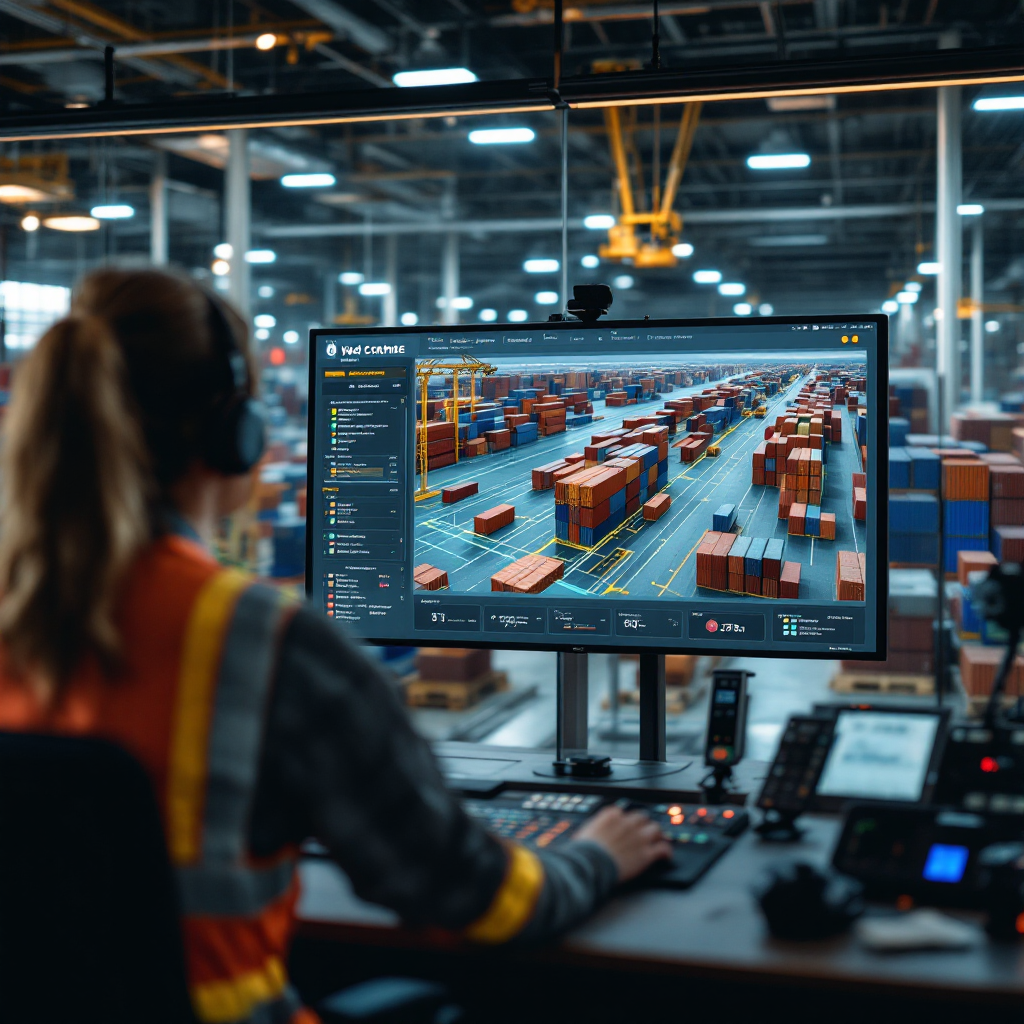
One practical benefit of heuristics is implementation ease. Terminals with limited IT resources can adopt greedy strategies, then incrementally add neighborhood search or genetic elements. That stepwise path lowers risk and allows evaluation against a real-world benchmark. In recent studies, such hybrid approaches improved reshuffle counts by 15–25% while keeping runtime acceptable for real-time dispatch.
Drowning in a full terminal with replans, exceptions and last-minute changes?
Discover what AI-driven planning can do for your terminal
Quantitative Insights: Productivity, Cost and Energy Metrics
Numbers matter. They guide investments and define acceptable operational targets. Studies show reshuffles can account for up to 30% of yard handling time, and that statistic anchors many optimization efforts (reshuffle share). Reducing reshuffles therefore shortens makespan and raises throughput. Terminals that cut reshuffles see a measurable lift in the efficiency of container terminals and in overall operational efficiency.
In concrete terms, optimized reshuffling strategies reduce the number of moves by roughly 15–25% depending on layout and crane specifics (space allocation study). That range translates directly to labour and equipment savings. Fewer moves mean fewer operator hours, less wear on cranes, and lower maintenance. The same strategies improve yard crane productivity by up to 20% in observed cases (productivity gain).
Energy is another measurable metric. Optimized travel and reduced idle time cut crane energy consumption by about 10% in some studies (energy study). Savings here come from fewer crane lifts, reduced gantry movement, and lower waiting at stacks. Those gains compound over months of 24/7 operations, producing sizable reductions in terminal operating expenses.
Cost reductions extend beyond energy. Fewer moves lower the need for temporary labor and for overtime. They also reduce the probability of damage during relocation. As a result, per-container handling cost drops and terminal throughput rises. The solution quality of an algorithm therefore has direct financial impact. When planners evaluate a proposed algorithm, they review not only runtime but also cost per move, number of container moves, and expected return on investment.
Benchmarks and case studies often use measures such as makespan, total waiting time, and the number of reshuffles. They also test against standard problems like crp and ycsp to compare methods. For teams running pilot projects, a digital twin can reproduce yard scenarios before rollout and prove a near-optimal solution under operational constraints. To explore how yard planning links to vessel and berth activity, see our piece on integrating vessel planning and yard planning in terminal operations (integrating vessel and yard planning).
Integrating Reshuffle Minimisation into Yard Crane Scheduling
Integrating reshuffle minimisation into yard crane scheduling requires a layered approach. First, build an objective function that captures reshuffle counts, crane travel, and waiting time. Then, choose an algorithmic family that fits the yard size and IT capacity. For small blocks, integer programming or mixed-integer linear programming can produce an optimal solution. For larger layouts, heuristics or hybrid approaches provide practical, near-optimal solution in real time.
Hybrid intelligent algorithms blend metaheuristics and exact methods. For example, a bi-level genetic algorithm pairs global search with a lower-level sequencing optimizer. That bi-level programming model helps in multi-objective cases where discharging and loading must coexist. Similarly, combining Genetic Algorithms with Tabu Search (GATS) has shown promise for balancing loading time, reshuffling time, and waiting time in complex instances (GATS study).
Real-time scheduling needs fast heuristics that respect routing and path planning for automated guided vehicles. When AGVs operate, planners must consider trajectories of agvs and path conflicts with internal trucks. Integrated scheduling of horizontal transport equipment plus crane dispatch improves coordination and reduces total waiting time. In automated container terminals, the interaction among ascs, asc, and yard cranes must be orchestrated, so the scheduling scheme supports seamless handoffs.
For implementation, terminals require reliable data and integration. They need timestamps across discharging and loading, container priorities, and accurate stack occupancy. Tools such as a digital twin help test programming model is established assumptions before deployment. Teams also use benchmarks and case study results to compare algorithms. For software and APIs that support AI-driven equipment task allocation, explore our coverage of AI-driven equipment task allocation in container ports (AI-driven equipment task allocation). Additionally, operators can leverage yard planning decision support systems to coordinate routing and dispatch (yard planning decision support).
Operationally, tools that automate exception handling make a big difference. That automation shortens response cycles and preserves context. As terminals adopt hybrid flow shop models and test stochastic scenarios, this kind of operational automation complements algorithmic advances and accelerates adoption across ports and sea-rail intermodal container terminal environments. Finally, ongoing research directions include better benchmarks, improved neighborhood search routines, and tighter integration of routing and crane sequencing to reach an optimal scheme.
FAQ
What are yard reshuffles and why do they matter?
Yard reshuffles are extra container moves inside the yard to access a target container. They matter because they increase handling time, raise labour and energy costs, and can account for up to 30% of yard handling time in some studies.
How do wide-span yard cranes change container storage strategies?
Wide-span cranes cover more stacks with a single unit, so planners can reduce moves across the yard. However, these cranes require more complex scheduling to minimize crane travel and avoid blocking, which changes stacking and retrieval tactics.
What role do heuristics play in reshuffle minimisation?
Heuristics provide fast, practical rules for stack placement and sequencing. They balance solution quality and runtime, and they work well for real-time dispatch where exact methods would be too slow.
Can optimization reduce energy use in yard operations?
Yes. Studies report up to roughly 10% energy savings when scheduling reduces crane travel and idle time. Those savings result from fewer lifts and reduced gantry movement.
What is the container relocation problem (CRP)?
The container relocation problem models how to store and retrieve containers while minimizing extra moves. CRP is a core formulation used to test heuristics, integer programming, and hybrid approaches.
How do AGVs affect yard crane scheduling?
Automated guided vehicles add routing and path planning constraints. Their trajectories can create path conflicts with internal trucks, so scheduling must coordinate horizontal transport equipment, dispatch and crane tasks to avoid delays.
Are exact methods like MILP useful in practice?
Exact methods like mixed-integer linear programming are useful for small to medium problems or as benchmarks. For large, real-time yards planners often use heuristics or hybrid approaches to get near-optimal solution quickly.
What practical tools help terminals implement reshuffle minimisation?
Terminals use yard planning decision support systems, digital twin simulations, and AI-driven scheduling tools. They also benefit from operational automation that handles exceptions and email workflows, which reduces manual triage time.
How much can reshuffle minimisation improve productivity?
Research indicates yard crane productivity can improve by up to about 20% when reshuffles are sharply reduced. Results depend on yard layout, the number of container, and implementation quality.
Where can I read more technical research on this topic?
Key sources include studies on reshuffling and stacking, works on yard crane scheduling and stacking, and papers on hybrid optimization for yard crane scheduling. For practical resources and tools, explore internal guides on yard crane scheduling and dispatching in port operations and AI-driven equipment task allocation in container ports.
our products
 stowAI
 stackAI
 jobAI
jobAI
Innovates vessel planning. Faster rotation time of ships, increased flexibility towards shipping lines and customers.
Build the stack in the most efficient way. Increase moves per hour by reducing shifters and increase crane efficiency.
Get the most out of your equipment. Increase moves per hour by minimising waste and delays.
stowAI
Innovates vessel planning. Faster rotation time of ships, increased flexibility towards shipping lines and customers.
stackAI
Build the stack in the most efficient way. Increase moves per hour by reducing shifters and increase crane efficiency.
jobAI
Get the most out of your equipment. Increase moves per hour by minimising waste and delays.