
container terminal layout and twistlock workflow
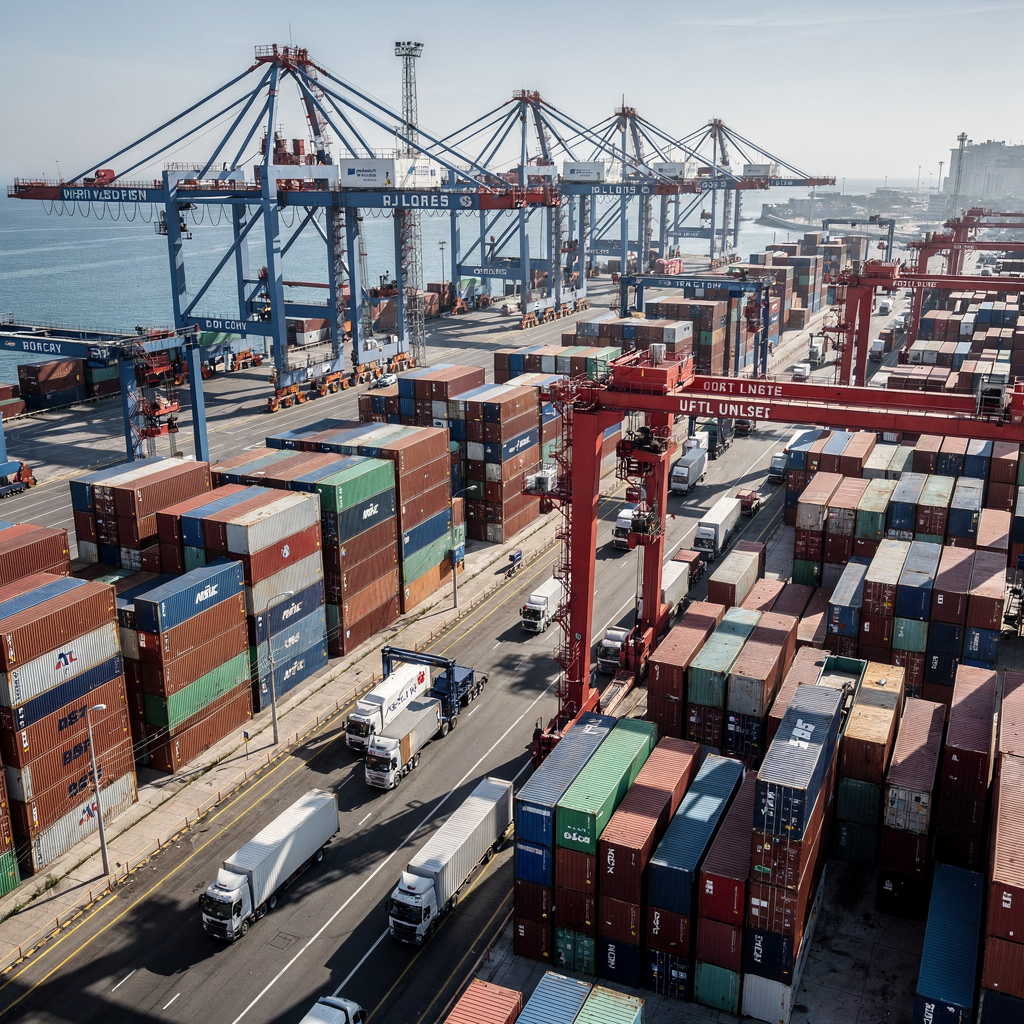
A container terminal is a structured environment. It combines quay side, yard, and landside elements. Ships berth along the quayside. Quay cranes lift shipping containers from vessel to dock. Then, internal transport moves boxes to container stacks. In the yard, spreaders lock onto containers. Operators guide stacks into lanes for storage and retrieval. Along these flows, twistlock duties sit at key junctions. Crane drivers, yard teams and gate staff all touch the twistlock workflow. First, a spreader aligns to a container. Next, twistlocks secure the load for safe crane operation. Then, after movement, twistlocks unlock for stacking or truck loading. Finally, twistlocks are stored or returned to the spreader for the next lift.
Each step has timing and safety checks. Poor coordination causes congestion and raises operational costs. For example, mis-timed handovers at the quayside slow ship-to-shore cycles. Therefore, designing layouts and clear handoff points helps. For details on how terminal digital systems support these flows, see the market overview of container terminal automation software at this resource container terminal automation software market overview. Also, effective planning must consider quay crane reach, lane widths and stack height restrictions. In tight yards, AGV paths and RTG operations must be balanced. Moreover, crew planning and the placement of spare twistlocks reduce idle time. Field studies show new twistlock methods are “designed to improve safety, productivity, environmental sustainability and profitability” in terminals An operations perspective on new twistlock handling in terminals.
In short, the layout defines the rhythm of container movement. Good design keeps cranes running. It reduces unnecessary walking and hand tools exchanges. It also helps terminal operators measure and improve container handling. Finally, routine checks on spreader-twistlock interfaces prevent unplanned stops and lower the chance of container damage during transfers.
productivity bottlenecks in manual twistlock handling
Manual twistlock work creates clear bottlenecks. First, it adds direct labour time during each lift cycle. Second, it introduces variability between shifts. Third, it increases the chance of unplanned equipment interaction. Studies quantify these impacts. For instance, optimizing twistlock handling can reduce handling time by up to 15–20% per container PTI: An operations perspective on new twistlock handling. This figure reflects both reduced manual coupling and fewer corrective actions after improper locking. Consequently, terminal productivity improves when tasks are standardised and measured.
Which steps consume the most time? Attaching and detaching twistlocks at the spreader is labour-intensive. So is returning spare twistlocks to storage or reconditioning stations. Shift-change periods reveal another pattern. During handovers, teams slow to confirm positions and status. As a result, crane idle time and yard waiting increases. In practice, manual changeovers can reduce crane productivity by several percentage points. Therefore, many terminals seek to automate or at least streamline these handoffs.
Beyond time, manual handling raises safety risks. Workers moving between spreaders and containers face exposure near moving cranes. This risk translates into delays after incidents or safety checks. Additionally, inconsistent twistlock condition can lead to container damage during stacking and loading. Preventive regimes reduce that risk and stabilise throughput. For broader strategies on reducing equipment starvation and balancing resources, terminals often use intelligent pooling solutions; see an example of resource pooling research reducing equipment starvation through intelligent pooling.
To summarise, manual handling is a measurable drag on throughput. Practical fixes focus on fewer touchpoints, clearer handovers and simple mechanisation at the spreader. These adjustments cut delays, lower congestion and steady crane cycles. They also help terminals better manage container handling demands when external factors shift.
Drowning in a full terminal with replans, exceptions and last-minute changes?
Discover what AI-driven planning can do for your terminal
port turnaround time: the role of twistlock processes
Ship turnaround depends on many variables. Twistlock processes are one of them. When twistlock steps lag, berth occupancy extends. Longer berth time raises berth costs and increases berth queueing for arriving container ships. The link is direct. Slow twistlock cycles increase time per lift which directly lengthens overall loading and unloading windows. Faster twistlock cycles therefore shorten ship turnaround and improve port performance. A focused operational change can shrink container handling time and shorten ship turnaround by measurable margins PTI study on twistlock handling.
For terminals, shorter ship turnaround yields competitive advantages. More calls can be scheduled. Less congestion follows. Reduced dock time helps shipping lines and terminal operators alike. For example, automation and better scheduling can cut loading and unloading windows and reduce port-stay time; related work on reducing port stay is covered in this study reducing port stay time for terminal operations vessels. Faster exchanges at the quayside also free quay cranes for other tasks. Consequently, the overall flow from ship-to-shore to yard improves.
Importantly, twistlock reliability affects larger vessels more. Larger vessels require tight coordination and multiple cranes to operate in parallel. Any variance in twistlock readiness cascades, producing longer vessel occupancy. Therefore, terminals handling larger vessels place a premium on streamlined twistlock routines. In this environment, digital tools that provide real-time status of spreaders and twistlocks reduce uncertainty. They can flag maintenance needs before an unplanned stop occurs. Thus, better information decreases delays. In addition, integrated planning that considers container terminal scheduling keeps cranes optimised across calls and avoids idle cycles. That planning links directly to improved quay crane utilisation and better port container terminals performance overall.
twistlock automation technologies and integration
Automation is increasingly central to twistlock solutions. Field tests with RMG cranes and straddle carriers show this clearly. For instance, automated twistlock modules have been trialled on RMGs to remove manual coupling steps. Trials report steadier lift cycles and consistent performance across shifts Automated Port Operations: The Future of Port Governance. These results matter. They demonstrate how automation of container locking keeps quayside rhythms predictable.
Integration of sensors, analytics and control logic makes these technologies useful. Data streams from spreaders feed analytics engines. Then, operators see health and usage trends for twistlocks and spreaders. This transparency allows planned maintenance rather than reactive fixes. Moreover, automation reduces the need for close-quarters worker interventions. As a result, terminals reduce the risk of container damage and improve safety. For more on how real-time systems and dispatch optimisation support such goals, explore this resource on real-time equipment dispatch real-time equipment dispatch optimization in container terminals.
Integration extends beyond hardware. It must include yard systems, vessel planning and communication links to gate and rail. Therefore, terminals that successfully integrate automation into operations avoid silos. They link spreader state to crane operation schedules and to AGV or truck assignments. In fully automated terminals, AGV routing and secure locking happen with minimal human input. These places show higher crane productivity and fewer unplanned interruptions. Furthermore, combining automation with clear processes produces robustness against variable operational conditions and external factors.
Finally, pilots often reveal where human oversight remains necessary. Hybrid models blend automation with operator supervision. For example, automated twistlock engagement with operator confirmation at key checkpoints reduces errors. This approach balances efficiency and safety while supporting the move to automated terminals.
Drowning in a full terminal with replans, exceptions and last-minute changes?
Discover what AI-driven planning can do for your terminal
twistlock handling best practices for minimal downtime
To minimise downtime, apply three complementary strategies: process optimisation, workforce training and preventive maintenance. First, map the container handling process. Then, eliminate redundant touches and streamline handovers. Simple changes, such as fixed twistlock stowage near high-use lanes, cut walk time. Next, standardise locking sequences across shifts. This step reduces variability and improves consistency in crane operation.
Second, train teams on both manual and automated workflows. Training should explain safety limits and provide quick refresher modules before peak periods. Also, use digital tools to distribute procedure updates. For instance, operational emails about exceptions can be automated. It reads intent, pulls data from ERP and TMS, and drafts consistent replies. As a result, teams save time on triage and maintain clearer ownership of twistlock exceptions.
Third, implement planned maintenance with analytics. Track twistlocks, spreaders and their sensors. This data drives predictive schedules and timely checks, which reduce unplanned stops. Planned maintenance lowers the frequency of unplanned equipment outages. The net effect: more uninterrupted operations and steady terminal productivity. Additionally, regular inspections reduce container damage and improve safety.
Finally, adopt a holistic approach that brings people, processes and technology together. When teams operate with shared dashboards, they react faster to anomalies. They also balance workloads across cranes and yard assets. For practical guidance on workload distribution and scheduling under load variation, see strategies for crane workload distribution crane workload distribution strategies in container ports. In brief, the best practice is to prevent downtime through clarity, training and measurable maintenance regimes.
terminal productivity gains from optimised twistlock operations
Optimised twistlock practices produce measurable uplifts. Case studies report automation-driven productivity increases between 10% and 25% depending on scope and context Automated Port Operations. Likewise, field tests of new twistlock handling indicate up to 15–20% reductions in container handling time in targeted workflows PTI: An operations perspective on new twistlock handling. These gains come from fewer manual touches, fewer corrective lifts and more reliable spreader-to-twistlock cycles.
Return on investment often appears within a short horizon. Savings include lower labour hours, reduced container damage and shorter ship turnaround. Together, these savings reduce operational costs and improve port performance. Environmental benefits also emerge. Faster cycles cut idling time for quay cranes and yard equipment. Less idle time reduces fuel use and emissions, supporting sustainability targets.
Another important benefit is robustness to demand spikes. Automated and well-integrated systems maintain steady throughput during shift changes. They also limit the impact of external factors such as peak arrivals or changes in supply chain rhythm. For terminals planning further automation, modelling with simulation tools and predictive modules helps quantify benefits and risks; see approaches to predictive modelling for yard capacity predictive modeling for port operations yard capacity.
In sum, optimised twistlock handling shortens lift cycles, improves crane productivity and reduces congestion. It raises terminal productivity and supports faster ship turnaround. Therefore, combining targeted automation with better processes and scheduled maintenance offers high ROI. The current study evidence supports these investments as effective levers for better port terminals and for global container logistics.
FAQ
What are twistlocks and why do they matter?
Twistlocks are locking devices used to secure shipping containers during lifts and stacking. They matter because secure locks prevent container drops, reduce container damage and keep cranes operating safely and efficiently.
How much time can be saved by optimising twistlock handling?
Studies report that optimising twistlock routines can reduce handling time by up to 15–20% in targeted workflows. These savings translate into faster loading and unloading and shorter ship turnaround.
Can automation eliminate all manual twistlock work?
No. Automation reduces many manual steps, but some human oversight remains necessary, especially during exceptions and maintenance. Hybrid models that blend automation with operator checks are common.
What maintenance practices reduce twistlock downtime?
Preventive maintenance, condition monitoring and planned maintenance schedules reduce unplanned stops. Analytics-driven inspections help identify wear before failures occur.
How do twistlock improvements affect port turnaround times?
Faster twistlock cycles shorten the time cranes spend idle and reduce berth occupancy. That, in turn, lowers ship turnaround and improves port performance.
Are there safety benefits from automated twistlocks?
Yes. Automation reduces the need for workers to approach spreaders and moving loads, which lowers the risk of accidents. It also enforces consistent locking sequences that prevent errors.
What role does data play in optimising twistlock handling?
Data from spreaders and cranes feed analytics that predict maintenance needs and measure cycle times. This information supports better scheduling and improves operational efficiency.
How do small terminals start improving twistlock workflows?
Small terminals can begin by mapping handling processes, then standardising handovers and introducing simple mechanisation near high-use lanes. Training and planned maintenance follow next.
Can email automation help terminal teams manage exceptions?
Yes. Automating operational email workflows speeds triage and routing, ensuring exceptions reach the right person with context.
What are typical ROI drivers for twistlock automation projects?
Key ROI drivers include reduced labour hours, fewer corrective lifts, lower container damage costs and shorter ship turnaround. Environmental gains from reduced idling also add value over time.
our products
 stowAI
 stackAI
 jobAI
jobAI
Innovates vessel planning. Faster rotation time of ships, increased flexibility towards shipping lines and customers.
Build the stack in the most efficient way. Increase moves per hour by reducing shifters and increase crane efficiency.
Get the most out of your equipment. Increase moves per hour by minimising waste and delays.
stowAI
Innovates vessel planning. Faster rotation time of ships, increased flexibility towards shipping lines and customers.
stackAI
Build the stack in the most efficient way. Increase moves per hour by reducing shifters and increase crane efficiency.
jobAI
Get the most out of your equipment. Increase moves per hour by minimising waste and delays.