
Simulation model and discrete event simulation for maritime container terminal operations
Discrete event simulation is a method that models systems as a sequence of events. First, it captures the arrival of ships, the start of crane tasks, and the completion of yard moves. Next, it represents resources such as quay cranes, straddle carriers, and trucks as agents that interact. This approach lets planners run risk-free scenario tests, and it helps teams try new rules without interrupting real operations. For example, the Seaport Capacity Manual explains that capacity calculation is a core planning tool and that optimized equipment usage can increase handling capacity substantially; some reports show gains up to 20–30% under ideal conditions Seaport capacity manual.
In practice, a simulation model maps logical flows and physical constraints. It defines entities like containers and trucks, resources like CRANEs and RTGs, and queues at the berth. Variables in a simulation model include arrival patterns, handling time distributions, and equipment speeds. Then, users tune allocation rules and stacking policies to balance quay productivity with yard congestion. Because discrete event models treat time as a sequence of events, they reproduce the stochastic nature of cargo handling. As a result, planners get robust insights on equipment utilization and berth scheduling.
Using simulation, terminals can quantify gains. Peer-reviewed analysis found that simulation-based planning can reduce vessel turnaround by about 15% and improve equipment utilization by 10–25% Performance analysis for a maritime port with high-frequency services. In this context, simulation is a powerful tool for capacity planning, and it supports investment-grade analysis for berths and yards. Loadmaster.ai uses a sandbox digital twin to train agents, and therefore our approach lets operators test policies in a risk-free environment before go-live. This reduces demurrage exposure and helps minimize unnecessary moves while you design scalable layouts and operational rules.
Terminal simulation software and port simulation software for port and terminal optimization
Terminal simulation software varies by capability. Some packages specialise in discrete event modeling, and others add fast empirical modules. AnyLogic and Arena are familiar names in the industry. Arena provides robust DES features and is widely used for port modeling; Rockwell Automation notes that “Moving cargo quickly and efficiently through a port can result in significant competitive advantage” Arena Simulation Software in Port & Terminal. Meanwhile, many modelers chose anylogic for multimethod approaches because it supports agent-based and DES hybrid models.
Terminal simulation tools now include 3D visualization and GIS integration, and they ingest IoT telemetry to refresh model inputs. They also layer modular architecture so teams can swap quay logic, gate modules, or yard blocks. This makes the software a flexible testbed for container yard planning. In addition, port simulation software can run what-if analyses for gate throughput, stacking rules, and crane assignment. For more on methods and comparison, see our review of what simulation software container terminals use what simulation software do container terminals use.
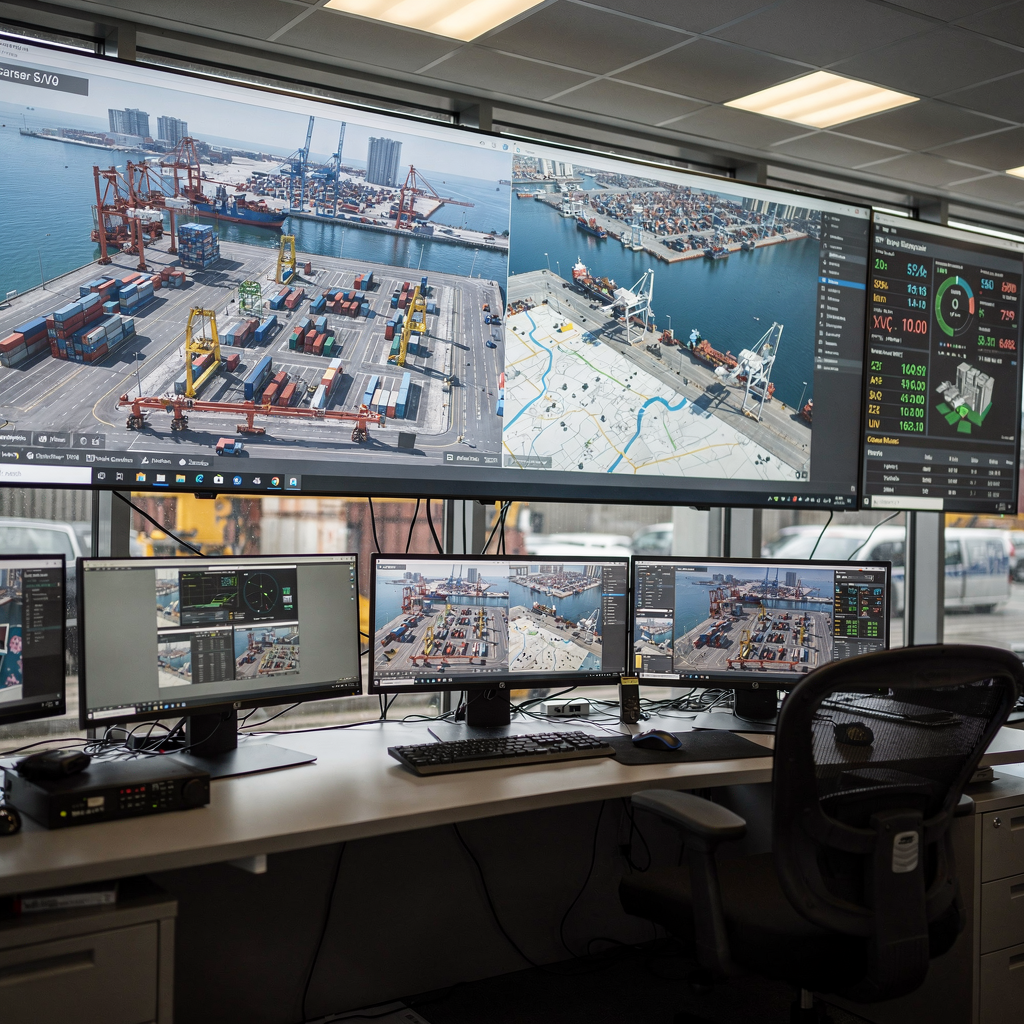
Third, modular simulation software supports scenario libraries and batch runs. This helps port authorities and planners evaluate capacity upgrades, new berth layouts, or revised shift patterns. For terminals that want tighter integration, some platforms offer APIs to feed live IoT streams into a digital twin. That twin then acts as a bridge between modeling software and operational systems, enabling continuous improvement. For guidance on integrating digital twins and terminal models, see our guide to terminal optimisation digital twin terminal optimisation digital twin.
Finally, pick tools that match your system requirements and scale. If you need a port and terminal simulation software stack to support investment appraisal, choose software that exports reproducible metrics, supports visualization, and links to your TOS. For practical tips on linking TOS with models, visit our page about simulation and optimisation tools for TOS simulation and optimisation tools for TOS.
Drowning in a full terminal with replans, exceptions and last-minute changes?
Discover what AI-driven planning can do for your terminal
Container yard planning and allocation for yard management using discrete event simulation
Container yard planning focuses on slot allocation, stacking strategies, and equipment routing. First, planners assign slots to incoming boxes, and they plan stacking policies that consider weight, destination, and dwell. Second, they route yard cranes and trucks to reduce travel time. Third, they monitor yard occupancy and adapt allocation rules to peaks. These routines affect dwell time, handling cost, and throughput per hectare, and they directly influence idle time and demurrage metrics.
Discrete event simulation helps test alternative layouts and allocation rules without operational risk. Using a container terminal simulation model, teams can compare block designs, cross-stacking rules, and allocation heuristics. The model reproduces arrivals, pickups, and reshuffles so you can estimate rehandles and energy use. Importantly, the testbed for container yard planning supports both strategic and tactical choices, and it helps yard management prioritise moves that reduce driving distance. Loadmaster.ai integrates reinforcement learning agents with a digital twin so planners can explore policies that traditional rule engines struggle to find. This method avoids dependence on historical data and reduces the risk of copying past inefficiencies.
Key yard management KPIs include container inventory balance, dwell distribution, and handling productivity. Decision makers track utilization of yard machines and measure throughput at peak hours. In many terminals, simulations show a 10–25% increase in equipment utilization and measurable reductions in congestion when allocation rules shift from static to dynamic. For teams building a simulation model developed for this purpose, include variables in a simulation model such as arrival variance, handling time distributions, and reshuffle policies to get realistic outcomes. To learn how to simulate container terminal operations step by step, see our how-to guide how to simulate container terminal operations.
Digital twin and port simulator for decision support in terminal operations
A digital twin is a live virtual replica of the physical terminal. It receives IoT data, telemetry, and TOS messages, and then it mirrors current state while allowing predictive runs. Digital twin integration with container data streams makes predictions more accurate, and it enables continuous capacity planning using digital twins. For resilience and sustainability studies, researchers note that “IoT devices have emerged as a solution, providing massive real-time data streams that enhance simulation accuracy” Digital Twin for resilience and sustainability assessment.
When you pair a digital twin of the terminal with a port simulator, operators gain a live decision support dashboard that tracks stacking, quay cranes, and vehicle flows. The port simulator feeds visualisation and live KPIs, and it generates alerts when a bottleneck threatens to cascade. For example, a twin integration with container terminal operating telemetry can suggest temporary allocation changes or a shift in crane assignment to protect quay productivity. This capability helps terminal operators adjust plans dynamically during breakdowns or weather delays, and it supports sustainability metrics like fuel use and equipment idle time.
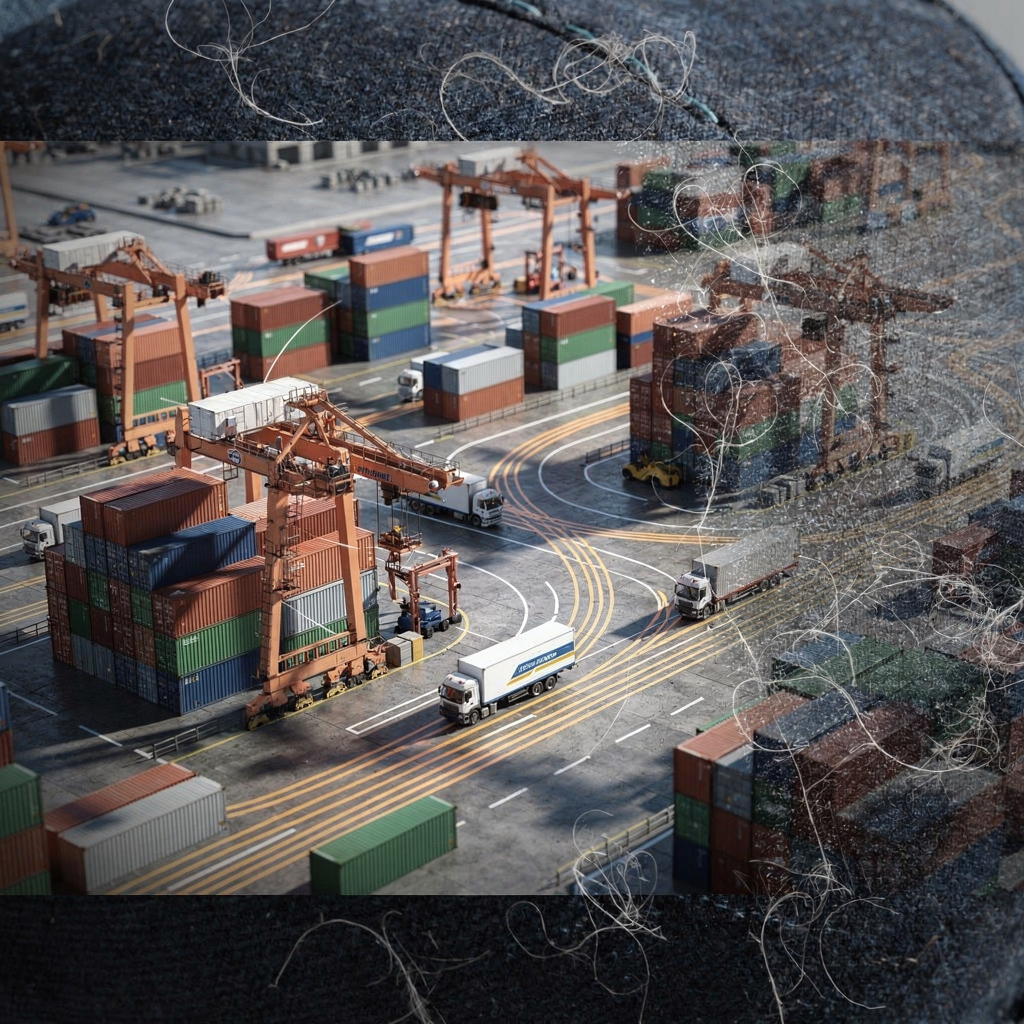
Digital twin integration with container terminal operating systems matters. It allows agents inside a digital twin to train policies that respect hard constraints, and it supports risk-free testing of expansion scenarios. Our platform spins up a digital twin and uses reinforcement learning to train closed-loop agents. This process delivers decision support tools that propose stack moves, quay sequences, and job coordination, and it drives measurable gains in stability and energy efficiency. For a practical toolkit on planning and investment, consult industry materials that outline best practices for freight infrastructure and policy alignment Port Planning and Investment Toolkit.
Drowning in a full terminal with replans, exceptions and last-minute changes?
Discover what AI-driven planning can do for your terminal
Case studies: boosting throughput and reducing bottleneck in container port operations with crane optimisation
Case studies show tangible uplift when simulation modeling helped refine crane work and yard flow. For instance, a simulation-driven review at a major European hub reported a throughput uplift of roughly 20% and crane idle time cut by 18% after revised crane assignment and sequencing. In addition, a Rotterdam trial that automated straddle-carrier scheduling showed a roughly 15% improvement in gate processing times while balancing yard workload. These outcomes illustrate how targeted changes can reduce bottleneck risk across the quay-to-gate chain.
One documented example highlights how optimized crane assignment reduces rehandles and shortens vessel stays. The model used discrete event simulation software to test crane assignment rules and quay block alignment. Then, planners evaluated trade-offs between concentrated crane work and distributed workloads. The selected policy lowered idle time and demurrage during peak windows, and it improved container throughput at the berth. You can read about how port simulation supports such decisions in studies that outline simulation for ports Simulation for Ports.
Another lesson from these case studies is the value of tying yard allocation to quay sequencing. When cranes follow coherent stowage plans and when yard allocation protects future moves, the system performs more predictably. Loadmaster.ai’s StowAI and StackAI approach trains policies to balance those KPIs. In practice, teams saw fewer shifters, shorter driving distances, and more even RTG utilization. These wins convert to lower operating cost and clearer operational governance. For teams focused on bottleneck reduction, see our resource on reducing terminal bottlenecks with simulation reduce terminal bottlenecks simulation.
Decision support for risk-free port terminal optimisation: container terminal simulation model and supply chain integration
A container terminal simulation model underpins supply chain alignment and investment appraisal. First, it maps the interface between ships, barges, and inland services, and it shows how berth choices ripple across the hinterland. Second, it tests expansion scenarios—new cranes, yard blocks, or automated equipment—without exposing operations to risk. This risk-free testing provides clarity on payback timelines and on operational trade-offs. Third, it gives planners data-driven justification for CAPEX and capacity planning.
When you integrate a container terminal simulation model with the wider supply chain, you identify choke points beyond the gate. For example, modelling shows how a gate policy can shift congestion into nearby intermodal hubs, or it reveals when feeder schedules create peak stacking pressure. Using simulation for these studies helps port management and port authorities coordinate investments and policy changes. For more on capacity tools for terminals, check terminal capacity planning software terminal capacity planning software.
Finally, decision makers get practical benefits: improved port efficiency, lower capital risk, and the ability to test labour or equipment changes before committing. The approach also supports supply chain resilience by allowing teams to simulate disruptions and to evaluate contingency rules. In short, simulation provides a disciplined, transparent path to terminal optimization. If you want to explore how to set up system requirements, modelling software choices, and pilot metrics, our guide to enterprise simulation tools for port logistics can help enterprise simulation tools for port logistics. By combining simulation with a terminal digital twin and policy-driven agents, terminals can transition from firefighting to proactive control and sustained improvement.
FAQ
What is discrete event simulation and why does it matter for terminals?
Discrete event simulation models systems as sequences of events and resource interactions. It matters for terminals because it reproduces stochastic arrivals and handling variability, and it enables planners to test policies without disrupting live operations.
How does a digital twin differ from a port simulator?
A digital twin is a live virtual replica that receives real-time IoT and TOS data to mirror current state. A port simulator typically runs scenarios and offline experiments; when combined, they provide continuous decision support and predictive analytics.
Can simulation reduce vessel turnaround and by how much?
Yes. Studies show simulation-based planning can reduce vessel turnaround by about 15% in high-frequency contexts study. Gains vary by terminal layout, equipment, and rule changes.
Is it risky to test new yard allocation rules in a digital twin?
No. The whole point of a risk-free sandbox is to validate changes before deployment. The twin supports controlled trials and stress tests, so planners can measure impacts on dwell time and demurrage without real-world disruption.
Which software should we consider for terminal simulation?
Options include discrete event simulation packages such as Arena, AnyLogic, and specialist port platforms. Choose tools that offer visualization, GIS integration, and API access to telemetry so you can link models to your TOS.
How do simulation and reinforcement learning work together?
Simulation provides a safe environment for agents to learn policy choices at scale. Reinforcement learning agents explore millions of decisions in the model and then deliver operational policies that improve KPIs in live operations.
What KPIs should we track in yard management?
Track dwell time, handling cost, throughput per hectare, equipment utilization, and idle time. Monitoring these metrics helps managers decide on allocation rules and capacity investments.
Will simulation help reduce demurrage?
Yes. By testing quay sequences and yard allocation rules, simulation helps shorten vessel stays and reduce delays that lead to demurrage. It also clarifies where to add capacity or adjust gate rules.
How do you integrate a simulation model with a TOS?
Integration typically uses APIs, EDI, or telemetry feeds to exchange container movements and equipment statuses. Many solutions remain TOS-agnostic and sit alongside the operating system to provide decision support.
Where can I learn more about building a container yard planning testbed?
Start with guides that outline system requirements and modelling steps, and then progress to pilots that use a sandbox digital twin. For practical resources, review our guides on how to simulate operations and on terminal optimisation digital twins how to simulate container terminal operations and terminal optimisation digital twin.
our products
 stowAI
 stackAI
 jobAI
jobAI
Innovates vessel planning. Faster rotation time of ships, increased flexibility towards shipping lines and customers.
Build the stack in the most efficient way. Increase moves per hour by reducing shifters and increase crane efficiency.
Get the most out of your equipment. Increase moves per hour by minimising waste and delays.
stowAI
Innovates vessel planning. Faster rotation time of ships, increased flexibility towards shipping lines and customers.
stackAI
Build the stack in the most efficient way. Increase moves per hour by reducing shifters and increase crane efficiency.
jobAI
Get the most out of your equipment. Increase moves per hour by minimising waste and delays.