
Maritime Simulation: Foundations and Frameworks
Maritime simulation sits at the intersection of engineering, operations research, and software design. First, discrete-event and multi-agent modeling describe time-sequenced events and individual actor decision rules. Second, a simulator represents quay cranes, trucks, and yard equipment as agents that interact. Third, the system models vessel movements and quay crane scheduling to mirror real activity. This kind of simulation supports planning and training in a risk-free environment and helps teams visualize complex interactions. For example, discrete-event methods capture queuing at the berth and the drumbeat of crane cycles, while agent rules let planners evaluate different scheduling algorithms.
This chapter explains core elements. It covers vessel positions, crane sequencing, yard stacking policies, and truck rotations. It also covers how models ingest data sources like AIS to reproduce arrival patterns and to quantify turnaround. Using simulation modeling, teams can test design options without physical changes. They can simulate berth allocation and assess berthing times. They can test navigational constraints and tug usage in low-visibility scenarios. A powerful tool like a digital twin can visualize yard layouts and show how different berth rules change system performance.
Simulation software for maritime is often customizable and verifiable. It gives decision support for planners who need fast, explainable answers. It creates a risk-free environment for training and for testing emergency drills. It also enables risk mitigation for hazardous cargo and helps reduce idle time and demurrage. Loadmaster.ai uses closed-loop digital twins and reinforcement learning to train agents in sandboxed conditions so a terminal can move from firefighting to policy-driven control. For readers who want technical depth, see our piece on building a digital twin of an inland terminal for methods and data workflows (building a digital twin of an inland container terminal).
Port Simulation and Port Design: Tools and Techniques
Port simulation informs port design and layout decisions. First, teams use models to test berth spacing, quay layout, and traffic flow planning. Then, they integrate CAD and GIS layers to map site constraints. Next, 3D visualisation platforms let stakeholders visualize yard flows and vessel traffic in clear terms. These tools allow iterative reviews of design options with operators, planners, and external stakeholder groups. The approach reduces costly rework and aligns expectations before construction.
Design and operations converge when simulation is used early. Designers can quantify the impact of different quay crane counts on throughput. They can also visualize truck routes to streamline gate throughput and to reduce unnecessary driving distances. When a proposed layout increases crane utilization but worsens yard congestion, simulation highlights the trade-offs. That makes the process interactive: teams can alter stacking policies, then run the model to see model performance and equipment utilization in minutes.
Many ports deploy port and terminal simulation software alongside CAD and GIS. That helps them visualize the yard and to simulate service lanes, gate throughput, and waterway access. In practice, simulation tools integrate with TOS feeds and telemetry to run realistic scenarios. For an applied view on tuning TOS settings to improve performance, see our guide on optimizing container terminal TOS configuration for performance (optimizing container terminal TOS configuration for performance).
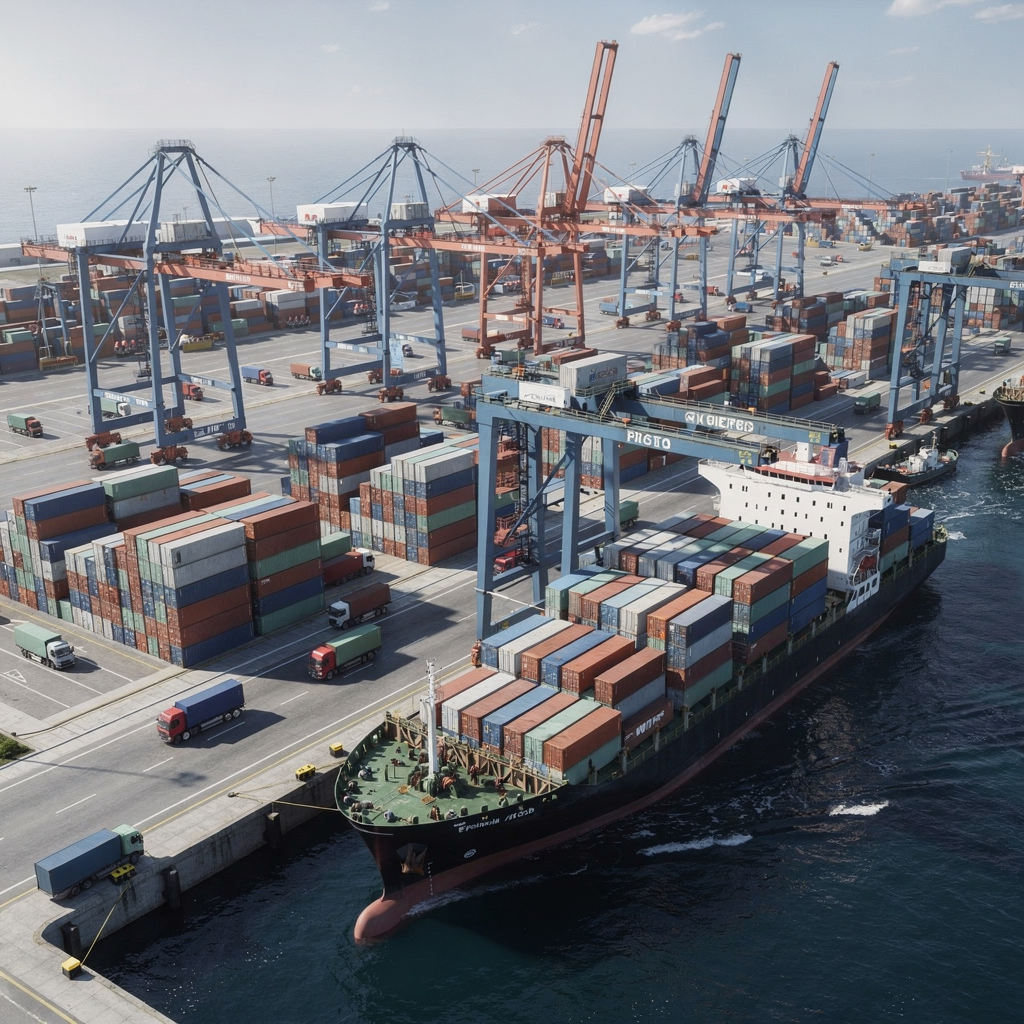
Drowning in a full terminal with replans, exceptions and last-minute changes?
Discover what AI-driven planning can do for your terminal
Optimize Operations: Throughput and KPI Analysis
Operators use port simulation to optimize throughput and to quantify KPIs. For example, AIS-based studies compute average turnaround times and berth productivity. Historical AIS analysis allows teams to compute waiting times and to identify peak congestion windows; these metrics help planners reduce demurrage and waiting time across the schedule (Times of ships in container ports: automatic identification system …).
Simulations test scheduling rules and show how simple changes cut ship waiting times by up to 20% in modeled scenarios. In one validated example, a discrete-event multi-agent model used real operational data to highlight crane allocation and yard-space constraints; the results suggested 15–25% productivity gains when planners rebalanced resources (A discrete-event multi-agent simulation framework supporting well-to …). These findings matter because throughput is the primary operational metric that links quay activity to the wider supply chain. Teams can simulate peak traffic scenarios to surface bottlenecks, and then change berth rules or gate staffing to see results.
Practically, simulation data from tests helps to quantify the marginal value of an extra crane, a change in shift patterns, or additional yard space. Users can run a range of scenarios to evaluate the reduction in idle time and demurrage and to see how utilization shifts. When paired with decision support dashboards, models provide quick answers to what-if questions. For readers interested in capacity sizing and investment cases, our article on capacity planning using digital twins lays out a method to translate simulation outputs into business cases (capacity planning using digital twins in terminal operations).
Case Studies: Lessons from Real-World Port Simulation
Case studies show how simulation systems deliver measurable gains in port and terminal settings. The Port of Salerno project used a discrete-event model validated with operational records. The model revealed that better crane sequencing and yard redistribution could increase productivity by 15–25% in targeted blocks (A discrete-event multi-agent simulation framework supporting well-to …). That result demonstrates the value of combining operational data with a customizable digital twin.
Likewise, AIS-driven studies have quantified ship timing patterns and arrival patterns for container port planning. Analysts use such data to test berth allocation strategies and to optimally position tugs and pilots to reduce waiting times (Times of ships in container ports: automatic identification system …). In other real-world trials, terminals trained staff in a simulator to improve emergency response and to reduce human error during peak stress. Training inside a risk-free environment improves situational awareness and maritime safety, which regulators and operators both value (Factors contributing towards effective maritime simulator training).
Case studies also show practical yard-space management changes. Simulation to test new placement rules often reveals that small shifts in stacking policy can rebalance workload and reduce rehandles. For example, reassigning a small cluster of blocks reduced long truck runs and smoothed RTG utilization. Loadmaster.ai’s multi-agent agents train inside a digital twin and then deploy policies that lower rehandles while keeping cranes busy. For a technical view on multi-agent planning, see our write-up about AI-native container terminals (AI-native container terminals with multi-agent planning architectures).
Drowning in a full terminal with replans, exceptions and last-minute changes?
Discover what AI-driven planning can do for your terminal
Digital Twin Simulation: Investment and Technology Trends
Digital twin and digital twin simulation technologies combine big data, AI, and sensor feeds to create a near real-time mirror of port activity. That consolidation supports predictive maintenance, energy-use reduction, and smarter scheduling. Industry 4.0 research highlights the trend toward smart port management and sustainable operations, and it emphasizes data integration across systems (Industry 4.0 research in the maritime industry: a bibliometric analysis).
Investment in a digital twin has two parts: the software and the integration work. The ROI arrives through lower fuel costs, less equipment wear, and fewer delays. Predictive algorithms that spot likely failures let maintenance teams work proactively. Also, cloud-based platforms scale modeling to many what-if cases. Standards for interoperability make it easier to connect TOS, telemetry, and external AIS feeds. For practical implementation guidance, read about building a digital twin and the integration points between telematics and planning systems (building a digital twin of an inland container terminal).
Digital twin platforms also enable a fast feedback loop for model performance and continuous improvement. Teams can collect simulation data, then reweight optimization objectives when conditions change. This is how adaptive agents learn to balance quay productivity against yard congestion. It is also how terminals move from reactive business processes to proactive strategies. For terminals considering investment choices, a staged approach that pilots a digital twin in a limited yard area often reduces risk and proves value before wider rollout. For a perspective on predictive planning and gradual rollout, see our article on predictive terminal planning for port operations (predictive terminal planning for port operations).
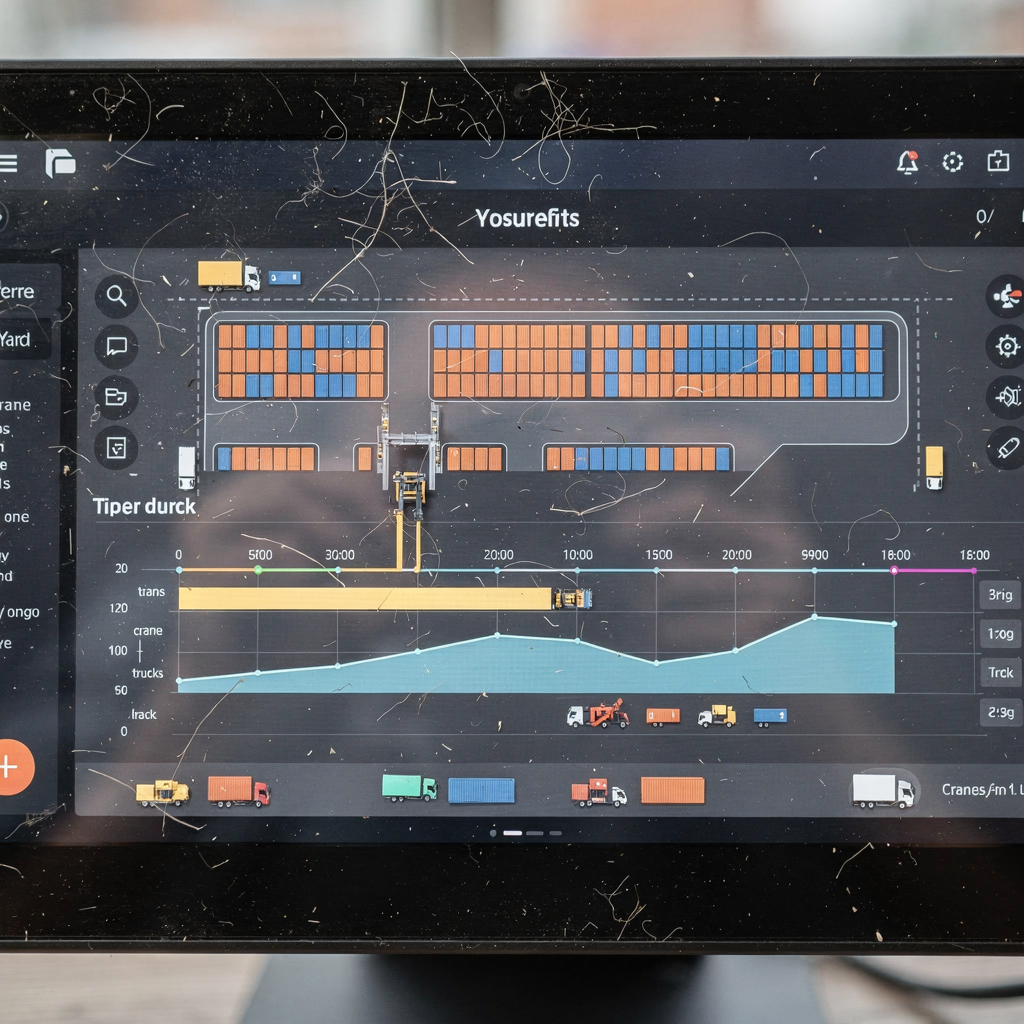
Investment and Optimization for Maritime Throughput
Investment choices for a terminal combine CAPEX, OPEX, and the expected gains from optimization. Decision makers must weigh equipment purchases against software and integration costs. Simulation helps quantify the marginal benefit of an extra crane, gate staffing, or a yard extension. It can also quantify idle time and demurrage reductions and show how those savings affect net returns. When teams simulate multiple investment scenarios, they can prioritize the options that deliver the highest return on investment.
Terminal optimization extends beyond hardware. It includes process redesign, staff training, and algorithm tuning. For example, a new scheduling algorithm may improve berth productivity but increase yard reshuffles. Simulation lets teams trade off those effects and pick balanced solutions that meet KPIs. Loadmaster.ai focuses on closed-loop optimization with RL agents that train in a sandbox. The agents learn policies that minimize rehandles and balance workloads while keeping operations executable without requiring large historic datasets.
For long-term success, operators should adopt a cycle of continuous improvement. First, simulate proposed changes. Second, pilot the best design options. Third, monitor system performance and retrain algorithms as conditions evolve. This process supports regulatory compliance and decarbonisation targets by prioritizing plans that reduce idle machine hours and lower fuel consumption. Finally, scheduling that reduces truck loops and crane idle time reduces greenhouse gas output and improves the terminal’s standing with customers and regulators. For practical guidance on balancing automation and human oversight, see our article on balancing automation and human oversight in inland container terminal vessel planning (balancing automation and human oversight in inland container terminal vessel planning).
FAQ
What is maritime terminal simulation software and what does it do?
Maritime terminal simulation software models the flow of vessels, cranes, trucks, and containers to test design and operational choices. It helps teams visualize system performance and supports decision making by producing verifiable metrics such as throughput and berth productivity.
How does simulation support port design?
Simulation allows designers to test layout alternatives and to quantify their impacts before construction. It helps visualize traffic flow, optimize berth allocation, and reduce costly rework during the build phase.
Can simulation reduce ship waiting times?
Yes. Studies show scheduling rule changes tested in models can cut ship waiting times by up to 20% in modeled scenarios (source). Simulated changes to berth allocation and crane sequencing often drive measurable improvements.
What role do digital twins play in terminal planning?
Digital twin simulation provides a near real-time mirror of terminal operations, linking sensor feeds and historic data to predictive models. It supports predictive maintenance, continuous optimization, and faster decision cycles.
How are operators trained using simulators?
Simulators create a risk-free environment where operators practice emergency drills and operational scenarios. Training in a simulated setting improves maritime safety and helps staff respond better to disruption response events.
What data sources power accurate models?
Models use AIS, TOS logs, equipment telemetry, and gate records as primary data sources. Combining these feeds with expert rules produces realistic arrival patterns and model performance that match real-world experience.
How do RL agents like those from Loadmaster.ai differ from traditional methods?
Reinforcement learning agents learn policies by simulating millions of decisions rather than only copying historical patterns. This approach is cold-start ready and avoids training on past inefficiencies, which helps achieve higher and more consistent throughput.
Can simulation help with environmental targets?
Yes. Simulation quantifies energy impacts of design and operational changes and can show how to reduce fuel use and emissions. Optimized scheduling reduces idle time and yields measurable energy savings.
Is investment in simulation software expensive?
Cost varies with scope and integration needs, but staged pilots reduce upfront risk. The economic case often rests on savings from reduced demurrage, lower fuel use, and higher utilization of existing equipment.
Where can I learn more about applying simulation to terminals?
Start with targeted resources such as our posts on container terminal simulation software and capacity planning using digital twins. They offer practical steps to pilot, validate, and scale models in live operations (container terminal simulation software, capacity planning using digital twins in terminal operations).
our products
 stowAI
 stackAI
 jobAI
jobAI
Innovates vessel planning. Faster rotation time of ships, increased flexibility towards shipping lines and customers.
Build the stack in the most efficient way. Increase moves per hour by reducing shifters and increase crane efficiency.
Get the most out of your equipment. Increase moves per hour by minimising waste and delays.
stowAI
Innovates vessel planning. Faster rotation time of ships, increased flexibility towards shipping lines and customers.
stackAI
Build the stack in the most efficient way. Increase moves per hour by reducing shifters and increase crane efficiency.
jobAI
Get the most out of your equipment. Increase moves per hour by minimising waste and delays.