
Terminal operations and container tracking api essentials
First, define what matters at a terminal when you expect fast, consistent data. Terminal operations depend on clear latency thresholds and strict data consistency rules. For yard work and gate workflows, many operators set soft latency limits near 200 ms for routine queries and hard limits below 1 second for synchronous handoffs. For safety-critical automation, research shows that “latency below 100 milliseconds is essential” for real-time control and safety, which makes strict thresholds necessary Latency below 100 milliseconds is essential. Next, data consistency means all systems see the same view of a container or slot. Otherwise, gates block trucks, cranes wait, and dwell time rises. For example, data inconsistency incidents can cost terminals up to $100,000 per hour in lost productivity and demurrage fees data inconsistency incidents can cost up to $100,000 per hour.
Also, a container tracking api supplies vessel ETAs, slot availability, and yard status in one stream. The container tracking api integrates AIS, TOS events, and telemetry to give a planner current yard maps and ETA revisions. Real-time container tracking is central to reducing truck queues and balancing quay workload. In practice, good APIs expose SLA metrics such as average API response time, SLA compliance rates, and data freshness indicators. Industry studies report average maritime API response times between 200 ms and over one second, with spikes at peak traffic average response times range 200 ms to over 1 second. Therefore, teams must instrument response time, time-to-freshness, and error rate.
Finally, practical thresholds vary by role. Gate systems may accept higher latency for bulk queries, while a quay crane operator needs sub-100 ms updates when automated triggers control moves. Loadmaster.ai helps terminals make those trade-offs by training agents in a sandbox, then deploying policies that streamline yard flow and reduce unnecessary rehandles. In short, set SLAs, measure continuously, and align API behavior with the operational KPIs you track, including throughput, dwell time, and crane utilisation.
Real-time integration in container terminal automation
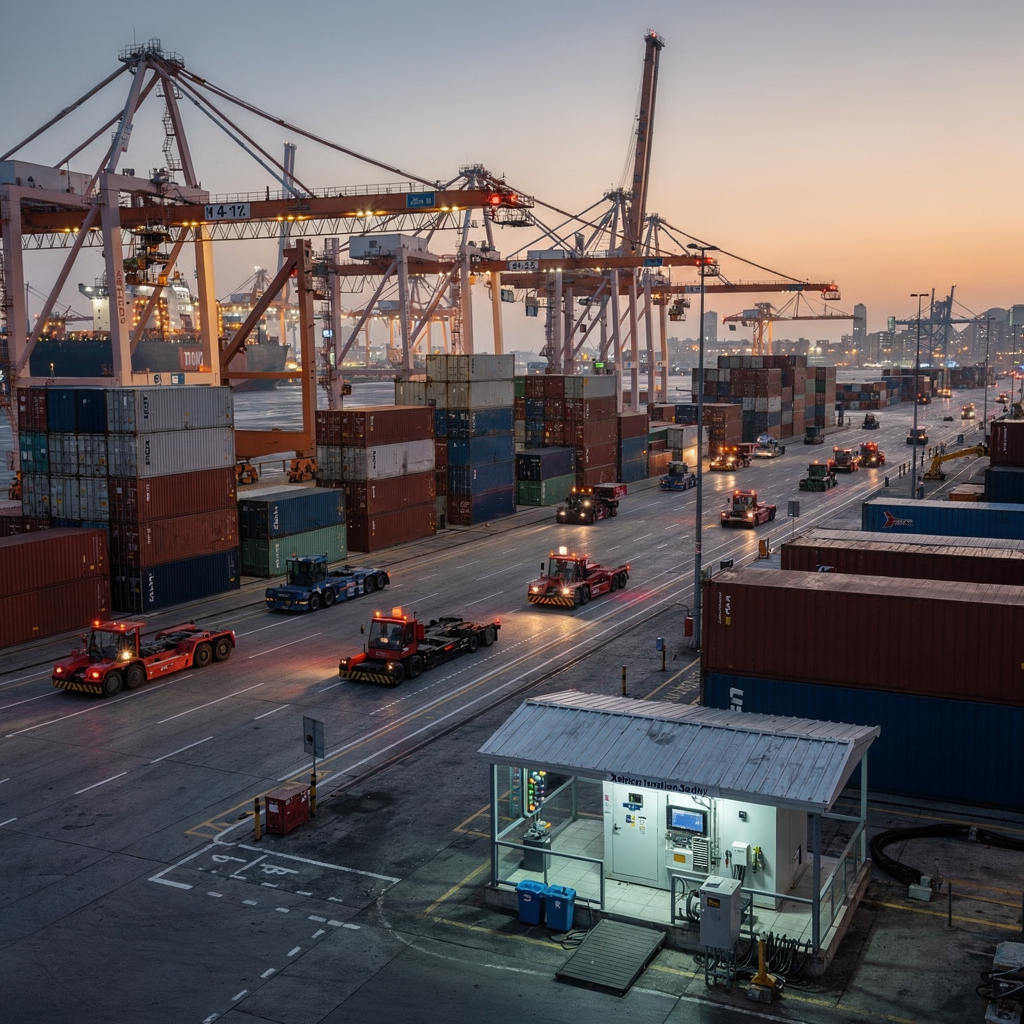
First, describe the data flows that power an automated container terminal. Quay cranes, automated guided vehicles, and the terminal operating systems exchange streams of telemetry, position data, and job assignments. Quay crane controllers publish move intents. AGV fleets subscribe to job queues. The TOS reconciles moves and updates the container yard map. Real-time flows must be low-latency and resilient to network faults. Also, edge computing nodes at the container yard reduce network hops and cut latency by handling local decision loops. Placing compute close to cranes and gates allows immediate feedback for safety interlocks and short-cycle orchestration.
Next, integration patterns help link legacy systems with modern automation. Use adaptors that translate EDI or proprietary TOS messages into modern API payloads. For example, a TOS gateway can expose gRPC endpoints and a REST sandbox for testing. A common pattern uses an edge gateway that authenticates devices, validates metadata, and provides fallback when connectivity drops. This pattern allows the TOS to remain the authoritative record while local controllers run short-term plans. In addition, operators often run hybrid deployments: cloud-based analytics for trend detection and edge nodes for instant control. That split reduces central latency and keeps the terminal resilient during network outages.
Also, integrate AIS feeds, multiple sources of telemetry, and berth schedules to create real-time visibility. When you integrate these data sources, planners see vessel ETAs, berth windows, and yard congestion in one dashboard. For deeper orchestration, systems must support orchestration of quay tasks, job sequencing, and handoffs to yard trucks. Loadmaster.ai applies reinforcement learning agents to these flows so the planner gets suggestions that improve throughput and reduce idle time. Finally, tie maintenance teams into the loop. Predictive alerts from crane telemetry cut downtime and keep operations running smoothly. For a practical example of synchronizing equipment and TOS layers, see synchronizing fleet management and TOS execution layers for more context synchronizing fleet management and TOS execution layers.
Drowning in a full terminal with replans, exceptions and last-minute changes?
Discover what AI-driven planning can do for your terminal
Api design and best practices for port supply chain optimization
First, choose API styles that fit your performance goals. REST works for broad compatibility. gRPC works when you need high-throughput and low-latency RPCs. Use JSON payloads for human-readability and compact binary formats when you need minimal overhead. Also, HTTP/2 brings multiplexing benefits and can reduce head-of-line blocking, which improves response times for many concurrent clients. For mission-critical integrations, design APIs with versioning, retry policies, and clear error codes. Authenticate every client, and use OAuth2 where possible. You must also include metadata for traceability.
Next, secure your endpoints with best practices. Authenticate and authorize every request. Use rate limiting and quotas to protect sensitive systems. Provide a sandbox for integrators to test with synthetic traffic before you expose production loads. In addition, add fallback patterns so a client can query cached views when the live TOS is unreachable. Implement robust retry logic and idempotent job submission to reduce duplicate moves. Also, include notification hooks for new event signals to downstream systems; that lets maintenance teams and dispatchers react quickly.
Also, align API design with supply chain needs. High-throughput pipelines carry position updates, job assignments, and stowage plans. Deliver real-time updates for shipment tracking and berth changes. For data-driven optimization, expose KPIs and analytics endpoints so optimization engines can tune for utilisation and throughput. Use webhooks for alerts and long-running job status. For practical guidance on TOS integration patterns that are TOS-agnostic, consult the TOS-agnostic software plugins resource TOS-agnostic software plugins. Finally, test under load. Simulate peak-day traffic. That practice helps you reduce latency and prevents surprises during disruption.
Terminal operating systems and crane workflow in container logistics
First, understand how terminal operating systems orchestrate the core tasks. The TOS schedules berth windows, assigns quay crane slots, and manages yard stacking. It publishes job tickets for each move. A job ticket includes container ID, destination slot, and required equipment. Then crane operators execute moves according to those tickets. TOS logic balances stowage planning against crane productivity. Stowage decisions must respect weight and lashing constraints and also minimize shifters. For in-depth stowage fundamentals, see stowage planning fundamentals for port operations stowage planning fundamentals.
Next, examine synchronization across subsystems. Cranes, straddle carriers, and rail interfaces must share a single authoritative state about a container’s location. Use event-driven workflows to publish new event messages whenever a move completes. Subscribers then reconcile local state. When reconciliation finds a mismatch, the TOS triggers a state reconciliation flow to resolve conflicts. Also, use consensus or lightweight locking for high-value assets to prevent duplicate assignments. This approach reduces rehandles and improves operational efficiency.
Also, integrate planner tools and analytics to drive better outcomes. A digital planner can suggest move sequences that reduce driving distances and idle time. Loadmaster.ai’s StowAI and JobAI work alongside the TOS to propose sequences that cut rehandles and balance workloads, thereby reducing yard congestion. For berth and crane planning best practices consider reading the container terminal berth and crane planning guide berth and crane planning best practices. Finally, maintain a clear alerting strategy. When a crane reports telemetry anomalies, send an alert to the maintenance crew and create a low-latency fallback plan so operations continue without costly downtime.
Drowning in a full terminal with replans, exceptions and last-minute changes?
Discover what AI-driven planning can do for your terminal
Apis and real time data consistency in maritime
First, network constraints in deepsea ports shape how APIs behave. Some ports rely on fiber and 5G, while others must use satellite links. Packet loss, jitter, and intermittent connectivity change the quality of service. For example, the Port of Shanghai generates enormous data volumes, and large ports can create spikes that push average API response times well above typical levels Port of Shanghai processes over 47 million TEUs annually. Also, empirical studies report maritime API averages ranging from 200 ms up to and over one second during peaks average API response times between 200 ms and over 1 second. Therefore, designers must plan for retries, caching, and offline modes.
Next, ensure data synchrony with distributed algorithms. Consensus algorithms like Raft or Paxos help keep replicated databases consistent. Use eventual consistency only where stale reads do not cause harm. In safety-sensitive workflows, require synchronous commit or strong reconciliation to avoid wrong assignments. Also, immutable ledgers and blockchain can provide tamper-proof transaction records, which increase trust between parties and simplify audits. Researchers note that blockchains add provenance for container movements while helping with cross-organizational consistency blockchain offers tamper-proof records.
Also, combine these techniques with practical network resilience. Use redundant links and dynamic route selection to reduce packet loss. Deploy local caches to serve read-heavy queries during a cutover. Implement health checks and SLA monitors that trigger alerts when a carrier or segment degrades. For deeper governance, adopt standards to harmonize data dictionaries across stakeholders. Finally, make sure your integrator and integrators can authenticate and authorize automated actors, and use metadata to support audit trails. For a perspective on costs caused by inconsistency, read the Dartmouth study on Pareto optimization for data mediation data inconsistency costs and mediation.
Global trade scaling with container tracking api integration
First, scale global container trade platforms with microservices, load balancing, and intelligent caching. Microservices let you scale the busiest components independently. Use API gateways to centralize authentication and quotas. Also, implement CDN-style caches for static port schedules and berth plans to reduce repeated load. For more on predicting equipment failures that affect global operations, look at predictive maintenance to reduce deepsea container port crane downtime predictive maintenance.
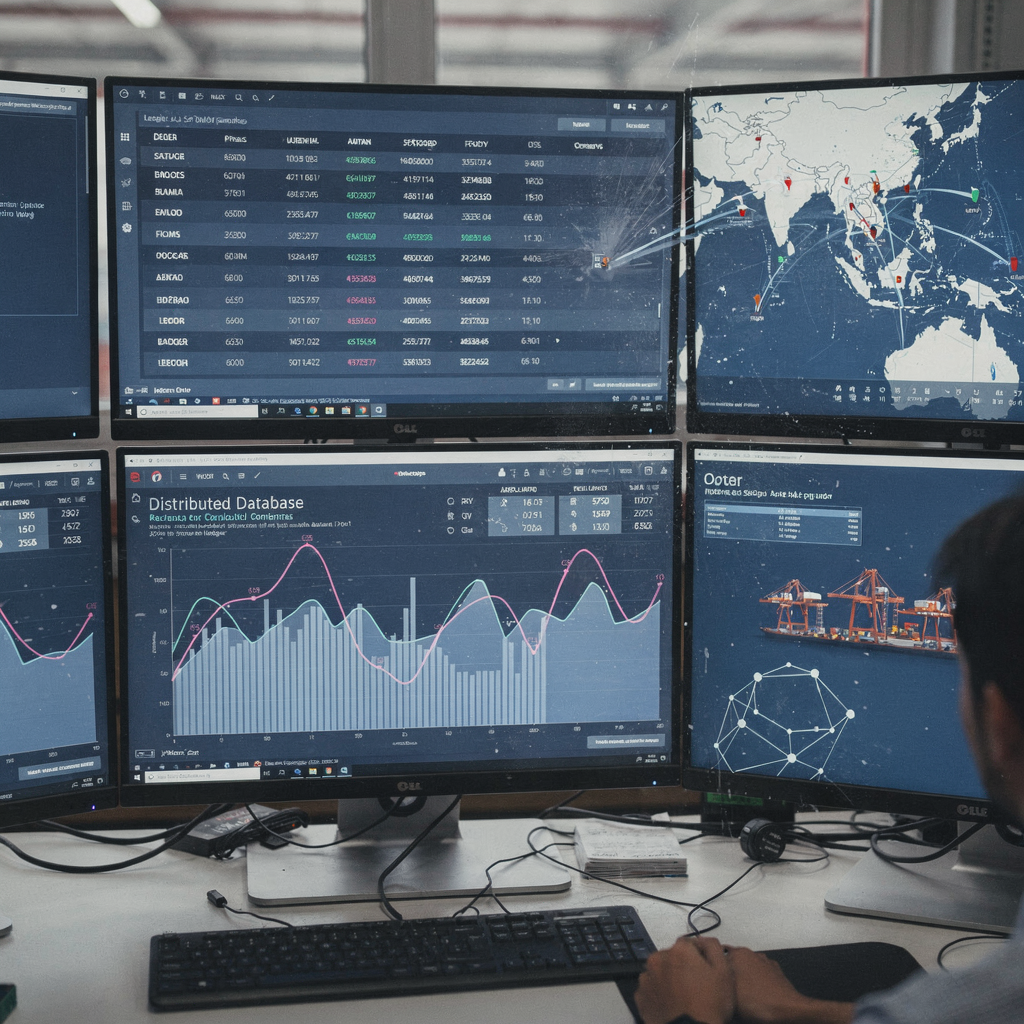
Next, integrate shipping lines, customs authorities, and terminal operators via a container tracking api. A single canonical feed for vessel ETA revisions, slot status, and container events reduces manual reconciliations. Shipping lines share booking and carrier data. Customs receive pre-advice and manifests. Terminals adapt stowage and yard plans. That shared data reduces errors and speeds clearance. Also, conform to international standards such as IPCSA or UN/CEFACT to maintain cross-border data consistency. These standards simplify compliance when you scale to terminals worldwide.
Also, operational resilience matters when trade volumes spike. Use auto-scaling policies for compute and message buses. Implement circuit breakers and fallback caches to keep critical services responsive in outages. For operational efficiency, expose analytics and KPIs so teams can optimize throughput and reduce dwell time. Use cloud-based analytics for trend detection while keeping the critical control loops close to the yard. Finally, design integration contracts that let a new integrator join quickly. Provide sandbox environments, clear authentication steps, and sample metadata so partners can authenticate, test, and go live with minimal friction. This approach helps global trade platforms remain resilient and responsive as they grow.
FAQ
What is the typical latency target for quay crane coordination?
Operators often target sub-100 ms latency for safety-critical crane coordination and below 200 ms for routine job assignments. Those targets help prevent delays and reduce idle time during peak operations.
How does a container tracking api improve berth planning?
A container tracking api consolidates ETA updates, berth availability, and yard status into a single feed, which planners use to adapt stowage and berth sequences. That integration reduces unnecessary shifts and helps optimize berth utilization.
Can legacy TOS systems integrate with modern APIs?
Yes. You can adapt legacy TOS with gateway adaptors that translate EDI into REST or gRPC endpoints. This pattern lets terminals integrate modern automation without replacing existing systems.
What role does edge computing play at the container yard?
Edge computing runs local decision loops near cranes and gates to reduce network hops and latency. It enables fast interlocks and immediate fallback when central connectivity degrades.
How can consensus algorithms support data consistency?
Consensus algorithms such as Raft ensure replicated databases agree on the same state, which prevents conflicting assignments across subsystems. Use strong consensus in safety-critical workflows and eventual consistency where brief staleness is acceptable.
Is blockchain useful for maritime APIs?
Blockchain provides immutable, auditable records for transactions and container movements, improving trust among parties. However, it adds overhead, so use it for provenance and audit trails rather than every high-frequency update.
How many external feeds should a terminal consume?
Consume only the data sources that add value: AIS, shipping line schedules, carrier manifests, and equipment telemetry. Aggregating multiple sources improves decision quality but increases integration complexity.
What is the best practice for API error handling at a port?
Provide clear error codes, idempotent endpoints, and retry guidance. Implement rate limiting and fallback endpoints so clients can degrade gracefully during outages.
How do AI agents like those from Loadmaster.ai fit into integration?
AI agents can close the loop between planner decisions and execution by proposing optimized sequences and adapting to disruption in real time. Loadmaster.ai trains agents in a sandbox digital twin, then deploys them with operational guardrails to improve throughput and reduce rehandles.
What standards should I follow for cross-border data exchange?
Adopt industry standards such as IPCSA and UN/CEFACT to standardize messages and reduce misinterpretation between shipping lines, customs, and terminals. Standardization simplifies scaling across regions and supports consistent orchestration of global workflows.
our products
 stowAI
 stackAI
 jobAI
jobAI
Innovates vessel planning. Faster rotation time of ships, increased flexibility towards shipping lines and customers.
Build the stack in the most efficient way. Increase moves per hour by reducing shifters and increase crane efficiency.
Get the most out of your equipment. Increase moves per hour by minimising waste and delays.
stowAI
Innovates vessel planning. Faster rotation time of ships, increased flexibility towards shipping lines and customers.
stackAI
Build the stack in the most efficient way. Increase moves per hour by reducing shifters and increase crane efficiency.
jobAI
Get the most out of your equipment. Increase moves per hour by minimising waste and delays.