
1. port operation and ai in port operations: systematic literature review of benefits of ai
Ports operate in complex environments. A systematic literature review of more than 70 articles shows steady annual growth in research on AI for ports. For example, a structured review notes that ML-based methods can “increase port performance by enabling more accurate and timely predictions” and that publication volume rises year on year (Applications of machine learning methods in port operations – A …). Therefore, ports and port authorities now track research and pilot projects more closely. Furthermore, the existing literature finds clear benefits of machine learning for berth scheduling, reduced berth waiting times and lower emissions. In fact, one review found that machine learning accounts for roughly three quarters of smart technology projects in port studies (The impact of artificial intelligence on enhancing operational …).
Across seaside operations and yard work, integration of AIS data, sensor feeds and historical logs enables models to learn from data. As a result, port operators improve forecasting of arrival times and make faster decisions. In practice, ML and AI combine AIS streams, gate scans and equipment telemetry to reduce dwell time and improve resource allocation. For example, ports that use combined data streams can better predict peaks and plan labour and crane shifts. Also, machine learning shortens reaction time to anomalies and reduces downtime. This supports operational efficiency, cuts costs and helps ports meet carbon targets.
In addition, AI systems help management teams move beyond traditional methods. They support port planning, port management and coordination with hinterland networks. For those who want concrete examples, see how digital twin pilots and yard prediction tools provide scenario testing and capacity planning (digital twin technology for port and terminal operations). Finally, port operators should view AI as a subset of new technologies that makes port operations more efficient while respecting responsible AI and cyber security practices.
2. applications of machine learning methods in port: predictive analytics for terminal optimization
Applications of machine learning methods now focus on predictive tasks that improve terminal throughput and turn times. First, regression models and classical ML predict arrival times and berth occupancy. Second, neural networks and deep learning handle nonlinear interactions in AIS and sensor data. Third, ensemble models combine short-term forecasts with longer trend forecasts to optimize allocation. A recent review highlights both methods and outcomes in this field (Applications of machine learning methods in port operations – Annual trends and use cases).
Predictive analytics reduces congestion. For example, when a terminal uses time-of-arrival and berth allocation models, it can cut waiting queues and plan crane sequences. Consequently, throughput and turnaround performance improve. In one benchmark, ML-driven scheduling reduced idle crane minutes and improved throughput by a measurable margin in pilot studies. Also, predictive analytics enables dynamic scheduling of cranes, labour and truck appointments. This supports terminal operators who need flexible shifts and rapid response to delays.
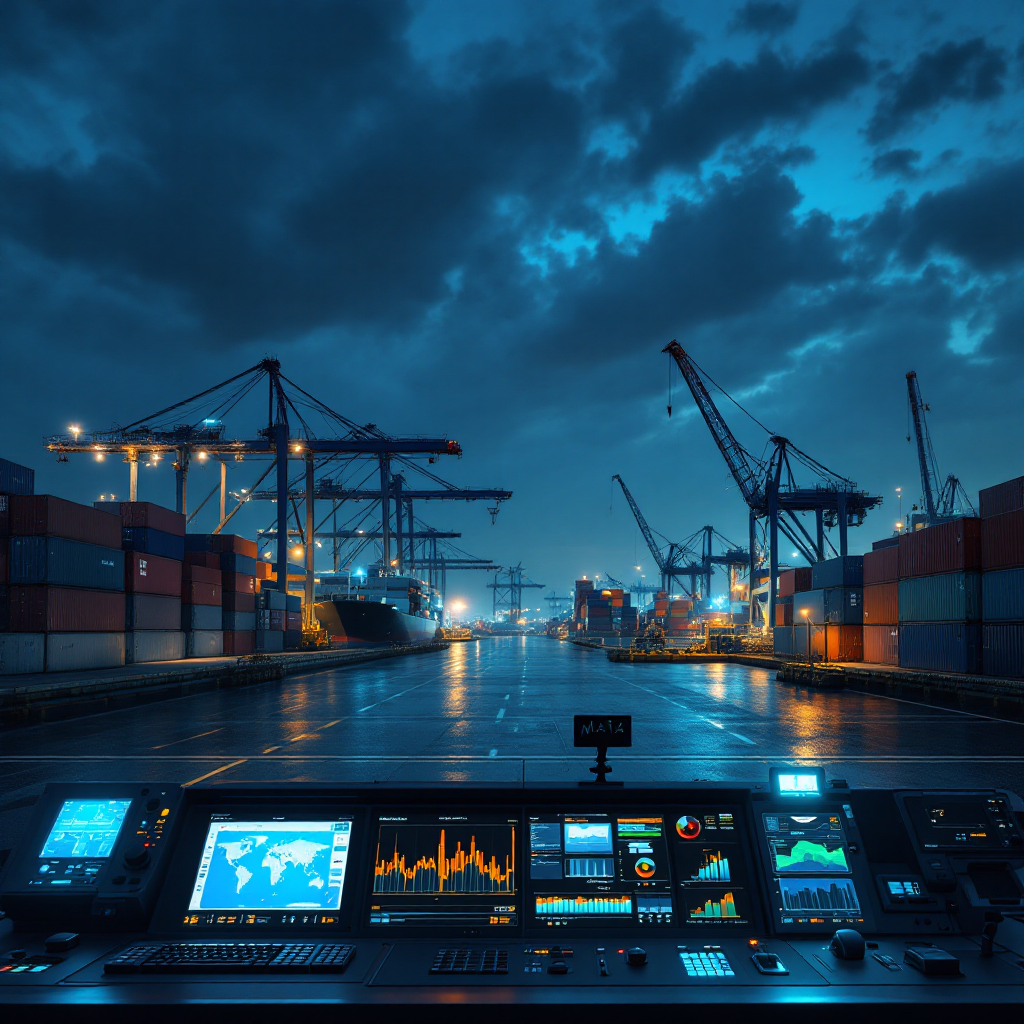
Moreover, terminal operating systems now ingest real-time feeds alongside historical logs to create time-of-arrival and berth occupancy prediction models. These models use ML algorithms and domain rules. They also support decision-making by recommending optimal crane sequencing and container routing. For further technical details on container sequencing and quay crane optimization, see an example of container sequencing software (optimizing quay crane operations with container sequencing software). In short, predictive tools and algorithms let terminals optimize schedules, lower dwell time and make port operation more efficient.
Drowning in a full terminal with replans, exceptions and last-minute changes?
Discover what AI-driven planning can do for your terminal
3. machine learning methods in port: learning methods in port operations to optimize port calls
Learning methods in port operations target reliable port calls and efficient berth allocation. Models now predict port calls and optimize berth allocation to reduce waiting. For instance, supervised models use AIS and historical berthing logs to estimate time of arrival and service time. Then, optimization routines allocate berths to minimize conflicts. This combination reduces vessel waiting and improves overall port fluidity. The technology connects to terminal operating systems and port community system feeds to coordinate arrivals and departures.
Predictive maintenance represents another major application. Sensors on cranes and gates stream vibration, temperature and usage data. Machine learning models detect anomalies and predict failures before they produce downtime. In one pilot, anomaly detection cut unscheduled downtime for cranes by flagging early signs of wear. As a result, maintenance teams schedule service during low-impact windows. This approach lowers repair costs and avoids cascading delays that affect the wider supply chain.
Data-driven scheduling also improves port call reliability. In practice, predictive allocation models simulate alternative plans and then select the least disruptive option. For a deeper dive into yard density and container stacking predictions, see container terminal yard density prediction using machine learning (container terminal yard density prediction). A case study of congestion prediction offers numeric support for these methods (Understanding and Predicting Port Congestion with Machine Learning). In short, machine learning models and optimization routines let terminal operators reduce delays, assign berths more fairly and keep cargo flows moving smoothly.
4. ai-powered automation and IoT-driven smart port for logistics and supply chain efficiency
AI-powered automation now stretches from autonomous crane control to gate processing. Deep reinforcement learning helps cranes learn efficient pick-and-place policies from simulation. As a result, terminals automate repetitive moves while preserving safety. Also, IoT and internet of things deployments feed telemetry for real-time yard management and energy monitoring. This creates closed loops where ML models recommend actions and automation executes them.
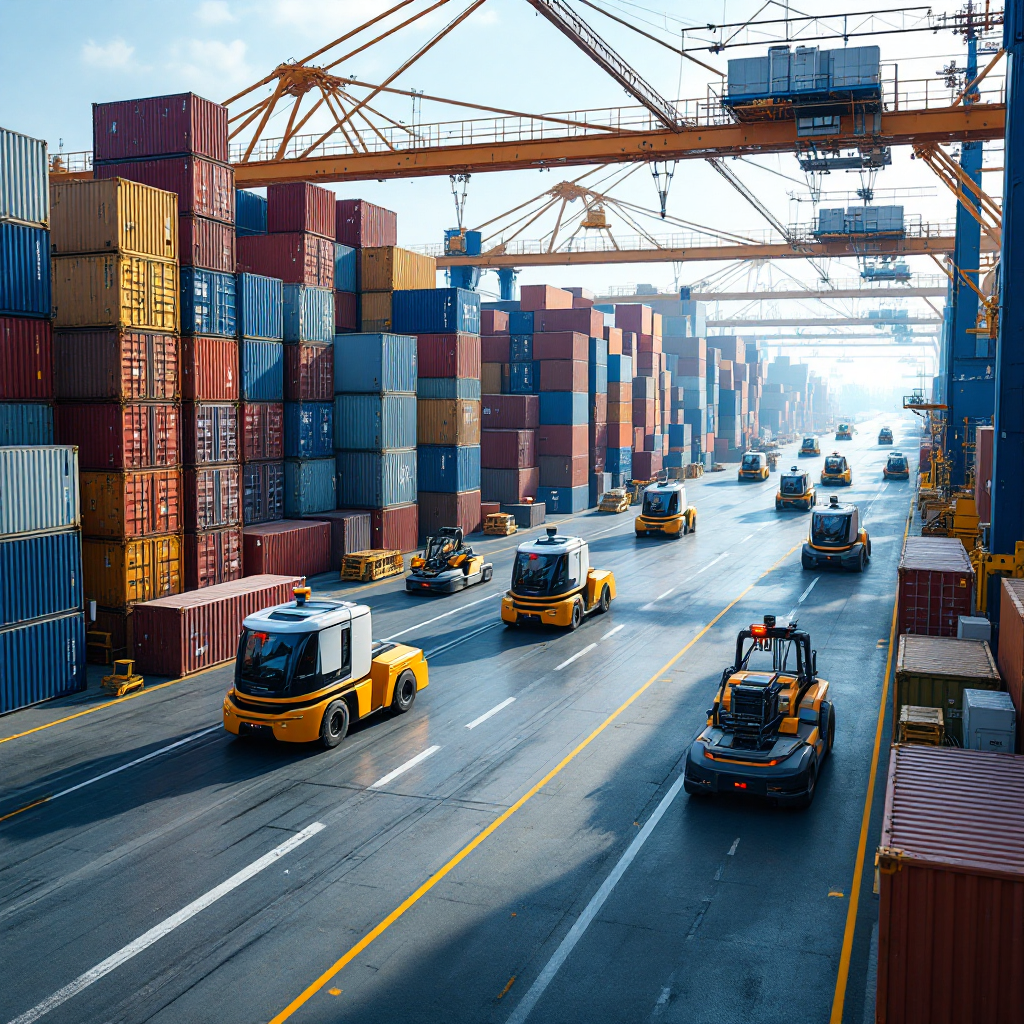
For terminals that already use automation, AI and ML integrate with terminal tractors and AGVs to prioritize jobs and reduce empty moves. For more on AGV job prioritization, see automated guided vehicles AGV job prioritization for import and export flows in container ports (AGV job prioritization). In addition, smart port strategies link yard decisions to broader supply chain nodes. Therefore, a delay at a terminal can trigger reroutes, appointment swaps and revised hinterland bookings. This keeps rail and truck partners informed and reduces cascading delays in the supply chain.
Operational teams also benefit from automation that handles communications. The system extracts structure from unstructured emails and routes or resolves messages using data from ERP and TMS. Thus, people receive timely context and terminals reduce time lost to coordination. Overall, IoT plus AI deliver a smarter smart port that improves logistics visibility and helps ports meet throughput goals while protecting safety.
Drowning in a full terminal with replans, exceptions and last-minute changes?
Discover what AI-driven planning can do for your terminal
5. application of machine learning for analytics in ports and terminals: ai use cases in safety and energy
Application of machine learning for analytics now includes safety and energy use cases. In maritime safety, ML detects anomalies in vessel movement and raises alerts when behaviour deviates from expected patterns. Such techniques support port security and predictive collision avoidance. A study on maritime safety for autonomous shipping explains how ML can detect unusual patterns and support decision-makers (Machine Learning in Maritime Safety for Autonomous Shipping – MDPI). This helps ports improve safety and protect cargo handling processes.
On the energy side, machine learning models forecast demand for electrified operations and help integrate renewable generation. A rapid review finds that ML enables more accurate predictions of energy demand and optimization of port operations, which is critical for sustainable port electrification (Machine-Learning Applications in Ports Electrification – A Rapid Review). Consequently, terminals can schedule charging for electric straddle carriers and minimize peak charges. For readers interested in electric equipment, see electric straddle carrier solutions (electric straddle carrier).
Prescriptive analytics then recommends optimal energy sourcing and load balancing. These AI-driven recommendations consider forecasted demand, tariff windows and stored energy. In practice, prescriptive systems reduce costs and lower emissions. At the same time, ports must guard cyber security and apply responsible AI. They should also involve stakeholders and port community systems when automating safety-critical functions. Overall, ML applications in port operations combine safety alerts and energy models to make ports cleaner and safer.
6. optimization and transportation research: future benefits of ai in port operations with digital twins
Digital twins let ports test “what-if” scenarios for terminal layouts, equipment deployment and traffic flows. They simulate outcomes before teams change physical assets. For this reason, digital twins accelerate experimentation without disrupting live work. For practical guidance, explore how digital twin technology supports optimized operations in ports and terminals (unlocking efficiency with digital twins).
Transportation research links port data to hinterland rail and road networks for end-to-end optimization. By combining port telemetry with road and rail schedules, researchers improve hub timing and reduce empty miles. A recent machine learning-driven global port analysis highlights how these models inform port planning and resource allocation (ImPORTance – Machine Learning-Driven Analysis of Global Port …). In addition, McKinsey reports that advanced analytics and machine learning can boost port performance by improving demand forecasts and operations (The future of port automation | McKinsey).
Emerging trends include deeper automation with reinforcement learning, stronger decarbonisation targets and AI-driven resilience. Also, transportation research encourages integration of ai and ml across modal boundaries. Thus, ports must plan for data governance, cyber security and responsible ai. They should also ensure that terminal operators and stakeholders adopt interoperable management systems and share the use of data. If ports implement AI carefully, they will improve efficiency and strengthen global trade links for major ports and smaller hubs alike.
FAQ
What is the difference between AI and machine learning in port operations?
AI describes a broad set of technologies that make systems act intelligently. Machine learning is a subset of AI that learns patterns from data to make predictions or classifications. In ports, AI covers decision-making systems, while machine learning powers many prediction models for arrival times and equipment health.
How do ports use predictive analytics to reduce berth waiting?
Ports use predictive analytics to forecast vessel arrival times and expected service durations. These forecasts let planners sequence berths and adjust crane assignments, which reduces queues and shortens berth waiting.
Can machine learning improve crane maintenance and reduce downtime?
Yes. Machine learning models analyze sensor feeds to detect anomalies and predict failures. By scheduling maintenance proactively, terminals can lower unplanned downtime and keep cargo flows moving.
What role does IoT play in a smart port?
Internet of things devices supply real-time telemetry from cranes, trucks and containers. This data feeds ML models and automation systems, enabling real-time yard management and more accurate decision-making. IoT thus acts as the sensing layer for smart port operations.
Are there examples of AI improving energy use in ports?
Yes. Machine learning models forecast energy demand and optimize charging schedules for electrified equipment. Studies show that ML helps integrate renewables and reduce peak charges, supporting port decarbonisation efforts.
How do digital twins help terminal planning?
Digital twins simulate terminal layouts, equipment moves and traffic flows without disrupting live operations. They let teams test what-if scenarios to pick the best design or schedule, which reduces risk and speeds up improvements.
What data sources do models use to predict port calls?
Models use AIS feeds, sensor data, historical logs and terminal operating systems. They may also ingest weather, tide and hinterland schedule information to refine time of arrival and berth allocation predictions.
How can small terminals implement AI without heavy IT projects?
Small terminals can start with focused pilots, such as predictive maintenance or email automation to reduce administrative load. Tools that integrate with existing ERPs and TOS can deliver quick wins and prove value before broader rollouts.
What are the cyber security risks when ports adopt AI?
AI systems depend on data integrity. Poorly secured feeds or management systems can expose operations to disruption. Therefore, ports must combine AI with strong cyber security controls and governance to protect operations.
By turning unstructured emails into structured tasks and routing or resolving them with data from ERP and TMS, it helps terminal operators focus on exceptions and high-value work.
our products
 stowAI
 stackAI
 jobAI
jobAI
Innovates vessel planning. Faster rotation time of ships, increased flexibility towards shipping lines and customers.
Build the stack in the most efficient way. Increase moves per hour by reducing shifters and increase crane efficiency.
Get the most out of your equipment. Increase moves per hour by minimising waste and delays.
stowAI
Innovates vessel planning. Faster rotation time of ships, increased flexibility towards shipping lines and customers.
stackAI
Build the stack in the most efficient way. Increase moves per hour by reducing shifters and increase crane efficiency.
jobAI
Get the most out of your equipment. Increase moves per hour by minimising waste and delays.