
port operations and AI integration: key performance indicators for container terminal
First, this chapter outlines how AI and terminal systems work together. In a modern container terminal the integration of AI into a terminal operating system aims to automate scheduling, adjust sequences, and improve CONTROLLER decisions. Also, planners and terminal operators must track key performance indicators to prove value. Therefore, ports measure container throughput rate as a core metric. For example, a DP World report shows a 15% increase in container throughput after AI-driven KPI programs were standardized at scale. This fact supports why kpis matter to port authorities and terminal operators.
Next, a terminal operating system ties together TOS, telemetry, and AI systems. In addition, the integration of AI reduces firefighting by moving teams from reactive tasks to planning and policy control. Our company, Loadmaster.ai, uses reinforcement learning agents in a digital twin to train StowAI, StackAI, and JobAI. Then, these agents recommend moves that lower rehandles, shorten driving distances, and stabilize performance across shifts. In short, the integration of AI creates measurable operational kpis focus for quay and yard operations.
Moreover, ports use a mix of metrics to assess performance. The container throughput rate shows the rate of container handling per hour or day. The metric links directly to operational efficiency and to terminal throughput capacity. As a result, port management can see a clear path to performance improvement when throughput rises. Finally, container handling equipment, job sequencing, and yard policies all influence throughput, so teams should align performance targets and benchmark outcomes with real targets, rather than rely solely on historical averages. For benchmarking resources and terminal simulation approaches see our page on simulations for terminal planning.
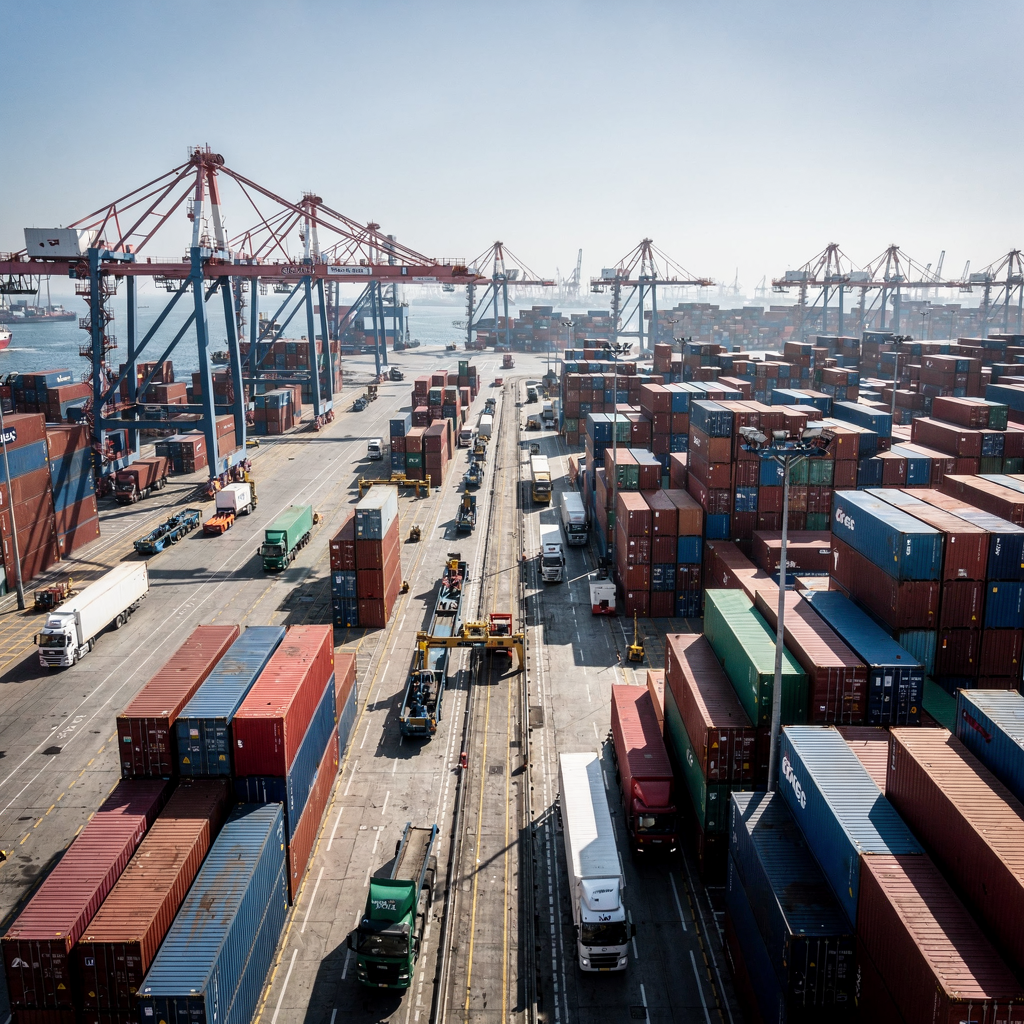
predictive analytics in terminal operations and real-time decision-making
First, predictive analytics and real-time data streams feed berth planning and predictive maintenance. These systems ingest telemetry, weather, and vessel schedules to forecast stress points. Also, when AI forecasts congestion it allows planners to reassign resources before queues form. For example, ports using real-time scheduling report a 25% improvement in berth utilization. That statistic shows how analytics and real-time tracking yield efficiency gains for berths and gates.
Next, a KPI that matters here is vessel turnaround time and its reduction through automated scheduling. Predictive analytics models can estimate handling time, and then they optimize berth windows to cut waiting. As a result, terminals lower turnaround time and reduce demurrage. Also, predictive maintenance reduces unexpected breakdowns and therefore reduces downtime. Research shows AI predictive maintenance can cut equipment downtime by up to 30%. This change leads to higher equipment utilization and to more stable operational performance.
Then, analytics tools forecast equipment needs and traffic flows. They run scenario simulations, and they test schedules before committing changes. Therefore, decision-making shifts from reactive to proactive. In addition, your teams can combine predictive models with human oversight to validate choices. For hands-on modelling and discrete-event simulation support, review our resources for JaamSim discrete event simulation and for digital twins used in enterprise dynamics planning. Finally, predictive analytics and real-time decision-making help ports and terminal operators improve throughput while protecting yard balance and energy use.
Drowning in a full terminal with replans, exceptions and last-minute changes?
Discover what AI-driven planning can do for your terminal
automation and machine learning to optimize throughput
First, automation and machine learning models automate cranes and yard trucks to raise throughput. Also, machine learning informs crane sequencing to minimize interference and to speed moves. Many terminals now use automation to automate repetitive tasks and to support complex decisions. For example, automatic guided vehicles and automated guided trucks operate with dynamic replanning. In addition, AI-managed job allocation reduces idle time for handling equipment and shortens average trips per container.
Next, a KPI that measures success is equipment utilization rate. Higher utilization means cranes and trucks work more consistently and move more TEUs per hour. Also, AI-driven yard management increases throughput by placing containers to reduce moves and by balancing workloads across RTGs and straddles. Loadmaster.ai trains agents in a sandbox digital twin to learn policies without relying on historical data. As a result, terminals get cold-start ready agents that do not imitate past inefficiencies. This approach improves performance evaluation and leads to efficiency gains without large data dependencies.
Then, case studies show measurable benefits. For instance, simulation and RL policies cut rehandles, reduce driving distances, and increase moves per hour. In practice, this combination raises throughput while lowering energy consumption and reducing shift-to-shift variability. Also, operators gain consistent performance independent of specific planners. For technical readers interested in container stacking and placement strategies see our piece on container stacking optimization techniques. Finally, machine learning models and automated control work best when teams maintain strong data governance, training, and clear KPIs for quay productivity, yard congestion, and driving distance.
kpis and metric for sustainability in ports and terminal operations
First, sustainability KPIs increasingly sit alongside traditional productivity measures. Energy consumption per container has become a key KPI for smart ports. AI can tune crane cycles, reduce idle engines, and compact moves to cut energy use. For example, studies show a roughly 10-12% reduction in energy consumption per container when ports deploy AI-based energy management. That metric links directly to lower emission totals and to better regulatory compliance.
Next, incident rate reduction is another measurable benefit. AI-powered cameras and rule-based monitors detect unsafe patterns. Also, automation can enforce safety rules during high-hoist moves and during yard reshuffles. Our research on safety-aware planning highlights how AI planning reduces risky handling operations. In addition, many terminals report fewer accidents when they mix automation with operator training and with governance controls set by port authorities. Consequently, sustainability and safety kpis affect insurance, downtime, and public reputation.
Then, tracking carbon and waste streams helps ports meet stakeholder expectations. AI systems combine load profiles, energy procurement, and equipment telemetry to produce carbon footprints per vessel or per container. Also, AI supports strategies such as opportunity charging for electric AGVs to flatten peaks and to lower grid impact. For related strategies see our guidance on opportunity charging strategies for electric AGVs. Finally, aligning kpis for sustainability with operational targets produces balanced decisions that reduce emission while protecting throughput and berth performance.
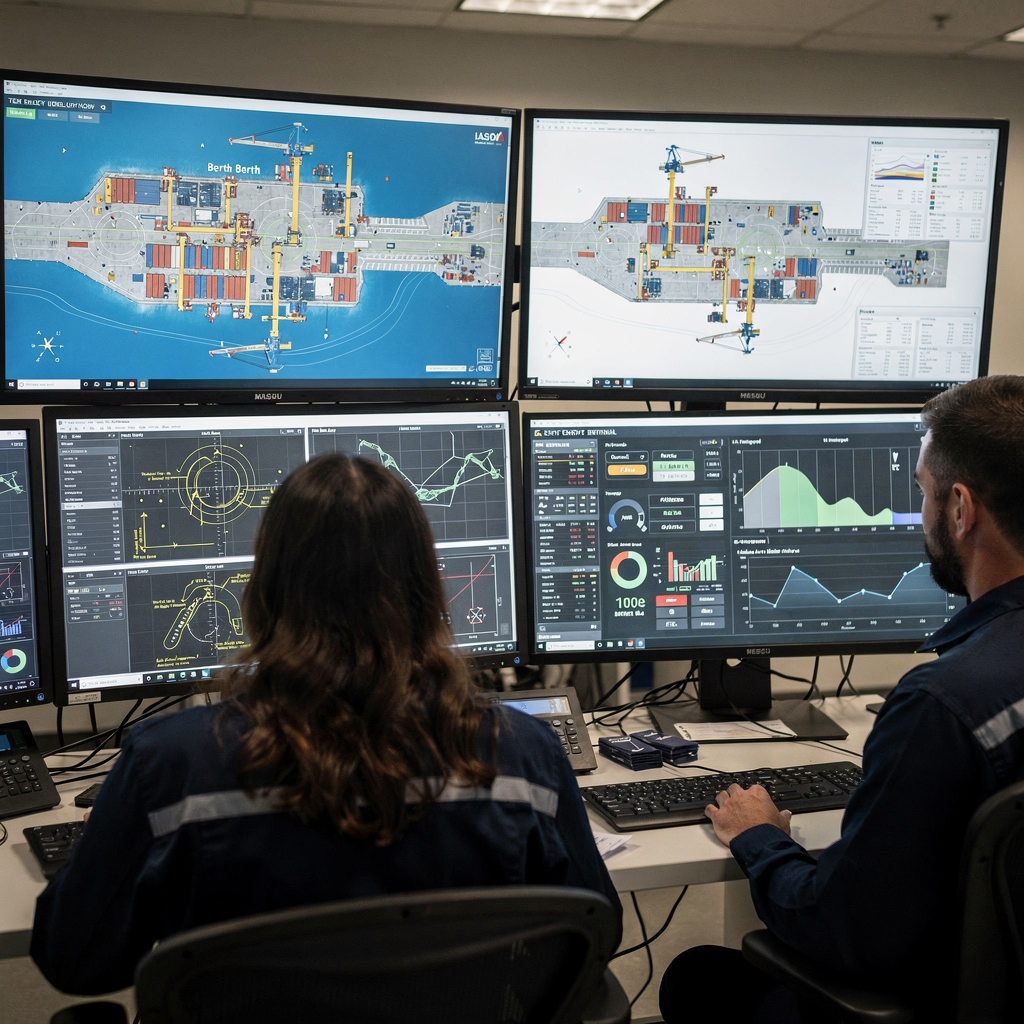
Drowning in a full terminal with replans, exceptions and last-minute changes?
Discover what AI-driven planning can do for your terminal
vessel turnaround time and berth allocation: key performance indicators in shipping lines
First, vessel turnaround time and berth utilisation rate remain central kpis for shipping lines and terminal operators. Even small reductions in turnaround deliver outsized benefits to vessel schedules and to global trade. For example, DP World reported a 20% reduction in vessel turnaround time after standardizing AI analytics. That improvement speeds vessel rotations and reduces demurrage costs.
Next, coordination matters. Ports, shipping lines, terminal operators, and port authorities must share data to align arrival slots, pilot times, and gate flows. Also, AI systems can suggest dynamic berth assignments that reflect current yard balance and forecasted arrivals. As a result, planners avoid stacking conflicts and they lower container dwell time. In addition, dynamic assignment links to traffic management, to reduce on-dock congestion, and to improve handling operations near the quay.
Then, the KPI of berth utilisation shows how well ports pack work into fixed quay time. AI optimizes sequences to protect crane productivity and to prevent yard bottlenecks. Also, vessel schedules improve because AI coordinates pre-stow and cut-off management with gate flows. For deeper reading on job scheduling and vessel cut-off management see our article on time-critical job scheduling. Finally, improving berth allocation reduces wait time, cuts costs for shipping lines, and strengthens port competitiveness in maritime logistics.
use cases and benefits of AI use and AI implementation in terminal operating system and logistics to improve performance
First, common use cases include predictive maintenance, dynamic berth assignment, and automated inventory control. Also, other use cases cover cross-equipment job prioritization and decoupling fleet control logic from a TOS. These functions reduce downtime and improve performance improvement across shifts. As a result, operators see fewer breaks in flow and better throughput per crane.
Next, benefits of AI appear in real numbers. For example, ports reported a 15% throughput increase and a 20% turnaround time reduction after AI programs. In addition, predictive maintenance can reduce downtime by up to 30%. These statistics show measurable benefits of ai use and support investment decisions for port management.
Then, best practices for ai implementation include clear data governance, stakeholder training, and continuous benchmarking. Also, start with a digital twin or simulation to validate algorithms before live deployment. Loadmaster.ai uses reinforcement learning agents trained in a sandbox environment so teams avoid teaching the AI past mistakes. In addition, multi-objective control lets operators balance quay productivity versus yard congestion. For simulation and modelling support explore our resources on enterprise dynamics logistics simulation. Finally, adopt measurable KPIs up front, monitor outcomes, and iterate policies to ensure the future of AI delivers consistent, auditable, and safe gains across maritime operations.
FAQ
What are the core key performance indicators for AI in port operations?
The core key performance indicators include container throughput rate, vessel turnaround time, and equipment utilization rate. Also, sustainability metrics such as energy consumption per container and incident rate reduction matter for long-term performance.
How does AI reduce vessel turnaround time?
AI reduces turnaround time by optimizing berth allocation and by sequencing crane work to lower idle time. In addition, predictive scheduling and improved communication among shipping lines and terminal operators speed vessel and port operations.
Can AI predict equipment failures in a terminal?
Yes, predictive maintenance models analyze telemetry and IoT signals to forecast failures. As a result, terminals can schedule repairs proactively and cut downtime significantly.
What sustainability KPIs should ports track?
Ports should track energy consumption per container, carbon footprint per vessel, and waste or fuel usage tied to handling operations. Also, tracking incident rates and efficiency gains helps link environmental targets to operational performance.
How do simulations support AI implementation?
Simulations create digital twins that let teams test AI policies without risking live operations. Also, they enable cold-start training so AI agents learn effective strategies without bad historical data.
What is the role of terminal operating systems in AI projects?
TOS connects scheduling, berth data, and equipment telemetry to AI systems so the algorithms can act on accurate inputs. In addition, a clear API layer helps integrate agents with management systems and with existing workflows.
How quickly can a terminal see benefits from AI?
Some terminals see measurable gains in months after pilot deployment, especially with model-in-the-loop simulation testing. However, the timeline depends on data quality, stakeholder alignment, and how well KPIs map to operational goals.
Are there risks when implementing AI in terminals?
Yes, risks include poor data governance, misaligned KPIs, and overreliance on historical patterns. Therefore, best practices include governance, guardrails, and continuous benchmarking to mitigate risk.
Which AI use cases deliver the fastest ROI?
Predictive maintenance and dynamic berth assignment often yield rapid returns through reduced downtime and better berth utilisation. Also, yard management improvements that cut rehandles can quickly increase throughput.
How should ports choose metrics for performance evaluation?
Ports should select measurable, operational kpis focus that reflect both productivity and sustainability. In addition, involve stakeholders early to ensure the chosen metrics align with port authorities, terminal operators, and shipping lines.
our products
 stowAI
 stackAI
 jobAI
jobAI
Innovates vessel planning. Faster rotation time of ships, increased flexibility towards shipping lines and customers.
Build the stack in the most efficient way. Increase moves per hour by reducing shifters and increase crane efficiency.
Get the most out of your equipment. Increase moves per hour by minimising waste and delays.
stowAI
Innovates vessel planning. Faster rotation time of ships, increased flexibility towards shipping lines and customers.
stackAI
Build the stack in the most efficient way. Increase moves per hour by reducing shifters and increase crane efficiency.
jobAI
Get the most out of your equipment. Increase moves per hour by minimising waste and delays.