
kalmar smartport is a set of process automation modules
Kalmar SmartPort is a modular platform that combines a terminal operating system and process automation to streamline yard work and improve throughput. Specifically, kalmar smartport is a set of tightly integrated components that let operators schedule, track, and control moves from gate to quayside. For clarity, this description uses the phrase “Kalmar SmartPort is a modular process automation solution” as a direct product statement from Kalmar that frames the offering and its intent.
The architecture centres on a core TOS module and a selection of automation modules that terminals can choose based on specific needs. Core modules include crane automation, yard planning, and equipment control. In practice, a terminal can deploy a module for automatic stacking cranes, a module for shuttle coordination, and a module for gate sequencing. This set of process automation modules supports staged rollouts. As a result, terminals can scale from a pilot block to wider yard automation without a full rip-and-replace.
Kalmar designed the platform to be vendor-agnostic and modular. Thus, terminals can integrate third-party equipment or keep existing fleets. The modular process automation approach lets teams focus on one area at a time. For example, they can first automate quayside crane scheduling, next add automated yard transfers, and finally automate truck movements at the gate. This reduces risk and speeds up deployment.
Kalmar SmartPort acts as an automation platform that aggregates data and delivers automatic updates to dashboards and controllers. It connects with a range of hardware and software, and it can deliver job instructions and automated data to other systems. For terminals that want simulation-driven testing before go-live, see our material on terminal digital twin software for how to validate staged automation safely and effectively.
To summarise, kalmar smartport combines a terminal operating system, modular process automation, and vendor-agnostic integration. Consequently, terminals get targeted process automation that meets specific needs and that can scale over time.
tos module and automation modules in terminal operations
The TOS module acts as the command centre for scheduling, resource allocation, and gate operations. It receives bookings and gate data. Then it plans quay work, allocates cranes, and issues move orders. The TOS coordinates with automation modules to hand over tasks that a human dispatcher would otherwise manage. For a clear product view, Kalmar describes how the TOS and modules work together as a process automation solution that improves visibility and safety across the yard (Kalmar SmartPort product page). This direct reference clarifies the design intent.
Integration with container handling equipment is central. The platform links to automatic stacking cranes and shuttle carriers, among other assets. In one technical brochure Kalmar shows how automatic stacking cranes can be part of an integrated solution and how they work with the wider TOS and yard software (Kalmar ASC brochure). That documentation helps explain physical interfaces and operational sequencing. For terminals that plan to model gate and yard interactions before deployment, our pages on container terminal simulation software offer examples of how to test TOS-driven workflows.
Automation modules optimise container movement by reducing manual steps and by delivering job allocation in near real time. They can automate container pick-up and drop-off sequences, balance workload across cranes, and steer shuttle routing. The system can automate simple moves and complex sequences equally well. For instance, smartstack logic can direct where to place containers to reduce future reshuffles. That logic is part of how the TOS module and automation modules combine to lower toil and boost productivity.
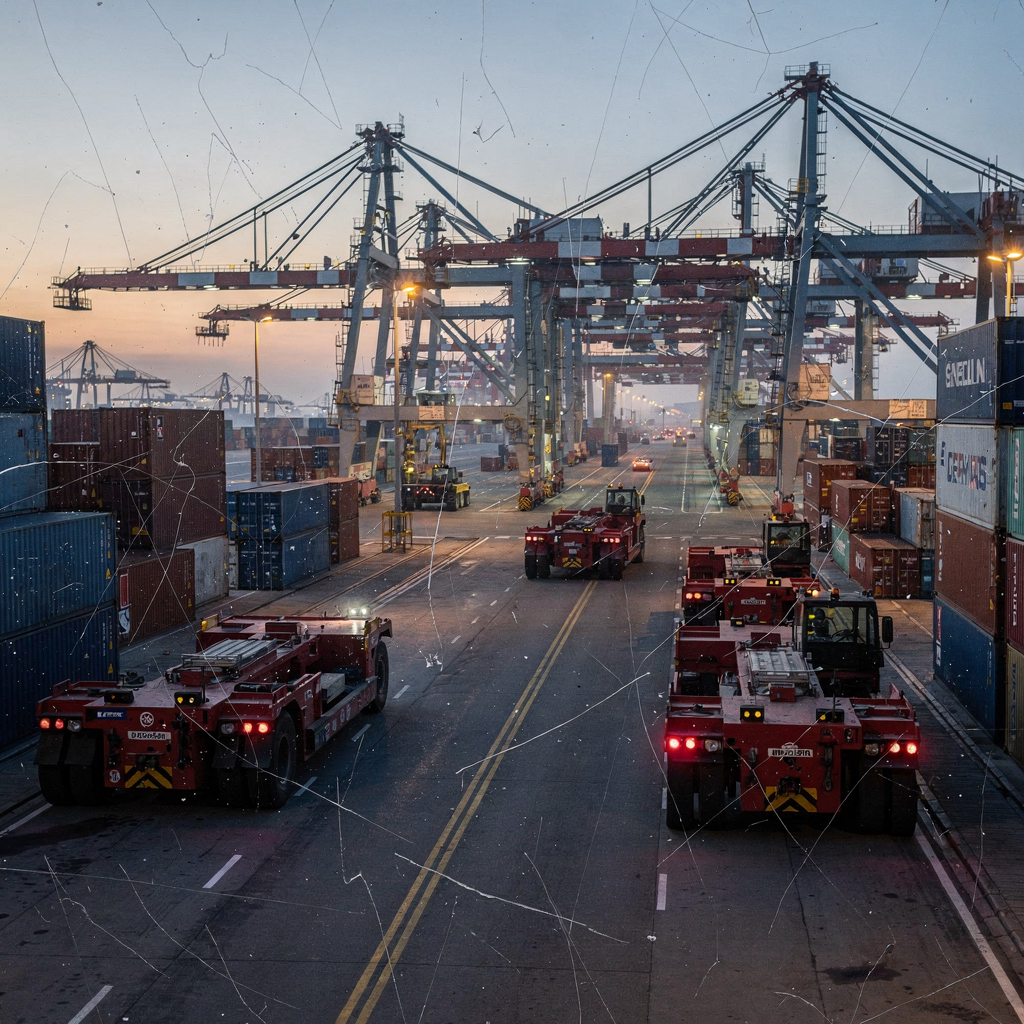
Data flows both ways. The TOS sends task lists. Automation modules return status and location. That closed-loop ensures job instructions remain current. As a result, the terminal reduces manual data entry and shortens turnaround times while keeping an audit trail for safety and compliance.
Drowning in a full terminal with replans, exceptions and last-minute changes?
Discover what AI-driven planning can do for your terminal
automation for operational efficiency in container terminal workflows
Automation delivers measurable operational efficiency across quay and yard workflows. Terminals with integrated automation have reported strong gains in moves per hour and in reduced dwell. Kalmar materials document deployments that support large numbers of automated stacking cranes working in an integrated solution (Kalmar ASC brochure). Case examples highlight how crane and shuttle automation let a terminal handle higher peak loads without proportional increases in staff.
Specifically, some operations report throughput increases and better resource utilisation when automation coordinates quay cranes, yard handlers, and gate activities. In practice, this coordination can cut idle times, reduce unnecessary travels, and lower rehandles. One industry review points to measurable improvements in throughput and day-to-day operations where Kalmar solutions have been deployed (product reviews). Those reviews provide qualitative evidence from users describing increased productivity and fewer bottlenecks.
Key steps that improve with automation include yard planning, equipment dispatch, and shift handovers. For yard planning, automated logic reduces the time planners spend on manual placement. For dispatch, the system issues optimized move orders that match available assets. For handovers, the TOS distributes an agreed plan so each shift can continue seamlessly. These steps reduce errors and human intervention. They also help reduce congestion around gate areas and improve truck movements.
Our reinforcement learning work at Loadmaster.ai can complement these gains. For example, our StackAI and JobAI agents work with the TOS to further reduce rehandles and balance workloads across cranes and shifters. We train agents in a sandbox twin of the terminal so teams can measure gains safely. For readers interested in modelling how automation affects throughput, our terminal throughput simulation tools show how coordinated automation translates to moves per hour and to tighter cost control.
real-time tracking modules for container flow
Real-time tracking of containers underpins reliable automation. Kalmar SmartPort uses GNSS/INS positioning to improve location accuracy in challenging port settings. Kalmar states that its solutions use GNSS/INS receivers to gather better data for terminal logistics (positioning technology brief). Independent coverage of GNSS in difficult environments also explains common challenges and methods for robustness (GPS World article). These external references show why terminals invest in integrated tracking.
Tracking modules do more than locate equipment. They provide geofencing, timestamped events, and live alerts. For example, a smarttrack function can flag when a container crosses a gate or when a shuttle leaves its lane. A smartmap for real-time display shows asset positions and container inventory on a single screen. That visual layer helps dispatchers and supervisors to reduce dwell and to resolve conflicts faster.
In practice, terminals use tracking modules to aggregate data from multiple sources. They combine telemetry from cranes, vehicles, and yard sensors. Then they create an automated data flow into dashboards and into the TOS. This data flow supports job allocation and automated status updates. It also permits playback so teams can review sequences and refine rules using using playback functionality.
Better tracking shortens decision cycles and cuts uncertainty. As data streams to controllers and planners, the terminal can speed up turnaround and allocate resources where they matter most. For teams exploring rapid prototyping, our pages on terminal equipment simulation explain how to test tracking and telemetry before committing hardware changes.
Drowning in a full terminal with replans, exceptions and last-minute changes?
Discover what AI-driven planning can do for your terminal
improve safety with advanced automation
Advanced automation helps improve safety by reducing human error in repetitive, high-risk moves. For instance, remote monitoring and automatic collision avoidance reduce the exposure of staff near moving equipment. Kalmar highlights how improved visibility and automation can raise safety across the yard (product overview). This statement supports why many operators prefer staged automation that first focuses on high-risk operations.
Key safety features include collision avoidance logic, remote operator stations, automated alerts, and persistent audit trails. These tools reduce on-spot judgement calls and make compliance simpler. They also let terminals maintain records for regulatory audits and for continuous improvement. For example, smartscreen dashboards present exception alerts and keep shift supervisors informed. Additionally, automated alerts notify teams of equipment faults before they escalate.
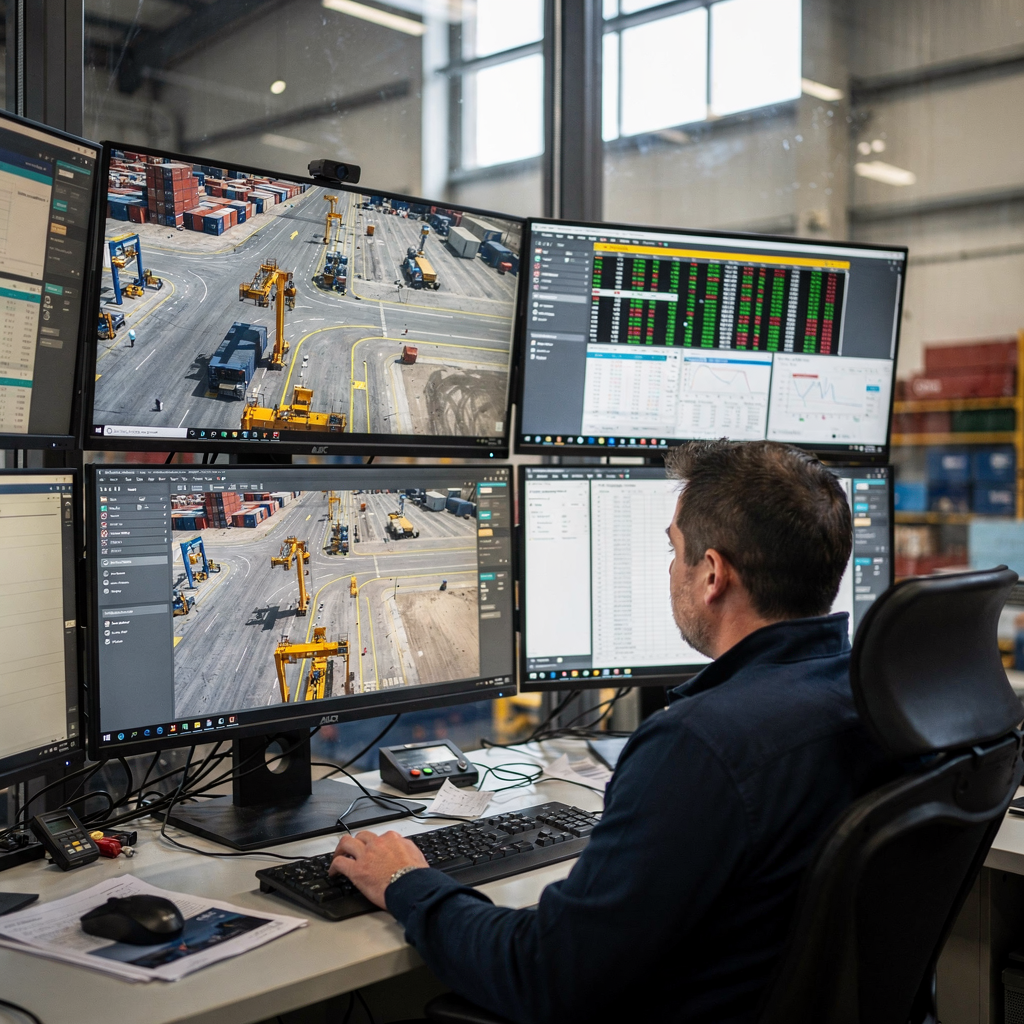
Automation also protects quayside staff by restricting where automated machines may operate. Smartlift and smarttruck functionality coordinate lifts and transfers to avoid overlaps. The system can also enforce rules for street trucks in yard operations, holding trucks in safe zones when required. At the same time the platform helps teams monitor equipment and personnel utilisation rates so they can reassign work safely and avoid overloading a single asset.
At Loadmaster.ai we pair RL agents with automation to improve safe decision-making under changing conditions. Our agents train in a sandboxed twin to explore contingency actions. This reduces risky experimentation on real equipment. Furthermore, the approach reduces reliance on single planners and preserves operational knowledge across shifts. That makes safety improvements stable and repeatable.
kalmar smartport tos integration in terminal
Kalmar SmartPort integrates with leading terminal systems, including Navis N4, through open APIs and vendor-neutral interfaces. The platform supports standard data exchanges and EDI feeds. In addition, Kalmar has made parts of its ecosystem available as standalone software to simplify integration tasks (Kalmar integration announcement). This availability helps terminals adopt automation without replacing existing TOS investments.
The vendor-agnostic design enables future expansions. Terminals can add smartport modules over time. They can also connect third-party systems such as gate automation, rail and container handlers, or bespoke monitoring tools. This flexibility proves useful for diverse equipment fleets and for terminals that must meet local regulatory requirements. For terminals exploring combined digital and physical testing, our guide to TOS simulation integration shows how to validate interfaces and data flow prior to live change.
Scalability ranges from single-gate solutions to fully automated mega-terminals. A modular smartport solution allows pilots that prove performance before scaling. As the system grows, it maintains a single source of truth for container inventory and for the flow of containers across the yard. The open APIs also permit automated data exchange with logistics partners and with inland rail systems. That reduces manual data entry and improves the predictability of truck arrival patterns.
Finally, integration supports operational objectives such as reduce congestion, speed up turnaround, and boost productivity. When combined with decision-support tools and digital twins, the TOS and its modules become the centre of a smarter, safer modern container terminal. For decision-makers looking to simulate what integration will mean for operations, visit our page on what-if scenarios for terminal TOS to see examples and outcomes from simulated rollouts.
FAQ
What is Kalmar SmartPort and how does it differ from a traditional TOS?
Kalmar SmartPort combines a terminal operating system with modular automation modules to manage moves and to automate execution. It differs from a traditional TOS by adding closed-loop automation, equipment control, and real-time tracking capabilities.
Can Kalmar SmartPort integrate with Navis N4 and other systems?
Yes. The platform supports open APIs for integration with Navis N4 and many third-party systems. Terminals often run SmartPort alongside an existing TOS to phase in automation without replacing current software.
How does Kalmar SmartPort improve safety in the yard?
SmartPort includes collision avoidance, remote monitoring, and automated alerts to reduce human error and to protect staff. These features provide persistent audit trails that simplify compliance and incident review.
What tracking technology does SmartPort use?
SmartPort uses GNSS/INS positioning and other telemetry to provide accurate locations for equipment and containers. These technologies help terminals maintain real-time tracking of containers and to reduce dwell times.
Can I pilot SmartPort on a small part of my terminal?
Yes. The modular approach supports staged rollouts that start with a pilot block or a single gate. Pilots reduce risk and let teams measure gains before scaling across the yard.
How does automation affect truck turnaround times?
Automation reduces manual handoffs and speeds decision-making, which lowers turnaround times for trucks. Coordinated job allocation and reduced manual data entry also cut queueing and waiting at gates.
Will SmartPort work with diverse equipment fleets?
Yes. The system has vendor-agnostic interfaces to connect with diverse equipment fleets. It can manage automatic stacking cranes, shuttle carriers, yard trucks, and more.
Can I test SmartPort before going live?
Terminals can simulate SmartPort and its automation modules using digital twins and discrete-event models. Our simulation pages show how to run what-if scenarios to validate workflows and to measure potential gains.
Does Kalmar SmartPort support rail and intermodal operations?
Yes. SmartPort can coordinate rail and container flows and integrate with inland logistics systems. This helps terminals manage combined quayside and rail schedules efficiently.
How do I measure the productivity benefits of automation?
Measure metrics such as moves per hour, dwell times, rehandles, and equipment utilisation. Simulation tools and staged pilots help quantify benefits under realistic conditions before full deployment.
our products
 stowAI
 stackAI
 jobAI
jobAI
Innovates vessel planning. Faster rotation time of ships, increased flexibility towards shipping lines and customers.
Build the stack in the most efficient way. Increase moves per hour by reducing shifters and increase crane efficiency.
Get the most out of your equipment. Increase moves per hour by minimising waste and delays.
stowAI
Innovates vessel planning. Faster rotation time of ships, increased flexibility towards shipping lines and customers.
stackAI
Build the stack in the most efficient way. Increase moves per hour by reducing shifters and increase crane efficiency.
jobAI
Get the most out of your equipment. Increase moves per hour by minimising waste and delays.