
operating system and terminal operating system: definitions and scope
First, an operating system in the context of port management is a software layer that coordinates hardware, data flows, and human tasks at a waterfront hub. Next, it schedules vessels, tracks yard stacks, and enforces business rules. Furthermore, it gives planners a single view of processes. Therefore, teams can react faster to changes. Also, it supports DATABASES, APIs, sensors, and operator terminals. As a result, the stack becomes an essential digital platform for planning and managing day-to-day work.
Then, a terminal operating system takes that concept deeper. It focuses on container terminals and the specific workflows that move TEUs from ship to shore to road or rail. For example, a TOS will manage vessel operations, gate checks, yard management, and crane sequencing. In addition, it often includes billing and customs interfaces. Next, the TOS replaces manual logs with set of computerized procedures to manage complex moves. Consequently, this improves efficiency and safety at the berth and across the yard.
However, legacy solutions used static tables and human-driven dispatch. They relied on tribal knowledge and batch uploads. In contrast, modern, software-driven approaches offer real-time visibility and decision support. For example, a modern platform can provide vessel registration and vessel traffic insights as ships arrive. Also, it may integrate RFID feeds and equipment telemetry for better resource planning and utilization. At the same time, planners still need domain expertise, but they get better tools to plan and manage constrained resources.
Finally, the shift matters for the supply chain and for terminal vs older rule engines. For instance, automated alerts reduce manual errors. Moreover, the industry now expects a management solution that covers berth planning, yard stacking, and gate throughput. In addition, vendors often support SCADA, tug coordination, and pilotage tasks. Therefore, port stakeholders see a clear case for moving from paper and spreadsheets to an effective management system that provides a set of computerized controls and an intuitive user interface.
iportman port operating system: core features
iPortman stands out as a modern operating system for seaports and multi-modal sites. It is often described as a comprehensive solution for marine operations, yard and gate. First, it organizes modules for marine, cargo, yard and gate. Next, it supports berth and pilotage planning, vessel registration, and arrival and anchorage workflows. Additionally, it handles break bulk, dry bulk, liquid bulk and general cargo.
Furthermore, the suite supports multiple devices. For example, operators can use desktops at control rooms, tablets on the quay, and PDAs in the yard. This multi-device accessibility helps maintain continuity during shifts. Also, the product supports multiple languages and legacy connectors, which eases system integration and migration from older platforms. For instance, terminals can keep historical data flowing while they adopt the new digital platform.
In addition, iPortman offers EDI support for business processes between terminals and shipping lines. For details on EDI message types, see their TOS documentation which lists IFMAN, BMISRM and HANMOV among others (source). Next, iPortman includes modules that automate yard operation, container handling, and vessel operations. Also, the product suite can be labeled as iportman – integrated when vendors combine marine terminal functionality with gate and yard tools.
For readers who want simulation and decision support around TOS integration, consider exploring our integration resources such as the terminal operating system simulation integration guide. In addition, if you want an interface comparison or detailed notes on Opus, see our page on the Opus Terminal for practical examples. Finally, user feedback highlights tangible gains; for instance, reviewers note reduced turnaround and improved throughput after deployment (user review).
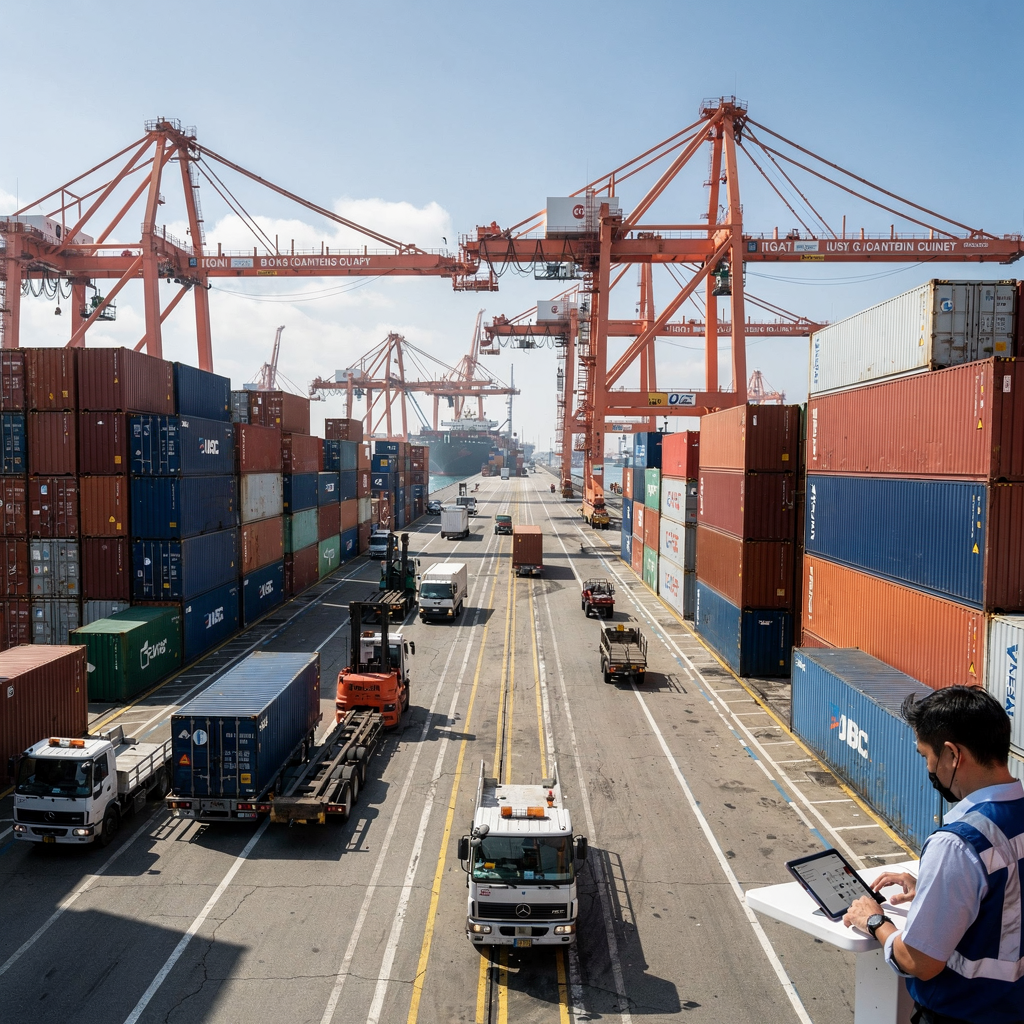
Drowning in a full terminal with replans, exceptions and last-minute changes?
Discover what AI-driven planning can do for your terminal
tos automation for container operations
First, a TOS can automate container operations at berth, yard and gate with clear tasking. It issues moves, assigns cranes, and sequences transfers. Next, the system reduces manual checklists and error-prone radio calls. Consequently, teams see faster unload and loading cycles. In addition, automation improves traceability for each container from vessel to truck or rail.
Second, EDI and messaging are central to automation. For example, supported messages include IFMAN, BMISRM, HANMOV, COPRN and COPRAR. These messages speed handoffs between carriers, terminals, and customs. The system’s EDI engine validates formats and updates workflows. Also, iPortman offers built-in handlers so carriers get timely responses and planners avoid duplicate tasks (product handout).
Third, real-time monitoring provides live KPIs and alerts. For example, yard occupancy maps update as cranes move containers. Then, managers get a true picture of queuing at the gate and the yard. Also, analytics reveal patterns that suggest better crane sequences or revised shift plans. As a result, terminals can prevent bottlenecks before they grow. In practice, some deployments report throughput gains of 15–20% after adopting a modern TOS (review summary).
Furthermore, automation does not replace human judgment. Instead, it frees planners to focus on exceptions and strategy. At Loadmaster.ai, we complement TOS capability by offering AI agents that optimize stowage and yard placements. For example, our StowAI, StackAI, and JobAI coordinate decisions across quay, yard and gate so moves execute smoothly. In this way, a TOS that can automate routine tasks pairs well with reinforcement learning agents that handle dynamic trade-offs.
seaport berth and yard and gate management
First, streamlining berth planning reduces vessel idle time. The TOS assigns berthing windows and coordinates tugs and pilotage. Next, systems track berthing details and assign berthing teams to unload. Also, planners monitor vessel traffic and adjust sequences to protect quay productivity. For example, berth and pilotage planning often includes pilotage planning and operation and tug scheduling along with berth and pilotage checks to reduce delays.
Second, yard and gate modules focus on stacking rules and equipment allocation. The system optimizes yard operation to minimize rehandles and balance work across RTGs and straddles. Also, automated gate checks speed truck turnaround. Consequently, gates see fewer backups and better throughput. In practical terms, terminals that restructured yard management and gate flows often cut truck wait times and increased moves per hour.
Third, vessel traffic management and arrival coordination matter for capacity. TOS features for vessel traffic schedule slots, monitor vessels at anchorage, and process arrival and anchorage updates. They also support vessel operations such as un-berthing and berthing sequences. In addition, integrated tug and barge schedules ensure the right support is available when a vessel arrives.
Finally, examples show measurable benefits. For instance, user reports highlight faster vessel turnaround and improved container handling capacity after TOS upgrades (user review). Also, combining the TOS with digital twins and simulation tools produces robust plans. For deeper simulation of yard flows tied to TOS feeds, see our article on how to simulate yard operations with TOS integration.
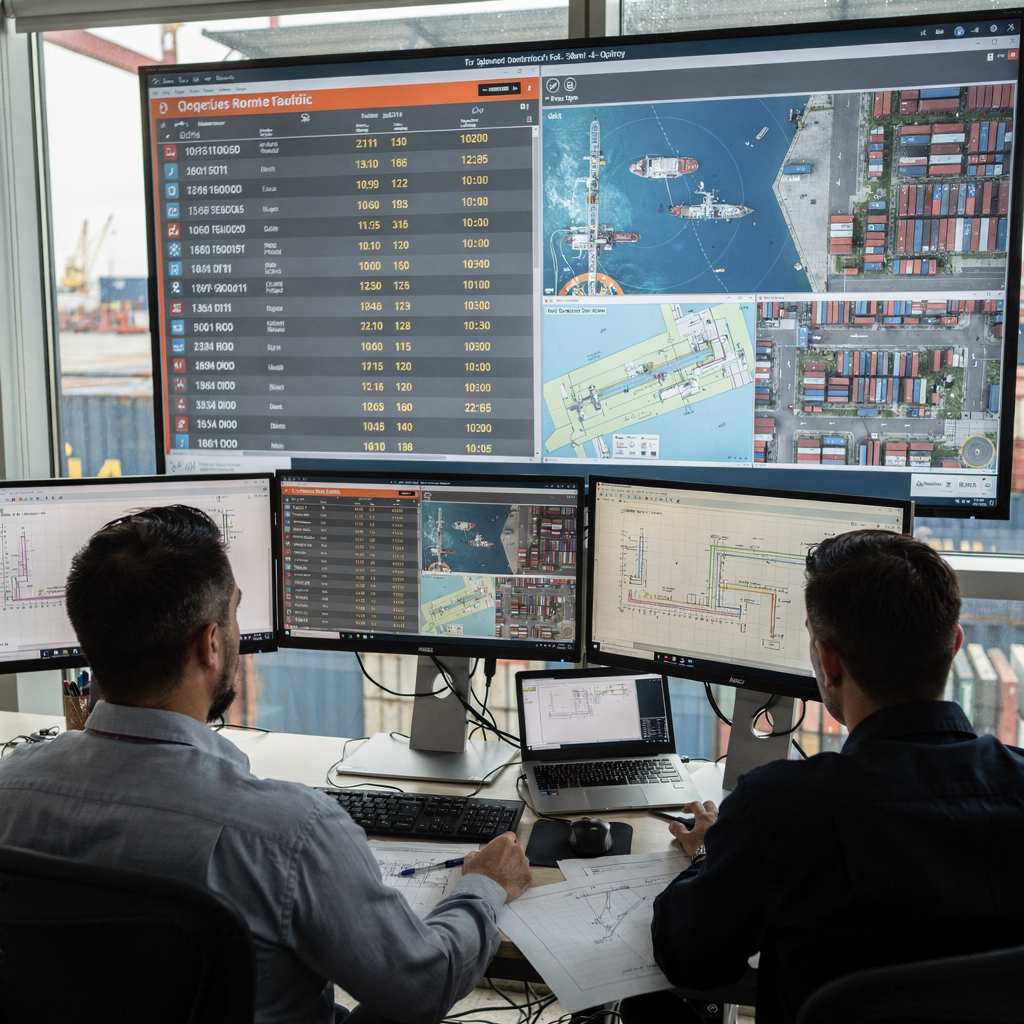
Drowning in a full terminal with replans, exceptions and last-minute changes?
Discover what AI-driven planning can do for your terminal
end-to-end workflow: streamline operations with opus terminal
First, an end-to-end process covers vessel arrival, berth allocation, cargo moves, yard staging, gate release, and billing. Next, the flow begins with vessel registration and pilotage confirmations. Then, the TOS assigns cranes and creates a stow plan. Afterwards, cranes unload containers and yard trucks transfer them to assigned stacks. Finally, trucks or rail collect containers and terminals close the job with invoicing and customs reports.
Second, Opus Terminal provides a user interface to manage these steps. The Opus Terminal interface helps coordinators keep tasks visible. In addition, it links shipping line notices to crane sequences and yard assignments. As a result, the process becomes transparent for planners and for customers. For more on Opus and comparable systems, see our Opus Terminal resource (detailed page).
Third, metrics matter. For example, terminals monitor moves per hour, crane productivity, and yard stack heights. In practice, modern systems improve those metrics and reduce manual errors. Reported improvements include throughput gains in the 15–20% range and measurable cost reductions in operational budgets (review). Also, improved resource planning and utilization produces fewer rehandles and steadier crane workloads.
Fourth, system integration reduces friction. For instance, system integration with customs, carriers, and gate scanners speeds paperwork. Also, RFID and telematics feeds give real-time location for critical assets. When combined with simulation, these integrations let teams test what-if scenarios and train staff in a sandbox before changes go live. For guidance, our post on simulation integration with TOS explains how to validate workflows safely.
best terminal operating: market position and ROI
First, iPortman competes with several leading products and ranks among top offerings in recent comparisons of terminal operating systems (ranking). Next, the platform emphasizes integration and multi-device support to serve diverse terminals. Also, market reviews highlight its flexibility when integrating with legacy systems and external partners. For instance, some terminals report faster vessel turnaround and better container handling rates after migrating.
Second, reported ROI figures support investment decisions. For example, some users cite throughput gains of 15–20% after a TOS upgrade (user reports). In addition, these gains typically come with lower labor costs, fewer rehandles, and improved billing accuracy. Consequently, the payback on software and integration projects often appears within a few years.
Third, comparisons such as terminal vs other TOS show trade-offs between deep analytics, legacy connectors, and modular design. Also, the category includes systems built for multi-modal terminals, marine terminal specialists, and all-in-one solution for vessel operation suites. In parallel, new trends push vendors to add AI-driven optimization and closed-loop control. At Loadmaster.ai, our RL agents slot into this evolution by offering cold-start ready optimization that works alongside any TOS through APIs and EDI.
Finally, the future will likely combine digital twins, stronger system integration, and adaptive automation. For strategic teams, selecting the best terminal operating product means weighing integration, end-to-end coverage, and the vendor’s roadmap. In 2026, the strong offerings include mature TOS platforms as well as adjacent tools that add AI-driven optimization and simulation to increase efficiency and safety. For readers researching the operating system in 2026, consider both core TOS features and how they will integrate with optimization layers and external systems such as port security and customs.
FAQ
What is the difference between an operating system and a terminal operating system?
An operating system in port contexts coordinates hardware and software to support operations. A terminal operating system focuses specifically on container terminals, yard management, gate processing and vessel operations, and it includes features tailored for cargo handling.
Which devices can run iPortman?
iPortman supports multiple devices including desktops, tablets and PDAs, enabling staff to access schedules and yard maps on the quay. This multi-device accessibility helps maintain continuity across shifts and functions.
How does EDI improve terminal processes?
EDI standardizes messages between carriers, terminals, and customs, reducing manual entry and errors. The TOS can parse messages like IFMAN and HANMOV to automate updates and speed handoffs.
Can a TOS handle different types of cargo?
Yes, modern systems support containerized cargo plus break bulk, liquid bulk, and dry bulk handling. They offer rules and modules that reflect the operational needs of each types of cargo.
What ROI can terminals expect from a TOS?
Reported gains vary, but some terminals document throughput improvements in the 15–20% range and lower operational costs after deployment. ROI depends on implementation scope, integration, and process change management.
How does yard and gate optimization reduce truck waiting times?
By sequencing yard moves and streamlining gate checks, the system reduces queuing and speeds truck processing. Also, better yard operation planning cuts unnecessary repositioning and saves time.
What role does simulation play with a TOS?
Simulation lets planners test schedules, what-if scenarios, and resource plans before changes go live. For integration and decision support, simulation tools reduce risk and validate performance under different conditions.
Is it possible to integrate AI agents with a TOS?
Yes, AI agents can work alongside a TOS through APIs and EDI to optimize stowage, job sequencing, and yard placement. These agents can improve consistency and resilience without replacing core TOS functions.
How does berth and pilotage planning interact with vessel traffic?
Berth and pilotage planning schedules the physical mooring and pilot availability while vessel traffic management coordinates slot timing and anchorage. Together they minimize conflicts and protect quay productivity.
What security and compliance features should I expect?
Expect role-based access, audit trails, and interfaces for customs and port security to support compliance. Additionally, modern implementations often include monitoring and logging to meet regulatory requirements.
our products
 stowAI
 stackAI
 jobAI
jobAI
Innovates vessel planning. Faster rotation time of ships, increased flexibility towards shipping lines and customers.
Build the stack in the most efficient way. Increase moves per hour by reducing shifters and increase crane efficiency.
Get the most out of your equipment. Increase moves per hour by minimising waste and delays.
stowAI
Innovates vessel planning. Faster rotation time of ships, increased flexibility towards shipping lines and customers.
stackAI
Build the stack in the most efficient way. Increase moves per hour by reducing shifters and increase crane efficiency.
jobAI
Get the most out of your equipment. Increase moves per hour by minimising waste and delays.