
Intermodal truck tracking: Optimising port yard operations in container terminal operations
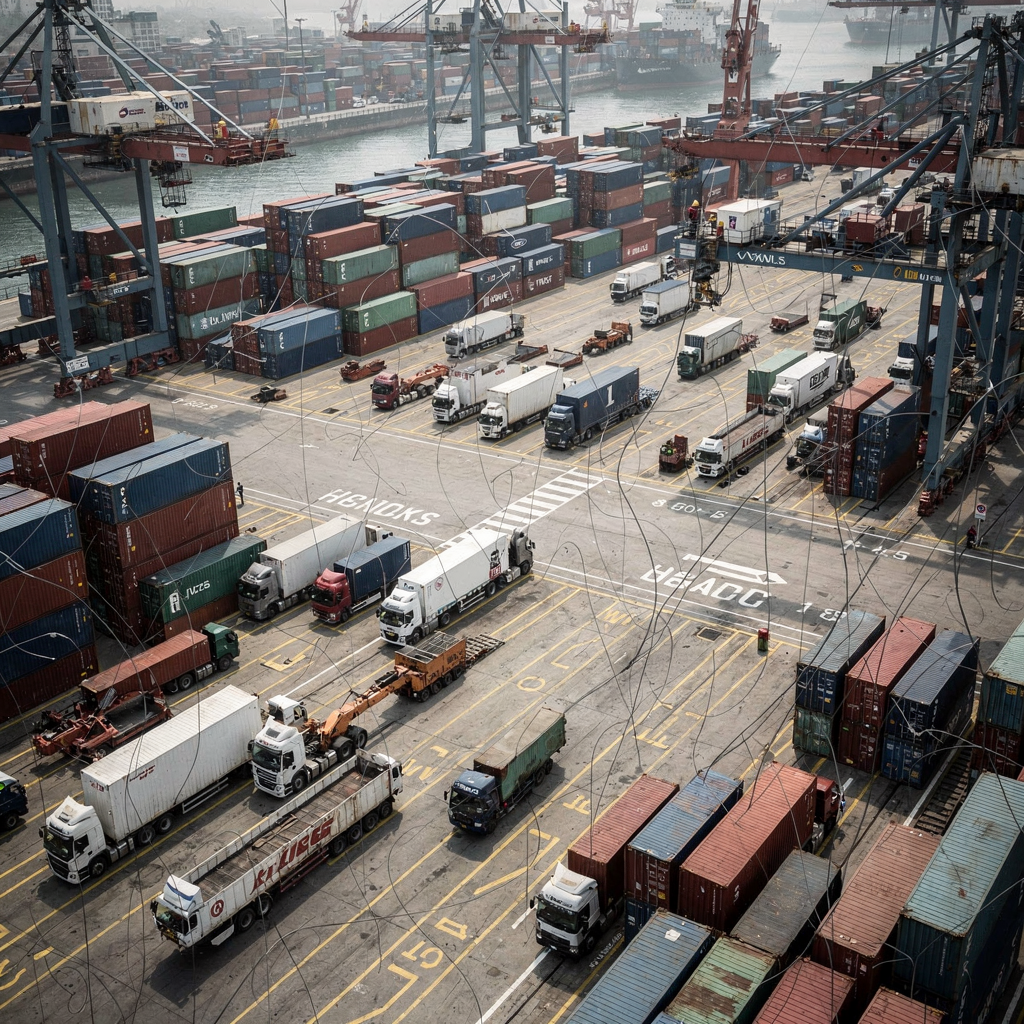
First, inter-terminal truck tracking links road flows inside a port with yard operations. Secondly, it depends on real-time feeds so planners see where each truck waits, moves, or departs. Third, intermodal movements benefit when trucks share location and status continuously. For example, inter-terminal transport (ITT) covers “any land and sea transportation that moves containers among terminals”, a definition that clarifies why visibility matters “any land and sea transportation that moves containers among terminals”. In practice, the external truck queue, gate throughput, and yard congestion respond quickly when operators receive live updates. As a result, ports can allocate yard resources to match incoming flows and avoid local bottlenecks.
Next, integrated truck tracking improves yard operations by prioritising container shifts and cutting gate wait times by up to 30% when combined with automated appointment systems studies show. Therefore, operators reduce the number of unnecessary moves and lower rehandles inside the yard. This boosts productivity of quay cranes and terminal tractors while trimming driving distance for shifters. Meanwhile, a visible truck movement stream lets terminal operators spot clustering and reroute moves before queues build. Consequently, optimizing container flow becomes a scheduled activity rather than ad hoc firefighting.
Furthermore, technology choices matter. GPS tracking, RFID tags, and geofencing provide location, identity, and status updates for each truck and shipping container. In addition, a modern yard management approach links these signals to allocation logic and crane sequences so work arrives in the right place at the right time. Finally, if you want practical examples, review how yard truck routing optimization can reduce empty travel and improve utilization at scale yard truck routing optimization. For freight stakeholders and freight forwarders, better truck visibility translates to faster container pickup and fewer disputes at handover.
Real-time tracking system integration with terminal operating system (tos) for container handling
First, a real-time tracking system must feed the terminal operating system (tos) with coherent signals. GPS units on vehicles and containers provide position. Meanwhile, RFID reads confirm identity and timestamps. In addition, IoT sensors on chassis and gates send status alerts. Together these feeds create real-time visibility that the TOS can use to schedule moves. This real-time tracking flow supports automated gate appointments, synchronised loading and unloading, and faster turnaround times.
Next, the terminal operating system uses that live data to update allocation and yard plans. For instance, when a container arrives earlier than expected the TOS can reassign a closer bay and alert a crane. In one trial, integration of live feeds and scheduling logic produced throughput gains in the order of 15–20% once fully integrated research reports. Therefore, the TOS does not act on historic snapshots alone; it adjusts to current conditions. Also, a container terminal operating system that accepts API integration can ingest third-party telemetry from trucking company platforms and from third-party systems used by carriers.
Moreover, real-time data reduces manual errors and streamlines container handling chores. For example, automated gate appointments cut paper checks and verify chassis and container IDs with RFID and OCR. Consequently, dwell times shrink and the yard gains predictability. If you want to test how a software platform can scale these patterns, read our notes on cloud-native platforms for container port operations cloud-native software for container port operations. Finally, GPS tracking and smart gate logic let terminal operators balance quay and yard work with fewer surprises, which improves terminal performance and cut costs over time.
Drowning in a full terminal with replans, exceptions and last-minute changes?
Discover what AI-driven planning can do for your terminal
Leveraging AI to automate and optimize terminal operations and fleet
First, AI models now help predict optimal truck routes and balance terminal workload. Specifically, reinforcement learning and deep reinforcement learning agents learn policies that trade off crane productivity, yard congestion, and driving distance. Loadmaster.ai uses RL to train agents in a digital twin so that the system learns without needing perfect historical logs. As a result, planners gain policies that adapt to unusual vessel mixes and disruptions, rather than mimicking average past choices.
Next, AI connects fleet decisions to terminal sequences. Job-level policies schedule moves across quay, yard, and gate so resources move when and where they will be most useful. In trials, AI-driven smart gates and automated scheduling lifted container terminal throughput by up to 20% trials indicate. Therefore, operators see lower fuel burn and reduced emissions because trucks idle less and trucks follow shorter, optimal paths. Importantly, these gains come while preserving safety and operational governance through constraint enforcement.
Furthermore, artificial intelligence helps with allocation and routing by predicting future queue build-ups. For example, an AI agent can reroute an approaching truck to a less busy block or delay its appointment by a few minutes. Consequently, the terminal reduces rehandles and improves utilization of cranes and terminal tractors. Additionally, AI supports operational efficiency by offering what-if scenarios in a sandbox so stakeholders can accept guardrails before deployment. Finally, to explore scheduling trade-offs and crane utilization more deeply, see our work on congestion-aware multi-lane crane scheduling congestion-aware multi-lane crane scheduling.
Enhancing truck driver workflows and chassis management in modern container
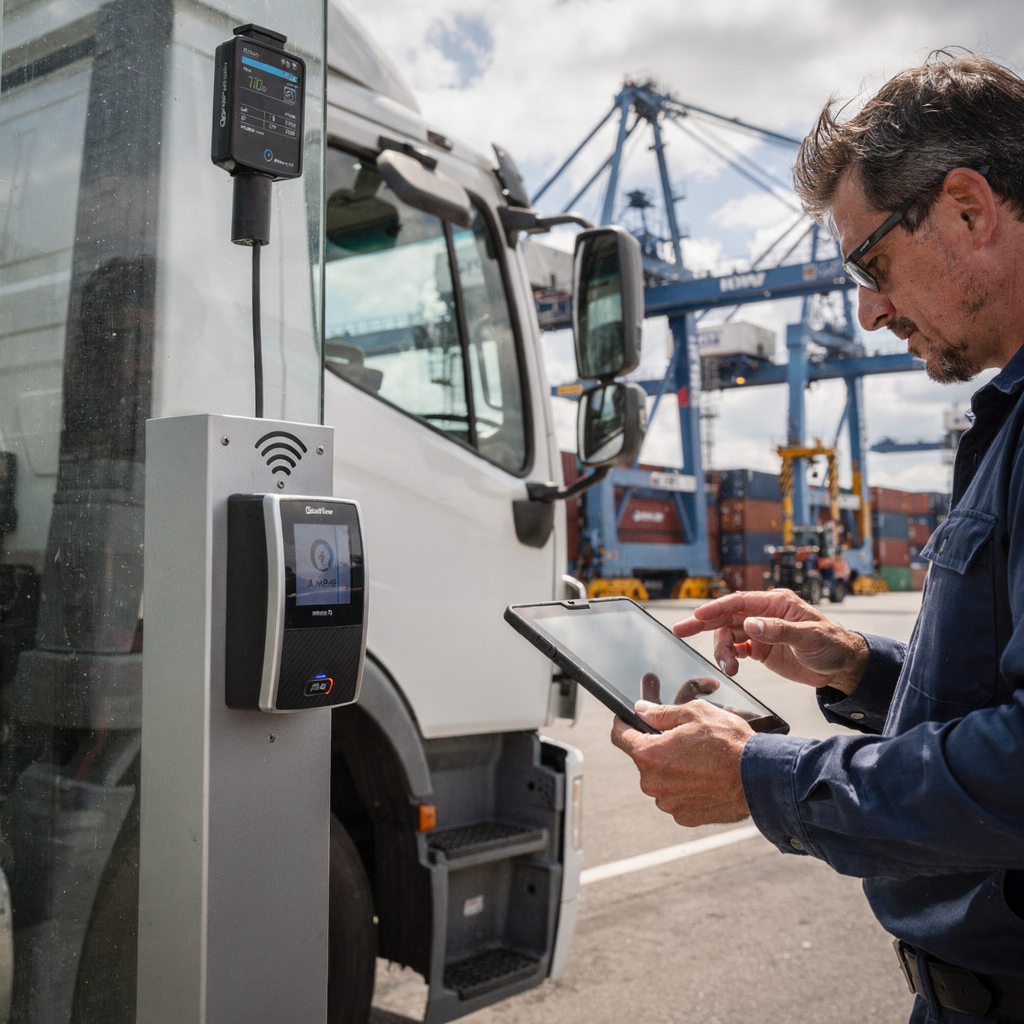
First, digital check-in and user-friendly mobile apps reduce friction for the truck driver. Drivers receive time windows and step-by-step routing upon booking. In addition, the app can show exact gate lanes, the assigned quay or yard block, and the allocated chassis. When a truck arrives the system confirms identity and reduces queue time. This streamlines the truck driver journey and cuts wasted waiting.
Next, automated chassis assignment ties into IoT-based safety checks. Chassis sensors report tire and brake status, and RFID confirms coupling. Then, a TOS-aware application assigns a good chassis and flags maintenance needs automatically. Consequently, terminals reduce idle time and lower the risk of on-site delays. In practice, terminals that combine digital check-in, chassis telemetry, and automated allocation see measurable improvements in turnaround times and driver satisfaction.
Moreover, these workflows help truck and container handoffs run smoothly across national and international operations. When a truck arrives the system publishes updates on container status and the estimated gate departure. This reduces disputes and improves coordination between carrier, trucking company, and the shipper. For a deeper look at how automated remarshaling and yard strategies cut rehandles, see our guide on automated remarshaling of export containers automated remarshaling. Finally, end-to-end visibility for chassis and container data supports regulatory compliance and helps freight forwarders track shipments reliably.
Drowning in a full terminal with replans, exceptions and last-minute changes?
Discover what AI-driven planning can do for your terminal
Shipping container visibility and carrier coordination via advanced container tracking
First, advanced container tracking unifies shipping container status across carriers, trucking companies, and terminal operators. By linking container data from vessel manifests, TOS records, and truck telematics, systems produce a single source of truth. Consequently, stakeholders receive standardised ETAs and consistent updates on container location. This helps reduce disputes and supports claim resolution when issues arise.
Next, standardised data sharing improves on-time performance. Recent work finds ports that deploy unified tracking report up to 25% improvement in on-time inter-terminal delivery, a direct boost to supply chain reliability World Bank data. Therefore, carriers and shippers can plan inland transport with more confidence. Additionally, centralised container tracking reduces manual reconciliation of records and helps the TOS match container handling sequences to actual arrival patterns.
Moreover, integrating APIs and carrier feeds supports seamless communication with third-party systems and with freight forwarders. For example, an API integration that pushes updates on container location and gate timestamps improves transparency for the shipper and the carrier. At the same time, geofencing and alerts let stakeholders know when a truck and container approach a specific block. This focused visibility supports optimizing truck assignments and lowers occurrence of mismatched chassis or late pickups. Finally, if you want further reading on emission benefits of smarter routing, check our analysis on emission reduction through efficient inland routing emission reduction.
Maritime automation trends in intermodal container terminal operations by 2025
First, modern container terminal ecosystems are moving toward deeper automation that links trucks, cranes, and yard equipment. By 2025, smart ports will increasingly combine AI agents, digital twins, and API-driven orchestration to orchestrate moves end to end. In these setups, terminal performance improves because systems adapt to incoming vessel mixes and varying demand without manual firefighting. Stakeholder collaboration among terminal operators, carriers, and trucking companies will shape cross-terminal interoperability and common protocols.
Next, standard communication protocols and data privacy measures will determine how systems scale. For instance, TOS-agnostic AI solutions require clean API integration and secure exchange patterns so third-party systems can cooperate safely. Consequently, governance-ready deployments embed safeguards, an audit trail, and compliance with regional rules. In practice, this makes it easier to automate tasks while keeping human oversight for exceptions. To explore governance and safety in AI for ports, see our governance-ready AI discussion governance-ready AI.
Furthermore, the shift toward autonomous intermodal flows prioritises scalability and cross-terminal interoperability. Companies will test combinations of terminal tractors, automated straddle carriers, and remote-controlled cranes. As a result, vessel turnaround times and yard throughput should both improve, while the port reduces costs tied to unnecessary moves. Finally, these trends require robust information systems that can share container tracking and movement and storage records across national and international stakeholders, while protecting data and supporting auditability.
FAQ
How does inter-terminal truck tracking cut gate wait times?
Real-time feeds let the TOS sequence gate appointments and reassign slots when delays occur. This reduces clustering at gates and can cut gate wait times by up to 30% when combined with automated appointment logic studies show.
What technologies enable real-time tracking in a terminal?
GPS tracking, RFID, and IoT sensors provide the core signals for location, identity, and status. These combine with software platforms and API integration to feed the terminal operating system and third-party systems.
Can AI really improve yard and quay coordination?
Yes. AI agents, including reinforcement learning models, learn policies that balance crane productivity and yard congestion. Trials show throughput gains of around 15–20% when AI integrates with gate and scheduling systems research.
How does advanced container tracking help carriers and shippers?
Advanced container tracking produces consistent updates on container location and status, which improves ETAs and reduces disputes. It also supports better coordination between carriers, freight forwarders, and terminal operators.
What role do mobile apps play for the truck driver?
Mobile apps give truck drivers clear appointment windows, lane assignments, and check-in steps. This streamlines the driver experience and cuts idle time at the gate.
How do terminals manage chassis availability and safety?
IoT-based chassis monitoring and automated allocation logic let the TOS assign serviceable chassis and flag maintenance. This reduces rejected handovers and improves safety compliance.
Are there standards for sharing container and truck data?
Industry efforts focus on API standards and secure exchange protocols so third-party systems and terminal operators can share container data reliably. Such standards make intermodal transport more seamless and auditable.
What are the environmental benefits of smarter truck routing?
Optimized routes and reduced idle time lower fuel burn and emissions. Studies and pilot projects report measurable emission reductions when routing and real-time coordination cut unnecessary travel see analysis.
How do terminals protect data privacy while sharing information?
Terminals implement role-based access, encryption, and audit trails to protect sensitive data. Governance-ready AI and secure API practices ensure that data sharing complies with regional rules and stakeholder agreements governance-ready AI.
Where can I learn more about routing and crane trade-offs?
For detailed research on crane scheduling and trade-offs between quay and yard productivity, consult technical resources on congestion-aware crane scheduling and routing optimization. These references explain how balancing stowage quality and crane productivity improves overall terminal productivity congestion-aware scheduling.
our products
 stowAI
 stackAI
 jobAI
jobAI
Innovates vessel planning. Faster rotation time of ships, increased flexibility towards shipping lines and customers.
Build the stack in the most efficient way. Increase moves per hour by reducing shifters and increase crane efficiency.
Get the most out of your equipment. Increase moves per hour by minimising waste and delays.
stowAI
Innovates vessel planning. Faster rotation time of ships, increased flexibility towards shipping lines and customers.
stackAI
Build the stack in the most efficient way. Increase moves per hour by reducing shifters and increase crane efficiency.
jobAI
Get the most out of your equipment. Increase moves per hour by minimising waste and delays.