
Port berth allocation challenges in deepsea container terminals
however, therefore, consequently, additionally, then, next, finally, firstly, secondly, thirdly, meanwhile, subsequently, thus, hence, likewise, similarly, otherwise, nevertheless, still, also, besides, alternatively, accordingly, thereby, in addition, as a result, instead, ultimately, notably, specifically, importantly, equally, conversely, meanwhile, moreover-not-used, further-not-used
Berth allocation sits at the heart of efficient port operations. It defines which berth a vessel uses and when. Good berth allocation shortens vessel turnaround times and cuts waiting times. Poor allocation raises port congestion and increases cost per container. The berth allocation problem becomes harder when ships grow. Over the last decade the industry saw a near doubling in container ship size. This trend reduced vessel costs per container by about a third, yet it strained terminals that lack high-capacity equipment (OECD).
Large vessels require more quay cranes and wider berth windows. Terminals must balance berth occupancy, crane assignment, and yard moves. As a result, berth allocation and quay crane scheduling must work together. If not, vessel delays rise and congestion grows. High-hoisting constraints worsen the problem. When quay cranes cannot reach high stacks, service rates drop. This increases the effective service time for each deep-sea vessel and tightens the planning horizon. Planners then face a complex allocation and scheduling challenge.
For port operators, this translates to a stricter need for integrated berth allocation and quay crane planning. They must decide which berth to allocate, how to assign quay cranes, and how to sequence hoisting moves. Short-term fixes include dynamic berth allocation and flexible crane deployment. Longer-term fixes demand investment in high-capacity quay cranes and stronger terminal operations systems. For more on improving crane productivity with AI, read our guide on improving gross crane rate with AI-based methods (improving gross crane rate with AI).
Container terminal constraints with high-hoisting limitations
however, therefore, consequently, additionally, then, next, finally, firstly, secondly, thirdly, meanwhile, subsequently, thus, hence, likewise, similarly, otherwise, nevertheless, still, also, besides, alternatively, accordingly, thereby, in addition, as a result, instead, ultimately, notably, specifically, importantly
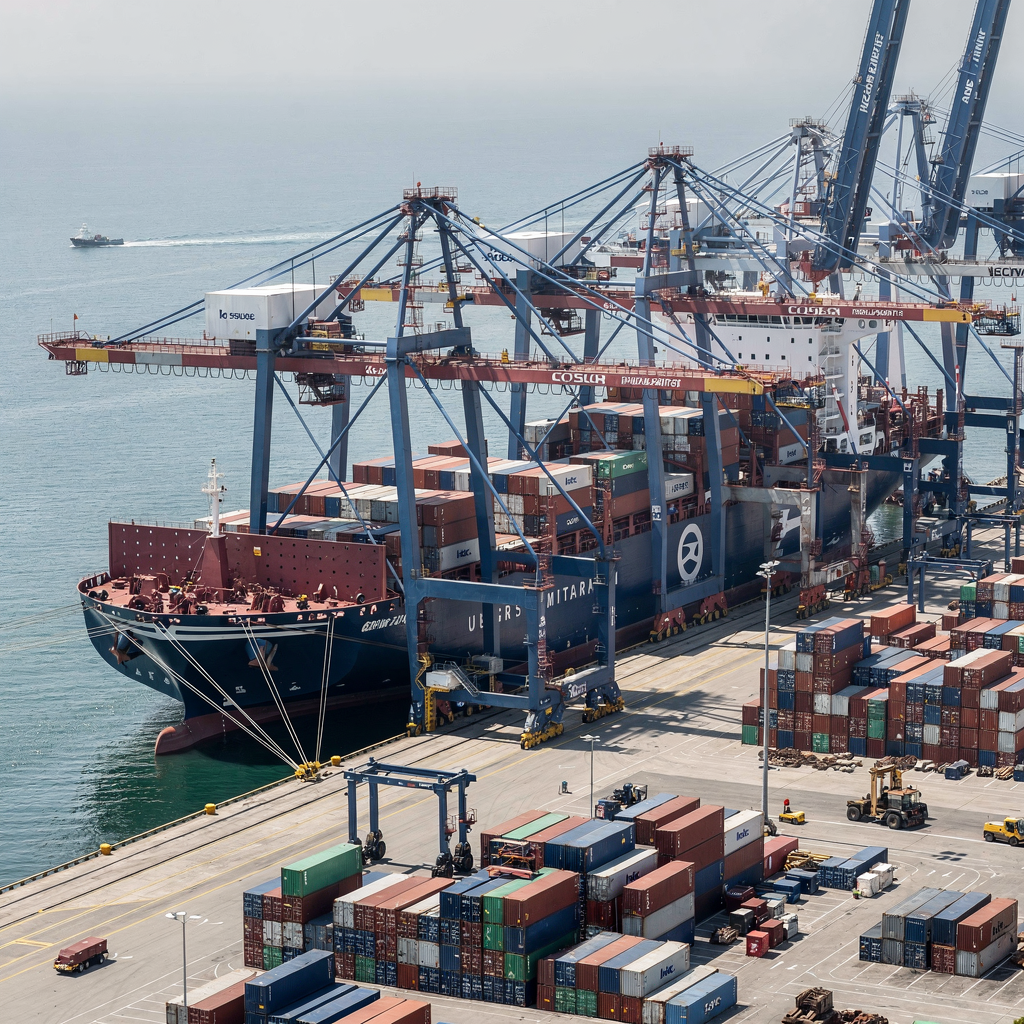
STS cranes set clear limits for container terminal operations. Ship-to-shore crane reach limits and maximum stacking heights define what a crane can handle safely. Some modern quay cranes can reach stacks that approach 50 meters. Older cranes often fall far short of that mark, which creates operational bottlenecks (Efficiency and productivity in container terminal operation). Differences in crane reach change how planners allocate berths. If a berth has low-capacity quay cranes, a large container ship will need more time at the quay. That increases berth occupancy and raises port congestion.
Comparing older terminals with modern high-capacity cranes shows a clear gap. Modern crane fleets reduce per container handling time. They also allow higher utilization for the available berth. Older terminals then face higher costs to handle the same TEU volumes. Studies show that larger ships delivered a roughly 33% reduction in vessel cost per container while port handling times did not fall by the same margin (ITF). This imbalance drives the need to upgrade crane fleets or to change operational rhythms.
High-hoisting limitations force planners to re-think quay crane assignment and yard configuration. They must allocate additional handling time and buffer for safety margins. That impacts the berth and yard link, the berth and yard interface, and inland connections. Operators can use simulation models and simulation optimization to test scenarios. These tools show where capacity constraints and waiting times will appear. For more on yard strategies that support berth planning, see our work on yard stack density optimization (yard stack density optimization).
Drowning in a full terminal with replans, exceptions and last-minute changes?
Discover what AI-driven planning can do for your terminal
Crane performance and operational constraints
however, therefore, consequently, additionally, then, next, finally, firstly, secondly, thirdly, meanwhile, subsequently, thus, hence, likewise, similarly, otherwise, nevertheless, still, also, besides, alternatively, accordingly, thereby, in addition
Crane performance depends on reach, hoisting speed, and operator skill. Hoisting speed typically drops as the crane raises containers to higher tiers. That reduces the effective crane rate per hour. Planners must include height-dependent handling time for accurate quay crane scheduling. Safety rules also constrain operations. Wind limits, load stability limits, and lashing requirements create additional margins for high lifts. These rules often force cranes to operate at reduced speed or to pause during adverse conditions. This interplay affects the quay crane scheduling problem and the overall berth allocation problem.
Maintenance and downtime also shape capacity. High-reach quay cranes require more frequent checks and heavier parts. Downtime for rotor or hoist repairs reduces the number of quay cranes available. That, in turn, raises utilization on the remaining cranes and increases waiting times for arriving ships. Terminal operators and port operators need to plan preventive maintenance within the planning horizon to avoid peaks in congestion. They must also decide how to assign operators and technicians to minimize disruption.
Operator decision-making plays a big role. Skilled operators can keep handling time low even at height. However, human limits and safety protocols cap gains. AI tools and automation can support operator decisions by recommending hoisting sequences and optimal crane operations. For example, AI approaches to quay crane scheduling reduce idle time and improve handling time per container (AI approaches to quay crane scheduling).
Computational mathematical model for integrated vessel planning
however, therefore, consequently, additionally, then, next, finally, firstly, secondly, thirdly, third, meanwhile, subsequently, thus, hence, likewise, similarly, otherwise, nevertheless, still, also, besides
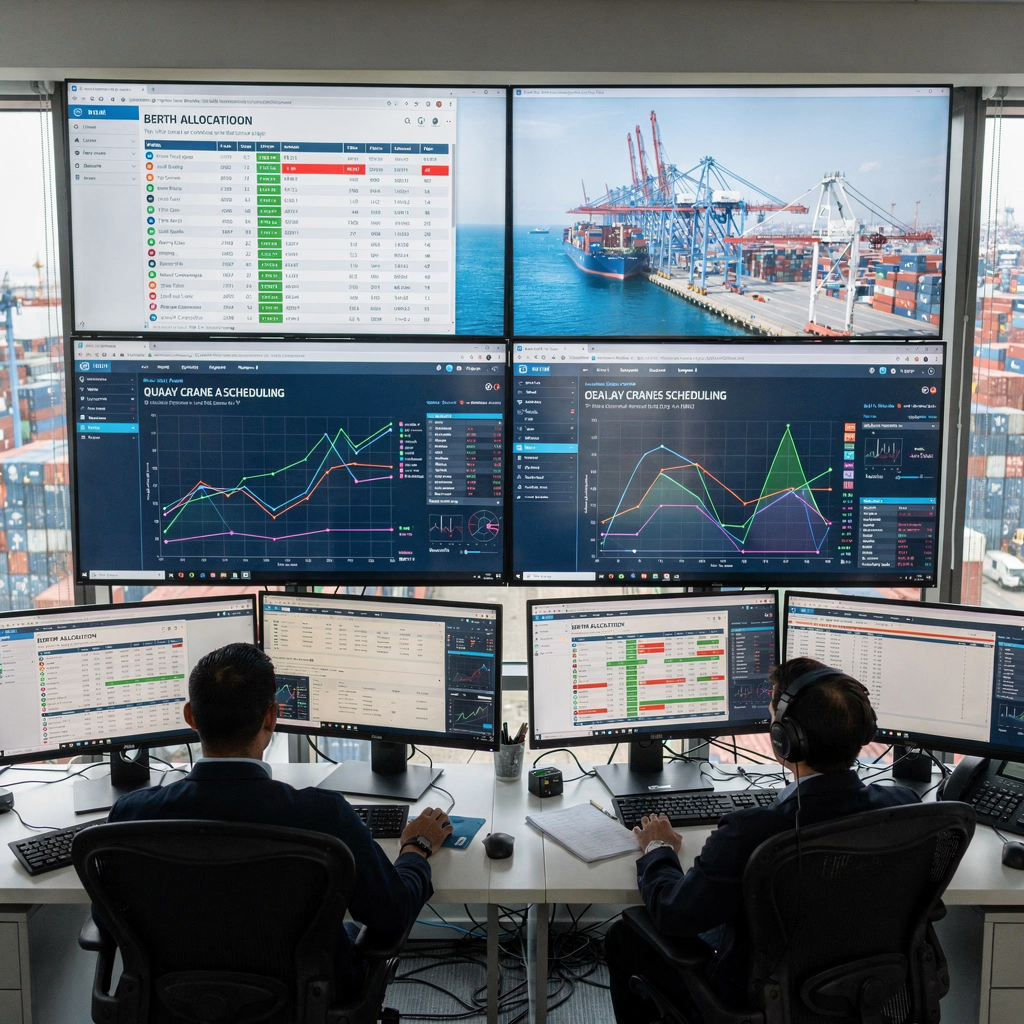
We propose a mathematical model that captures berth allocation, quay crane assignment, and hoisting sequences. The model uses decision variables for available berth slots, the number of quay cranes assigned, and the order of hoisting moves. It also tracks arrival time windows for each deep-sea vessel and the expected handling time per container by height. The mathematical model links berth and yard, so it models berth and yard interactions explicitly. The objective is to minimize vessel service time and crane idle time while respecting safety and capacity constraints. In practice, the objective is to minimize delays, which yields a near-optimal solution in many scenarios.
Constraints include berth availability, crane reach limits, stacking height, and safety margins. We add constraints for crane operations, such as maximum simultaneous lifts and required rest or maintenance windows. The model also enforces arrival time windows and terminal-specific rules like tidal port access or yard capacity. For uncertainty in arrival time and handling speed, the problem can be formulated as a two-stage stochastic optimization or a problem with stochastic elements to reflect realistic variability. This approach helps when planners face uncertain arrival time and stochastic handling rates.
Decision-makers can use this model for integrated planning or for discrete berth allocation followed by quay crane scheduling. The formulation can be implemented as a mixed integer linear programming model or as mixed integer with heuristic layers. When the scale grows, planners often turn to heuristic and metaheuristic algorithms to produce a good allocation and scheduling faster. The model supports port network planning and helps balance container transportation flows to reduce emission per container and total waiting time at the quay.
Drowning in a full terminal with replans, exceptions and last-minute changes?
Discover what AI-driven planning can do for your terminal
Solution method for berth allocation with hoisting constraints
however, therefore, consequently, additionally, then, next, finally, firstly, secondly, thirdly, meanwhile, subsequently, thus, hence, likewise, similarly, otherwise, nevertheless, still
The solution method pairs mixed integer linear programming with pragmatic heuristics. At small scale, mixed integer linear programming finds the optimal solution for berth allocation planning problems. For large ports and mega-ship scenarios, MILP can become slow. In those cases, we apply heuristic and metaheuristic algorithms to get a near-optimal solution fast. Examples include greedy assignment, tabu search, and genetic algorithm hybrids. These methods solve the allocation and quay crane assignment together in an integrated planning loop.
Simulation ties everything together. Simulation models test the quality of the solution under stochastic conditions. Running simulation optimization helps evaluate performance when arrival time or handling time varies. This two-step approach gives planners both an optimized schedule and confidence in its robustness. It also supports berth allocation and quay crane scheduling problem variants and dynamic berth allocation adjustments as real-time data appears. For implementation, Terminal Operating Systems ingest schedules and use real-time feeds to reassign quay cranes as needed.
Computational performance and scalability depend on model size and the number of quay cranes. For very large instances, hybrid approaches that combine MILP for short horizons and heuristic for long horizons deliver good trade-offs. They keep computation time reasonable while improving the quality of the solution. To see how AI modules can feed decision-making and reduce equipment starvation, explore our pieces on intelligent pooling and real-time equipment dispatch (intelligent pooling, real-time equipment dispatch).
Advanced logistics and transportation research in terminal operations optimisation
however, therefore, consequently, additionally, then, next, finally, firstly, secondly, thirdly, meanwhile, subsequently, thus, hence, likewise, similarly, otherwise
Recent transportation research highlights practical pathways to improve terminal operations. Case studies show ports that invested in high-capacity quay cranes and advanced planning cut vessel turnaround time substantially. For instance, research indicates that better Terminal Operating Systems and improved crane capabilities can reduce delays and raise throughput (Improving the Performance of Dry and Maritime Ports). Cost-benefit analyses weigh infrastructure upgrades against operational tweaks. Upgrades carry high capital costs but yield long-term savings when they remove recurring congestion and reduce per container handling cost.
Operational fixes can include integrated berth allocation and quay crane assignment, improved quay crane scheduling, and better yard planning. These measures often leverage algorithms and simulation models to lower total waiting time and emission per container. Hybrid approaches that blend stochastic optimization with heuristic assignment problem solvers perform well in transshipment terminals and large ports. Research on the impact of mega-ships shows that carriers gained transport cost savings, yet ports must adapt to realize the full gains (The Impact of Mega-Ships). This dynamic shapes global trade and port competitiveness.
Future studies will explore AI-driven integrated planning, resilient port design, and machine learning algorithms for demand prediction. They will also quantify the trade-offs in empty container repositioning and yard utilization. As research evolves, port operators and terminal operators should combine strong TOS functionality with advanced algorithms and simulation optimization to optimize berth allocation and reduce port congestion.
FAQ
What is berth allocation and why does it matter?
Berth allocation assigns arriving vessels to specific berths and time windows. It matters because good allocation shortens vessel turnaround, reduces waiting times, and lowers costs for carriers and for the port.
How do high-hoisting constraints affect container terminal productivity?
High-hoisting constraints slow down crane operations at tall stacks, which raises handling time per container. This effect reduces crane throughput and can create berth congestion for large container ships.
What is the berth allocation problem in mathematical terms?
The berth allocation problem is a planning problem that assigns berths to vessels while satisfying time windows and capacity constraints. It often appears as a mixed integer linear programming formulation with objectives to minimize delays and crane idle time.
Can ports optimize without upgrading cranes?
Yes. Ports can improve allocation and quay crane scheduling through better planning, simulation optimization, and algorithms that assign cranes more efficiently. However, upgrades to high-capacity quay cranes provide larger, long-term gains where demand justifies investment.
What solution method works for large ports and mega-ships?
Hybrid methods work best: MILP for short horizons and heuristics or metaheuristics for large instances. Simulation helps validate solutions under stochastic arrival patterns and handling rates.
How does stochastic optimization help berth planning?
Stochastic optimization models uncertainty in arrival time and handling rates, which yields plans that remain robust under variability. It reduces the risk of cascading delays when ships are early or late.
What role do quay cranes play in berth allocation planning?
Quay cranes determine how fast a vessel can be serviced. Quay crane assignment affects which berth is feasible and how long a vessel will occupy a berth. Effective quay crane workload distribution improves the efficiency of the port.
How do simulation models support decision-making?
Simulation models test schedules under real-world variability and equipment failures. They help quantify total waiting time, utilization, and emission impacts so planners can choose the best operational strategy.
What are common heuristics for berth allocation and quay crane scheduling?
Common heuristics include greedy assignment, tabu search, genetic algorithms, and local search hybrids. These produce near-optimal solutions quickly for large-scale planning problems.
This reduces handling time for administrative tasks and improves the speed and traceability of operational changes.
our products
 stowAI
 stackAI
 jobAI
jobAI
Innovates vessel planning. Faster rotation time of ships, increased flexibility towards shipping lines and customers.
Build the stack in the most efficient way. Increase moves per hour by reducing shifters and increase crane efficiency.
Get the most out of your equipment. Increase moves per hour by minimising waste and delays.
stowAI
Innovates vessel planning. Faster rotation time of ships, increased flexibility towards shipping lines and customers.
stackAI
Build the stack in the most efficient way. Increase moves per hour by reducing shifters and increase crane efficiency.
jobAI
Get the most out of your equipment. Increase moves per hour by minimising waste and delays.